
Amazon's quick-commerce service in India, Amazon Now, has crossed $1 billion in gross annualised sales, the company said this week, marking what it calls the fastest-growing e-commerce business unit in Amazon India's history. The milestone comes as Amazon accelerates an aggressive expansion push ahead of the festive season, even as it remains a later entrant in a market already dominated by established rivals.
It is important to be precise about what this figure represents. Amazon has not reported $1 billion in actual annual revenue. Rather, the company is reporting an annualised run rate, a projection based on recent performance rather than audited results.
What Amazon's $1 Billion Annualised Milestone Means
Gross annualised sales is a run-rate calculation, not a confirmed yearly revenue figure. According to reporting on the announcement, the number is typically calculated by taking total gross sales for a recent month or quarter and multiplying it to project what a full 12-month period would look like at that same pace.
The figure reflects the value of orders placed, minus discounts and cancellations, and excludes India's goods and services tax (GST). It is a gross sales measure, not a profit or net revenue figure, and it should not be treated as equivalent to Amazon's reported financial results, since Amazon does not break out Amazon Now's earnings separately in its official financial filings.
Samir Kumar, Amazon India's country manager, confirmed the milestone in comments to the Economic Times and in an official company statement. "In a short period of time, Amazon Now has crossed $1 billion in annualised gross sales in India, making it the fastest-growing e-commerce business unit in Amazon India's history," Kumar said. "We are humbled by the customer response, with orders doubling every quarter."
Amazon's Quick-Commerce Expansion in India
Amazon Now has expanded rapidly in recent weeks. According to Amazon's own announcement, the service has grown to four times as many cities in under 10 weeks, taking delivery-in-minutes to more than 60 Indian cities and towns ahead of the festive season. This includes not just major metros but smaller towns such as Padubidri, Tirupati, Guntur, Gurdaspur, Jalandhar, Vellore, Dharwad, Warangal and Berhampur.
The company said it is on track to expand Amazon Now to 100 cities by Diwali, delivering to customers from Gurdaspur and Hoshiarpur in the north to Vembayam and Alamcode in the south. Amazon first announced plans in June 2026 to build what it described as India's largest "delivery-in-minutes" network, targeting eventual coverage of more than 300 cities.
Fulfilment Network
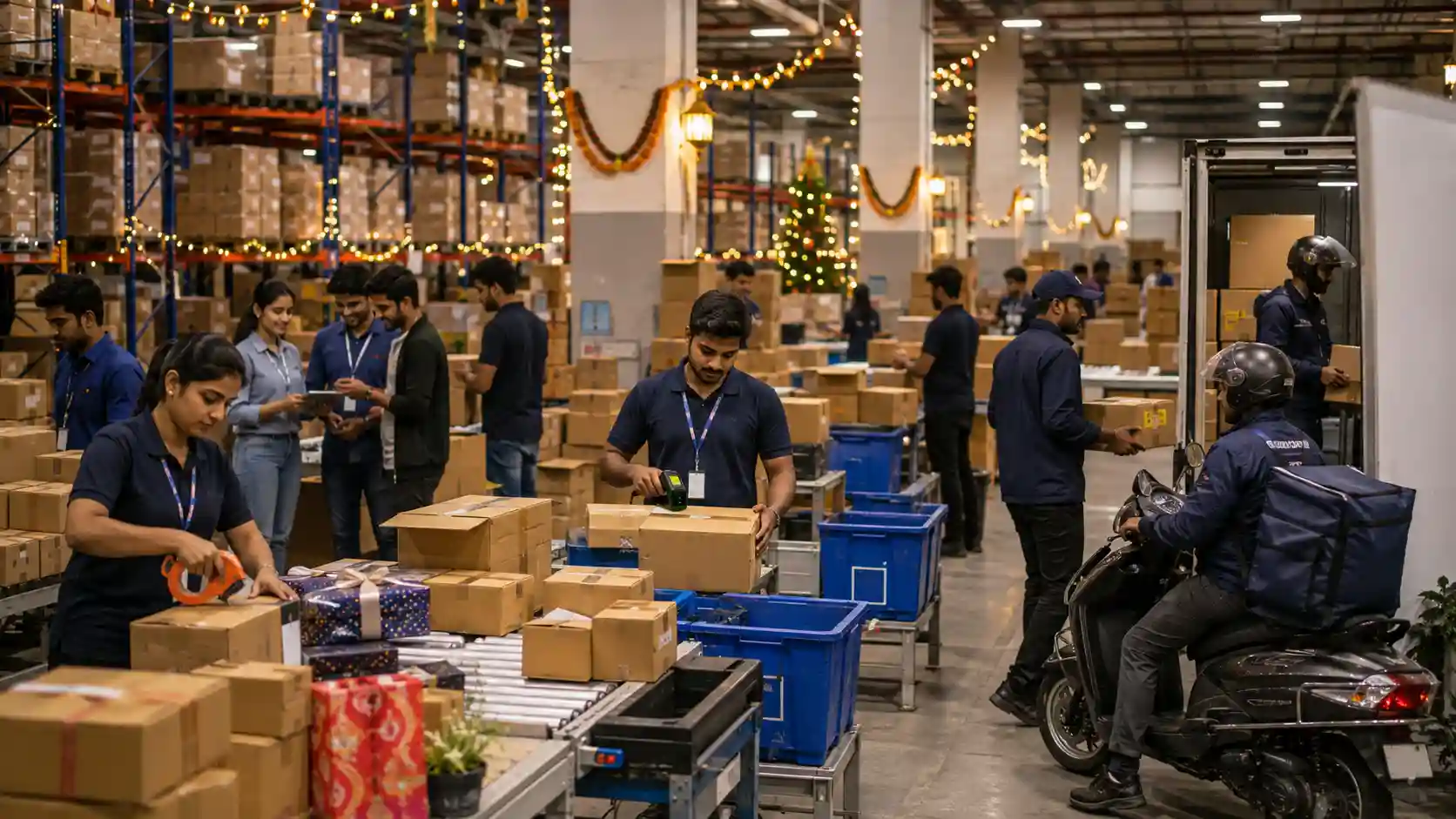
Amazon Now orders are delivered through a network described by the company as comprising more than 750 micro-fulfilment and urban fulfilment centres. Industry tracking cited in Business Standard's coverage placed India's broader quick-commerce footprint at 477 cities nationally, with the top 10 cities alone accounting for a large share of total dark-store count, according to data from CLSA.
Some figures related to Amazon Now's store count and daily order volume, including a reported target of roughly 1,000 dark stores by year-end and an estimated 700,000 orders per day, have circulated in industry coverage but were not directly confirmed in Amazon's own official statement reviewed for this article. These figures should be treated as reported estimates pending direct confirmation from Amazon.
What Is Driving Demand for Fast Deliveries
Kumar attributed much of Amazon Now's growth to its Prime membership base. He told the Economic Times that Prime members shop on Amazon Now roughly three times more frequently than non-Prime customers, describing Prime as "a big driver for our flywheel."
At the same time, Kumar said non-Prime customer growth has been healthy as the service reaches smaller cities, with many of those customers subsequently converting to Prime membership. "Even non-prime customers are coming in quite a good number. As we start reaching smaller cities, we are also seeing a very, very healthy growth in non-Prime customers. They are also converting to Prime," Kumar said.
More broadly, India's quick-commerce sector has grown on the back of rising consumer expectations for near-instant delivery of groceries and household essentials, an area where the country's e-commerce penetration has historically lagged behind its overall retail market. Investment firm CLSA had previously projected the sector's total addressable market could rise sixfold between fiscal years 2024 and 2027, reaching approximately $27 billion, according to reporting from TechCrunch.
Amazon's Strategy and Business Growth
Amazon Now launched during the March quarter of the previous year, positioning Amazon as what TechCrunch described as the sixth major entrant into India's quick-commerce market at the time of its pilot phase. That pilot began in Bengaluru, with Kumar framing the company's approach around what he called its long-standing strategy of "Selection, Value and Convenience."
Amazon's late entry meant the company initially ceded significant ground to earlier movers in the space. According to reporting from Amanshanti News, citing a company executive, Amazon Now has since caught up to become one of the top three quick-commerce players by some measures in Delhi and Bengaluru, despite that later start.
The push to scale Amazon Now has also drawn direct attention from Amazon's global leadership. During a visit to India earlier this year, Amazon CEO Andy Jassy said the company intended to expand Amazon Now to more than 300 cities and build what he described as the largest delivery-in-minutes network in the country, according to reporting on the visit.
The Competitive Quick-Commerce Market
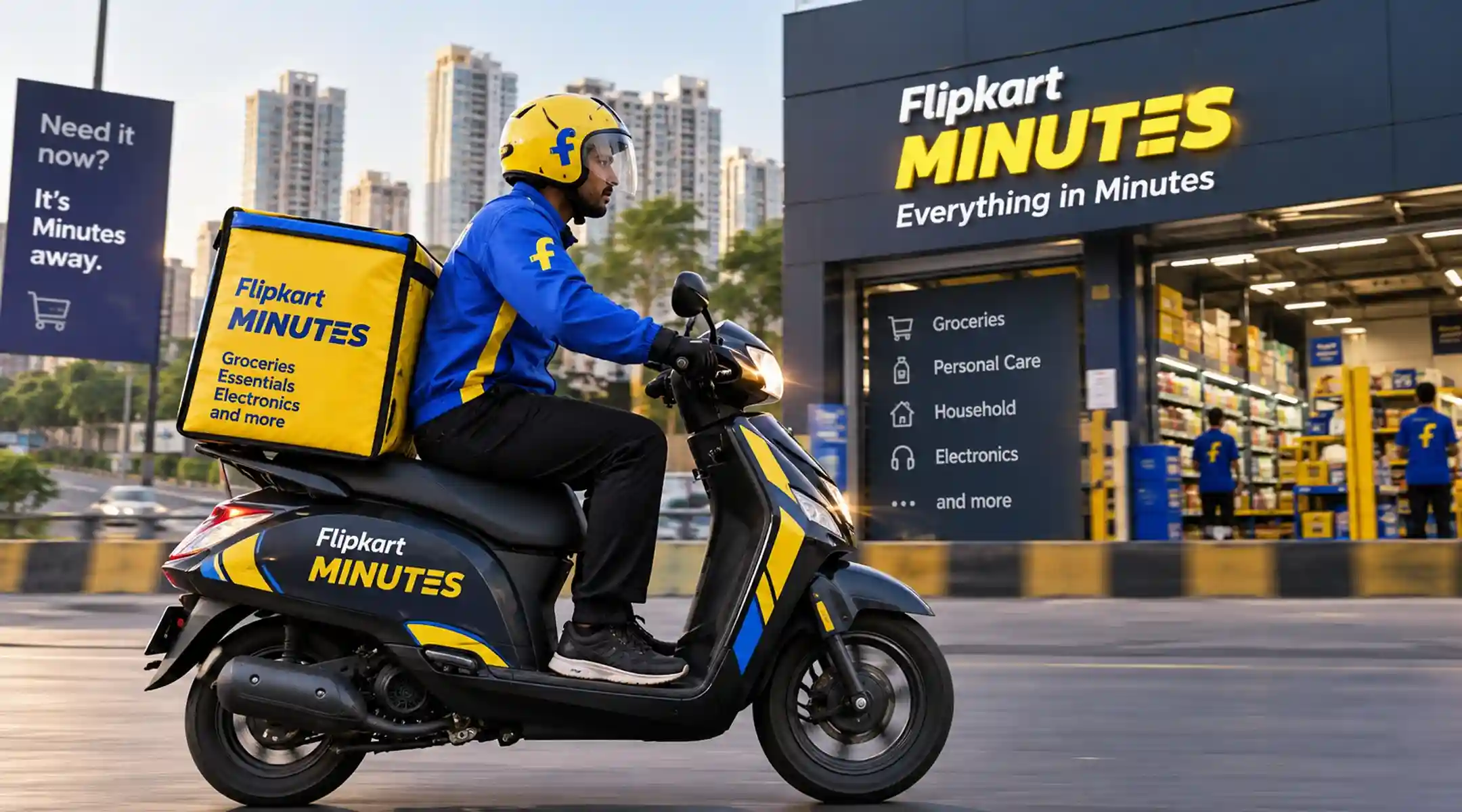
India's quick-commerce sector remains highly competitive, with Amazon Now facing established rivals including Blinkit, Zepto, Swiggy Instamart and Flipkart Minutes, all of which had built out dark-store networks and market share before Amazon Now's launch. Business Standard reported that this competitive backdrop is intensifying ahead of the festive season, as multiple platforms race to expand geographic coverage and delivery infrastructure simultaneously.
Bernstein analyst Rahul Malhotra had previously told TechCrunch that Amazon had been criticized for moving too slowly in India's quick-commerce space, noting the company had not fully capitalized on opportunities in smaller towns and in certain product categories such as apparel. The $1 billion annualised sales milestone represents a significant acceleration relative to that earlier, slower start, though it does not by itself establish Amazon Now's overall market share relative to competitors, which was not independently verified in the sources reviewed for this article.
What Comes Next for Amazon
Amazon has stated its near-term target is to expand Amazon Now to 100 cities by the Diwali festival period, with a longer-term ambition of reaching more than 300 cities nationally. The company has said it will continue scaling its fulfilment infrastructure to support a wider product selection delivered on faster timelines.
Whether Amazon Now sustains its reported pace of orders doubling every quarter, and how its performance compares to competitors once the festive season concludes, remains to be seen and was not addressed in the sources available for this article. Any future figures on profitability, market share or store count should be verified against Amazon's own disclosures or credible reporting once available, rather than assumed from the current announcement.
Amazon Now's $1 billion annualised gross sales milestone marks a notable acceleration for a business that entered India's quick-commerce market later than its main rivals. The figure reflects a projected run rate based on recent gross sales performance, not a confirmed annual revenue result, and Amazon has not disclosed the profitability of the business. As Amazon Now continues its rapid city-by-city expansion ahead of Diwali, its ability to sustain order growth and improve its competitive position against Blinkit, Zepto, Swiggy Instamart and Flipkart Minutes will likely shape how the milestone is remembered in the context of India's broader quick-commerce race.
Further reading and useful links
Reader questions
Frequently asked questions
What does '$1 billion annualised' mean for Amazon Now?
It means Amazon projected a full year of sales based on a recent quarter's performance, not that Amazon has reported $1 billion in confirmed annual revenue. It is a gross sales run-rate figure, excluding GST and net of discounts and cancellations.
When did Amazon Now launch in India?
Amazon Now launched during the March quarter of the previous year, beginning with a pilot in Bengaluru, according to company statements and TechCrunch's reporting at the time.
How many cities does Amazon Now currently serve?
As of the announcement, Amazon Now operated in more than 60 Indian cities and towns, with a stated target of reaching 100 cities by Diwali and eventually more than 300 cities.
Who are Amazon Now's main competitors in India?
Amazon Now competes with Blinkit, Zepto, Swiggy Instamart and Flipkart Minutes, all of which entered India's quick-commerce market before Amazon.
Is Amazon Now profitable?
Amazon has not disclosed profitability figures for Amazon Now. The $1 billion figure refers to gross annualised sales, not profit or net revenue.
Nexuswild welcomes factual corrections. Email [email protected] with evidence and the article URL.