
Apple Pay could launch in India as soon as October 2026, according to a Reuters report published September 18, 2026, which cited three unnamed people familiar with the matter. The reported rollout would begin with Axis Bank credit cards, while Apple continues separate discussions with other major Indian lenders. Neither Apple nor the named banks have confirmed the report, and no official launch date has been announced.
This article lays out what has been reported, what remains unconfirmed, and how Apple Pay would technically function within India's existing payments infrastructure if the reported plans go ahead.
What Has Been Reported, and What Apple Has Not Confirmed
According to Reuters, Apple Pay is expected to launch in India next month, with Axis Bank as its first banking partner for credit card support. The report states that Apple is also in discussions with HDFC Bank and ICICI Bank, though commercial terms with those lenders have not yet been finalized. Reuters reported that Apple and the banks named in its report did not comment when asked about the plans.
This is an important distinction to keep in mind throughout this story: the October 2026 timeline, the Axis Bank partnership, and the scope of the initial rollout all rest on reporting attributed to unnamed sources. As of this writing, Apple has not added India to its public Apple Pay country and region availability page, which lists every market where the service currently operates, and the company has made no public announcement regarding an India launch date. Until Apple or a confirmed banking partner makes an official statement, the specifics of the rollout should be treated as reported plans rather than settled facts.
This would not be the first time an India launch date for Apple Pay has been discussed in the press without materializing on schedule. In February 2026, Bloomberg News reported that Apple was in talks with ICICI Bank, HDFC Bank and Axis Bank, alongside global card networks, aiming to introduce the service in India around the middle of 2026. That timeline did not result in a confirmed launch by mid-2026, illustrating that reported target dates for this rollout have shifted over time and should be read with appropriate caution.
The Reported Initial Rollout With Axis Bank
Under the arrangement described in the Reuters report, Apple Pay's first phase in India would support credit cards issued by Axis Bank. Axis Bank is India's fourth-largest credit card issuer, with 16.26 million active credit cards as of July 2026, according to Reserve Bank of India data, ranking behind HDFC Bank, SBI Card and ICICI Bank.
The report indicates that Apple's initial strategy is centered on a single major banking partner rather than a simultaneous multi-bank launch. Reuters' reporting specifically names Axis Bank credit cards for the first phase, without mentioning debit card support or eligibility for cards issued by other banks at launch. Apple is described as being in separate, ongoing discussions with HDFC Bank and ICICI Bank, which could extend the service to their cardholders in a later phase, though no timeline for that expansion has been reported.
This phased approach mirrors how Apple Pay has historically entered other markets, typically launching with a small number of initial banking partners before gradually expanding eligibility to other card issuers over subsequent months.
How Apple Pay Works: Tokenization and NFC
Apple Pay operates by replacing a user's actual card number with a unique, device-specific digital identifier known as a token, a process called tokenization. When a card is added to Apple Wallet, Apple does not store the actual card number on the device or on Apple's servers. Instead, a unique Device Account Number is created, encrypted, and stored securely within the device's dedicated payment chip. During a transaction, this token, rather than the real card number, is transmitted to the merchant and the card network, which reduces the exposure of a user's actual card details during payment.
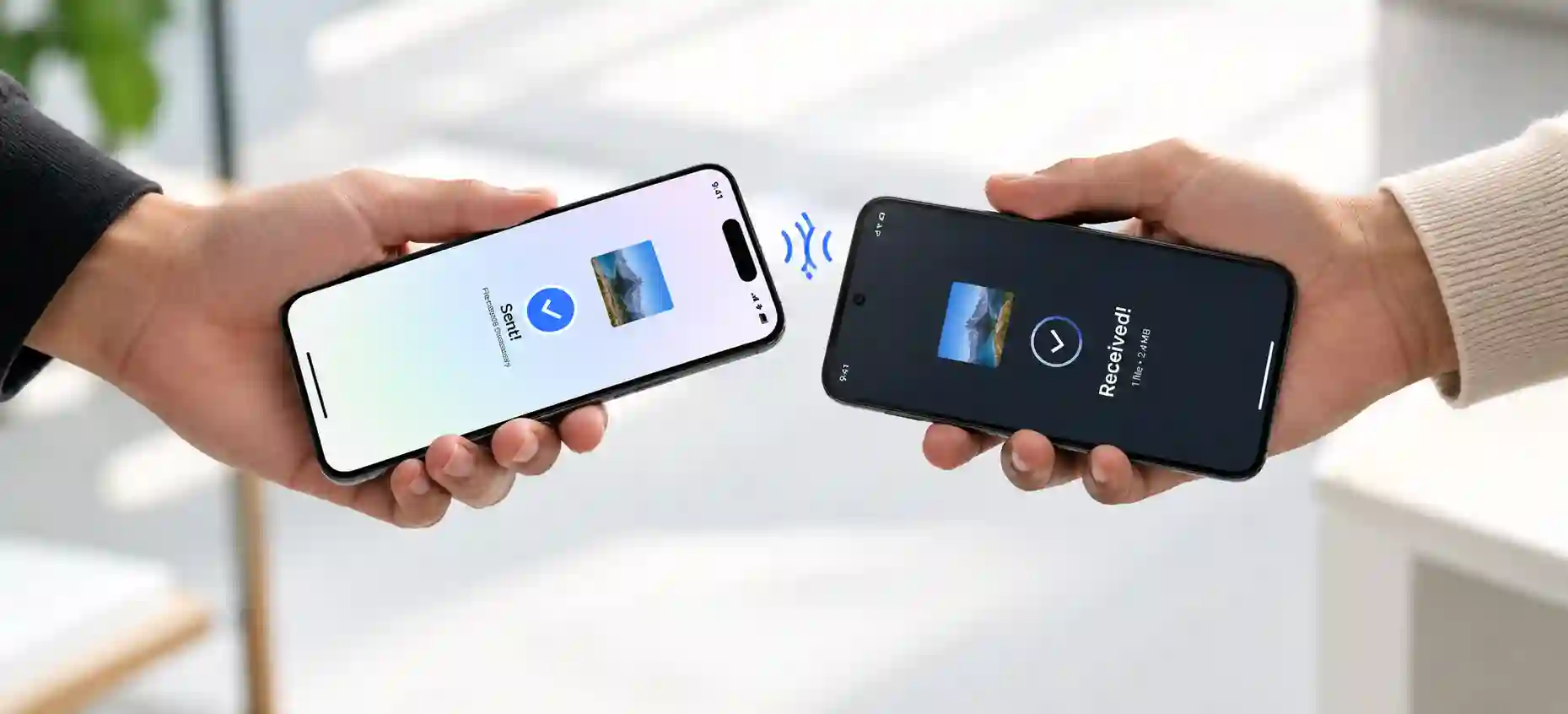
At the point of sale, Apple Pay transactions are completed using Near Field Communication, or NFC, a short-range wireless technology that allows a compatible device to communicate with a payment terminal when held close to it. A user authorizes the payment using Face ID, Touch ID, or their device passcode, after which the tokenized payment credential is transmitted to the NFC-enabled terminal to complete the transaction. This same tokenization and NFC architecture underpins Apple Pay transactions both in physical stores and, separately, for in-app and website purchases where supported.
The RBI Rule Change That Enables Biometric Authorization
A regulatory change in India has been widely cited in reporting as a key enabler for Apple Pay's reported entry. The Reserve Bank of India issued the Authentication Mechanisms for Digital Payment Transactions Directions, 2025, which modernizes the country's long-standing two-factor authentication requirement for digital payments. Previously, Indian digital transactions have relied heavily on SMS-based one-time passwords as the standard second authentication factor. The new RBI directions permit payment system providers to adopt alternative authentication methods, including biometric identifiers such as fingerprints and facial recognition, device-based tokens, and other cryptographic credentials, provided that transactions still meet a two-factor standard with at least one dynamic, transaction-specific element. Payment system providers and participants, including banks, are required to comply with these directions by April 1, 2026, according to a summary of the rules published by legal and regulatory analysis firms including Fox Mandal and K&S Partners.
Because Apple Pay has long relied on Face ID and Touch ID as its default authentication methods globally, this regulatory shift removes a structural barrier that previously made it difficult for Apple's biometric-first payment authorization model to align with India's authentication requirements. Multiple reports on Apple's preparations for an India launch, including coverage by The Week and PaymentsJournal, have pointed to this RBI rule change as a significant factor supporting the service's technical feasibility in the country.
Apple's Broader Compliance History With Indian Card Rules
Apple Pay's reported India entry follows a longer period in which Apple had stepped back from processing card payments within India for its own App Store and iCloud purchases. According to reporting from PaymentsJournal, Apple had gone through roughly a five-year period without accepting debit and credit card payments for these services in India, a gap connected to friction with the RBI's card tokenization mandate. India's tokenization rules, which have applied broadly to card-on-file transactions in the country, generally require that card details used for recurring or stored transactions be replaced with tokens rather than retained in raw form by merchants and platforms.
More recently, according to reporting cited by The Week, Apple resumed accepting card payments for its own India storefronts after adhering to the tokenization guidelines, while opting not to store India's tokenized payment data on local servers. This compliance step has been described in reporting as an early sign of Apple's broader preparations for a full Apple Pay launch in the country, alongside its reported bank discussions.
UPI Support Is Not Expected in the Initial Rollout
Based on the most recent reporting available as of September 2026, Apple Pay's initial India launch is expected to be centered on credit card support rather than direct integration with the Unified Payments Interface, or UPI. The Reuters report describing the October 2026 timeline and the Axis Bank partnership refers specifically to credit card-based contactless payments and does not describe UPI account-linking as part of this initial phase.
This marks a shift in how the story has been reported over time. Earlier reporting from February 2026, citing Bloomberg News, had described Apple Pay in India as expected to support UPI alongside card-based payments, reflecting UPI's dominant position in the country's digital payments landscape. However, the more recent September 2026 Reuters reporting, which forms the basis of the October launch timeline, describes a rollout structured around bank card partnerships, beginning with Axis Bank, without indicating that UPI account linkage is included in this initial phase. Given this shift and the absence of any official Apple statement confirming UPI integration, this article treats UPI support as not expected to be part of the initial rollout, consistent with the more recent and more specific reporting, while noting that this could change as Apple's plans develop and as more official information becomes available.
Why an India Launch Would Be Significant for Apple
India represents one of the world's largest and most developed digital payments markets, and it has remained one of the notable countries where Apple Pay has not been available, despite the service's presence in numerous other markets globally. According to figures compiled by industry trackers, Apple Pay was available in 89 markets as of January 2026, supported by more than 11,000 bank and network partners and more than 20 local payment networks worldwide, and the service was associated with over 100 billion dollars in additional merchant sales globally during 2025, based on Apple and industry data cited in that reporting.
India's underlying digital payments infrastructure has scaled rapidly in recent years. UPI, the real-time interbank payment system operated by the National Payments Corporation of India, processed 24.51 billion transactions worth 29.82 lakh crore rupees in August 2026 alone, according to figures reported by Outlook Money citing NPCI data. This scale illustrates the size of the digital payments environment Apple Pay would be entering, even though its reported initial rollout targets a narrower segment, credit card-based contactless payments, rather than UPI's broader account-to-account transaction base.
Apple's iPhone user base in India has also been growing, providing a larger potential pool of Apple Pay-eligible users than in earlier years. Reporting from PaymentsJournal in mid-2026 estimated that iPhones account for roughly 10 percent of India's smartphone market, an industry estimate rather than an officially audited figure, but one that nonetheless points to an expanding, if still comparatively small, base of iPhone owners in the country who could be reached by a card-based Apple Pay service from launch.
The Competitive Landscape: UPI and Contactless Cards
India's digital payments environment today is shaped predominantly by UPI, which allows direct, real-time transfers between bank accounts through a range of mobile applications, and which has become the primary method Indian consumers use for both peer-to-peer transfers and in-store merchant payments, typically via QR code scanning. Traditional contactless card payments, using NFC-enabled debit and credit cards tapped directly on a point-of-sale terminal, also exist in India but represent a smaller share of everyday transaction volume compared with UPI's scale.
Apple Pay's reported initial structure, built around credit card tokenization rather than UPI integration, would position it within this second, smaller contactless card segment rather than directly competing with UPI's account-to-account transaction rails. Because the reported rollout is limited at first to Axis Bank credit cards, its addressable user base at launch would also be narrower than the pool of users already transacting through UPI-linked bank accounts and existing mobile payment applications in the country.
This competitive positioning could shift over time if Apple expands eligibility to more banks and card types, or if its plans evolve to include UPI support in a later phase, though no confirmed timeline for such an expansion has been reported as of September 2026.
NPCI's UPI Tap & Pay: A Parallel Development in Contactless Payments
Separately from Apple Pay's reported plans, India's own payments infrastructure has recently added a new NFC-based contactless capability of its own. On September 10, 2026, at the Global Fintech Fest in Mumbai, Reserve Bank of India Governor Sanjay Malhotra launched UPI Tap & Pay, a new NPCI feature that allows users with NFC-enabled smartphones to make in-store payments by tapping their device against a compatible point-of-sale terminal, rather than scanning a QR code, according to reporting from Business Today, Outlook Money and the Electronic Payments International trade publication. NPCI non-executive chairman Ajay Kumar Choudhary was present at the feature's launch, alongside representatives from participating banks and fintech companies.
UPI Tap & Pay functions using the point-of-sale terminal's own internet connectivity rather than requiring an active mobile data connection on the user's phone, and it supports payments drawn from various UPI-linked account types, including RuPay Credit Card on UPI, according to reporting from Outlook Money and The Paypers. Transactions up to 5,000 rupees can be completed without entering a UPI PIN, while payments above that threshold require PIN entry directly on the point-of-sale terminal, a tiered authentication structure that mirrors how contactless card payments are typically handled in other markets.
Alongside Tap & Pay, NPCI also introduced MyUPI, an AI-powered support platform built on NPCI's own small language model, called FiMI, according to reporting from The Paypers. MyUPI is designed to expand transaction visibility across banks and UPI apps, and it includes features such as a Safety Switch that allows users to request that UPI debit transactions be declined if they suspect their account has been compromised, as well as tools for automated chargeback processing and transaction replay.
According to NPCI data cited by Outlook Money, biometric-authenticated UPI transactions had crossed 6.29 billion as of August 31, 2026, a milestone that reflects UPI's own parallel adoption of biometric authentication following its introduction at the Global Fintech Fest in 2025, one year before Tap & Pay's launch. Business Today's coverage of the Tap & Pay launch specifically noted that the feature arrives as Apple Pay is separately expected to debut in India, framing the two developments as occurring around the same period in the country's contactless payments landscape, though the two systems, UPI Tap & Pay and a reported Apple Pay rollout centered on credit cards, are structurally distinct and are not reported to be directly connected to one another.
Global Card Networks and Bank Involvement
Earlier reporting on Apple's preparations for an India launch has referenced discussions extending beyond the three banks named in the most recent Reuters report. A Bloomberg News report from February 2026 described Apple as being in talks with Visa and Mastercard, the two major global card networks, alongside ICICI Bank, HDFC Bank and Axis Bank, as part of its broader groundwork for launching payment services in India. Other reporting from mid-2026, cited by The Week, described Apple as having also held discussions with SBI Cards and Kotak Mahindra Bank in connection with its India plans. None of these additional banks or card networks were named in the most recent September 2026 Reuters report describing the specific October 2026 timeline and Axis Bank partnership, and this article does not assume their involvement in the initial rollout beyond what has been separately and specifically reported.
Distinguishing Confirmed Facts From Reported Plans
To summarize the reliability of the information in this story: Apple Pay's technical mechanics, tokenization and NFC-based contactless authorization, are confirmed, publicly documented features of the existing global service. The RBI's Authentication Mechanisms for Digital Payment Transactions Directions, 2025, and its April 1, 2026 compliance deadline, are confirmed regulatory facts, independently documented by multiple legal and regulatory publications. NPCI's UPI Tap & Pay and MyUPI features are confirmed to have launched on September 10, 2026, based on multiple independent reports describing the same event and the same RBI Governor's public remarks.
By contrast, the specific October 2026 launch timeline for Apple Pay in India, the Axis Bank partnership as the first phase, the scope of that partnership being limited to credit cards, and the status of talks with HDFC Bank and ICICI Bank, are all based on a Reuters report citing unnamed sources, and have not been confirmed by Apple, Axis Bank, HDFC Bank or ICICI Bank. Readers should treat these specific details as reported, not officially confirmed, until Apple or a named banking partner issues a public statement or Apple's own Apple Pay availability listing is updated to include India.
Summary: What This Could Mean for India's Digital Payments Ecosystem
If the reported October 2026 timeline holds, Apple Pay's India debut would mark a significant, though initially narrow, expansion of the company's global payments footprint into one of the world's largest digital payments markets. Based on current reporting, the launch would begin modestly, limited to Axis Bank credit card holders, positioning Apple Pay within India's smaller NFC-based contactless card segment rather than directly alongside UPI's dominant account-to-account payment rails. Its arrival would coincide with a period of rapid innovation within UPI itself, illustrated by NPCI's own recent rollout of NFC-based Tap & Pay functionality and its AI-powered MyUPI platform. Whether Apple Pay's presence in India expands to more banks, additional card types, or eventual UPI integration remains unconfirmed and will depend on developments that have not yet been reported or announced.
Further reading and useful links
Nexuswild welcomes factual corrections. Email [email protected] with evidence and the article URL.