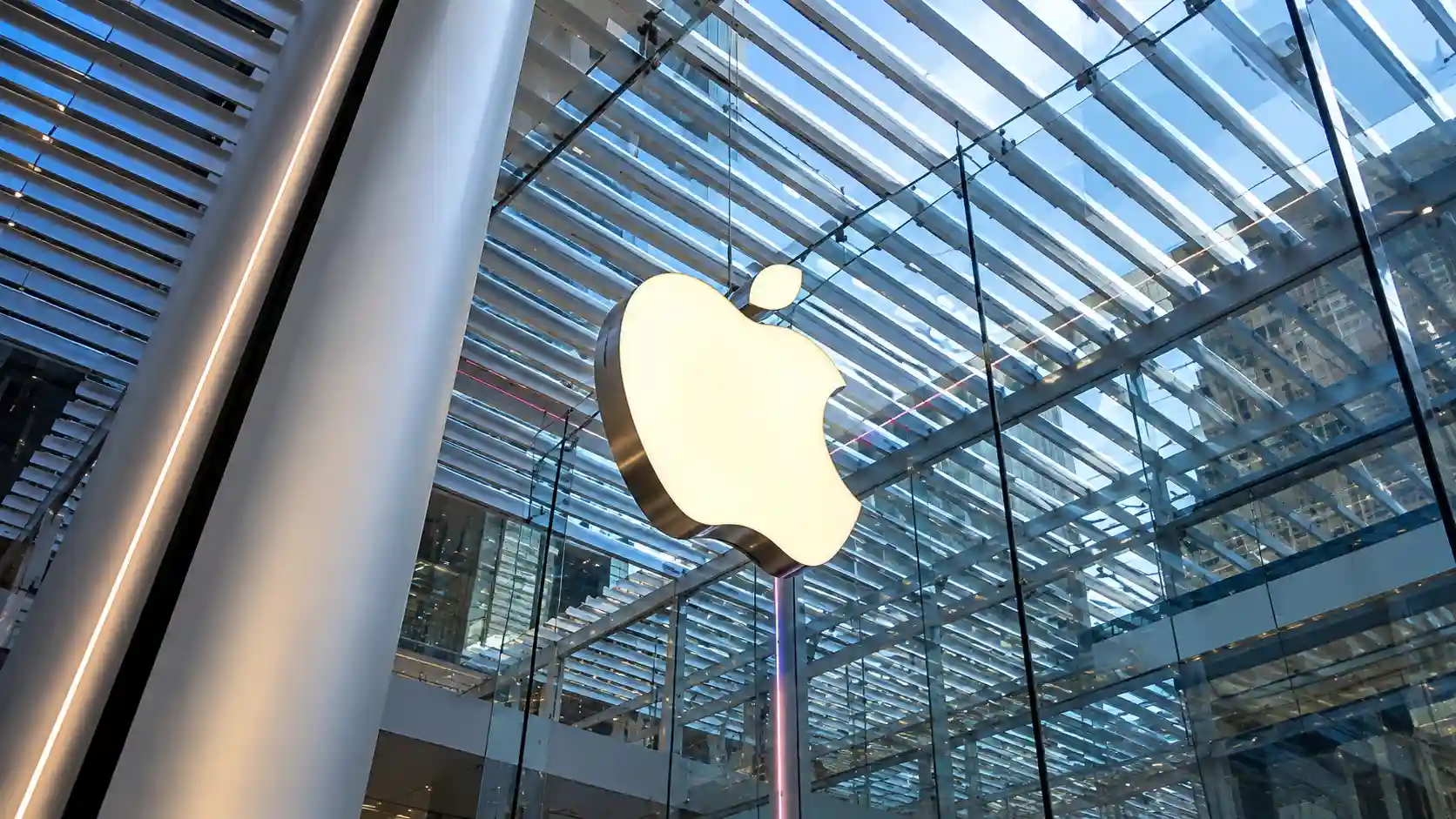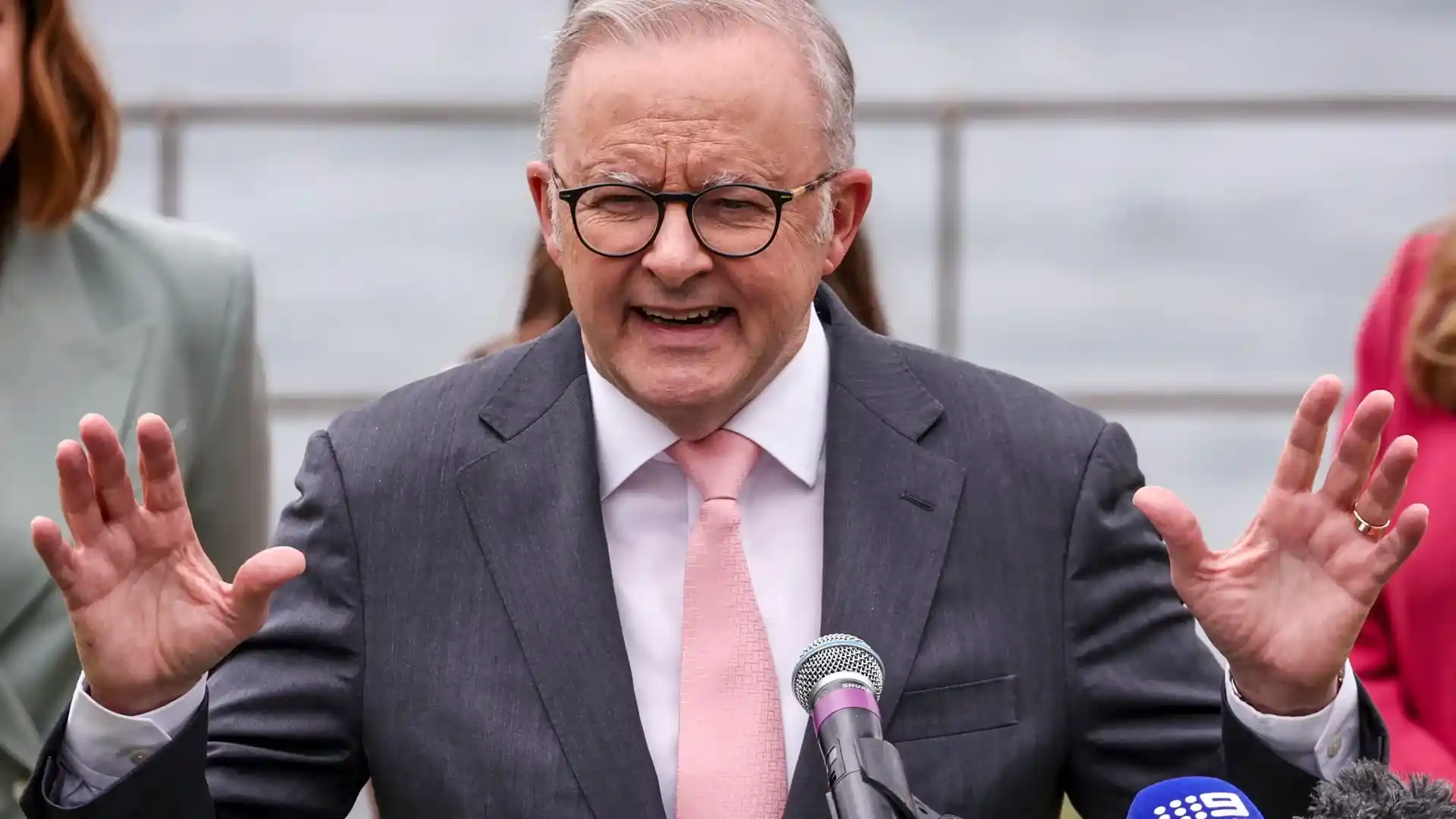

Australian Prime Minister Anthony Albanese said Sunday, September 20, 2026, that his government is seeking cooperation from major technology companies to strengthen the country's online safety laws and artificial intelligence regulations, following a meeting with Apple's executive chairman, Tim Cook, at Apple's Cupertino, California headquarters on Saturday. Albanese, in the United States ahead of the United Nations General Assembly, said "Australia can't do it alone" when it comes to protecting children from online harm, and confirmed that new Australian AI standards will be introduced by the end of the year.
Key Developments
Albanese met Cook, who transitioned from Apple's chief executive role to executive chairman on September 1, 2026, when longtime hardware engineering chief John Ternus became CEO. Writing on social media after the meeting, Albanese said he and Cook "spoke about what we're doing to protect children from online harm and the work ahead," adding that "we're putting stronger rules in place to keep Australians safe online. And now, big tech companies like Apple are stepping up too." In a separate post on X, Cook confirmed the meeting and referenced discussing new safety-related measures with Albanese, without detailing specific commitments in the portion of his statement publicly available.
In a video posted to his own X account, Albanese said his government is focused on "making sure technology works for Australians," rather than the reverse. Speaking to national broadcaster ABC during his U.S. trip, Albanese also addressed AI risk directly, saying "the risk is that AI develops in a way in which humans are no longer in control of what AI is producing," and asking "how do we make sure that people are in control rather than the technology in control of us?"
Australia's AI Regulatory Approach
Albanese confirmed that Australia will introduce new AI standards by the end of 2026, though specific regulatory text, enforcement mechanisms, or scope had not been detailed in his public remarks as of this report. His comments followed what he described as serious safety warnings from industry figures, which he cited as part of his rationale for pushing stronger AI oversight during his U.S. visit.
Separately from Albanese's AI standards announcement, Australia's government has also been developing legislation that would allow the government to formally declare certain categories of online content harmful, a process that Communications Minister Anika Wells has said would extend to AI services. According to reporting by The Register, Wells described a mechanism under which the responsible minister would consult with Australia's eSafety Commissioner, who could recommend that specific content types, including content glorifying crime, promoting terrorism, or relating to eating disorders, pornography, sexual violence or misogyny, be formally declared harmful, with any such declaration subject to a parliamentary vote before taking effect. Wells specifically raised the example of an AI chatbot advising a young user on extreme calorie restriction as a foreseeably harmful AI-driven service that current law does not adequately address, and separately cited an AI photo-editing capability, reported to be able to generate explicit images from photos of real people without consent, as an example of a harm existing Australian law lacked a clear mechanism to regulate.
Big Tech's Role and Industry Cooperation
Albanese's direct outreach to Apple's executive chairman reflects a broader pattern of the Australian government engaging major technology companies individually as it finalizes new digital regulation. Anika Wells, as Communications Minister, has previously met with senior executives from several major platforms as the government worked to implement its under-16 social media ban, which took effect December 10, 2025.
The government's newly unveiled Digital Duty of Care legislation, released as a 72-page exposure draft in September 2026, would place a legal obligation on major platforms, including services such as Facebook, TikTok and Instagram, to proactively design their products to be safe rather than only responding to harmful content after it is posted. According to reporting by The Nightly, the draft law would grant Wells sweeping new powers to determine which online services must comply, to designate specific platform features as harmful, and to mandate user-control tools that companies must provide, including the ability for users to turn off algorithmic content recommendations. The draft stops short of demands from some digital-rights advocates and the Australian Greens for a mandatory non-algorithmic default feed, meaning users would need to actively opt out of algorithmic recommendations rather than having them off by default. The Digital Duty of Care framework was first recommended in a 2024 review of Australia's Online Safety Act conducted under Wells' predecessor, former Communications Minister Michelle Rowland, and is expected to be introduced to parliament later in 2026 following consultation with social media companies, industry bodies and civil society groups.
Internet Safety Measures and Enforcement
Australia's existing under-16 social media ban has faced compliance challenges since its implementation. Data reported in August 2026 found that under-16 users were increasing their use of platforms including Instagram and TikTok despite the restrictions. In response, the government introduced legislation, described in official parliamentary transcripts as a short, four-page bill, to give the eSafety Commissioner, currently Julie Inman Grant, greater information-gathering powers to pursue non-compliant technology companies and to nearly double maximum penalties for breaches, from roughly 50 million Australian dollars to almost 110 million Australian dollars. That bill was introduced as urgent legislation in June 2026, referred to an eight-week Senate inquiry, and has since been recommended for passage by that inquiry.
These enforcement measures are distinct from, but related to, the Digital Duty of Care and AI-related harmful content proposals, together forming a broader legislative push by the Albanese government to expand regulatory authority over technology platforms operating in Australia. Australian Greens Communications spokesperson Sarah Hanson-Young has indicated her party intends to push for amendments to the Digital Duty of Care legislation, particularly around the algorithmic opt-out design, when it reaches parliament.
Industry Implications
For AI developers and online platforms operating in Australia, the combination of new AI standards expected by the end of 2026, an expanded Digital Duty of Care framework, and harmful content declaration powers extending specifically to AI-driven services signals a broadening of Australia's regulatory scope beyond social media content moderation into AI system design and deployment. Companies offering AI chatbots, generative image tools or algorithmically driven recommendation systems in the Australian market could face new design, disclosure or compliance obligations once this legislation is finalized, though the precise requirements remain unsettled pending parliamentary consideration expected later in 2026.
Conclusion
Australia's push for direct cooperation from major technology companies, exemplified by Prime Minister Albanese's meeting with Apple's Tim Cook, reflects the government's stated view that effective AI regulation and online safety enforcement require industry participation rather than unilateral government action alone. With new AI standards planned by the end of 2026, a Digital Duty of Care framework awaiting parliamentary introduction, and expanded enforcement powers for the eSafety Commissioner already recommended for passage, Australia is positioning itself among the more active jurisdictions globally in extending platform accountability rules to cover both social media conduct and AI system behavior, though the final scope and enforcement details of these measures remain subject to ongoing parliamentary process.
Further reading and useful links
Reader questions
Frequently asked questions
What did Prime Minister Anthony Albanese discuss with Apple's Tim Cook?
Albanese and Cook discussed protecting children from online harms, upcoming Australian internet safety rules, and securing cooperation from Big Tech on AI standards.
When will Australia introduce its new AI standards?
Prime Minister Anthony Albanese confirmed that Australia's new AI standards are scheduled to be introduced by the end of 2026.
What is Australia's Digital Duty of Care legislation?
The proposed 72-page Digital Duty of Care bill legally obligates major platforms like TikTok and Instagram to design their services proactively for user safety and allows users to opt out of algorithmic recommendation feeds.
How are penalties changing for non-compliant tech companies in Australia?
Legislation recommended by a Senate inquiry nearly doubles maximum penalties for breaching online safety and age-restriction laws, from roughly 50 million to nearly 110 million Australian dollars.
Nexuswild welcomes factual corrections. Email [email protected] with evidence and the article URL.