
Two Decades of Negotiations Continue Without a Final Maritime Agreement
ASEAN and China have not finished talks about the long‑awaited Code of Conduct for the South China Sea during the Philippines 2026 chairmanship. The draft for a maritime framework remains unfinished even though progress was made.
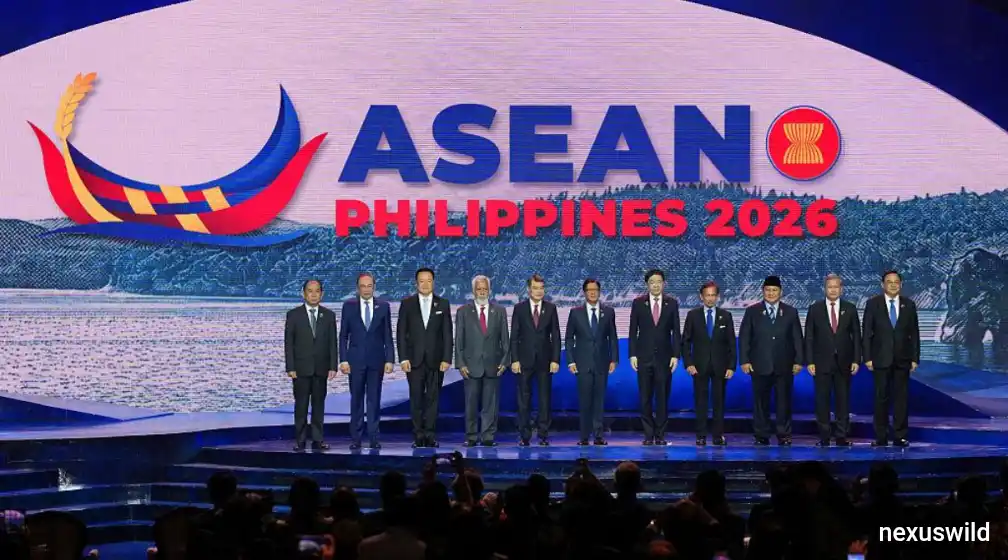
Philippine Foreign Affairs Secretary Ma. Theresa Lazaro confirmed this at the ASEAN Summit in Manila on November 15. Lazaro said ASEAN and China had reached agreement on about 80% of the draft paragraphs but important unresolved questions still block a final agreement.
Negotiations will now go on under Singapores ASEAN chairmanship in 2027. The Philippines had hoped to finish the process before the end of its term. The remaining differences were hard to resolve in the time that was available.
The result shows progress in a process that has lasted more than two decades. It also shows how hard it is for ASEAN members and China to agree on rules for maritime conduct in this strategically important region where territorial claims, economic interests and military activities overlap.
Because there is no agreement regional governments will keep relying on current diplomatic arrangements bilateral talks and established international legal principles while talks go on.
The 80% Milestone: Significant Progress Without a Completed Agreement
The prominent news from the Manila summit was that about 80% of the proposed Code of Conduct draft had reached provisional agreement.
Lazaro had earlier said the progress was 77% then publicly said it was 80%. These figures are estimates of the negotiating text, not a formally checked measure of legal completion.
The difference between agreement and final adoption is important.
A paragraph can have negotiating support even if every government has not accepted the complete document. When ASEAN and China agree on the general direction of a provision the final wording, legal interpretation and connection to other clauses may still need more discussion.
Therefore an 80% complete draft cannot be treated as an agreement that's already operational or legally binding.
The remaining provisions may also have political significance than their numbers suggest. A small number of clauses can decide whether a final agreement has practical value, how it fits with international law and whether participating governments accept its obligations.
Lazaro said the negotiations were entering their phase. She also said ASEAN and China had made progress during the Philippines chairmanship and more time would have been needed to finish the process.
The Philippine government therefore leaves Singapore with a negotiating document but not a finished regional agreement.
Why the Philippines Could Not Complete the Code in 2026
The Philippines had made concluding the South China Sea Code of Conduct a diplomatic goal of its ASEAN chairmanship.
Manila sought to speed up negotiations and move the process beyond the periods of diplomatic discussion that had marked earlier years.
According to Lazaros November 16 remarks negotiators met every month from January 2026 to speed up progress. Despite that increased engagement, ASEAN and China could not resolve all issues before the end of the Philippines chairmanship.
Lazaro said another five or six months might have been enough to finish the text. The process had to be handed over to the next chair.
She declined to set a completion deadline.
This is a distinction for understanding the diplomatic outcome. The negotiations did not. Asean and China did not say they were abandoning the proposed code. Instead the process moved into the phase under a new ASEAN chairmanship.
The Philippines can point to provisional agreement as an achievement of its diplomatic efforts. However the failure to finish the code means its original end‑of‑2026 ambition was not achieved.
The challenge for Singapore will be to keep the negotiating momentum while addressing the questions that still remain unresolved.
The Remaining Disagreements: Legal Status, Geographic Scope and Political Differences
The obstacle is no longer just the lack of a negotiating process. It is the difficulty of finding ground on provisions that could decide the final codes authority and practical reach.
Whether the Code Will Be Legally Binding
One of the important unresolved questions concerns the legal character of the agreement.
ASEAN governments have sought a framework that can give clearer expectations, for maritime conduct. The question is whether the eventual code should create binding obligations or work mainly as a political and diplomatic commitment.
A binding agreement could give a stronger formal basis for expectations between participating governments. However the practical effect of the agreement would depend on the language of the document the commitments accepted by each party and the mechanisms available to address non-compliance.
I think a binding arrangement could be easier to negotiate but might leave greater uncertainty about the consequences of violations.
I think Lazaro identified the status of the proposed code as one of the major unresolved issues. The disagreement is particularly sensitive because the final instrument could influence how regional governments manage maritime incidents.
I think it would be premature to describe the COC as binding before the parties have finalized and adopted the COC text.
Geographic. The Maritime Areas Covered
I think the geographic scope of the code is another subject of discussion.
I think the South China Sea contains overlapping maritime claims involving China and several Southeast Asian states, including the Philippines, Vietnam, Malaysia and Brunei. Indonesia also has interests affected by the broader dispute while Taiwan maintains its own claims.
I think a regional code must establish which areas and activities fall within the code intended coverage.
I think the scope question is not merely an issue. The scope question can influence how the code applies to incidents coast guard encounters, fishing activity, resource exploration and other operations in disputed waters.
I think if participating governments disagree over the reach of the agreement they may also disagree over which incidents should trigger the agreement procedures.
I think the final negotiating text will need to provide clarity without requiring governments to abandon their underlying territorial or maritime positions.
Definitions, Implementation and Practical Conduct
I think the language used in an agreement can carry significant political and operational consequences.
I think terms describing conduct, cooperation, incidents, restraint and consultation need to be understood consistently by the parties.
I think worded commitments may be easier to accept diplomatically but can be difficult to apply during a confrontation. I think detailed provisions may improve clarity but can also expose differences over the obligations governments are willing to accept.
I think the parties therefore face the task of turning principles into practical expectations for conduct at sea.
I think the precise status of enforcement or dispute-resolution clauses remains insufficiently established in the public reporting reviewed for this article. I think those provisions should not be presented as a confirmed list of unresolved issues without further documentary evidence.
An Important Breakthrough: The Relationship With the 2002 Declaration
I think although the overall agreement remains unfinished the negotiations have produced a breakthrough on the relationship between the proposed COC and the 2002 Declaration on the Conduct of Parties in the South China Sea.
I think Lazaro confirmed that the parties had resolved this issue, which was one of four negotiating milestones.
I think the agreed approach is that the 2002 Declaration provides the foundation for the proposed code and that the COC should remain consistent with and build upon the principles of the document.
I think this matters because the declaration has been the political framework guiding ASEAN-China discussions on maritime conduct since 2002.
I think the proposed COC is intended to develop an effective and substantive framework for managing differences and encouraging cooperation.
I think the agreement on the relationship between the two instruments provides negotiators with a foundation for completing the remaining provisions.
I think however resolving this milestone does not mean that the wider COC has been finalized. I think the legal status, geographical scope and other substantive issues still require negotiation.
Why the 2002 Declaration Was Not Enough
I think the 2002 Declaration on the Conduct of Parties in the South China Sea established commitments intended to encourage restraint, peaceful settlement of disputes and cooperation.
I think it provided a diplomatic foundation but it did not resolve the underlying territorial and maritime disputes.
I think the declaration also did not create the detailed regional framework that governments have sought through the proposed COC.
I think the continued negotiations reflect the desire to move beyond political commitments toward more practical guidance for managing maritime interactions.
I think the challenge is that a detailed agreement requires governments to make decisions, about legal obligations, geographic application and the conduct expected of their maritime agencies.
I think those decisions can be difficult when the parties have national interests and interpretations of the regions legal and political environment.
I think the proposed code is therefore not simply a replacement document. I think it is an effort to develop a structured framework while maintaining the political foundation established by the earlier declaration.
The International Legal Framework: UNCLOS and the 2016 Arbitration Ruling
I think the negotiations take place within an international legal environment shaped by the United Nations Convention on the Law of the Sea (UNCLOS).
I think UNCLOS provides the legal framework governing maritime zones, navigation rights, resource entitlements and other aspects of ocean governance.
ASEAN governments have said again and again that the proposed Code of Conduct must follow law, including UNCLOS.
The legal context also covers the 2016 ruling in the case filed by the Philippines against China under the law of the sea dispute‑settlement framework.
The tribunal rejected the basis for China’s broad historic‑rights claims inside the so‑called nine‑dash line, where China went beyond the maritime rights allowed by UNCLOS.
The ruling did not decide who owns every disputed land feature in the South China Sea. Did it set a full territorial settlement.
China rejects the ruling. Keeps saying its maritime activities are lawful.
This disagreement keeps shaping the environment where the COC is being negotiated.
For the Philippines and other claimant states international law is a reference for protecting maritime rights. For China the negotiating process must fit its view on sovereignty, maritime jurisdiction and regional security.
A workable COC must tackle these differences without saying the agreement itself solves all underlying claims.
ASEAN Unity and the Challenge of Different National Interests
The negotiations also show how hard it is to keep an ASEAN position on a dispute that affects member states in different ways.
Some ASEAN governments have territorial or maritime disputes with China. Others have economic ties with Beijing but fewer direct clashes in the contested waters.
These different national interests can shape how governments approach the proposed code.
Countries with maritime disputes may want more detailed rules and stronger safeguards. Other members may put stability, economic cooperation and keeping regional consensus first.
ASEANs consensus‑based decision‑making approach asks governments to find language that all participating members accept.
That approach can boost legitimacy but it can also slow hard negotiations.
The COC process shows this tension. ASEAN must negotiate with China while also keeping agreement among its own members on the form and substance of the proposed framework.
The remaining issues are not a Beijing‑Manila disagreement. They also need ASEAN members to reconcile ideas of what an effective regional code should achieve.
Prabowo Calls for Continued Political Goodwill at the Summit
The issue stayed prominent during the 29th ASEAN‑China Summit in Manila on November 16.
Indonesian President Prabowo Subianto asked for political goodwill and continued cooperation between ASEAN and China.
He said that progress on the South China Sea needs ASEAN unity and centrality mutual respect and a pledge to solutions.
Prabowo also asked for the finalization of an substantive Code of Conduct that follows international law.
His remarks showed Indonesias preference for a process that keeps regional cooperation while handling maritime disagreements.
Indonesias position matters because the South China Sea dispute touches the regional security environment, not just the countries with the most direct territorial claims.
The summit gave another chance for ASEAN leaders to stress the importance of the negotiations even though the final document was not ready.
Prabowos statement should be seen as an appeal, not proof that a new agreement or deadline was reached.
Chinas Position: Li Qiang Signals Support for a
Chinese Premier Li Qiang also said he supports continued negotiations.
After the ASEAN‑China Summit Philippine Foreign Affairs Secretary Lazaro said Li promised to support a conclusion of an effective and substantive code that follows the 1982 United Nations Convention on the Law of the Sea.
This statement gives a diplomatic signal that Beijing still publicly commits to the negotiating process.
A general promise to finish early does not solve the real disagreements that stopped the agreement from being finalized.
The challenge will be turning the promise into acceptable negotiating words on legal status, geographic scope and real implementation.
Chinas stance on the 2016 ruling and its maritime claims will stay part of the bigger political context.
For ASEAN the goal is to get an agreement that's meaningful enough to improve maritime conduct while staying acceptable to all participating governments.
For Beijing the final text must also fit its view of its interests and regional role.
The next negotiating phase will test if the diplomatic words spoken at the summit can turn into concessions.
Singapore Inherits the Negotiations in 2027
Singapore will take the rotating ASEAN chairmanship in 2027. Inherit the job of guiding the remaining COC negotiations.
The handover gives Singapore a draft with a provisional agreement, on about 80% of its paragraphs.
It also moves a process that did not reach the Philippines goal of finishing by the end of 2026.
Lazaro said she thought the rest of the work could be finished in another five to six months. She did not promise Singapore an exact finish date.
That caution is important. No official new deadline should be taken for granted just because the talks go into 2027.
Singapores job will be to keep the progress that has already been made to bring ASEAN positions and to keep talking with China.
The negotiation problem will not automatically be solved by holding meetings. The remaining parts need choices that may bring hard compromises.
Singapore will also have to handle the regional scene, such as sea incidents and the different national priorities of ASEAN members.
The next chairmanship may give a chance to finish the code. The result will depend on whether governments are ready to close the remaining gaps.
Commercial Implications: Shipping, Insurance and Regional Investment
The lack of a finished COC has effects that go beyond ties.
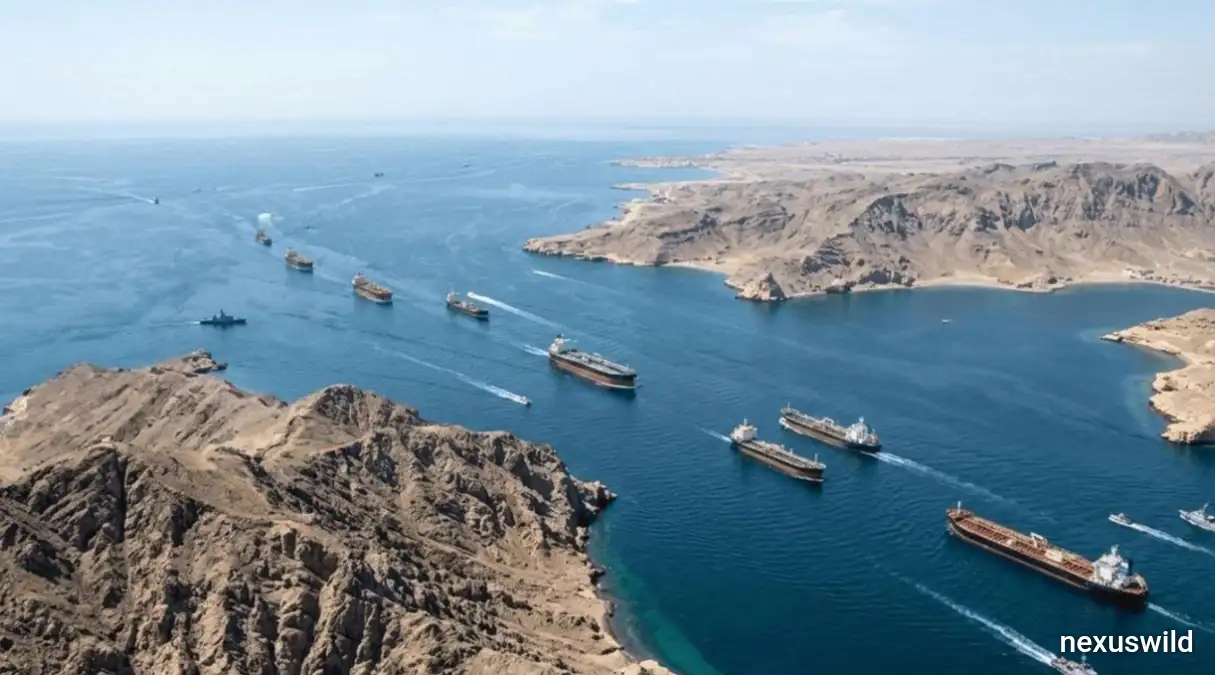
The South China Sea is a commercial sea that links key manufacturing economies, world ports and global shipping paths.
Uncertainty about sea rules can change the working world for shipping firms, insurers, energy companies and investors.
Shipping and Freight Operations
Commercial ships need sailing rules and clear steps when sea authorities meet each other.
A regional code could set rules for talking, staying calm and handling incidents.
Without a finished framework operators stay exposed to doubt that comes from overlapping claims, political tension and sea fights.
This does not mean commercial shipping has stopped or that all paths are unsafe. It means the regions political risk stays a part of sea planning.
Marine Insurance and Risk Assessment
Insurance companies look at risk together with ship details, cargo, routes and working conditions.
A long period of sea tension can change how insurers judge areas and whether they need extra risk rules.
A full code could bring predictability if it sets real rules and useful cooperation ways.
The presence of a COC would not automatically remove sea risk or promise lower insurance costs.
Insurers would keep checking incidents, military action and how well any agreement works.
Offshore Energy and Subsea Infrastructure
The South China Sea also matters for energy search, fishing and undersea telecom cables.
Uncertainty about sea jurisdiction can make investment choices in disputed zones harder.
Energy firms may have to check rule risks before putting money into offshore projects.
Undersea cable operators also rely on sea conditions, for fixing repairing and guarding their lines.
A working regional framework could help teamwork. Lower some operational doubt.. It would not solve ownership fights or decide who owns disputed sea resources.
Nexuswild welcomes factual corrections. Email contact@nexuswild.com with evidence and the article URL.