
A new maritime security problem makes people worry about a very important energy route
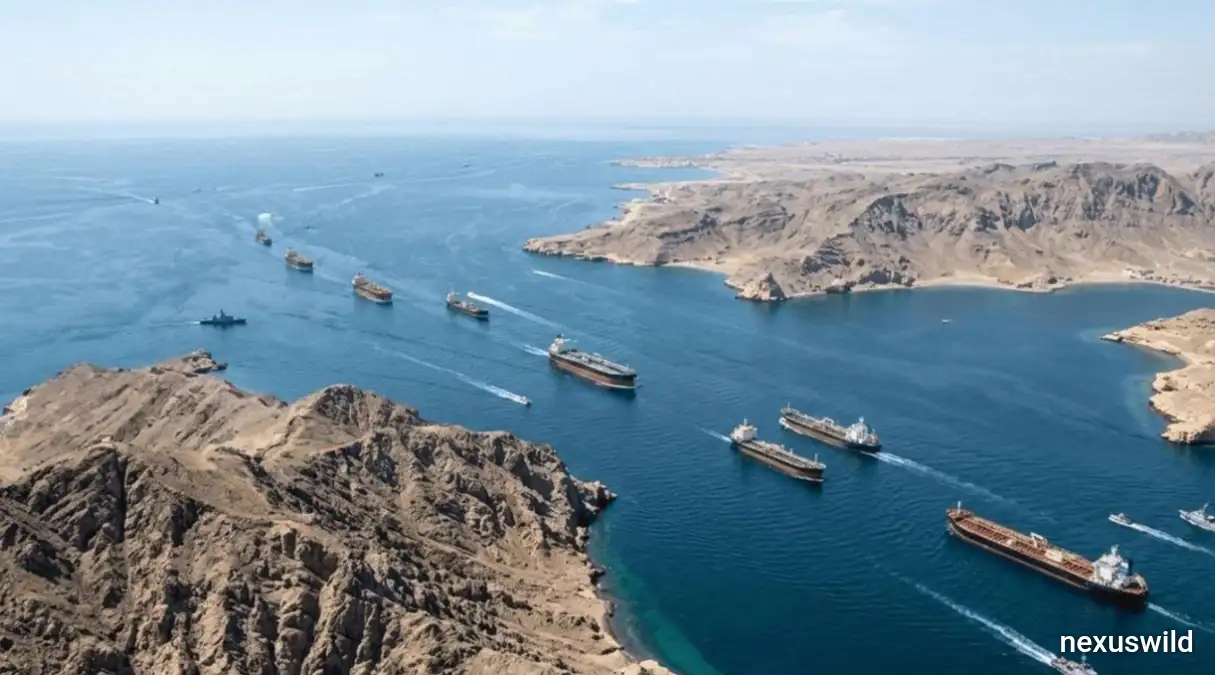
Commercial ships going through the Strait of Hormuz had more worries on November 15 and 16 2026. The United Kingdom Maritime Trade Operations said an outbound tanker was hit by a projectile while going through the important waterway.
According to UKMTOs November 16 notice the ships security officer said the tanker was hit while going out through the strait. The hit caused a fire in the engine room. No one was. All the workers were found. At the time of the notice the damage and any environmental effects were not known.
This happened after another report on November 15. UKMTO said it got information from shipping authorities about an attack on a tanker going east through the Arabian Gulf before entering the Strait of Hormuz. The workers were safe. The damage and any environmental effects were not known.
The two UKMTO reports show that there were attacks on commercial tankers in the wider area of Hormuz. However they do not show that the events were part of one plan or say who did the attack on November 16.
Meanwhile Irans military said there were problems with mines. Irans regular army and Islamic Revolutionary Guard Corps said several tankers were damaged, caught fire or sank after entering waters Iran says are not allowed.
These statements make shipowners and people in the energy market worried.. It's important to know the difference between a reported maritime problem and a military statement. The number of ships lost the reason for the problems and the names of the ships have not been checked.
What UKMTO Confirmed on November 15 and 16
UKMTOs reports are the information we have for this story.
November 16: Outbound tanker hit by a projectile
The November 16 UKMTO report said a ship going out through the Strait of Hormuz was hit by an unknown projectile. The companys security officer said the ship was hit during the trip.
The hit caused a fire in the engine room. That area has parts that help the ship move. Damage there can stop the ship from moving or going on its journey.
UKMTO said all the workers were found and no one was hurt. It also said they did not know the damage or any environmental effects at that time.
The group told ships to be careful and report anything while the investigation happened.
The notice did not say the name of the ship, which country it was from what it carried or who was responsible. It also did not say if the attack was a missile, a drone, a rocket or something else.
These details matter because the way the attack happened changes how we see the risk. A projectile hit, a bomb on the ship a mine or an accident are events and should not be mixed up.
For now the true thing is that UKMTO got a report that an outbound ship was hit by a projectile and had a fire in the engine room.
UKMTOs November 15 report was about another ship problem in the Arabian Gulf.
According to the group Indian shipping authorities said a ship going east was attacked before entering the Strait of Hormuz. The workers were safe. The damage and any environmental effects were not known.
This report is important because it shows that the worries were not just on one ship inside the strait. Ships coming towards the waterway were also in danger.
The November 15 and 16 reports should stay separate. There is no proof that both ships were hit by the thing or that the attacks came from the same group.
Irans Military Claims: Ships and Mine Attacks
While UKMTO reported the attack Irans military groups said there were more problems with mines.
Their reports should not be put together as one verified loss of ships.
Irans regular army says one ship hit a mine
Irans regular army said a ship hit a mine east of the Strait of Hormuz caught fire and could not move.
The statement said the area was not allowed and told ships not to go into waters or turn off their tracking systems.
The Iranian military also said they watched the ships in the area. Their warning said shipowners were responsible if they ignored the rules from forces.
This claim is important because a ship that can't move can cause a problem for ships, especially in a narrow area where there is not much space.
But the statement did not give details to check the ships name, who owned it what it carried, where it was or what happened in the end.
So this is still an Iranian military report and not a confirmed loss of a ship.
IRGC says two more mine attacks and six ships lost
The IRGC Navy said on November 16 that two ships hit mines while trying to go through the southern route of the Strait of Hormuz.
According to the IRGC the ships were under the direction of U.S. Officers. Had help from American planes. The group said the attacks caused explosions.
The IRGC said those two ships were part of six that it said caught fire and sank since Sunday.
It also warned shipowners not to use what it called a U.S. Created route. The IRGC said the route was mined and said the problems were a response to the U.S. Block on Iranian ports.
These claims have not been checked. The IRGC did not give details to confirm the six ships lost and UKMTO did not say there were six ships sunk.
The difference is very important when people say a big ship with than two million barrels of oil sank. Without knowing which ship it was the cargo details, tracking or confirmation from the shipping authorities that detail should not be considered as true.
A report that a ship caught fire is not the same as saying it sank. A ship can have a fire the workers can leave the ship can float, be pulled or move on its own. The final result has to be checked
Why the Strait of Hormuz is Important for Global Energy Security
The situation in the Strait of Hormuz is important for the world because it is one of the important energy routes.
The narrow waterway connects the Persian Gulf with the Gulf of Oman and the wider Arabian Sea. It is the way to send oil and gas from several big Middle Eastern energy countries.
The International Energy Agencys February 2026 factsheet says 20 million barrels of oil and products moved through the strait in 2025. That was 25% of all the oil shipped by sea.
The IEA also says about 19% of all LNG trade went through the strait in 2025 from Qatar and the United Arab Emirates.
These numbers are parts of the sea trade not the energy made or used.
Oil exports and the Asian market
Most of the oil through Hormuz goes to markets. Countries like China, India, Japan and South Korea get a lot of their energy from the Gulf area.
For these economies the waterway is not a local shipping route. It is a part of the supply chains for power, transport, factories, chemicals and industry.
If the route was closed for a time refiners and buyers would have to find other ways to get oil use their stockpiles or change how they buy.
The effects would not be the same. Countries with choices for suppliers, stockpiles or other routes would have more options than those that rely mostly on Gulf oil.
LNG impact
The strait is also important for gas.
The IEA says about 19% of all LNG trade passed through Hormuz in 2025. Qatar is a part of this and the UAE also depends on the route for a lot of its LNG exports.
Unlike some oil there are options for LNG from the Gulf if the main way is blocked.
A long stoppage could affect buyers in Asia and other places that depend on Qatari and Emirati gas.
The effect would depend on how the stoppage lasted how much stockpiles there are, other ways to get gas and if buyers can find replacements.
U.S. Naval. The Fighting Over Maritime Access
The problems are happening during a fight between the United States and Iran.
A U.S. Naval block on ports is part of the bigger military and economic pressure in the conflict. Reports in November said ships going in and out of ports had restrictions. U.S. Forces were. Checking ships.
The Joint Maritime Information Centers November advice said the U.S. Block was still in place with neutral ships getting checked and ships near the area facing risks.
The difference between a block on ports and a rule, on all ships going through the Strait of Hormuz is important. They are not the thing.
The IRGC said ships using a U.S. Planned route were breaking Iranian rules. The group said the route was mined.
Those claims do not prove that every ship traveling the route was with U.S. Protection or that UKMTO confirmed an area on its own.
The United States position on the sea Irans statements about water areas and the movement of big ships have created a difficult situation. Ship owners need to look at not the danger of an attack but also the chance of being stopped changed course or held up by military groups.
For companies that are not taking sides the real challenge is to find out which paths are still open which groups are in charge of places and what papers or messages are needed when moving through.
Oil Markets: Danger has Not Caused a Big Price Rise on Monday
The events have made people worry again about the chance of a problem with energy supplies. However the market response needs to be described
Reuters said that Brent crude was at about $95.89 a barrel around 07:57 GMT on November 16 up about 0.1%. U.S. West Texas Intermediate was $88.65, also up roughly 0.1%.
A later Reuters report said that Brent was at $95.32 a barrel down 0.5% as traders thought about oil coming from the Middle East and expected more supply.
These numbers show that the recent problems at sea did not cause a jump in oil prices during the time when the market was open.
The markets reaction shows things that are happening.
On one side attacks on ships and claims about mines make it possible that more supplies could be stopped. If ships don't want to go through the area oil exports could be late without an official stop.
On the side traders also look at how much oil is being made, how much is stored, other ways to send oil and what people want.
The International Energy Agencys prediction for the three months said there would be a lot of extra oil. That bigger picture can reduce some of the pressure from politics on prices.
What happens is a market where the chance of problems on the water can go up even when oil prices stay about the same.
If the attacks keep happening if ships are lost or if shipping stops for a time that might change.. Those situations should be checked against real shipping and market numbers instead of guessed in advance.
War Insurance and the Cost of Running Big Ships
For shipping companies the biggest money problems might come from insurance, planning. When ships go on trips.
Ships going through sea areas can get more war insurance rules. The price and what the policy says depend on how bad the threat's where the ship is going who owns it, where it is registered what it is carrying and what safety steps are in place.
If there are attacks or real warnings about mines the insurance companies might look at coverage for certain areas again. Companies might pay more have rules or need more papers before going into a risky area.
These costs can change how it is to move oil and other products.
A trip that costs more to protect might need a price to stay profitable. If ships wait outside the problem area or go a way the number of ships that can be used might also go down.
There should not be a report about higher war insurance costs without a specific notice from the insurance company a brokers report or a market price. Just because there is danger does not mean the insurance costs go up by a certain amount.
Delays in Shipping and the Chance of Fewer Ships Available
The Strait of Hormuz is small. Moves a lot of oil. When security gets worse companies might slow down wait for information or avoid some paths.
Even if there is no stop uncertainty can make the schedule harder.
A ship waiting outside an area might not be able to do another job. Delays can lower the number of ships that're available even if the number of ships still in use stays the same.
The results can be felt beyond the area near the Gulf.
Refineries might have to change when they get oil. Traders might look for oil from places. Ship owners might have trips while ports and storage places might need to handle changes in when ships arrive.
For countries that need oil the uncertainty can change when they buy and when they get the oil.
How much this affects things depends on how the problems go on and if the main shipping paths stay open.
Risks to the Environment from Damaged Ships
The chance of damage is another important part of the story.
A ship with oil or refined products can cause pollution if it gets hurt.
The UKMTO report from November 16 said that the effect of the attack was not known yet. So it is soon to say it was an oil spill or pollution.
The IRGC also said that pollution spread across the area after the mines exploded. That claim has not been checked by others.
If there is a confirmed spill they need to know what the ship was carrying how much came out where the event was, the weather, the water movement and what the countries near the area did to respond.
Environmental problems can be bigger than the spot where the attack happened. Oil can harm the sea, fishing, the shore and water plants depending on how much and where the oil goes.
Now the environment after the reported events is not clear.
What Shipping Companies and Energy Buyers Need to Watch
The situation happening now makes several things important for shipping companies, insurance companies, traders and countries that need oil.
First the people in charge need to follow the security messages and stay in touch with the right people. UKMTO told ships to be careful and tell them about anything while they keep looking into the situation.
Second the companies need to tell the news from military stories. Saying a path is blocked is serious. The people in charge and the insurance companies still need good info about where the problem is, what it is and how big it is.
Third tracking ships and talking to them is important. Giving the position helps the people in charge understand where ships are find problems and work together.. The people in charge need to follow the security rules where they are.
Fourth buyers of oil should check where they get their oil from. Companies that depend a lot on oil from the Gulf might need to look at how much they have in stock when they get oil and where they can get it from instead.
Finally governments and groups that work on the sea need to tell people about safe trips checking what is happening and if the paths are okay. Conflicting stories can make it harder to know what is going on even if there are not confirmed attacks.
Nexuswild welcomes factual corrections. Email contact@nexuswild.com with evidence and the article URL.