
Asian Stocks Rally as Anthropic IPO Filing and Big Tech Earnings Revive AI Optimism
Asian stock markets advanced on Tuesday, October 27, as investors returned to technology shares ahead of a closely watched round of earnings from major US technology companies. South Korea’s KOSPI and Japan’s Nikkei 225 led regional gains, supported by semiconductor stocks, stronger South Korean economic data and renewed enthusiasm for artificial intelligence following Anthropic’s public filing for an initial public offering.
The rally followed gains on Wall Street, where the S&P 500 rose 0.7% and the Nasdaq Composite gained 0.8% in the previous session. Investors were looking for evidence that spending on AI computing infrastructure is translating into durable revenue and profits, rather than relying on expectations of future growth alone.
Anthropic’s filing added another dimension to that debate. The company, which develops the Claude family of AI models, disclosed financial information as part of its proposed US stock-market listing. Its rapid revenue growth attracted attention, but the filing also revealed substantial losses and risks associated with the competitive AI industry.
With Microsoft, Alphabet and Amazon scheduled to report results during the week, the market recovery may face an important test. Investors will be looking for details on cloud growth, demand for AI services, infrastructure costs and management expectations for future investment.
South Korea’s KOSPI leads the regional advance
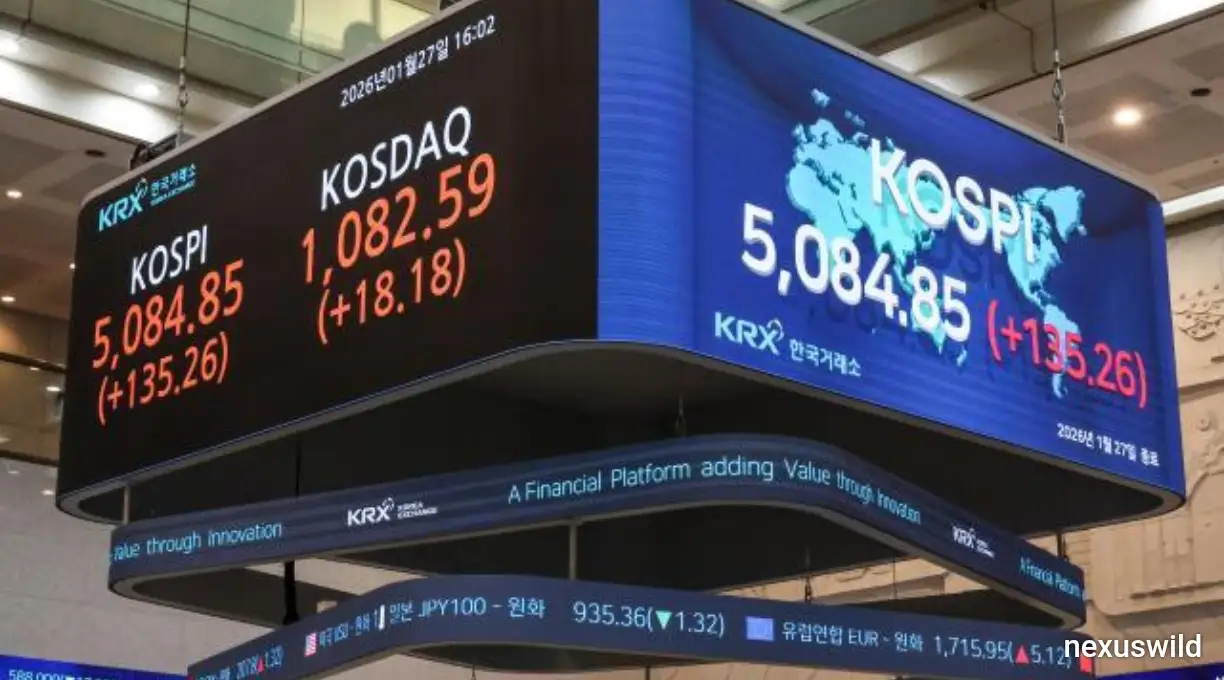
South Korean equities were among the strongest performers in Asia. The KOSPI climbed sharply during Tuesday’s session, with semiconductor companies Samsung Electronics and SK Hynix helping drive investor interest.
Market reports differed on the precise size of the index’s gain. Reuters reported a rise of 3.9%, while the Associated Press reported a 3.1% increase to 5,638.34 points in its closing account. Earlier intraday reports showed the index advancing by more than 4% at one stage. These figures reflect different market updates and should not be treated as interchangeable closing prices.
The broader direction was clear: investors were buying into South Korea’s technology-heavy market after a rebound in US technology shares and renewed interest in AI-related investments.
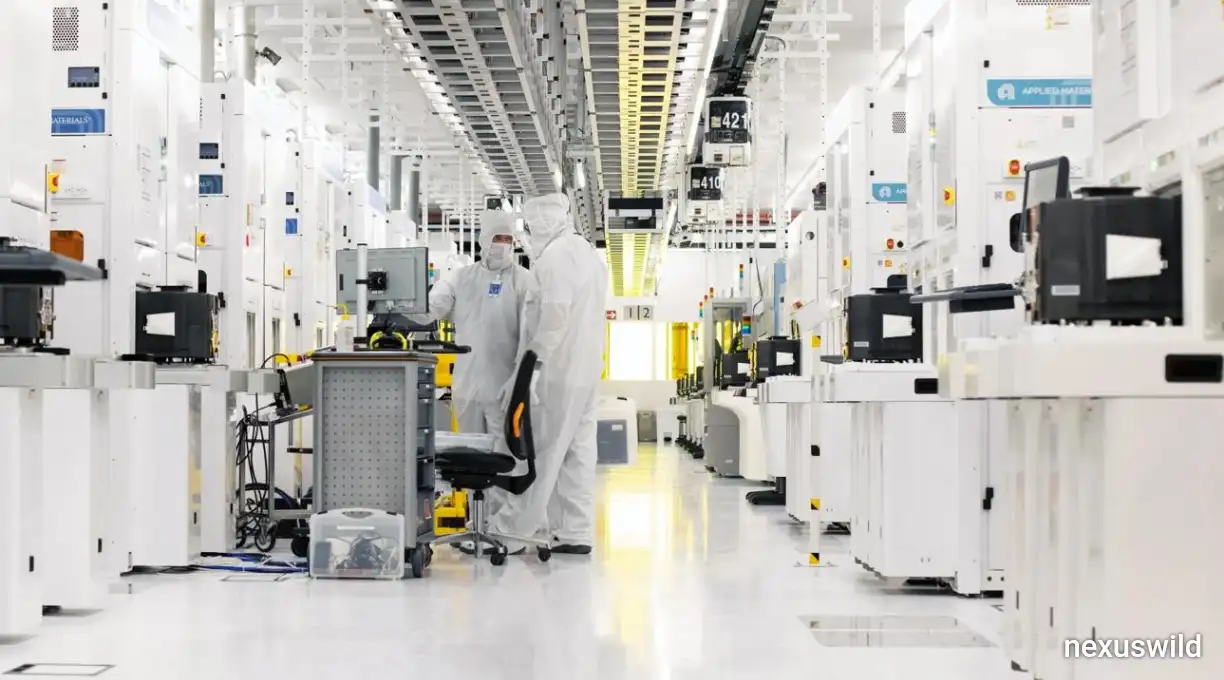
Semiconductor manufacturers have become particularly important to the AI investment cycle. Advanced computing systems require powerful processors, high-bandwidth memory and other specialised components. Companies supplying these products can benefit when cloud providers and AI developers expand their computing capacity.
However, semiconductor shares are also sensitive to expectations. Their valuations may rise when investors anticipate stronger demand, but they can fall quickly if customers reduce orders, supply increases faster than demand or expected margins disappoint.
Tuesday’s rally therefore reflected renewed confidence in the AI-related semiconductor outlook, rather than proof that the sector’s risks have disappeared.
Japan’s Nikkei rises alongside technology stocks
Japan’s Nikkei 225 also advanced, with market reports placing the gain at approximately 1.7% to 2.1%, depending on the update and timing. An intraday report from Aju Press placed the index near 63,495.54 points.
Japanese equities have significant exposure to technology, electronics, semiconductor equipment and other businesses connected to global investment in computing infrastructure. When sentiment toward AI improves, these companies can attract investor interest alongside South Korean chipmakers and US technology firms.
The Nikkei’s move followed the previous session’s gains on Wall Street. That connection illustrates how quickly financial-market sentiment can travel between regions: a rally in US technology shares can influence Asian markets before investors in the United States return for their next trading session.
Nevertheless, the performance of individual Japanese companies will depend on their own earnings, order books, currency exposure and operating costs. A rise in the headline index does not necessarily mean every technology supplier will benefit equally.
The broader regional picture was also mixed. While South Korea and Japan posted strong gains, other Asian markets moved less decisively. That difference suggests the rally was concentrated partly in markets with substantial exposure to semiconductors and AI-related technology rather than representing an equally strong advance across the entire region.
Anthropic’s IPO filing renews interest in AI businesses
A major catalyst for the renewed enthusiasm was Anthropic’s filing for a US initial public offering. The company submitted a registration statement to the US Securities and Exchange Commission on October 26, bringing financial information about its business into the public domain.
Anthropic develops Claude, a family of AI models used for tasks such as software development, research, writing and enterprise automation. Its proposed listing offers investors a potential way to gain direct exposure to a major AI developer rather than investing only through established technology companies that provide computing infrastructure or distribute AI services.
The filing is significant because investors have been debating whether the enormous cost of building AI models and data centres will ultimately generate sustainable returns. A public offering requires detailed financial disclosures, allowing investors to examine revenue growth, expenses, losses and risk factors more closely.
The reported figures in Anthropic’s filing indicate strong business expansion alongside substantial losses. That combination highlights a central tension in the AI industry: demand can grow rapidly while the costs of developing models, acquiring computing capacity and competing for customers remain high.
The filing should not be confused with the completion of an IPO. A registration statement is an important step in the process, but the final timetable, offer price, number of shares and eventual market valuation can change. Investors will also need to assess the company's disclosures and the risks described in the prospectus.
For the broader technology market, the filing provides a new reference point for evaluating AI businesses. It does not, by itself, prove that every company investing in AI will achieve attractive returns.
South Korea’s GDP adds support to technology sentiment
South Korea’s economic data provided another positive signal. Preliminary figures from the Bank of Korea showed that real gross domestic product grew 1.0% in the third quarter of 2026 compared with the previous quarter, accelerating from 0.6% growth in the second quarter.
The result exceeded the median 0.7% increase expected by economists in a Reuters poll and was stronger than the central bank’s earlier projection of 0.3% quarterly growth.
Exports increased 2.3% quarter on quarter, while facilities investment rose 4.1%. Semiconductor demand and investment in machinery associated with manufacturing helped support the expansion.
On a year-on-year basis, South Korea’s economy grew 3.4%, compared with 3.7% in the previous quarter.
The figures reinforced the importance of semiconductor demand to the country’s economic performance. South Korea is home to major memory-chip manufacturers, and the global expansion of AI infrastructure has increased demand for advanced memory products used in data centres.
However, the data also contained a caution. Private consumption declined 0.2% in the third quarter, indicating that strong exports and investment had not translated into uniformly stronger domestic demand.
For investors, the GDP report offered evidence that the technology sector is contributing to real economic activity, not just share-price gains. But the concentration of growth in exports and investment means the wider economic picture remains more complicated than the stock-market rally alone suggests.
Microsoft, Alphabet and Amazon face an important earnings test
The next major focus is the earnings calendar. Microsoft and Alphabet are scheduled to report on October 28, followed by Amazon on October 29.
These results are important because each company operates a large cloud-computing business and is investing heavily in AI infrastructure. Their earnings and management commentary can influence expectations for the broader technology sector, including semiconductor manufacturers, server suppliers, networking companies and data-centre operators.
Microsoft investors will be watching Azure growth, AI-related revenue, infrastructure expenditure and the financial performance of its cloud and productivity businesses. The company’s results cover its fiscal first quarter of 2027, which ended on September 30, 2026.
Alphabet’s results will provide information about Google Cloud, advertising performance and the costs of integrating AI into its services. Investors will be assessing whether AI products are supporting revenue growth while the company continues to invest in computing capacity.
Amazon’s results will put attention on Amazon Web Services, operating margins, capital expenditure and the demand for cloud services from businesses adopting AI tools.
The critical question is not simply whether revenue increases. Investors also want to know how much additional spending is required to produce that growth, how efficiently infrastructure is being used and whether AI services can deliver attractive returns over time.
Strong sales accompanied by rising costs may produce a different market response from equally strong growth supported by improving margins and cash flow.
AI infrastructure spending faces growing scrutiny
The technology sector’s investment cycle extends well beyond software. Cloud providers need data centres, specialised processors, networking equipment, power infrastructure and cooling systems to support increasingly demanding AI workloads.
Building this infrastructure requires substantial capital before the resulting services necessarily generate enough revenue to justify the investment. Some projects also depend on the availability of electricity, land, specialised components and financing.
Reuters has previously reported that rising AI infrastructure costs are putting pressure on the free cash flow of major technology companies. That makes the next earnings announcements particularly relevant: investors need evidence that spending is creating sustainable commercial value.
There are several indicators worth watching. Faster cloud revenue growth may suggest that businesses are adopting more AI-related computing services. Better margins could indicate that providers are using infrastructure more efficiently or charging enough to cover costs. Management guidance on future capital expenditure may show whether companies expect demand to justify additional investment.
Conversely, slower cloud growth alongside rising infrastructure costs could renew concerns about valuations. Companies may continue to invest heavily because they believe future demand will be substantial, but markets can become less tolerant if the expected returns take longer to appear.
This is why the current earnings cycle matters beyond the individual companies reporting results. The figures could influence how investors value businesses across the AI supply chain.
Interest rates remain another source of uncertainty
Technology shares are also sensitive to borrowing costs and government bond yields. Companies building data centres and AI infrastructure may require significant financing, while higher interest rates can reduce the present value investors assign to earnings expected far into the future.
The US 10-year Treasury yield was near 5% in market reporting on October 27, keeping financing costs and valuation assumptions in focus.
Investors were also preparing for policy decisions from the US Federal Reserve, European Central Bank and Bank of Japan. Even when central banks leave interest rates unchanged, their statements can influence markets by signalling whether borrowing costs may remain elevated or change in the months ahead.
For AI companies, the interaction between capital spending and interest rates is especially important. Higher financing costs can make large infrastructure projects more expensive, while uncertainty about demand can complicate decisions about when and where to expand capacity.
A rally in technology stocks can therefore coexist with significant financial risks. Positive sentiment may support valuations in the short term, but earnings, cash flow, financing conditions and the expected returns on new infrastructure will ultimately matter.
What investors should watch next
The immediate focus will be the results and guidance from Microsoft, Alphabet and Amazon. Investors will be looking for clear evidence that demand for cloud computing and AI services is growing fast enough to support continued investment.
Anthropic’s proposed IPO will remain another point of interest as investors examine the company's disclosures and assess the potential market appetite for a major AI listing. Its financial profile may provide useful context for understanding the opportunities and challenges facing AI developers, although its business model is not identical to those of the major cloud providers.
South Korea’s GDP figures and the rally in semiconductor shares also highlight the growing relationship between technology investment and the wider economy. The strength of chip exports and facilities investment is encouraging, but weak private consumption shows why a technology-led expansion does not automatically translate into broad-based economic growth.
The October 27 market rally reflects renewed confidence after a period of uncertainty around AI valuations and infrastructure costs. Whether that confidence lasts will depend on the information companies provide in the coming days.
For now, the central question remains whether the money flowing into AI infrastructure can generate durable revenue, stronger margins and sustainable cash flow. The upcoming earnings reports will not settle the debate, but they should give investors a clearer basis for judging the next phase of the AI investment cycle.
Nexuswild welcomes factual corrections. Email contact@nexuswild.com with evidence and the article URL.