
On the morning of September 30, flydubai flight FZ1073 left Dubai for Tel Aviv looking, from the outside, like another routine international service.
A few hours later, the Boeing 737 MAX 8 was descending violently over the Middle East, emergency codes were appearing on air-traffic systems and an injured captain was fighting inside the cockpit as the aircraft’s passengers faced a crisis they could scarcely have anticipated when they boarded in Dubai.
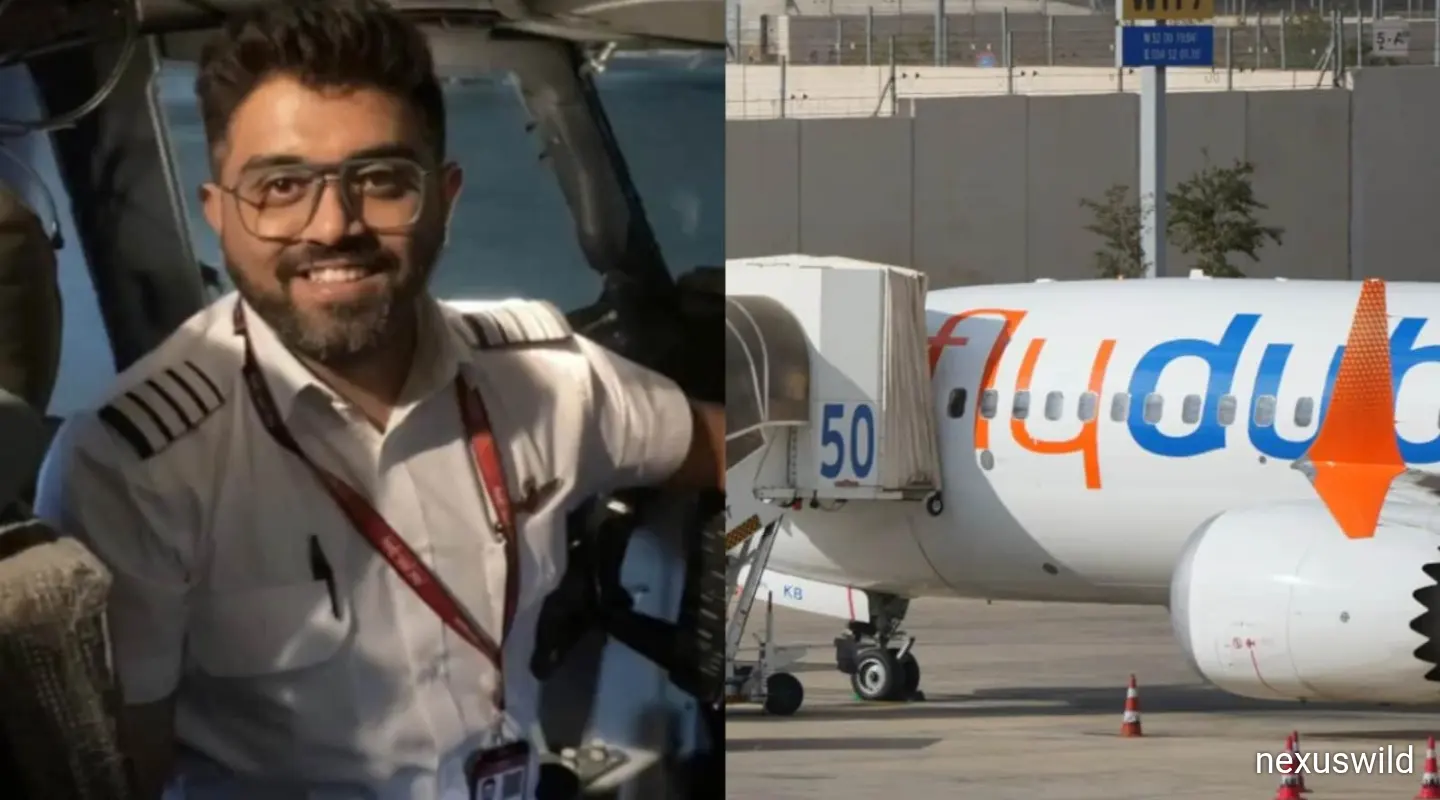
At the centre of what followed was Captain Smit Machchhar, an Indian pilot who had spent years flying commercial aircraft before joining the Dubai-based airline.
Israeli authorities say Machchhar was stabbed by his co-pilot during an apparent attempt to bring down the aircraft. Flydubai has formally confirmed that an altercation occurred on the flight deck, that other flydubai crew members travelling on the aircraft intervened, and that the plane was subsequently diverted and landed safely at Tabuk Airport in Saudi Arabia.
What investigators have not yet established publicly is equally important.
The motive behind the incident remains under formal investigation. The UAE Attorney-General has ordered investigators to examine the circumstances, including whether the event was connected to terrorism, involved advance planning or had another explanation altogether. Flydubai itself has urged against speculation until that investigation is completed.
That distinction matters in a story that has already travelled around the world.
There is enough confirmed information to describe an extraordinary aviation emergency. There is not yet enough to write the final explanation for why it happened.
A Routine Dubai-Tel Aviv Flight Changes Suddenly
Flight FZ1073 departed Dubai International Airport at approximately 03:05 UTC on September 30, 2026, according to flight-tracking data published by Flightradar24.
The aircraft, identified as a Boeing 737 MAX 8 registered A6-FKF, climbed to a cruising altitude of around 34,000 feet on its planned journey to Ben Gurion International Airport near Tel Aviv.
For more than two hours, its publicly visible flight profile offered little indication of what was about to happen.
Then, at around 05:21 UTC, the aircraft began a steep and highly unusual sequence of altitude changes.
Flightradar24 recorded a sharp descent, an ascent and then another descent before the aircraft eventually stabilised around 15,000 feet. An analysis of flight-tracking data reported separately by India Today calculated one particularly severe drop of approximately 14,125 feet in just 29 seconds.
Inside the aircraft, the emergency was not simply technical.
According to Israeli Prime Minister Benjamin Netanyahu’s official account, one pilot stabbed the other and apparently tried to crash the aircraft. Netanyahu said a passenger and crew member entered the cockpit and helped neutralise the attacking pilot, after which another flight crew aboard the aircraft helped stabilise it.
Reuters subsequently reported that the wounded captain was Smit Machchhar and that he managed to release the cockpit door despite his injuries, allowing others to enter and intervene.
The Emergency Codes Tell Part of the Story
The aircraft’s transponder data provides another window into how serious the situation had become.
At 05:28:48 UTC, FZ1073 began transmitting squawk 7700, the internationally recognised transponder code for a general emergency.
Several minutes later, at approximately 05:35 UTC, the aircraft switched to 7500.
For aviation professionals, that number carries a very different meaning. Squawk 7500 is the internationally recognised code associated with unlawful interference with an aircraft.
The jet later returned to the 7700 emergency code as it approached Tabuk. Flightradar24 recorded the final ADS-B transmission associated with its safe arrival at approximately 06:58 UTC.
Those electronic signals cannot explain exactly what was occurring inside the cockpit at every moment.
They do, however, independently show that the crew declared a serious emergency and, for part of the flight, indicated unlawful interference.
Machchhar’s Critical Decision
As more information emerged after the landing, one action repeatedly appeared in accounts from passengers, officials and the captain himself: opening the cockpit.
Modern commercial aircraft cockpits are deliberately secured against unauthorised entry. That design is one of the most important changes in commercial aviation security since the September 11 attacks.
During FZ1073, however, the threat was reported to have originated inside that protected space.
Machchhar told Indian Prime Minister Narendra Modi during a video call on October 2 that, despite being badly wounded, he realised the aircraft was descending and needed to enable others to enter the cockpit.
Reuters reported that he managed to open the cockpit door, after which passengers and crew were able to subdue the other pilot and additional pilots aboard the aircraft took over the flight.
Flydubai’s own statement is more restrained but confirms the essential operational sequence.
The airline said an altercation occurred on the flight deck and that on-duty flydubai crew travelling on the flight successfully secured the aircraft, diverted it and landed safely at Tabuk. It confirmed that all passengers and crew were safe and accounted for.
That wording is significant because it comes directly from the airline rather than from a passenger account or political statement.
Safe Landing in Tabuk
Once control of the aircraft had been secured, the immediate priority shifted from stopping the cockpit emergency to getting the Boeing safely onto the ground.
FZ1073 turned toward Tabuk in north-western Saudi Arabia.
The choice placed the aircraft at an airport where emergency services could meet it while avoiding the need to continue toward its original destination during a continuing security situation.
The aircraft landed safely.
Flydubai later dispatched two replacement aircraft to Tabuk to support the passengers and crew affected by the incident.
All passengers survived.
Published accounts have differed slightly over the number of people aboard. Saudi airport information cited in a Reuters reconstruction referred to 174 passengers, while some international reporting has used a larger total after including crew members. For that reason, the most defensible formulation while the records are reconciled is that more than 170 passengers were aboard, together with the flight crew.
For a professional news report, that difference should not be silently flattened into a single number when reputable sources are counting different categories.
Who Is Captain Smit Machchhar?
Before September 30, Smit Machchhar was largely unknown outside aviation circles and the people who knew him personally.
Reuters reported that he initially considered a future connected to his family’s textile business before aviation caught his attention when he was young.
He trained as a pilot in New Zealand and later spent more than a decade with Indian carrier SpiceJet before joining flydubai in 2022.
A Reuters profile put his experience at nearly 9,750 flight hours across roughly 15 years of flying.
That background became relevant in the aftermath of FZ1073 because emergencies rarely allow pilots the luxury of time.
Commercial flight training is built around procedures, repetition and disciplined decision-making precisely because a crew may have only seconds to respond when events depart dramatically from normal operations.
Nothing about a cockpit assault is routine.
But the ability to process danger, identify what still can be controlled and make an effective decision under extreme physical and psychological pressure is central to professional aviation training.
In Machchhar’s case, enabling outside intervention became one of the decisive actions of the emergency.
From Tabuk Hospital to Abu Dhabi
Machchhar suffered serious injuries during the incident.
He initially received treatment in Saudi Arabia before being transferred to the UAE for continued medical care.
India’s Ministry of External Affairs said he was moved from Tabuk to Abu Dhabi, where he continued his recovery. Indian diplomatic officials remained in contact with him and his family.
On October 2, Prime Minister Modi spoke with Machchhar by video.
The captain described the struggle and the moment he realised that, despite his injuries, he could not allow the situation aboard the aircraft to continue unchecked.
He also spoke about drawing strength from his faith during the ordeal.
The Indian government had already publicly praised him on October 1. A statement issued by the Prime Minister’s Office said Modi commended Machchhar’s courage and resolve in helping protect those aboard despite being seriously injured.
Israel’s government also praised his actions, as did senior Israeli officials who credited the combined response of the captain, passengers and other crew with preventing a larger disaster.
What Investigators Still Do Not Know
The most sensitive question remains the simplest one: why did the incident happen?
The co-pilot has been identified in multiple reports as an Omani national and was taken into custody in Saudi Arabia following the landing.
Israeli officials have characterised what happened as an apparent attempt to crash the aircraft.
That is an important official allegation.
It is not, however, the same thing as a completed investigation into motive.
On October 1, UAE Attorney-General Hamad Saif Al Shamsi ordered the formation of a specialised Public Prosecution team to investigate the FZ1073 incident.
The team is working with the UAE General Civil Aviation Authority and other authorities.
According to the official UAE statement, investigators are gathering evidence to determine the facts, circumstances and motives. They are specifically examining whether the incident had any connection with terrorist activity or purpose and whether there was prior planning or external direction.
The wording is deliberately open-ended.
The UAE authorities have not said that terrorism has been established.
They are investigating whether such a link exists.
That is why descriptions such as “terror attack” or definitive claims about radicalisation should be treated cautiously unless and until investigators publish evidence supporting them.
Flydubai has taken the same position.
The carrier said the underlying reasons and motives remained unknown at the early stage of the investigation and explicitly asked against premature speculation.
Why the Incident Raises Difficult Aviation-Security Questions
Commercial aviation has spent decades building layers of security around one basic assumption: keeping unauthorised people away from aircraft and, especially, away from the cockpit.
Passenger screening, baggage checks, restricted airport zones, locked flight-deck doors and security intelligence are all part of that system.
FZ1073 raises a different and more complicated problem.
What happens when the threat is alleged to originate from someone who is already authorised to be inside the cockpit?
That is an insider-threat problem rather than a traditional hijacking scenario.
AP reported that aviation-security specialists are now examining the implications of the incident for pilot vetting, cockpit procedures and the balance between keeping flight decks protected from outsiders while still allowing an effective response when the danger comes from within.
It is a difficult engineering and procedural challenge.
A cockpit door that is too easy to enter undermines one form of security.
A cockpit that cannot be reached when something goes catastrophically wrong inside it creates another.
There is no simple rule that eliminates both risks.
The event is therefore likely to be studied not only as a criminal investigation but as a safety and security case for the wider aviation industry.
Israel Moves Toward Additional Pilot Checks
The incident has already produced security-policy responses.
Israel has indicated that it intends to strengthen checks on the identities and backgrounds of pilots operating flights into the country.
An Israeli prime ministerial spokesperson said authorities would seek greater information about pilots arriving in Israel and conduct additional security screening.
Any permanent changes will have to balance security with the realities of global aviation.
International airlines employ multinational crews. Pilots routinely fly across jurisdictions with different security systems, labour laws and intelligence-sharing arrangements.
Aviation security therefore depends not on one country or one airline but on cooperation among regulators, airports, governments and carriers.
The FZ1073 investigation may eventually show whether existing systems failed in a specific way or whether the event was an extreme case that would have been difficult to predict through ordinary screening.
Until then, broad conclusions about what should have prevented it remain premature.
Flydubai Suspends Israel Flights
The consequences have extended beyond the aircraft involved.
Flydubai announced that it was temporarily suspending flights to and from Israel while the investigation continues.
The airline said the suspension would allow authorities to establish the facts and that it remained in coordination with governments, regulators and airports.
It also said it would review the decision as more information became available.
The move illustrates how a single aviation-security incident can immediately affect a much wider operation.
Flight schedules, passenger connections, crew assignments and international traffic rights can all be disrupted even when the aircraft involved lands safely.
Flydubai is a substantial regional airline. The company says it operates a fleet of 98 Boeing 737 aircraft and serves more than 125 destinations across 56 countries.
The investigation therefore matters not only for one flight but for the carrier’s operations, regulatory relationships and security procedures.
Separating the Confirmed Facts From the Claims
By October 2, several central facts were clear.
Flight FZ1073 was operating from Dubai to Tel Aviv on September 30.
A serious altercation occurred inside the cockpit.
Captain Smit Machchhar was badly injured.
Flight-tracking systems recorded violent altitude changes, followed by emergency code 7700 and then code 7500 for unlawful interference.
Other flydubai crew aboard the aircraft intervened.
The aircraft diverted and landed safely in Tabuk.
The passengers and crew were accounted for.
Machchhar later received further treatment in Abu Dhabi.
The UAE has opened a formal investigation.
Those points are supported by the airline, government statements, flight data and major international reporting.
The unanswered questions concern motive, planning and whether anyone beyond the alleged attacker was involved.
Those questions are not minor details.
They determine whether investigators ultimately classify the incident as an individual act of violence, an attempted hijacking, terrorism or something else.
Professional reporting should therefore resist the temptation to fill the gaps faster than investigators can establish the evidence.
Courage Without Mythmaking
There is already enough in the verified record to understand why Captain Smit Machchhar has received widespread praise.
He was injured during an extraordinary cockpit emergency.
He remained capable of taking an action that opened a path for others to intervene.
Other crew members then helped secure and safely land the aircraft.
The outcome depended on more than one person, and it would diminish the professionalism of the wider crew to pretend otherwise.
But Machchhar’s role is central.
His actions came at a moment when he was himself in serious danger and when the aircraft was undergoing extreme changes in altitude.
Commercial aviation often appears effortless precisely because so much preparation exists behind every ordinary flight.
Passengers board, doors close, the aircraft climbs and hours later it lands somewhere else.
The skill involved usually remains invisible.
FZ1073 was the opposite.
For a few minutes, the systems, training and human judgment normally hidden from view were tested under circumstances no passenger or crew member expects to encounter.
The aircraft ultimately reached the ground safely.
That is the most important fact in the story.
What Comes Next
The next phase belongs to investigators rather than commentators.
UAE prosecutors and aviation authorities will need to establish the exact sequence inside the cockpit, examine communications and flight data, reconstruct the actions of both pilots and determine whether the event was planned.
Saudi authorities possess evidence connected with the landing and detention.
Flydubai will conduct its own operational review.
Other governments and aviation-security agencies will watch closely for lessons that could apply more broadly.
Until those processes are complete, some of the most dramatic claims circulating online should remain exactly that: claims.
For Captain Smit Machchhar, the immediate priority is more personal.
He is recovering after an event that transformed an ordinary scheduled flight into an international aviation-security investigation.
For the passengers aboard FZ1073, the journey ended far from its planned destination but on the ground and alive.
And for the aviation industry, the incident leaves a difficult question that will remain long after the headlines fade:
How do you design security for a cockpit that must be almost impossible for an attacker to enter, while still preparing for the rare possibility that the danger is already inside?
The investigation into flight FZ1073 will determine what happened and why.
What is already established is that, amid a rapidly deteriorating emergency, Machchhar, fellow crew members and passengers acted in ways that helped bring a badly threatened aircraft safely to the ground.
Nexuswild welcomes factual corrections. Email contact@nexuswild.com with evidence and the article URL.