
India’s quick-commerce boom has been built around one promise: speed.
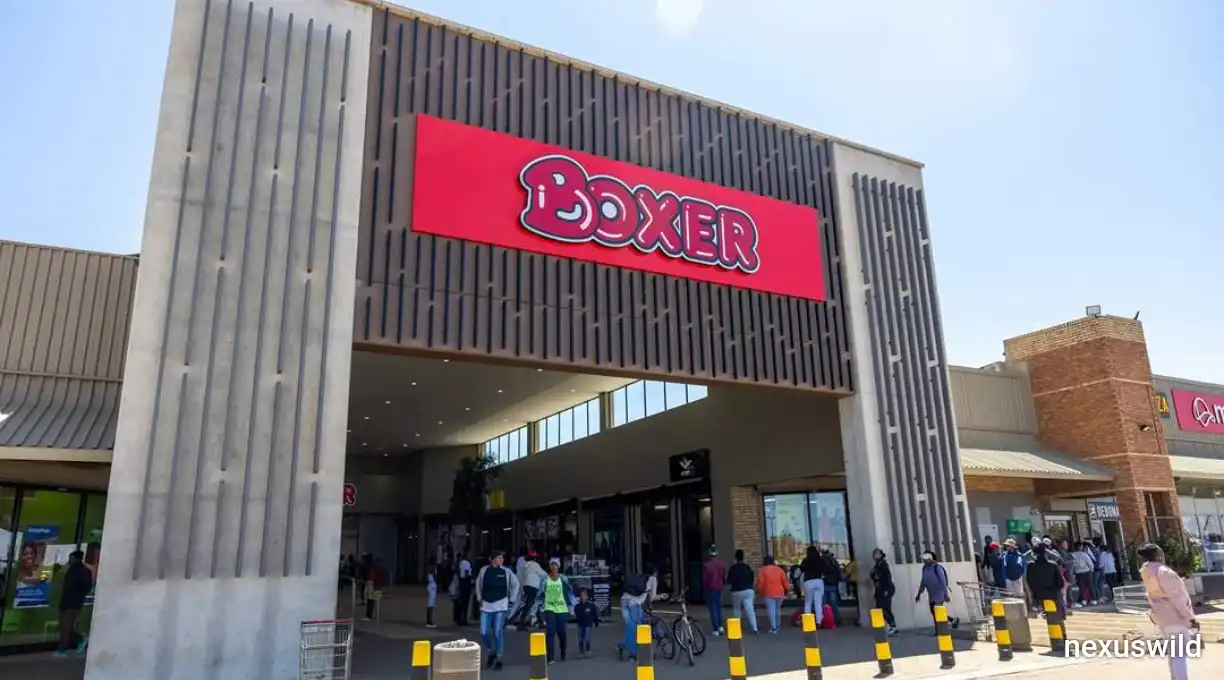
Blinkit, Zepto, Swiggy Instamart and other delivery platforms trained urban consumers to expect groceries at their door in minutes. Bengaluru startup FirstClub is trying to compete on a different question.
What if the customer cares less about whether tomatoes arrive in 10 minutes and more about whether those tomatoes, the paneer beside them and the packaged food in the same basket meet a higher quality standard?
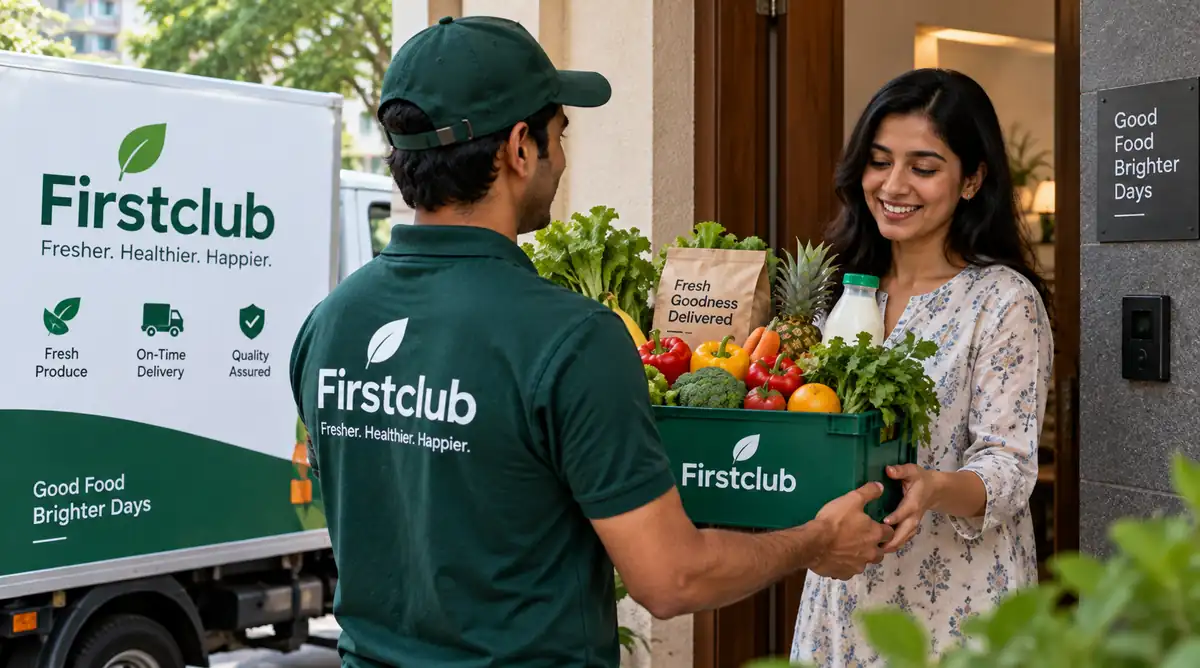
FirstClub describes itself as a “quality-first” grocery platform. It still delivers quickly, generally positioning its service around deliveries in roughly 30 minutes, but founder Ayyappan R says speed is not supposed to be the company’s main differentiator.
The startup is instead trying to build trust around curation, fresh produce, ingredient screening, testing and a smaller assortment of products it believes customers can buy without examining every label themselves.
That positioning has attracted significant investor interest.
In June 2026, FirstClub raised $55 million in a Series B round co-led by Peak XV Partners and Sofina, valuing the company at $255 million post-money. The round took total funding to about $86 million, according to the company and independent reporting.
For a startup that only launched its consumer service in mid-2025, the valuation reflects a larger bet on how India’s online grocery market may evolve.
Built by a former Flipkart operator
FirstClub was founded by Ayyappan R, a longtime Indian e-commerce executive.
Before starting the company, Ayyappan spent more than a decade within the Flipkart ecosystem. He served in senior roles at Flipkart, became chief business officer at Myntra and later led Cleartrip as CEO.
Earlier in his career, he also worked at consumer-goods company ITC, including on grocery-market expansion.
That background matters because FirstClub is less a technology experiment than a retail and supply-chain business.
The company has to source produce, decide what to stock, maintain inventory, operate fulfillment locations, deliver orders quickly and convince consumers that its products are consistently better than alternatives available from much larger competitors.
Ayyappan has said the idea emerged partly from his own frustration with grocery labels and product quality. On FirstClub’s website, he describes examining everyday products such as bread and ketchup and questioning why long ingredient lists and additives had become normal.
The business that followed was designed around curation rather than endless choice.
What FirstClub actually sells
FirstClub’s current consumer proposition spans fresh fruits and vegetables, dairy, staples, packaged food and premium grocery products.
Its Google Play listing, updated in September 2026, advertises more than 1,000 products and highlights categories such as fruits and vegetables, A2 dairy, stone-ground flour, cold-pressed oils, pulses, rice, artisanal breads, cheeses and imported butter.
Earlier in its growth, the company told TechCrunch that it carried around 4,000 curated stock-keeping units, significantly fewer than many mainstream quick-commerce competitors.
The exact assortment can change by location and over time, but the underlying strategy is consistent: FirstClub does not want to win by listing everything.
It wants customers to believe that someone has already done part of the selection work for them.
“Clean” is a marketing claim that needs context
FirstClub markets its produce as fresh and its broader grocery assortment around ideas such as “clean label” and ingredient transparency.
Those phrases are useful commercially, but they should not be confused with universal scientific or regulatory classifications.
FirstClub says it has banned more than 200 ingredients across categories including artificial flavours, certain oils, artificial preservatives, benzoates, dough conditioners, artificial colours, refined sweeteners and synthetic antioxidants.
The company also says products are screened, claims are checked and some items undergo laboratory testing.
That is FirstClub’s own quality framework.
It does not mean every product sold elsewhere is unsafe, or that the absence of a particular additive automatically makes a food healthier. Food safety and nutrition depend on the ingredient, quantity, manufacturing process, storage and the individual consumer.
The meaningful business point is that FirstClub is making product selection itself part of the service.
Fresh produce may be the hardest category to standardize
Fruits and vegetables are especially important to FirstClub’s pitch because fresh produce is difficult to sell consistently online.
A packaged biscuit has a standard recipe and sealed packaging.
An avocado does not.
Ripeness varies.
A tomato can look acceptable at a warehouse and be damaged during handling.
Leafy vegetables deteriorate quickly.
Different customers may even want different levels of ripeness.
FirstClub says it grades fresh produce and applies quality checks before delivery. Its app marketing emphasizes avoiding bruised or visibly damaged produce.
That sounds simple, but operationally it can be expensive.
Higher rejection rates increase waste.
More inspection requires labor.
Better storage can require tighter temperature control.
Sourcing directly or selectively can complicate procurement.
If FirstClub can maintain quality while keeping those costs under control, produce could become one of its strongest differentiators.
If not, “quality-first” risks becoming an expensive marketing promise.
The company is not trying to be the fastest
This is where FirstClub differs most clearly from the first phase of India’s quick-commerce race.
Ayyappan has repeatedly said he did not want to build another service whose primary promise was delivery in five or 10 minutes.
FirstClub still uses rapid fulfillment because consumers have come to expect convenience, but the company is more willing to make shoppers wait if the trade-off is a more curated basket.
In 2025, Ayyappan told TechCrunch that early customers appeared willing to do exactly that when they felt the product selection and service were meaningfully different.
At the time, FirstClub reported an average order value of about ₹1,050 and a repeat-purchase rate of around 60%.
By June 2026, the company told TechCrunch that customers were placing more than four orders per month on average and spending roughly ₹1,200 per order.
Moneycontrol reported a higher average order value of around ₹1,500 based on company disclosures around the same period, illustrating that these startup metrics can vary depending on the measurement window.
The important point is not one exact basket figure. FirstClub is trying to attract households willing to spend more per order than the emergency top-up purchases common in quick commerce.
One million orders in its first year
The startup’s early growth has been rapid.
TechCrunch reported in June that FirstClub had crossed one million orders and acquired about 170,000 households within a year of launching in Bengaluru.
Moneycontrol reported that the company had delivered more than 1.2 million orders, sold more than 15 million units and served over 200,000 customers after roughly nine months of full-scale operations.
Those figures came from company disclosures and should be read as such, but they show why investors have continued to fund the business.
In February 2026, FirstClub said it had reached more than 90% of Bengaluru pin codes, was running at an annualized order rate of 1.2 million and had been growing more than 45% month over month at that stage.
By June, TechCrunch reported that the startup operated 21 stores in Bengaluru and had launched three locations in Hyderabad.
A $255 million bet on premium grocery
FirstClub’s financing history shows how quickly investor expectations increased.
The company raised an $8 million seed round in December 2024 led by Accel and RTP Global.
In September 2025, it raised roughly $23 million in Series A financing at a $120 million post-money valuation.
Nine months later, Peak XV Partners and Sofina co-led a $55 million Series B that valued FirstClub at $255 million.
Accel, RTP Global and Paramark Ventures also participated in the latest round.
That brought total funding to approximately $86 million.
The valuation has therefore more than doubled since September 2025.
Investors are effectively betting that India’s quick-commerce market will segment as it grows.
Instead of every platform competing for every customer with the same assortment, premium households may support specialist retailers with stronger curation, differentiated products and higher average basket values.
The market is getting large enough for different models
India’s quick-commerce market has expanded rapidly.
TechCrunch, citing ICICI Securities research, reported that the market grew from roughly $6.2 billion in FY25 to an estimated $11 billion to $12 billion in FY26.
That growth has created room for different strategies.
Mainstream platforms can maximize selection and speed.
Others can specialize in beauty, electronics, health, pet care or premium groceries.
FirstClub is betting that groceries themselves can be segmented by quality and trust.
The company says more than 60% of its customer base consists of women-led households. Ayyappan has also said products such as avocados, persimmons and Modi apples have ranked among popular items, rather than only mass-market staples such as onions and potatoes.
That suggests the company is targeting a relatively affluent urban consumer rather than the entire Indian grocery market.
But quality is harder to scale than delivery speed
FirstClub’s central challenge is consistency.
A consumer can forgive a 25-minute delivery instead of a 20-minute one.
A customer who chooses the platform specifically for better produce may be less forgiving if the fruit arrives bruised.
That creates a demanding operating model.
The company has to maintain standards across more stores, more suppliers and more cities without allowing its quality promise to weaken.
It also faces much larger competitors with deep balance sheets, dense delivery networks and established consumer habits.
Blinkit, Zepto, Instamart and BigBasket can improve their own premium assortments and fresh-produce standards.
FirstClub therefore cannot rely on the word “quality” alone.
It has to make customers notice the difference often enough to return.
Beyond Bengaluru and Hyderabad
The Series B capital is intended partly to expand FirstClub beyond its current base.
The company has said it plans to deepen its presence in Hyderabad, move into additional cities and invest further in supply chain, technology and category expansion.
It is also looking beyond food.
Reported expansion areas include home and kitchen products, children’s food, pet care and gifting, alongside subscription-style services and possible experiential retail formats.
That creates both opportunity and risk.
More categories can increase basket size and customer frequency.
But every expansion makes curation more complicated.
A company built around saying “we have already selected the good option for you” has to maintain that credibility across every new shelf it adds.
The real test for FirstClub
FirstClub’s story is not really about whether groceries can be delivered quickly.
India’s biggest quick-commerce companies have already proved that.
The harder question is whether a startup can build a meaningful business by deliberately refusing to make speed the only measure that matters.
FirstClub has early evidence in its favor: rapid order growth, repeat customers, larger baskets, expansion into Hyderabad and a valuation that reached $255 million less than two years after the company was founded.
Its app has also crossed 500,000 downloads on Google Play, where it currently carries a rating above four stars, though app-store ratings can change continuously.
But investor capital and download counts will not ultimately prove the model.
Food retail is repetitive.
Customers judge a grocer every week.
If FirstClub can make the avocado, paneer, milk, bread and vegetables feel consistently worth choosing, quality can become a habit rather than a slogan.
That is the business Ayyappan is trying to build.
Not the fastest grocery app in India.
A grocery service that hopes consumers will trust what arrives in the bag.
Reader questions
Frequently asked questions
What is FirstClub?
FirstClub is a Bengaluru-based grocery and quick-commerce startup that positions itself around curated, quality-first groceries, fresh produce and fast delivery rather than making delivery speed its only differentiator.
Who founded FirstClub?
FirstClub was founded by Ayyappan R, a former senior Flipkart executive who also served as chief business officer at Myntra and CEO of Cleartrip.
How much is FirstClub worth?
FirstClub was valued at $255 million post-money in its June 2026 Series B funding round.
How much funding has FirstClub raised?
The company has raised about $86 million in total funding after a $55 million Series B led by Peak XV Partners and Sofina.
Where is FirstClub available?
As of June 2026, FirstClub operated 21 stores in Bengaluru and three locations in Hyderabad, with plans to expand further.
Does FirstClub deliver groceries in 10 minutes?
FirstClub does not primarily position itself around a 10-minute guarantee. It generally markets grocery delivery in minutes or around a 30-minute experience, with product quality and curation as its main differentiation.
What does FirstClub mean by clean-label groceries?
FirstClub uses its own ingredient-screening framework and says it has banned more than 200 ingredients across several categories. That is the company’s quality standard and is not a universal regulatory definition of clean food.
Nexuswild welcomes factual corrections. Email contact@nexuswild.com with evidence and the article URL.