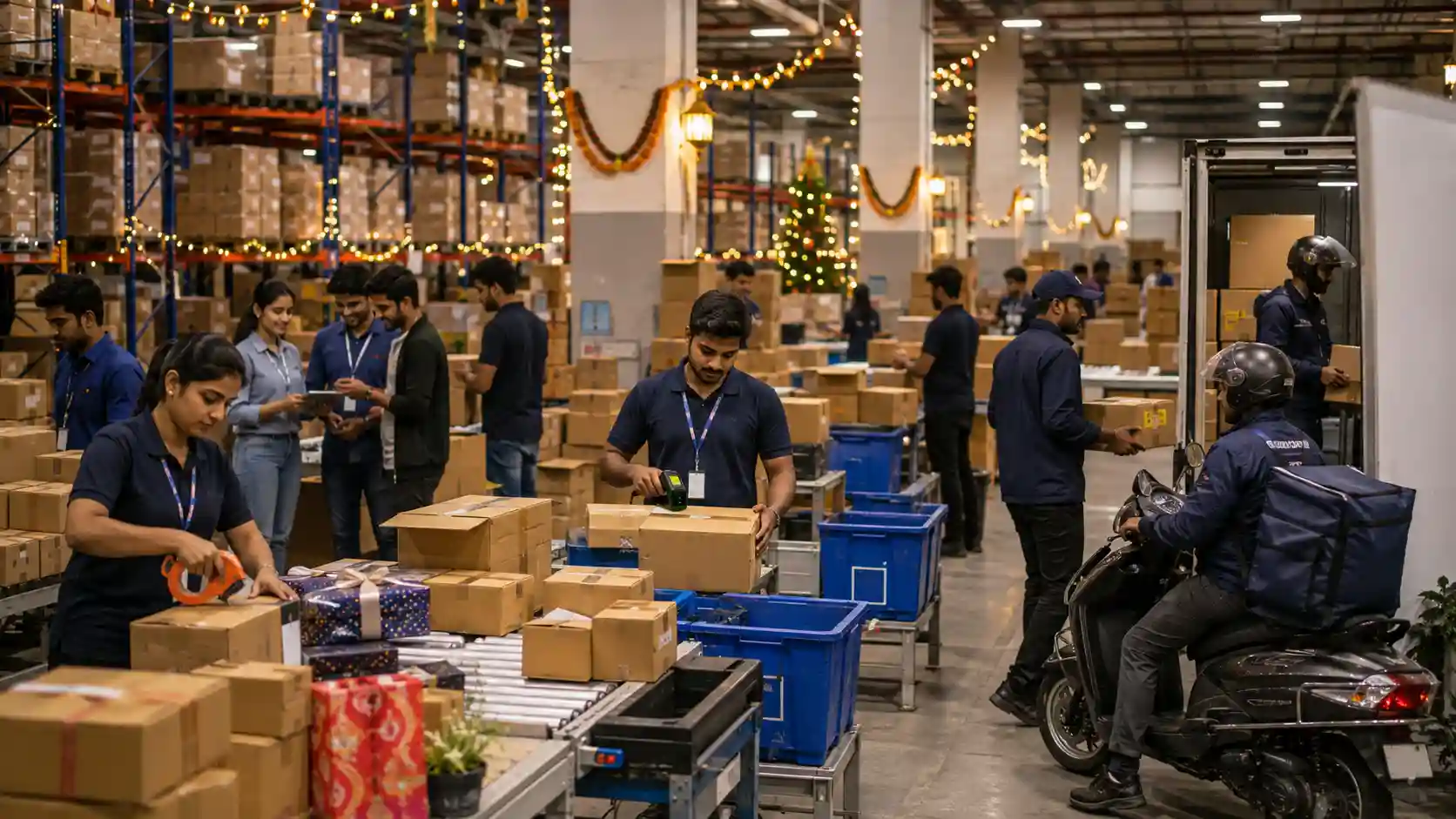

As India approaches its most lucrative shopping period of the year, Walmart-backed Flipkart has announced the creation of over 250,000 direct and indirect seasonal jobs across its supply chain. This extensive hiring initiative is designed to bolster the company's logistics, warehousing, and last-mile delivery networks ahead of its annual Big Billion Days sale. The temporary workforce expansion highlights a broader surge in domestic e-commerce demand, driven largely by the rapid growth of quick commerce and increasing digital penetration in smaller regional markets.
Scaling Logistics for the Festive Rush
The 250,000 figure represents a mix of direct and indirect employment opportunities, including contract staff and gig workers, entirely dedicated to managing the anticipated surge in festive orders. These are not permanent corporate roles but rather seasonal operational positions required to maintain efficiency during peak shopping weeks.
The hiring drive will span more than 7,000 Ekart facilities nationwide, integrating workers into fulfilment centres, sortation hubs, and local distribution networks. According to Flipkart, nearly 75,000 of these roles, representing about 30 percent of the total new hires, are being filled by individuals entering the formal workforce for the first time.
Rajneesh Kumar, Chief Corporate Affairs Officer at Flipkart Group, stated that as digital commerce grows across India, the company has a responsibility to ensure this expansion creates pathways into employment and entrepreneurship. He noted that the initiative aims to include communities that have historically had fewer opportunities to participate in the formal economy.
Quick Commerce and Last-Mile Expansion
The most significant area of workforce growth for Flipkart this season is at the final stage of the supply chain. Last-mile delivery operations account for 60 percent of the new jobs, translating to nearly 140,000 temporary roles.
To support this physical expansion, the company has established more than 900 new festive delivery hubs. This infrastructure scale-up is heavily influenced by two major market trends: the deepening of online consumer demand in Tier 2 and Tier 3 cities, and the aggressive expansion of "Flipkart Minutes," the company's quick commerce service.
Hemant Badri, Senior Vice President of Supply Chain, Customer Experience and Re-Commerce at Flipkart Group, confirmed that the addition of new hubs and last-mile personnel reflects the sheer scale at which the company's network is growing. Badri noted that the supply chain plays a critical role in bringing together the full scale of India's commerce ecosystem during the festive season.
Workforce Diversity and Skill Development
Alongside the temporary job creation, Flipkart has introduced measures to formalise elements of the blue-collar gig economy while improving workforce diversity. Women now represent more than 20 percent of Flipkart's supply chain roles, a notable shift for the historically male-dominated logistics sector. The company also reported an increase in the participation of persons with disabilities across its warehouse and delivery operations.
To ensure operational readiness, Flipkart's Supply Chain Operations Academy (SCOA) awarded nearly 10,000 certifications ahead of the festive season. This training programme, delivered in partnership with the Ministry of Skill Development and Entrepreneurship, NCVET and ITI Kalyani, provides trainees with hands-on experience in modern logistics. Furthermore, the company stated that the seasonal supply chain workforce will receive support including medical and accident insurance, round-the-clock telemedicine services, and assistance with government e-Shram registration.
Industry Context: The E-Commerce Employment Boom
Flipkart's hiring announcements arrive amid intense competition across India's digital retail landscape. The weeks leading up to major Indian festivals generate a substantial portion of the annual Gross Merchandise Value (GMV) for e-commerce platforms, forcing all major players to rapidly scale their logistical capabilities.
Rival platform Amazon India recently announced the creation of up to 160,000 temporary seasonal roles, marking a significant increase in workers to support its pan-India operations network. Meanwhile, e-commerce marketplace Meesho anticipates generating over one million seasonal job opportunities across its broader seller and logistics ecosystem to handle the expected order volume. Furthermore, traditional e-commerce giants are now defending market share against specialised quick-commerce rivals like Blinkit, Zepto, and Swiggy Instamart, which have conditioned urban consumers to expect deliveries within minutes.
Why It Matters
The creation of hundreds of thousands of seasonal jobs underscores the evolving role of e-commerce as a major engine for temporary employment in India. While these roles are inherently short-term, they inject vital capital into the rural and semi-urban gig economy. Furthermore, the massive investment in Tier 2 and Tier 3 logistics infrastructure signals that consumer demand in India is no longer restricted to major metropolitan areas. For the broader retail sector, the scale of this seasonal hiring serves as a reliable barometer for corporate confidence in domestic consumer spending heading into the critical fourth quarter.
Further reading and useful links
Reader questions
Frequently asked questions
Are the 250,000 jobs announced by Flipkart permanent?
No. The jobs are temporary, seasonal opportunities comprising direct, indirect, and gig roles specifically created to handle peak demand during the festive season.
Which sectors within Flipkart will see the most hiring?
Last-mile delivery operations account for 60 percent of the new jobs, largely driven by the expansion of quick commerce and increased demand in smaller cities.
Are other e-commerce companies in India hiring for the festive season?
Yes. Competitors like Amazon India have announced over 160,000 seasonal roles, while platforms like Meesho anticipate creating up to one million direct and indirect opportunities across their networks.
Nexuswild welcomes factual corrections. Email [email protected] with evidence and the article URL.