
Lead & key facts
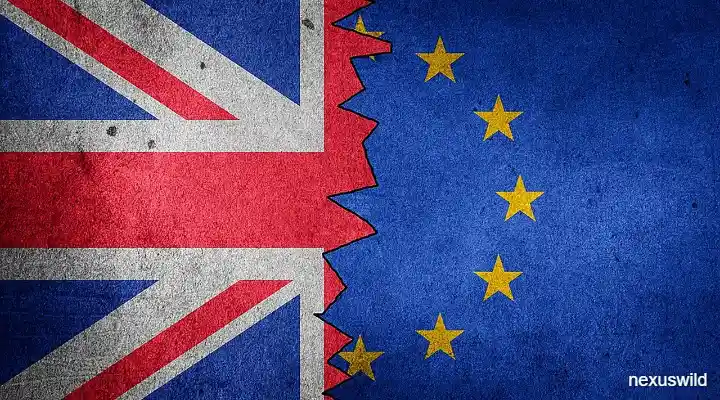
Britain and the European Union concluded a post-Brexit reset at their second summit in Brussels on Friday 20 November 2026, signing agreements on food trade, carbon-market integration and youth mobility that the UK government says will add 0.5 per cent to national output — roughly £17 billion a year. The package, set out in a 14-page joint statement published by the Cabinet Office the same day, was presented by both sides as a practical repair of a relationship strained since Britain left the bloc a decade ago. It stopped well short of reversing Brexit, deferred one of the most contested issues, and left key implementation details to be settled in law.
That growth figure is a UK government estimate produced by the Treasury, not an independent forecast. Reporting around the summit placed the projected gain at around 0.5 per cent of GDP by 2040, making it a long-run modelling exercise rather than an immediate windfall. Burnham seized on it anyway, calling the package "the single biggest growth measure that we could take in this parliament." Independent economists and the European Commission did not put their own number on the deal on the day.
The summit, postponed from July after the resignation of Keir Starmer, brought together Burnham, European Commission President Ursula von der Leyen and European Council President Antonio Costa. "We, the Leaders of the European Union and of the United Kingdom, held our second EU-UK Summit in Brussels on 20 November 2026," the joint statement opens, against "deepening geopolitical and economic challenges." Burnham called the result a "win-win" and a "historic moment." Von der Leyen described it as "a turning point" in EU-UK relations.
Three agreements formed the core of the deal: a Common Sanitary and Phytosanitary Area covering food, animals and plants; a link between the EU and UK emissions trading systems; and a Youth Experience Scheme opening up to 100,000 places on each side. Alongside them sat a long list of wider commitments on energy, fisheries, security, migration, economic resilience and future cooperation. But the much-disputed question of university tuition fees for EU students was pushed into a separate negotiating track with a six-month deadline, and the legal texts that would give the agreements force were still to be published.
The three core agreements at a glance
The joint statement organised the summit's deliverables under a section headed "Strengthening our economies while protecting our planet and its resources." Within it, three negotiated outcomes stood out.
First, the SPS agreement would create a common sanitary and phytosanitary area with certain common quality standards. The UK government's own factsheet, published ahead of the summit and updated on 18 November, said the "food and drink" deal could add up to £5.1 billion a year to the economy by cutting paperwork and easing pressure on prices. The joint statement said the vast majority of movements of animals, animal products, plants and plant products between Great Britain, the Crown Dependencies and the EU could take place without the certificates and controls currently required, with the same benefits extended to movements between Great Britain and Northern Ireland under the Windsor Framework.
Second, the ETS agreement would link the two carbon markets. The statement said this would provide a stable basis for mutual recognition of EU and UK allowances and for exempting EU and UK goods from each other's Carbon Border Adjustment Mechanisms, subject to respective laws and procedures. The UK factsheet put the potential gain at up to £3.8 billion a year and said the arrangement would protect critical industries including steel and aluminium from carbon border levies on roughly £6.5 billion of exports.
Third, the Youth Experience Scheme would allow 100,000 young people from the EU and 100,000 from the UK respectively to reside for up to three years to work, study, au-pair, volunteer or travel. Burnham told the press conference that the scheme was "for you" when addressing younger voters directly.
Each agreement carried a future date rather than immediate effect. The UK government said it aimed to apply the SPS deal from 1 March 2028 and the ETS link from 2028; the youth scheme was to apply no later than 2028, with opportunities available no later than January 2030. Those timelines, and the absence of published legal texts, were repeatedly noted by journalists covering the summit.
Food and drink trade (SPS)
For British food exporters, the SPS agreement was the most tangible outcome of the day. The current system requires certificates, checks and veterinary sign-offs for goods moving from Great Britain into the EU — friction that ministers argue has suppressed exports and raised costs for consumers on both sides of the Channel.
Burnham illustrated the problem with a figure he repeated in his speech and at the press conference: exporting a single shipment of salmon could cost as much as £1,400. "Obviously that's too high and it will bring costs for business down, it will bring the cost of food down," he said. He also cited National Farmers' Union data suggesting agricultural exports from Britain to the EU have fallen by more than 30 per cent over the last decade.
Under the agreement, the vast majority of movements of animals, plants and related products — sausages, seeds and similar goods were given as examples in reporting — would no longer require the certificates and controls currently imposed. The joint statement said the deal would also remove the majority of "Not for EU" labels once fully implemented, a change the UK government said would strip away trade friction between Great Britain and Northern Ireland and lower costs for supermarkets and food producers.
The economics are significant but contested. The £5.1 billion annual figure comes from the UK government's own analysis, not from a joint UK-EU assessment. The British Retail Consortium, while calling the SPS deal a "big win," cautioned that businesses would need at least 18 months and "clear and early" guidance to transition without unnecessary cost or disruption. The BRC also said it did not expect supermarket prices to fall as a direct result, noting that upward pressures on food costs remained heavy.
There is a regulatory trade-off. The SPS agreement requires Britain to align with certain EU rules, including on pesticide use — a point that drew a mixed response from farming and environmental bodies. The National Farmers' Union said the deal should help but was "only the beginning," while the Country Land and Business Association warned that Britain would have "no recourse" when the EU introduced new regulations affecting farmers. Environmental groups, by contrast, welcomed the alignment as good for nature while urging ministers to support farmers in becoming less reliant on pesticides.
The target date for application is 1 March 2028. That is a political commitment in the joint statement, not a legal guarantee, and the implementing legislation had not been published by the end of the summit.
Carbon market linking (ETS)
The second pillar linked the EU and UK emissions trading systems. The joint statement said the agreement would allow mutual recognition of EU and UK allowances and exempt EU and UK goods from their respective carbon border levies, subject to the two sides' laws and procedures. The UK government's factsheet framed this as protection for steel and aluminium exporters facing the EU's Carbon Border Adjustment Mechanism, with approximately £6.5 billion of exports potentially affected and up to £3.8 billion a year in economic benefit.
The logic is straightforward. Both jurisdictions operate a cap-and-trade system for industrial emissions. Linking them means a tonne of carbon priced and surrendered in one market is recognised in the other, reducing the scope for border charges to be levied on goods crossing between them. Von der Leyen said the agreement would reduce "over-dependence on imported fossil fuels," and the two sides presented it as part of a wider economic-security partnership.
Ministers also pointed to related energy provisions. The statement noted that the energy title of the Trade and Cooperation Agreement had been extended to 31 March 2028 and that negotiations on UK participation in the EU internal electricity market were expected to conclude in 2027, subject to final agreement. Such participation would be linked to a UK financial contribution to reducing economic and social disparities between EU regions — a detail certain to prove sensitive in domestic politics.
The ETS link was scheduled to apply from 2028, the same broad timeframe as the SPS deal. As with the food agreement, the legal instruments had not been published. And the Conservatives seized on the energy implications immediately: Kemi Badenoch argued that the deal would increase household energy bills, a claim the government rejected but which illustrated how carbon-market alignment can be recast as a cost-of-living issue in British politics.
Youth Experience Scheme
The most politically delicate element of the reset was the Youth Experience Scheme. Under the agreed terms, 100,000 young people from each side would be able to reside in the other's territory for up to three years to work, study, au-pair, volunteer or travel. The joint statement said the scheme aimed to apply no later than 2028, with opportunities available to young people no later than January 2030. It would cover people up to the age of 31 — effectively those born in 1999 and later, according to analysis published alongside the summit coverage.
The scheme is capped, time-limited and conditional, and the government was at pains to distinguish it from the free movement of people that Brexit ended. Officials said places would be allocated among EU member states according to population; participants would initially apply to one country but could switch after 12 months, spending time in up to three countries during their stay. Participants would have to pay an application fee, prove they had enough money to support themselves, and would not be able to claim benefits or be accompanied by dependants such as children.
Burnham invested heavily in the scheme's symbolic weight. "Brexit did take opportunity away from young people," he said, describing them as the biggest losers from the exit. He pointed to a report published in Britain that week about one million young people not in education, employment or training. "This deal really is about lifting your life chances," he told the press conference. "Hope is the word and it starts now." Von der Leyen said the EU had "missed" British Erasmus students and framed the agreement as a "win-win."
The UK's return to the Erasmus+ programme in 2027 was confirmed separately; the funding call opened on 18 November. Costa said British students would be able to benefit from Erasmus+ from 2027, and the joint statement said the two sides would explore opportunities beyond that year.
The scheme was not without critics. Conservative and Reform UK figures argued it would bring European graduates into a tight British labour market, while some young people interviewed by the BBC made the same point from the opposite direction, questioning how readily they could find work abroad. Liberal Democrat leader Ed Davey called it "a big step forward" but "nowhere near enough."
The growth case
The centrepiece of Burnham's economic argument was the claim that the package would add up to 0.5 per cent to UK GDP — a figure the Treasury translated into approximately £17 billion a year. He repeated it in his speech, at the press conference and in interviews, presenting it as the largest single growth measure available to the government in this parliament.
The estimate should be treated with care. It is a UK government projection produced by the Treasury, not a joint assessment and not an independent forecast. Reporting of the summit placed the gain as a projected uplift by 2040, meaning the benefits were modelled as accruing over more than a decade rather than arriving in the next budget. No equivalent figure was published by the European Commission, and the 0.5 per cent number was not broken down by individual measure in the material released on the day.
The government's more granular figures came from its pre-summit factsheet: up to £5.1 billion a year from the food and drink deal, and up to £3.8 billion a year from emissions linking, including protection for around £6.5 billion of exports from carbon border charges. Burnham argued that cutting the cost of exporting and reducing red tape would help relieve pressure on the cost of living, pointing to the £1,400 salmon shipment figure and retailer support.
Business reaction was broadly positive but conditional. The British Retail Consortium's Helen Dickinson said reducing border friction and simplifying trade would cut costs and support smoother trade in food, drink and plants between the UK and EU, including goods moving to Northern Ireland. "The benefits will be felt across the entire supply chain," she said, while insisting the government give businesses at least 18 months to transition. Marks and Spencer's food managing director Alex Freudmann described the announcement as "a major step forward," using the spaghetti bolognese example to make the case for removing what he called "mountains of paperwork."
Yet the growth case rests on assumptions about behaviour as much as tariff arithmetic. The National Farmers' Union cautioned that rebuilding lost exports would take time because British products had in some cases been replaced by goods sourced elsewhere. The BRC warned that lower border costs would not automatically translate into lower shelf prices. Neither claim negates the Treasury's modelling, but both underline that the £17 billion figure is an estimate of potential output, not a promise about household bills.
What was left out: tuition fees
The most conspicuous absence from the three deals was an agreement on university tuition fees. The EU wants its students to be eligible for "home fees" at British universities rather than the international rate, which can be roughly three times as high. Under current rules, EU students are treated as international students, with undergraduate fees varying by institution — figures cited during the summit coverage ranged from £11,400 to £38,000, against a capped home fee of £9,790 for most British undergraduates. Before Brexit, EU students were treated as home students.
Britain has resisted a full home-fee offer and prefers what officials describe as "significantly reduced" fees. The compromise in the joint statement was to commit both sides to "work towards a supplementing agreement" to the Trade and Cooperation Agreement on tuition fees for EU students in the UK and UK students in the EU. The agreement would apply to all students from the other party irrespective of immigration pathway, and negotiations were to conclude within six months of the summit.
Burnham insisted at the press conference that "the deal is done, it's there in black and white," pointing to the bill he said would enter Parliament the following week. Von der Leyen was more studied, saying work on tuition fees was on "a different sheet of paper" but expressing confidence that a solution could be found. Costa said the two sides needed to work hard to solve problems, while noting the EU's principles, including the indivisibility of the single market's four freedoms.
The university sector responded with alarm. The Russell Group said any reduction in EU student fees would put pressure on UK student places and take more money out of British higher education without necessarily achieving the ambition of growing opportunities for EU students. Universities UK said universities currently subsidise the cost of teaching domestic students and receive no public funding for international ones, making it "vital" that any agreement met the full cost of delivery. The University and College Union warned that opportunities for European students "must not become another unfunded commitment in an already overstretched post-16 education system."
There was also uncertainty about sequencing. Some summit reporting suggested the three sectoral deals might not enter into force until the tuition-fee question was resolved, while other accounts said the food and agriculture arrangements would take effect in March 2028 regardless. The joint statement commits to applying SPS from 1 March 2028 and ETS from 2028, but with no legal texts published and the tuition talks still open, the precise interaction remained unclear at the end of the day.
Leaders' remarks
The summit's choreography was designed to signal warmth. Burnham was greeted on arrival by a string quintet, and the leaders posed together before talks began. Afterwards, the three principals appeared at a press conference that was as much about tone as substance.
"This is a good day for Britain and this is a good day for Europe," Burnham said. "The agreement that we've reached together is a win-win." He argued that public opinion in Britain had moved decisively: three-quarters of people favour closer ties with Europe, he said, citing recent polling, because "we've had a decade of drift, too much division, low growth in the economy and higher prices in the shops." He said the deal answered concerns about the weekly shop, energy costs, red tape, illegal immigration and opportunities for young people.
He also framed the moment historically. "Today we do draw a line on a decade of drift and division," he said, speaking of "rebuilding the bridges that were broken all of those years ago" and "building a much more constructive relationship with our nearest neighbours and our largest market." When a reporter suggested the deal was merely a "fig leaf," Burnham pushed back: "I would say not a fig leaf." He acknowledged, however, that what had been agreed was "probably the limit of what we can achieve in this parliament," and that "incremental steps … only take us so far."
Von der Leyen called the outcome "a turning point" in EU-UK relations and "a big success," noting that there were "three major agreements where many people thought we would never be able to come to the finish line." She said the EU was "totally open to do the necessary brainstorming for the wider picture, the bigger picture" of future relations, and at one point observed dryly that "I have many British friends and they are very good at making up their minds."
Costa was careful to avoid endorsing any talk of British re-entry. "We respected the sovereign decision taken by the British people in 2016," he said. "We regret, but we respect." The EU, he added, "remains open to have the closest possible relationship" with the UK — but he pointedly reminded listeners of the obligations of membership, including the indivisibility of the four freedoms of the single market.
Political reaction in the UK
Domestic reaction was sharply mixed, and the summit immediately became another front in Britain's long argument over Europe.
Kemi Badenoch, leader of the Conservative Party, said the deal "isn't fair" and that her party would seek to amend it in Parliament. "Andy Burnham's deal doesn't deal with any of the problems which the country has right now," she said. She argued that it would increase energy bills, that young Europeans would come to Britain and compete with young Britons struggling to find work, and that British farmers would have rules made for them by people they had not elected. "My overall view is that this isn't fair," she concluded.
Nigel Farage, leader of Reform UK, travelled to Brussels to hold a rival press conference. He called the agreement "a very good day for the EU," said it represented "the first step, incrementally, to take us back into membership of the European Union," and described it as a "reversion back to the old pre-2016 referendum ideas." He argued that the deals would mean "vastly more red tape piled on British business" and said they were in "direct contradiction" of the Labour manifesto on which the government was elected in 2024.
Ed Davey, the Liberal Democrat leader, took the opposite line but was unimpressed by the scale of the change. Burnham had "raised everyone's hopes," he said, but "all this Brexit reset amounts to is signing off on Keir Starmer's tweaks to Boris Johnson's failed deal." His party wanted "a whole new deal that actually works for Britain, and fast."
Pro-European campaigners were more enthusiastic. Naomi Smith of Best for Britain called the agreement "an essential and laudable step" towards rejoining the union, and described it as "one small step in our economic fortunes but one giant leap for young people's opportunities, and British businesses who for too long have had their horizons narrowed and wings clipped by needless Brexit red tape."
The government was careful to stay within its stated red lines. The factsheet published before the summit said the prime minister remained committed to ruling out rejoining the EU, the customs union and the single market, as well as a return to freedom of movement, for the remainder of the Parliament. Burnham has said all options should be on the table for future relations, including rejoining, but has stressed that reversing Brexit is neither imminent nor solely a British decision — it would require backing from British voters and unanimous support from a mistrustful EU.
Business, farming and sector response
Beyond party politics, the response from business and industry was welcoming but laced with practical warnings about delivery.
The British Retail Consortium called the SPS agreement a "big win" for retailers. Helen Dickinson, its chief executive, said reducing border friction and simplifying trade would cut costs and support smoother trade in food, drink and plants between the UK and EU, including goods moving to Northern Ireland. But she stressed that the "priority now must be to get the detail right and give businesses at least 18 months, alongside clear and early guidance, to transition to the new arrangements without unnecessary cost or disruption." The BRC also made clear it did not expect prices on supermarket shelves to fall in response to the deal, given the weight of other upward pressures.
Marks and Spencer's Alex Freudmann gave the most-quoted endorsement. "How hard can it be to get a spaghetti bolognese from a factory in Lincolnshire onto a shelf in Dublin?" he wrote. "Today, it takes hundreds of extra miles, mountains of paperwork, a vet's signature and the Latin name of a cow." He called the announcement "a major step forward."
Farmers were less uniformly enthusiastic. National Farmers' Union president Tom Bradshaw said the organisation had worked with the government to secure the agreement, which "should help" the industry, but warned that it was "only the beginning." Businesses dependent on access to EU markets would benefit, he said, but all farmers — including those supplying only the domestic market — wanted reassurance that they would not be disadvantaged. Rebuilding lost exports would take time, he added, because in some cases British products had been replaced by goods from elsewhere.
The Country Land and Business Association (CLA), which represents rural landowners and businesses across England and Wales, was more sceptical. President Gavin Lane said that when the EU introduced a new regulation that might damage British farmers or producers, "we will have no recourse." The Wildlife Trusts described the agreement as "good news for nature," while the Soil Association and Wildlife Trusts both called on the government to support farmers in becoming less reliant on pesticides. Martin Lines, a Cambridgeshire farmer who leads the Nature Friendly Farming Network, said the transition period gave farmers enough time to adapt.
Universities, as noted, focused on the unresolved fee question. The Russell Group, Universities UK and the University and College Union all warned that any fee reduction would need to be fully funded. The Higher Education Policy Institute (HEPI) said more EU students would bring "welcome diversity," but that Britain could "lose out" if reciprocal benefits were not secured and the costs to universities of charging cheaper fees were not covered.
What happens next
The immediate next step is legislative. Burnham said the Chief Whip would introduce a bill in the British Parliament the following week to implement the SPS, ETS and other elements of the deal. "We will not waste any time whatsoever," he said. The joint statement set out a broader timetable: ETS from 2028, SPS from 1 March 2028, the youth scheme applicable no later than 2028 with opportunities available by January 2030, UK participation in Erasmus+ from 2027, and energy-market talks to conclude in 2027.
Those dates are aims, not accomplished facts. No legal texts had been published by the end of the summit, and the Guardian's live coverage noted explicitly that the detailed implementing agreements were still to come. The tuition-fee negotiations were given six months from the date of the summit. The interaction between that separate track and the entry into force of the three sectoral deals was not fully resolved in the material published on the day.
Several of the harder questions were simply carried forward. Britain wants special status under the EU's "Made in Europe" rules, particularly for cars, so that British manufacturers are not disadvantaged in EU public procurement and subsidy schemes. The EU signalled willingness but linked it to British alignment with its trade-protection policies, including restrictions on Chinese-built hybrid and battery-electric vehicles. The final wording committed the UK, in sectors where cooperation had been agreed, to "ensure outcomes consistent with relevant EU measures" — language that critics said amounted to accepting EU rules without a say in making them.
The statement also launched a Dialogue on Economic Security covering export controls, technology leakage, critical infrastructure, resilient supply chains and early warning of disruptions. It committed both sides to work towards diversified steel and electric-vehicle supply chains and to review progress every four months. On fisheries, full reciprocal access to waters was noted until 30 June 2038. On security and defence, the leaders pledged closer coordination on Ukraine, hybrid threats, maritime security and defence industrial cooperation, and welcomed a Framework Participation Agreement enabling UK participation in EU civilian missions. On migration, they committed to joint action under the EU's Channel Action Plan, adopted in June 2026, including a new Structured Dialogue.
Burnham said he wanted an "informal brainstorming process" with the EU within about a year, before the next summit, to consider what farther-reaching options might look like. Costa said the EU was open to it. Von der Leyen said the bloc would "welcome this brainstorming." For now, though, the government's position remained that the agreement was the limit of what could be achieved before the next election — and the £17 billion growth claim remains a Treasury estimate, the tuition fees remain unsettled, and the 2028 and 2030 dates remain targets awaiting legislation.
Nexuswild welcomes factual corrections. Email contact@nexuswild.com with evidence and the article URL.