
Key Facts
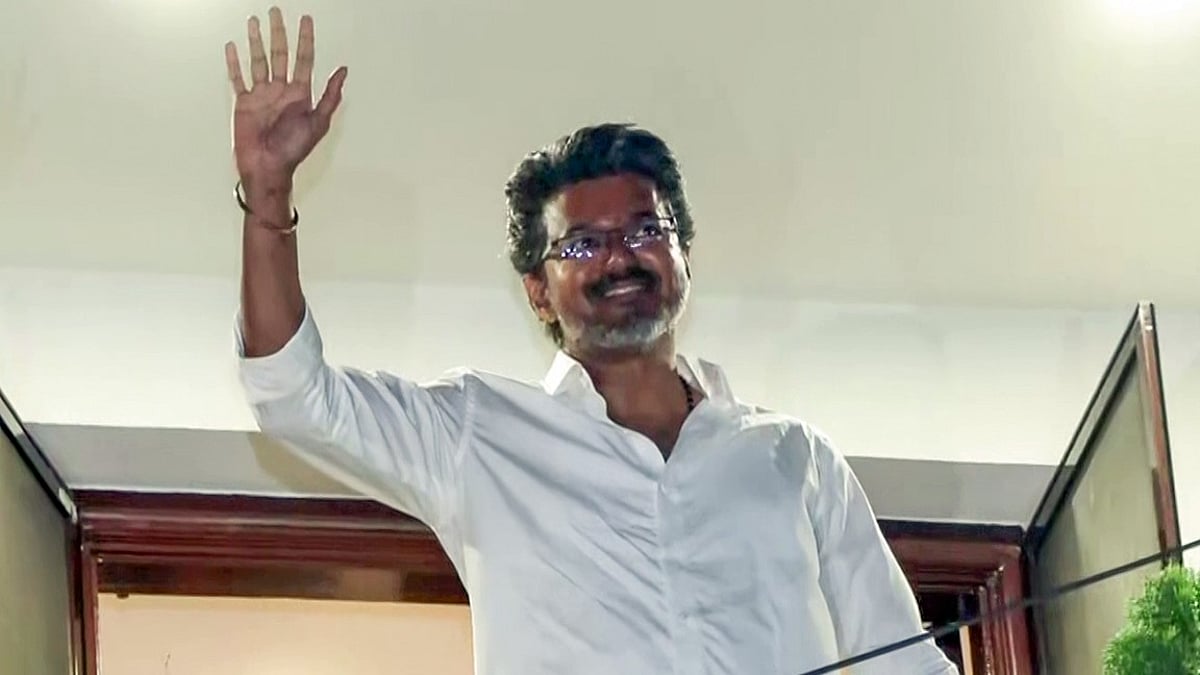
- The Resignation: Union Education Minister Dharmendra Pradhan resigned on July 25, 2026, submitting his letter to Prime Minister Narendra Modi hours before a scheduled third round of talks with protest leaders.
- The Trigger: The NEET-UG 2026 medical entrance exam, held May 3 for roughly 2.28 million candidates, was cancelled on May 12 after leaked material was found circulating before the test, prompting a CBI probe and a re-test.
- The Movement: The Cockroach Janta Party (CJP), a satirical online movement founded May 16 by Boston University graduate Abhijeet Dipke, grew to over 20 million Instagram followers within weeks.
- The Flashpoint: A July 20 "Chalo Sansad" march toward Parliament was met with tear gas and baton charges, intensifying pressure that had already been building around activist Sonam Wangchuk's 26-day hunger strike.
- The Legislative Response: The Union Cabinet approved the Anti-Paper Leak Bill 2026 on July 24 - raising maximum prison terms to 10 years and fines to ₹10 crore for organized exam fraud, alongside a shift to computer-based NEET testing from 2027.
On the evening of July 25, 2026, Union Education Minister Dharmendra Pradhan submitted his resignation to Prime Minister Narendra Modi, ending ten weeks of escalating student-led protest that had, by the final days, drawn in national politics, a hospitalized hunger-striker, and running clashes with police in the heart of New Delhi. His departure marked a rare instance of a sitting Union Cabinet minister stepping down under direct pressure from a leaderless, digitally organized street movement - one that had, only weeks earlier, existed as a joke.
The Exam That Broke Public Trust
The crisis traces back to the National Eligibility cum Entrance Test (NEET-UG), India's sole gateway exam for undergraduate medical admissions, held on May 3, 2026. Roughly 2.28 million candidates sat the exam nationwide, competing for a small fraction of available medical college seats - the kind of ratio that turns a single morning's test into a make-or-break event for entire families.
Within days, reports emerged of a handwritten "guess paper" - a set of roughly 400 questions circulating on WhatsApp and Telegram groups in coaching hubs including Rajasthan's Sikar and Uttarakhand's Dehradun - with a significant portion matching questions that appeared on the actual exam, according to reporting from ThePrint and The South First. On May 12, the National Testing Agency (NTA) formally cancelled the exam, referred the matter to the Central Bureau of Investigation (CBI), and announced a re-test using the same registration data, at no additional cost to students. This was not the NTA's first brush with scandal - a nearly identical grace-marks and leak controversy had engulfed NEET-UG in 2024, when Pradhan, newly appointed to the post, publicly insisted there was "no corruption" and "no proof of paper leak" in that year's exam.
From a Courtroom Remark to a National Movement
The specific spark for what followed came from an unlikely source: the judiciary. On May 15, 2026, during a Supreme Court hearing concerning fraudulent legal credentials, Chief Justice of India Surya Kant remarked that "there are youngsters like cockroaches, who don't get any employment and don't have any place in the profession," according to court reporting cited by the Wikipedia entry documenting the movement's origins. The CJI later said the remark was aimed specifically at holders of fraudulent law degrees, not India's unemployed youth broadly - but the comment had already detonated online.
The following day, Abhijeet Dipke, a 30-year-old political communications strategist then finishing a master's degree in public relations at Boston University, posted a one-line provocation on X: "What if all cockroaches come together?" Within 24 hours, roughly 50,000 people had signed up to a satirical new outfit he called the Cockroach Janta Party - a direct parody of the ruling Bharatiya Janata Party's name - under the tagline "Voice of the Lazy & Unemployed." Dipke, who had previously worked on digital campaigns for the Aam Aadmi Party, used AI tools to build the movement's website and visual identity within days, according to Boston University's own account of its graduate's role in the movement. Within a fortnight, the CJP's Instagram account had crossed 20 million followers - outpacing the official accounts of India's established political parties.
Those in power think citizens are cockroaches and parasites. They should know that cockroaches breed in rotten places.
- Abhijeet Dipke, CJP founder, speaking to Al Jazeera
A Coalition Built on the Constitution
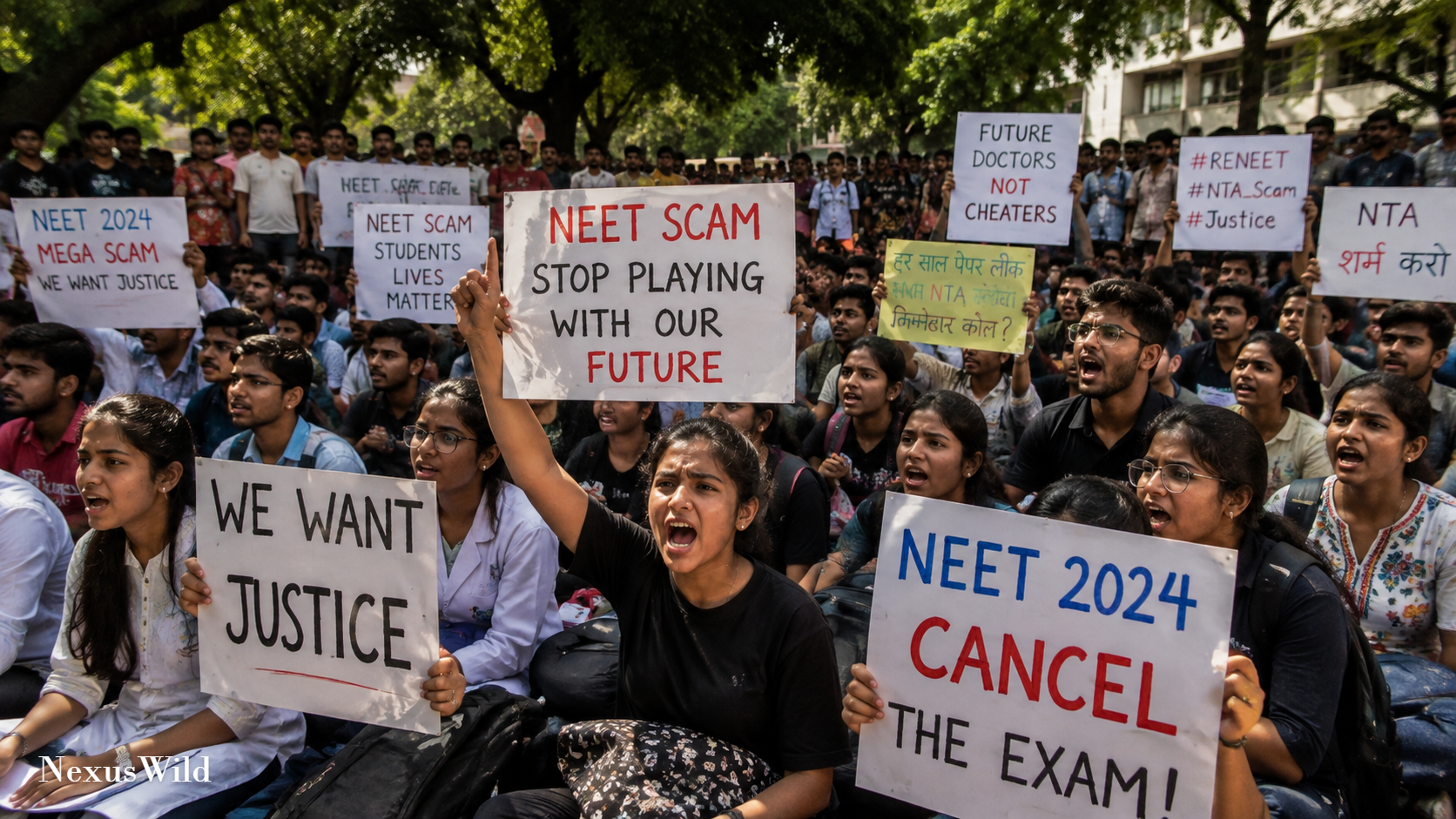
What began as satire quickly absorbed a much older set of grievances. The CJP's protest base camp at Jantar Mantar in central Delhi became a sustained sit-in through June and July, drawing student federations, opposition politicians, and - most consequentially - climate activist and education reformer Sonam Wangchuk, who joined an indefinite hunger strike in solidarity and declared himself an "honorary cockroach." Wangchuk was removed by Delhi Police from the protest site on July 18 and admitted to Safdarjung Hospital after more than 20 days without food; his wife, Gitanjali J. Angmo, subsequently approached the Delhi High Court over his continued hospitalization, according to reporting by Brut India. He ultimately broke his 26-day fast after meeting Union Ministers J.P. Nadda and Jitendra Singh, per Business Today's reporting on the government's negotiations.
The movement's messaging deliberately avoided partisan symbols. Organizers asked participants to carry only the Indian national flag, the Constitution, or portraits of B.R. Ambedkar, Mahatma Gandhi, and Bhagat Singh - explicitly instructing supporters to leave political party flags at home, a framing choice documented in the Wikipedia timeline of the Jantar Mantar protests. That strategy made the protests difficult for the ruling establishment to dismiss along familiar partisan or "anti-national" lines.
"Chalo Sansad": The Day the Standoff Turned Physical
Tension peaked on July 20, 2026, the opening day of Parliament's Monsoon Session, when the CJP launched its "Chalo Sansad" (March to Parliament) initiative. Delhi Police had already stated that no permission had been sought or granted for a march toward Parliament and had imposed prohibitory orders restricting assemblies near the area. Thousands of students, parents, and older supporters marched from Jantar Mantar toward Sansad Marg regardless, joined visibly by public figures including actors Prakash Raj and Shabana Azmi and Trinamool Congress MP Mahua Moitra, as documented in The Federal's photo record of the march.
Security forces responded with tear gas and baton charges to disperse the crowds near multiple layers of barricades; CJP founder Abhijeet Dipke was among those detained during the operation. Delhi Police publicly disputed characterizations of the response as violent, stating on social media that "no such incident has taken place and protest is being handled professionally." Protest organizers and much of the visual reporting from the day told a starkly different story, and the optics of the confrontation - students facing tear gas on the day Parliament reconvened - proved to be the turning point that hardened public opinion against the government's handling of the crisis.
The Resignation
Two rounds of government talks with CJP leaders, mediated by Union Ministers J.P. Nadda and Jitendra Singh, failed to produce a resolution in the days following the march. A third round was scheduled for Saturday, July 25. Hours before it could take place, Pradhan posted his resignation letter directly to X, framing his exit not as an admission of fault but as an act of national unity:
Considering the situation that has unfolded at Jantar Mantar and across the country - and to ensure that anti-national forces do not exploit this situation, that national unity remains intact... I have submitted my resignation letter to the Honorable Prime Minister.
- Dharmendra Pradhan, resignation statement, July 25, 2026
The Prime Minister's Office had not formally confirmed acceptance of the resignation at the time of Pradhan's announcement, according to The Week's reporting, though CJP leaders treated the announcement as their central demand met. Hours later, spokesperson Ashutosh Ranka - an IIT Kanpur and London School of Economics alumnus who had joined the movement's leadership - announced the protests would stand down, telling supporters that "all our demands have been accepted," per Al Jazeera's coverage of the announcement. The CJP's other stated demands included compensation of ₹10 lakh for the families of students who died by suicide after being told to retake the exam, and assurance that no punitive legal action would be taken against protest participants.
Addressing jubilant crowds at Jantar Mantar after the news broke, Dipke turned the moment back toward its origin, thanking the man whose remark had started it all: "If he hadn't called us cockroaches, I wouldn't have come to India. This movement would not have started."
The Government's Response: A Tougher Anti-Paper Leak Law
As the protests intensified through mid-July, Prime Minister Narendra Modi intervened directly, posting a late-night video message acknowledging that "paper leak is not an ordinary issue" and that it had caused immense pain to lakhs of students and their guardians, according to Republic World's coverage of the July 22 address. Modi announced that fast-track courts were already being established and promised stronger cabinet action against paper-leak networks within days.
That promise materialized on July 24, when the Union Cabinet approved the Anti-Paper Leak Bill 2026, an amendment to the existing Public Examinations (Prevention of Unfair Means) Act, 2024. The revised law raises the maximum prison term for organized examination fraud to 10 years and introduces fines of up to ₹10 crore for guilty syndicates and service providers, while also raising the minimum mandatory jail term from three to five years, per reporting from Outlook India and confirmed by wire reporting carried on The Federal. The bill also mandates fast-track courts and a time-bound investigation process, with probes required to conclude within a set statutory window rather than dragging on indefinitely, as prior paper-leak cases have historically done.
Separately, Pradhan himself had already acknowledged, ahead of his resignation, that there had been a "breach in the command chain" within the examination system, and confirmed that NEET-UG would transition to a fully computer-based testing format starting in 2027 - directly addressing the physical-paper-transport vulnerability that both the 2024 and 2026 leaks exploited, according to Wikipedia's ongoing timeline of the 2026 NEET controversy, which also confirms that CBI investigators traced the leak network to arrests in Maharashtra and Pune tied to coaching institutes and a school administrator.
What This Moment Signals
Whatever one makes of the CJP's satirical branding, the substance of the underlying grievance is not new: India's higher-education system funnels millions of aspirants through a small number of high-stakes exams, and repeated integrity failures in that system - this was NEET's second major leak controversy in three cycles - have visibly eroded public patience for administrative reassurance. Pradhan's resignation is a rare, concrete instance of that pressure translating into ministerial accountability rather than dissipating into another cycle of committee reports and quiet delay.
More broadly, the episode is a pointed reminder of what India's much-discussed "demographic dividend" can become when the institutions meant to channel it fail: a decentralized, digitally organized youth movement, born from a single courtroom insult, proved capable of forcing legislative action and a Cabinet-level resignation within ten weeks - without a formal leader, a registered party, or a traditional political machine behind it. Whether the structural fixes now underway - a tougher anti-paper-leak law, a shift to computer-based testing, and an overhauled NTA - outlast the news cycle that forced them is the question that will determine whether this moment is remembered as a genuine turning point or simply the latest chapter in a recurring story.
Nexuswild welcomes factual corrections. Email [email protected] with evidence and the article URL.