
The digital payments landscape in India is navigating one of the most consequential structural transitions in its decade-long history. For over six years, the country’s flagship payment rail - the Unified Payments Interface (UPI) - operated on a mandate of absolute zero cost for both consumers and merchants. This subsidized pipeline hyper-accelerated digital adoption, transforming India from a cash-heavy economy into the global undisputed leader of real-time digital transactions. However, operating a payment network that processes billions of transactions monthly requires massive, continuous capital expenditure.
In a landmark policy shift announced in mid-September 2026, the Government of India and the National Payments Corporation of India (NPCI) confirmed the introduction of a Merchant Discount Rate (MDR) on select, high-value UPI transactions. By transitioning away from a purely zero-MDR regime, the regulatory authorities are establishing a self-sustaining commercial model designed to fund the next decade of infrastructure resiliency, cybersecurity, and technological innovation.
While the introduction of transaction fees often triggers public apprehension, the new framework is highly calibrated. It ring-fences everyday consumers and micro-merchants from any financial burden, targeting only large-scale commercial payments. This comprehensive analysis delves into the exact mechanics of the newly announced UPI fee changes, explores the profound implications for banks and fintech service providers, and examines how this strategic pivot will reshape the future of India's booming digital payments market.
Latest UPI Fee Developments: The October 2026 Mandate
The conversation surrounding the monetization of India's retail payment systems has been ongoing for years, characterized by a delicate balancing act between promoting financial inclusion and ensuring the financial health of the banking sector. The turning point arrived following the Monsoon Session of Parliament in August 2026, when lawmakers passed an amendment to Section 10 A of the Payment and Settlement Systems Act, 2007. This legal amendment created the necessary enabling framework to levy an MDR on payments made through UPI and other specified electronic modes.
Following the legislative amendment, a specialized 22-member UPI and Services Steering Committee - comprising representatives from the Indian Banks' Association (IBA), the Payments Council of India (PCI), payment service providers, and industry stakeholders - convened to determine a fair and sustainable pricing structure.
On September 14, 2026, the government issued a formal gazette notification, followed immediately by detailed operational guidelines from the NPCI on September 15. The official mandate declared that effective October 15, 2026, a Merchant Discount Rate of 0.4 percent will be applied to Person-to-Merchant (P2M) UPI transactions that exceed ₹2,000.
To prevent the fee from becoming prohibitive on extremely high-value purchases - such as electronics, luxury goods, or vehicle down payments - the NPCI instituted a strict cap. The 0.4 percent MDR is capped at a maximum of ₹300 per transaction, a ceiling that is reached when a transaction value hits ₹75,000. Any payment above ₹75,000 will still only incur the flat ₹300 charge. This one-month lead time between the mid-September announcement and the mid-October implementation was deliberately designed to grant acquiring banks, payment aggregators, corporate accounting platforms, and fintech application providers adequate time to update their software engines and backend billing systems.
What the Fee Change Means: Mechanics and Exceptions
To understand the practical application of this policy, it is essential to deconstruct the concept of a Merchant Discount Rate. MDR is the fee that a merchant pays to the payment ecosystem - the banks, the network operator (NPCI), and the digital application providers - for the service of securely processing and settling a digital transaction.
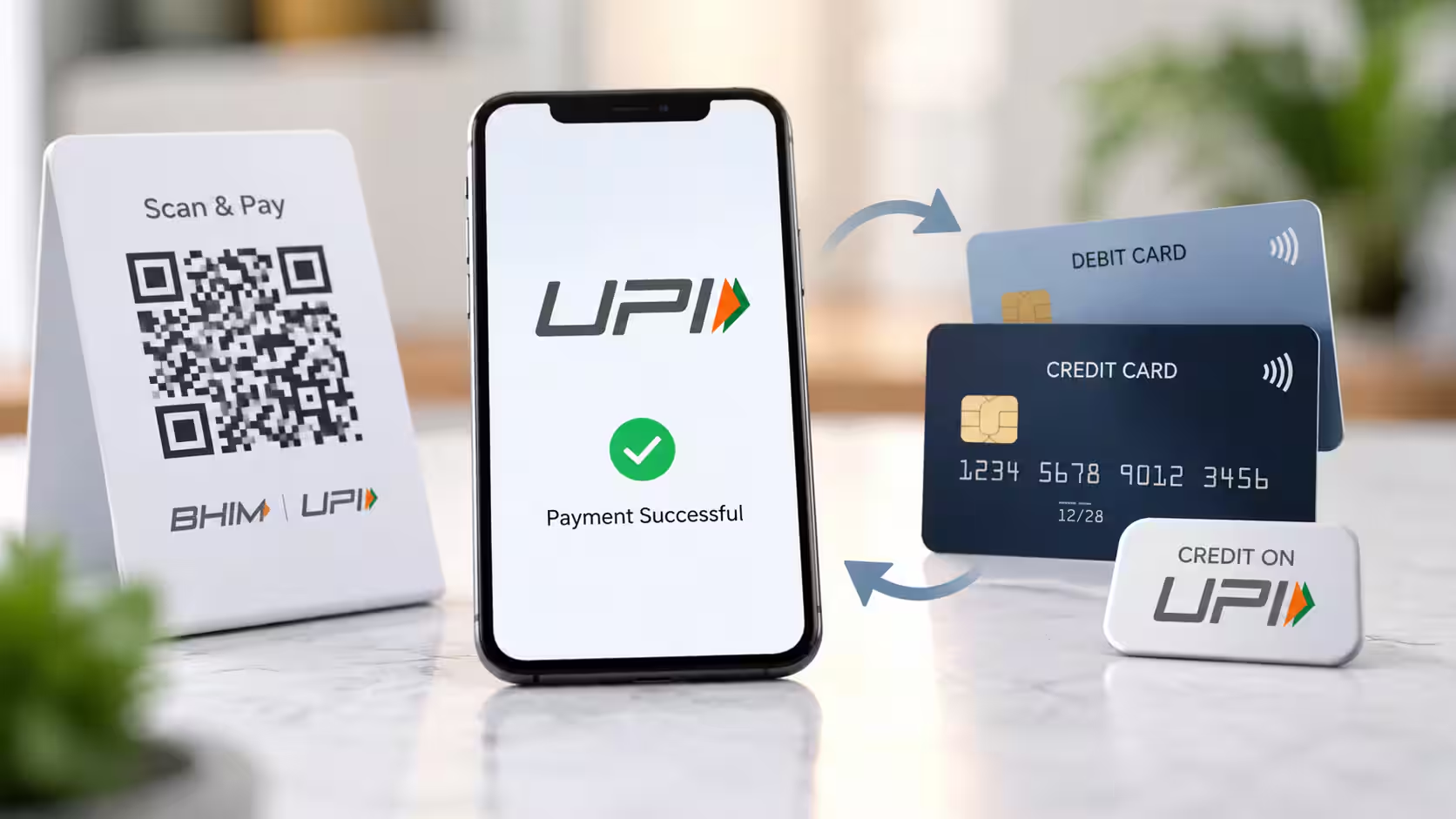
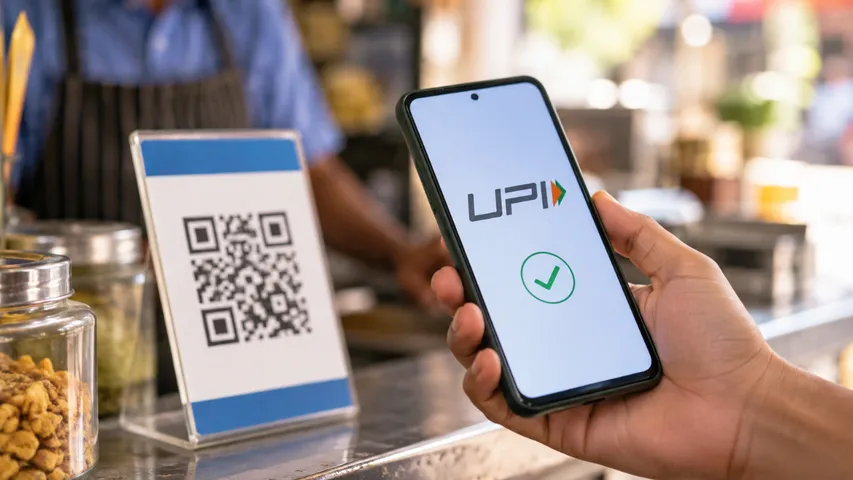
Under the new framework, if a customer purchases a smartphone for ₹10,000 and pays via scanning a merchant QR code, the 0.4 percent MDR is triggered because the transaction exceeds the ₹2,000 threshold. The MDR on this transaction equates to ₹40. Consequently, the merchant's bank account will be credited with ₹9,960. The ₹40 fee is then distributed among the various ecosystem players that facilitated the seamless transfer of funds.
However, the NPCI and the regulatory bodies have engineered the fee structure with a highly nuanced tier system, recognizing that different sectors of the economy operate on vastly different profit margins. To protect essential services and thin-margin industries, several notable exceptions to the standard 0.4 percent rate have been established:
- Essential Services: High-value payments exceeding ₹2,000 directed toward critical sectors - including railways, telecommunications, insurance premiums, fuel stations, utility bill payments (electricity, water, piped gas), educational institutions, and agricultural inputs - will not be subjected to the percentage-based MDR. Instead, these transactions will attract a nominal, flat MDR of just ₹5 per transaction, regardless of the total value.
- Financial Markets: Payments related to mutual fund investments, securities, stockbrokers, and financial dealers will attract a vastly reduced MDR of just 0.02 percent, which is also capped at ₹300 per transaction. This ensures that retail capital market investments are not heavily penalized.
- Automated Payments: Monthly utility bills, OTT media subscriptions, recurring investments, and other payments executed through automated recurring standing instructions (such as UPI Mandates or AutoPay) are entirely exempt from MDR charges, ensuring seamless continuity for subscription-based businesses.
Most importantly, the new policy strictly preserves the foundational premise of India's digital public infrastructure: peer-to-peer communication of value. All Person-to-Person (P2P) transactions - whether sending ₹50 to a friend for coffee or transferring ₹50,000 to a family member for an emergency - will continue to remain completely free of any charges, irrespective of the amount transferred.
Impact on Consumers and Merchants
Whenever payment networks introduce fees, the immediate concern is whether those costs will cascade down to the end consumer, resulting in digital inflation. The Ministry of Finance and the RBI have moved aggressively to preempt this outcome.
Absolute Immunity for Consumers
The government has explicitly mandated that consumers will not bear any direct or indirect costs for utilizing the UPI network. The Finance Ministry has strongly advised all participating banks to ensure that merchants do not pass the MDR charges onto customers at the point of sale in the form of convenience fees or surcharges. Furthermore, digital application providers have been expressly prohibited from imposing platform fees, hidden gateway charges, or processing levies on the consumer. For the retail user standing at a checkout counter, the experience remains identical to the pre-October era: if the bill is ₹2,100, the amount debited from their bank account will be exactly ₹2,100, and not a single rupee more.
Protecting the Micro-Merchant
For the merchant community, the introduction of the fee represents a shift in operational costs, but the impact is highly isolated. The government data indicates that an overwhelming majority of retail commerce in India consists of low-ticket items. Every single merchant payment up to ₹2,000 remains entirely free. This means that daily transactions at local grocery stores, autorickshaw fares, tea stalls, and vegetable vendors are completely outside the scope of the new charge. The Finance Ministry estimates that approximately 95 to 96 percent of all merchant transactions by volume will remain untouched by the new MDR.
To further protect the informal economy, the NPCI has formalized a specific category known as Person-to-Person-Merchant (P2PM). This category encompasses small merchants, street vendors, and independent contractors who receive payments via UPI QR codes linked to their personal bank accounts. Under the new framework, any small merchant whose total inward UPI credit does not exceed ₹1 lakh per month remains entirely exempt from all MDR charges, even if an individual customer makes a single payment exceeding ₹2,000.
To enforce this, banks and payment service providers will utilize a transaction velocity check. A micro-merchant is only reclassified into the regular Person-to-Merchant (P2M) category - and thereby subjected to the 0.4 percent MDR on large transactions - if their aggregate monthly UPI inflows exceed the ₹1 lakh threshold for three consecutive months. The NPCI has also clarified that small merchants will not be required to replace or re-register their existing physical QR codes; the backend software will automatically handle the classification and exemptions.
Impact on Banks and Fintech Companies
To appreciate the necessity of the new MDR framework, one must examine the hidden costs of running a digital payment network that processes hundreds of billions of transactions. Operating the UPI infrastructure requires massive, continuous investments in high-capacity servers, real-time settlement engines, cryptographic security, fraud monitoring algorithms, and round-the-clock customer grievance redressal systems.
Since January 2020, when the zero-MDR mandate was instituted for UPI and RuPay debit cards, the banks and payment service providers have borne the operational costs of this infrastructure without a direct revenue stream. To keep the system afloat, the central government stepped in with an annual incentive scheme. The Union Budget for 2026 estimated a subsidy payout of ₹2,000 crore to compensate the ecosystem, following payouts of ₹2,196.21 crore in 2025-26 and ₹1,922.77 crore in 2024-25. However, as the NPCI and industry stakeholders have repeatedly pointed out, running the UPI ecosystem at its current astronomical scale costs an estimated ₹20,000 crore annually. Government subsidies were only ever intended to serve as short-term bridge funding during the network's high-growth adoption phase.
The introduction of the 0.4 percent MDR creates a massive, organic revenue pool that will finally make the ecosystem commercially viable. The funds generated from high-value merchant transactions will be distributed among the key players: the acquiring bank (which deployed the merchant's QR code or soundbox), the issuer bank (which holds the customer's funds), the payment application provider, and the NPCI (the central network operator).
For the banking sector and fintech companies, this marks the dawn of a new economic era. Payment application providers, which have historically burned through venture capital while struggling to monetize their massive user bases, now have a clear, sustainable revenue line. This commercial viability will spur a new wave of innovation. The RBI has noted that a fair and appropriate distribution of MDR will support continued investment in technology, allowing banks to upgrade legacy mainframe systems to prevent transaction failure rates, deploy advanced AI-driven cybersecurity measures, and expand acceptance networks deeper into rural and semi-urban geographies.
UPI Market Data and Exponential Growth
The transition to a fee-based model for large merchants is occurring at a time when the UPI network has reached an unparalleled scale, reflecting deep integration into the daily financial lives of Indian citizens. The volume and value of transactions processed by the network are staggering, confirming its status as the world’s largest real-time payment system.
According to a comprehensive statistical review of the network's first decade, the annual transaction volume expanded from a mere 1.78 crore (17.8 million) transactions in the 2016-17 financial year to an astonishing 24,162 crore (241.6 billion) transactions by the end of the 2025-26 fiscal year. This represents an almost 13,000-fold surge in transaction volume over ten years. Parallelly, the annual transaction value rose sharply from ₹0.07 lakh crore in 2016-17 to approximately ₹314.2 lakh crore in 2025-26, translating into a more than 4,000-fold increase in monetary value handled by the network.
The growth momentum shows no signs of plateauing. In July 2026, the network recorded a historic milestone, processing 2,366 crore (23.66 billion) transactions in a single month, with a combined monetary value of ₹29.88 lakh crore. By August 2026, the system was servicing over 550 million unique users across the country, with 741 banks operating live on the platform. Today, UPI commands an 84 percent share of India's total digital payments ecosystem and accounts for nearly 49 percent of all real-time digital transactions globally.
The network is also expanding its global footprint. As of late 2026, UPI acceptance is operational in 11 countries, emerging as a viable global platform for cross-border digital payments and remittances. Transitioning this colossal, globally significant infrastructure from a subsidized model to a commercially self-sustaining entity is a logical maturation for a network of this magnitude.
Industry and Expert Views
The policy shift has drawn extensive commentary from lawmakers, central bankers, and industry experts. The consensus among financial regulators is that the move is an unavoidable and necessary step for systemic health.
In a formal statement addressing the policy, the Reserve Bank of India emphasized that the transition is “an important step towards strengthening the long-term sustainability of India's digital payments ecosystem.” The central bank noted that allowing ecosystem participants to earn a fair return on their technological investments is the only way to ensure that UPI can continue to scale, innovate, and serve consumers without suffering from infrastructure fatigue or security vulnerabilities.
During the parliamentary debates preceding the amendment, Finance Minister Nirmala Sitharaman robustly defended the commercialization strategy while alleviating public fears. She assured the nation that the foundational ethos of UPI as a public good for the common citizen remains intact. "The vast majority of merchant transactions, including ordinary, low-value transactions, will continue to remain free. Any future MDR will apply only to a limited category of merchant transactions above a prescribed threshold," the Finance Minister stated on the floor of the house, reiterating that everyday commerce would remain frictionless.
While banking executives have universally lauded the move as a victory for operational sustainability, some political and trade organizations have expressed localized concerns. Certain trade associations argued that the MDR could be construed as an assault on small traders and shopkeepers who have championed the digital shift over the past half-decade. However, financial analysts and the NPCI have swiftly rebutted these concerns by pointing to the ₹1 lakh monthly inward credit exemption rule. Experts note that a merchant receiving more than ₹1 lakh strictly through digital payments in a single month is operating a robust commercial enterprise, not a micro-business, and can therefore easily absorb a 0.4 percent operational processing cost.
Furthermore, international payment experts point out that the newly established rates are highly competitive on a global scale. In Brazil, the highly successful PIX real-time payment system levies a merchant charge of around 0.33 percent, while corresponding charges in China's digital payment ecosystems hover around 0.40 percent. By aligning with these international benchmarks, India is ensuring its network remains globally competitive while finally addressing domestic profitability.
Potential Market Implications
As the October 15 implementation date approaches, the broader financial technology market is anticipating several strategic shifts in how digital commerce is conducted in India.
The most immediate implication is the stabilization of business models for payment aggregators and fintech applications. Companies that have built massive user bases by distributing QR codes and audio-confirmation soundboxes to merchants will finally see a direct return on their hardware and acquisition investments. This new revenue stream is expected to trigger a fresh wave of competition among banks and fintechs to acquire high-value merchants - such as electronics retailers, jewelry stores, and luxury apparel brands - since processing payments for these entities will now yield tangible profits.
A critical question raised by retail analysts is whether the imposition of the 0.4 percent fee will cause a behavioral regression, prompting merchants selling high-ticket items to discourage UPI and demand cash. However, market economists view this outcome as highly unlikely. Consumer behavior in India has fundamentally shifted; shoppers now expect the convenience, security, and instantaneous nature of digital payments. Merchants who refuse UPI to save a fraction of a percent risk alienating a massive consumer base that no longer carries large amounts of physical cash.
Furthermore, when comparing the new UPI MDR to alternative digital payment methods, UPI remains the most economically attractive option for merchants. Traditional credit card transactions typically carry an MDR ranging from 1.5 percent to 2.5 percent of the sale value. Even standard debit card MDRs are capped at up to 0.90 percent. At just 0.4 percent, with a hard cap of ₹300, UPI continues to be the cheapest, fastest, and most settlement-efficient mode of digital payment available to the Indian retail sector. Rather than stifling growth, experts predict that the revenue generated will allow payment providers to offer better merchant services, robust lending products, and advanced analytics dashboards, ultimately deepening merchant loyalty to the digital ecosystem.
Conclusion
The introduction of a 0.4 percent Merchant Discount Rate on high-value UPI transactions marks the end of an era and the beginning of a mature, sustainable future for India's digital payments market. The six-year zero-MDR policy was a masterclass in behavioral economics - a state-subsidized strategy that successfully broke the country's historic reliance on cash and built the largest, most vibrant real-time payment network on the planet.
However, scaling a network to process over 240 billion annual transactions requires more than government subsidies; it requires a robust, commercially viable economic engine. By carefully designing the new fee structure to completely exempt everyday consumers, small-value purchases, and micro-merchants, the government and the NPCI have successfully protected the vulnerable segments of the economy while mandating that large-scale commercial retail pays its fair share for utilizing world-class financial infrastructure.
As the new rules take effect on October 15, 2026, the revenue generated will flow back into the ecosystem, funding the next generation of cybersecurity, server infrastructure, and technological innovation. Rather than disrupting the digital payments market, the targeted UPI fee change ensures its survival, equipping the network with the financial resilience needed to support India’s continued trajectory toward becoming a fully digitized, trillion-dollar digital economy.
Further reading and useful links
Reader questions
Frequently asked questions
Will consumers be charged for using UPI?
No, consumers will not bear any direct or indirect costs for utilizing the UPI network. The government has mandated that merchants cannot pass the MDR charges onto customers.
Which transactions will attract the new 0.4% MDR?
Effective October 15, 2026, a 0.4% MDR will apply only to Person-to-Merchant (P2M) UPI transactions that exceed ₹2,000. It is capped at a maximum of ₹300 per transaction.
Are person-to-person (P2P) transfers affected by the new fees?
No, all Person-to-Person (P2P) transactions remain completely free, regardless of the amount transferred.
How does the new fee structure protect small merchants?
Small merchants who receive up to ₹1 lakh per month through UPI QR codes linked to their personal bank accounts are exempt from all MDR charges, even for single payments exceeding ₹2,000.
Nexuswild welcomes factual corrections. Email [email protected] with evidence and the article URL.