
The global shift toward sustainable power generation is witnessing one of its most critical expansions in South Asia. India, one of the world's fastest-growing major economies and a historically coal-dependent nation, has rapidly accelerated its transition toward clean energy. Driven by aggressive government targets, massive domestic and foreign capital inflows, and rapidly declining technology costs, the country is fundamentally restructuring its power grid.
Recent data released by the Ministry of New and Renewable Energy (MNRE) and the Central Electricity Authority (CEA) in the third quarter of 2026 indicates a historic shift in the country's energy mix. As the nation races toward its ambitious commitment to achieve 500 gigawatts (GW) of non-fossil fuel capacity by 2030, the latest capacity additions highlight a sector moving from a transitional phase into a period of dominant market share.
This comprehensive analysis examines the latest verifiable data on India’s renewable energy expansion, detailing the specific growth across solar, wind, and hydro sectors. It explores the economic and policy drivers behind this acceleration, the substantial investments funding the transition, and the critical logistical and technological challenges that grid operators and policymakers must navigate to sustain this momentum.
Latest Renewable Energy Capacity
To understand the scale of India's clean energy transition, it is necessary to examine the latest capacity milestones. As of July 2026, India's total installed power generation capacity stood at approximately 552 GW. In a landmark achievement for the nation’s climate goals, the total non-fossil fuel capacity reached 300.50 GW by the end of July 2026. This means that clean and renewable energy sources now account for over 54 percent of the country’s total installed electricity capacity, decisively tipping the scale away from traditional thermal baseloads.
Breaking down these figures provides a clearer picture of the technological mix driving the transition. According to MNRE data submitted to the Rajya Sabha in mid-2026 by the Union Minister of State for New and Renewable Energy, Shripad Yesso Naik, the core renewable energy capacity (excluding nuclear) stood at 288.58 GW.
The composition of this renewable capacity is highly diversified, though heavily weighted toward solar energy:
- Solar Power: The undisputed leader of the renewable portfolio, accounting for roughly 162.15 GW by the end of June 2026, and officially crossing the 168 GW mark by August 2026.
- Wind Power: Holding the second-largest share with 57.44 GW of installed capacity.
- Large and Small Hydro: Contributing a combined 57.24 GW, providing essential grid stability and flexible baseload generation.
- Bio-Power: Accounting for 11.75 GW, including biomass cogeneration and waste-to-energy projects.
- Nuclear Power: While not classified under standard renewables, nuclear energy provides 8.78 GW of zero-emission, non-fossil fuel capacity.
This robust portfolio firmly establishes India as the world’s third-largest nation in terms of installed renewable energy capacity. The trajectory is equally notable; the country's renewable capacity has surged nearly fourfold from a modest 76.38 GW in 2014 to its current levels, reflecting a decade of sustained policy focus and aggressive execution.
Solar and Wind Energy Growth
The expansion of India's renewable energy sector is not uniform across all technologies; it is fundamentally a solar-driven revolution, supplemented by steady advancements in wind energy infrastructure.
The Solar Power Boom
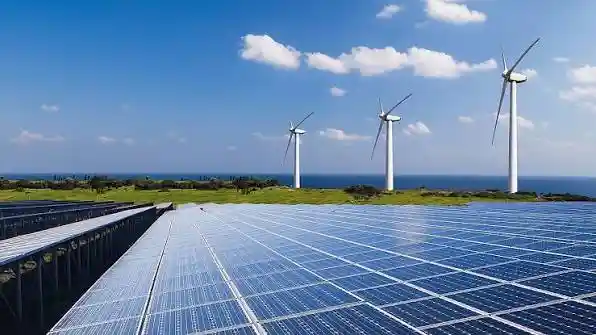
India’s solar capacity has experienced a staggering 60-fold increase over the past twelve years. In 2014, the country possessed a mere 2.8 GW of solar capacity. By August 2026, that figure surpassed 168 GW. The pace of installation has accelerated dramatically in recent months. In the first eight months of 2026 alone, the country added an estimated 34.45 GW of new solar capacity.
This massive solar deployment is divided between utility-scale ground-mounted projects, which account for roughly 120 GW, and a rapidly expanding rooftop solar segment. The residential rooftop sector received a massive injection of momentum with the launch of the PM Surya Ghar scheme. Backed by a total outlay of ₹75,021 crore, the scheme aims to solarize one crore (10 million) households. By August 2026, over 51.58 lakh households were benefiting from rooftop installations under this initiative, supported by approximately ₹28,024 crore in direct government subsidies. Crucially, nearly 19 lakh of these households are now receiving zero electricity bills, demonstrating the direct economic benefit of decentralized clean energy.
Furthermore, the government is diversifying its solar strategy to overcome land acquisition hurdles. In September 2026, the Union Cabinet approved the Pradhan Mantri Surya Sarovar Yojana (PM-SSY). This ₹5,070 crore scheme is designed to build 5,000 MW of floating solar capacity across the country's reservoirs and industrial water bodies. By utilizing water surfaces, the government aims to deploy solar panels without competing for scarce agricultural or commercial land.
Wind Energy Advancements
While solar captures the majority of headlines, the wind energy sector remains a foundational pillar of India's green grid. With 57.44 GW of installed capacity, onshore wind provides a complementary generation profile to solar, often producing maximum output during evening hours and monsoon seasons when solar generation dips.
A significant achievement in this sector is the localization of the supply chain. India’s domestic wind turbine manufacturing capacity reached approximately 24 GW annually by early 2026, up from just 10 GW in 2014. The industry has achieved an impressive 70 to 80 percent indigenization across key turbine components, reducing reliance on imported machinery.
Looking toward the future, the government has formally initiated its offshore wind strategy. In June 2026, the Union Cabinet approved a ₹7,453 crore Viability Gap Funding (VGF) scheme to support the development of the country's first 1 GW of offshore wind projects. Offshore wind benefits from higher and more consistent wind speeds compared to onshore sites, promising higher capacity factors and a more reliable energy yield for the grid.
Government and Private Investment
The transition to a clean-energy economy is highly capital-intensive, requiring trillions of rupees to finance generation assets, upgrade transmission networks, and deploy energy storage. The growth witnessed in India's renewable sector is the direct result of a highly successful mobilization of both domestic and international capital.
According to official MNRE disclosures, the Indian renewable energy sector attracted approximately $45.72 billion in Foreign Direct Investment (FDI) between the 2014 and 2026 fiscal years. International sovereign wealth funds, global private equity firms, and multinational energy conglomerates have identified India as one of the most lucrative and scalable green energy markets in the world.
Domestically, the financial mobilization has been even larger. Over the same 12-year period, domestic financial institutions deployed an estimated ₹12.32 lakh crore toward the renewable energy sector. This capital injection was led by 12 public sector banks alongside specialized non-banking financial companies and development institutions, including the Indian Renewable Energy Development Agency (IREDA), Power Finance Corporation (PFC), REC Limited, and the National Bank for Financing Infrastructure and Development (NaBFID).
This liquidity is supported by government policies designed to de-risk investments. The Solar Energy Corporation of India (SECI) acts as a highly credible intermediary, signing long-term Power Purchase Agreements (PPAs) with renewable energy developers and then selling that power to state distribution companies (DISCOMs). By mitigating the counterparty risk historically associated with financially distressed state DISCOMs, SECI has enabled developers to secure lower interest rates from commercial lenders, ultimately driving down the levelized cost of energy.
Progress Toward Clean-Energy Targets
India's renewable energy expansion is guided by a set of legally binding international commitments and highly aggressive domestic targets. At the COP26 summit, India committed to achieving 500 GW of non-fossil fuel electricity capacity by 2030 and reaching net-zero emissions by 2070.
Crossing the 300.5 GW non-fossil threshold in July 2026 confirms that the country is firmly on track to meet its 2030 objective. Reaching 54 percent of total capacity from non-fossil sources also means India has already comfortably surpassed its initial Nationally Determined Contribution (NDC) target of achieving 40 percent cumulative electric power installed capacity from non-fossil fuel-based energy resources well ahead of schedule.
However, industry analysts note that while installed capacity targets are being met, the actual generation mix - the amount of electricity flowing through the grid at any given moment - remains heavily reliant on coal. Because solar and wind have lower capacity factors (typically operating at 20 to 30 percent efficiency compared to 70 to 80 percent for thermal plants), fossil fuels still generate the majority of the total terawatt-hours consumed annually. Closing the gap between installed renewable capacity and actual grid generation is the primary objective of the next phase of the transition.
Impact on Electricity Generation, Energy Security, and Emissions
The macroeconomic and environmental impacts of this accelerated renewable deployment are becoming increasingly visible in national statistics.
From an energy security perspective, maximizing domestic renewable generation directly reduces India’s reliance on volatile imported fossil fuels. Official government data from the Ministry of Power highlights that coal imports by thermal power plants fell to 45.4 million tonnes (MT) in the 2025–26 fiscal period, down from 62.5 MT the previous year - a decline of 27.4 percent. While domestic coal production increased to meet rising baseline electricity demand, the aggressive integration of solar and wind generation successfully displaced a significant portion of expensive, imported thermal coal.
Environmentally, the displacement of fossil fuels is mitigating millions of tonnes of greenhouse gas emissions annually. Projects like the newly approved PM-SSY floating solar scheme are expected to cut close to 10 million tonnes of carbon emissions per year once fully operational. Furthermore, distributed generation models, such as rooftop solar, are reducing transmission and distribution (T&D) losses, as the power is consumed exactly where it is generated, improving the overall thermal efficiency of the national grid.
Economically, the transition is serving as a major engine for industrial manufacturing and job creation. Backed by government incentives, domestic solar module manufacturing capacity expanded from a mere 2.3 GW in 2014 to roughly 172 GW by March 2026. This domestic manufacturing base is insulating Indian developers from global supply chain shocks and creating tens of thousands of high-skilled jobs in the green economy.
Challenges Facing the Sector
Despite the record-breaking capacity additions and massive financial investments, the Indian renewable energy sector faces several formidable structural and logistical challenges that must be addressed to ensure grid stability and sustain future growth.
Grid Integration and Energy Storage
The most pressing technical challenge is the integration of intermittent energy sources into the national grid. Solar power peaks at midday and drops to zero at sunset - exactly when national electricity demand typically spikes. Wind power is highly seasonal and unpredictable. As the share of intermittent renewables grows, the grid requires massive amounts of flexible energy storage to absorb excess daytime power and dispatch it during evening peak hours.
Currently, India’s grid-scale battery storage capacity is entirely insufficient to manage a 500 GW renewable portfolio. Recognizing this bottleneck, the government has mandated that the new 5,000 MW floating solar scheme (PM-SSY) be paired with at least 10,000 MWh of battery storage. Furthermore, the government is heavily promoting Pumped Hydro Storage (PHS) projects, which utilize excess renewable energy to pump water to a higher elevation, releasing it through turbines when power is needed. Scaling these storage solutions rapidly is critical to preventing grid curtailment, where grid operators are forced to turn off solar plants because the transmission system cannot handle the daytime surge.
Land Acquisition and Transmission Infrastructure
Utility-scale solar and wind farms require vast expanses of contiguous land. In a densely populated and heavily agricultural nation like India, acquiring land with clear legal titles is a time-consuming, expensive, and often socially contentious process. Delays in land acquisition remain one of the primary reasons renewable energy projects miss their commissioning deadlines.
Even when land is acquired and plants are built, the power must be transported to load centers. Renewable energy resources are geographically concentrated; the best solar potential lies in Rajasthan and Gujarat, while the best wind potential is along the southern and western coasts. Transporting this power to industrial hubs in the north and east requires massive high-voltage direct current (HVDC) transmission lines. The government’s Green Energy Corridor project aims to build this necessary infrastructure, but constructing interstate transmission lines frequently lags behind the rapid deployment of solar parks, creating temporary evacuation bottlenecks.
Supply Chain Dependencies
While India has successfully scaled its solar module assembly capacity to 172 GW, the upstream supply chain remains vulnerable. The country still relies heavily on imports for solar cells, silicon wafers, and polysilicon. Expanding domestic manufacturing capabilities higher up the value chain is necessary to achieve true energy independence and protect the sector from international trade disputes or raw material shortages.
Expert and Industry Views
The consensus among government officials, energy economists, and industry leaders is that India has successfully navigated the initial, high-friction phase of the clean energy transition and is now focused on execution and grid modernization.
Union Minister Shripad Yesso Naik has repeatedly emphasized in parliamentary responses that the surge in capacity from 76 GW to over 288 GW is a testament to the stability of India's policy environment. By maintaining transparent bidding guidelines, honoring long-term power purchase agreements, and continuously opening new avenues for foreign direct investment, the government has successfully positioned India as a global superpower in renewable energy deployment.
Energy experts from domestic and international organizations note that the dropping levelized cost of energy (LCOE) is the true engine of this growth. Solar tariffs in India, which hovered around ₹18 per unit in 2010, have dropped below ₹2.50 per unit in recent years. Analysts point out that renewable energy is no longer being deployed merely to satisfy climate commitments; it is being deployed because it is objectively the cheapest source of bulk electricity available to the Indian market today.
However, grid management experts caution that the next 200 GW of capacity will be significantly harder to integrate than the first 300 GW. Industry organizations stress that regulatory frameworks must rapidly evolve to incentivize ancillary services, time-of-day pricing, and massive grid-scale battery deployments. Without a synchronous expansion of storage and transmission infrastructure, the rapid addition of raw solar and wind capacity could lead to grid instability.
Conclusion
India’s expansion of its renewable energy capacity represents a monumental achievement in global climate action and domestic economic strategy. By officially surpassing 300 GW of non-fossil fuel capacity in 2026, the country has proven its ability to execute massive infrastructure projects at an unprecedented scale.
The record-breaking additions in solar power, the revitalization of the domestic wind turbine manufacturing sector, and the strategic push into offshore wind and floating solar demonstrate a highly diversified and resilient approach to the clean-energy transition. Backed by tens of billions of dollars in foreign and domestic investment, India is not merely adopting green technology; it is rapidly scaling domestic manufacturing to supply it.
As the country continues its march toward the 500 GW target by 2030, the focus must now shift toward systemic integration. Overcoming the challenges of land acquisition, scaling battery energy storage, and building out the Green Energy Corridors will dictate the ultimate success of the transition. If the current momentum is paired with strategic grid modernization, India is well-positioned to secure its energy independence, fuel its economic growth, and lead the global developing world toward a sustainable, decarbonized future.
Further reading and useful links
Reader questions
Frequently asked questions
What is India's current non-fossil fuel capacity?
As of mid-2026, India's non-fossil fuel power capacity crossed 300.5 GW, accounting for over 54 percent of the nation's total installed power capacity of approximately 552 GW.
How much solar capacity has India installed?
India's installed solar capacity reached over 168 GW by August 2026, driven by large utility-scale projects and massive residential adoption through the PM Surya Ghar scheme.
What is India's clean energy target for 2030?
India has committed to achieving 500 GW of non-fossil fuel-based electricity capacity by the year 2030, alongside targeting net-zero carbon emissions by 2070.
What are the biggest challenges facing India's renewable energy sector?
The primary challenges include intermittent power grid integration, insufficient grid-scale battery storage, delays in contiguous land acquisition, and upstream supply chain dependencies on imported solar cells and polysilicon.
Nexuswild welcomes factual corrections. Email [email protected] with evidence and the article URL.