
For an e-commerce business, making a sale is only part of the challenge. Getting the product into the customer's hands at an affordable cost can be just as important. As online shopping expands and consumers expect faster deliveries, the final stage of shipping has become one of the most significant pressures on retail profitability.
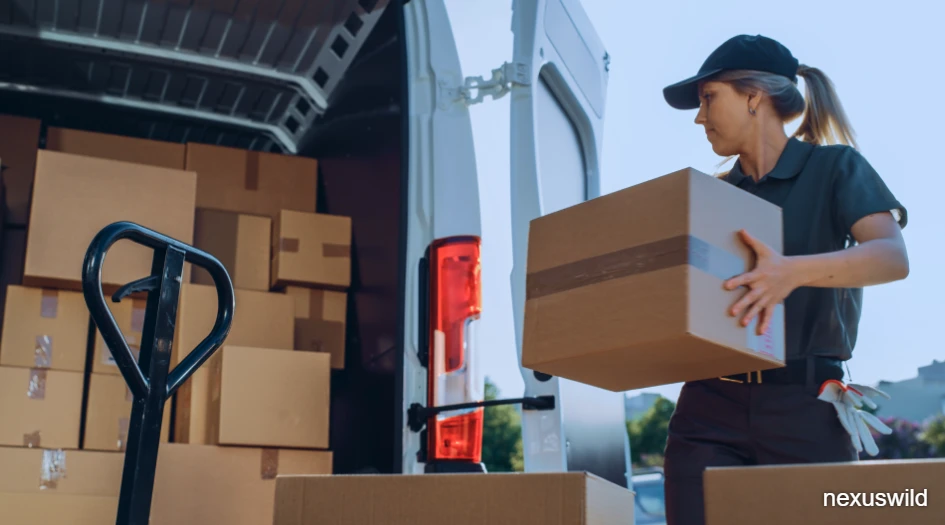
Known as last-mile delivery, this stage covers the movement of a parcel from a local distribution hub or fulfilment centre to the customer's doorstep. Although it is the final leg of the supply chain, it can account for a substantial share of total logistics expenditure.
For online retailers operating on thin margins, even a small increase in delivery costs can reduce the profit earned on each order. Failed deliveries, customer returns, cash-on-delivery transactions and demands for same-day shipping can make the economics even more difficult.
The challenge is particularly relevant in India, where e-commerce is expanding beyond major metropolitan areas into smaller cities and towns. Businesses must balance affordability, delivery speed and service quality without allowing fulfilment expenses to consume their margins.
Why Last-Mile Delivery Is So Expensive
The final stage of delivery is often more complicated than transporting large quantities of goods between warehouses. Parcels must be separated by destination, assigned to delivery routes and taken to individual addresses, frequently across congested streets or widely dispersed communities.
Each stop requires time, fuel or electricity, labour and coordination. Delivery personnel may also encounter incorrect addresses, unavailable customers, restricted building access and traffic delays.
These expenses become more difficult to manage when a route contains relatively few successful deliveries. A vehicle covering a long distance to deliver only a handful of parcels can generate a much higher cost per order than one serving a densely populated neighbourhood.
According to a 2026 report by the Centre for Social and Economic Progress, last-mile delivery represents roughly 60% of total logistics costs per parcel in India's e-commerce sector. The report also identifies low average order values and substantial return rates as constraints on profitability.
This means retailers cannot assess shipping efficiency solely by looking at the amount charged by a courier company. They must consider the full cost of completing an order successfully.
The Hidden Cost of Failed Deliveries
A failed delivery can turn an otherwise profitable transaction into a financial loss. When a customer is unavailable, an address is incorrect or a cash-on-delivery order is refused, the business may need to arrange another attempt or return the parcel to a warehouse.
These events create additional transportation and handling expenses without necessarily generating revenue.
The impact can extend beyond the immediate shipping bill. Returned inventory may remain unavailable for sale during transit, require inspection or repackaging, or lose value if the product is seasonal or time-sensitive.
Cash-on-delivery orders can create additional complications because the seller must manage payment collection and may face a greater risk of refusal at the doorstep.
For businesses with limited margins, these costs accumulate quickly. A delivery operation that appears inexpensive when measured per shipment may become significantly more expensive when calculated per successfully completed order.
Retailers therefore need to track delivery success rates, reattempts, return-to-origin rates and the total cost of returned parcels rather than focusing on the initial shipping charge alone.
Free Shipping Creates a Profitability Dilemma
Free shipping is an effective marketing tool because customers often compare the total checkout price across different retailers. However, the absence of a delivery fee for the buyer does not mean the service is free for the seller.
Retailers must absorb the expense themselves or recover it through product margins, supplier arrangements, membership fees or minimum-order thresholds.
The problem becomes more pronounced when businesses compete through discounts while simultaneously promising faster delivery. A product sold at a low margin may not generate enough revenue to cover picking, packing, transportation, payment processing and customer support.
Smaller businesses can be particularly vulnerable because they lack the shipment volumes needed to negotiate favourable carrier rates or distribute fixed logistics expenses across a large number of orders.
One possible response is to offer free shipping only above a minimum purchase value. Another is to provide different delivery options, allowing customers to choose between standard shipping and a paid express service.
The right approach depends on customer behaviour, average order value and the actual cost of serving each delivery location.
Faster Delivery Raises the Stakes
The expansion of same-day and quick-commerce services has changed customer expectations. Many shoppers increasingly value convenience and speed, putting pressure on retailers to shorten delivery windows.
However, faster fulfilment often requires inventory to be positioned closer to customers. Businesses may need additional local warehouses, smaller fulfilment centres, more delivery personnel and technology capable of coordinating orders in real time.
These investments can improve service quality and reduce travel distances when demand is sufficiently concentrated. But maintaining extensive infrastructure in areas with limited order volumes can make each delivery more expensive.
The challenge is especially relevant when retailers expand into new cities before demand becomes predictable. A company may gain geographic reach while struggling to generate enough orders in each location to make its delivery network economical.
The experience of India's quick-commerce sector illustrates the trade-off between growth and profitability. Companies have invested heavily in local fulfilment infrastructure and faster delivery, while competition and discounting continue to put pressure on margins.
For e-commerce businesses, the objective should not always be to deliver as quickly as possible. It should be to offer a delivery speed customers value at a cost the business can sustain.
Returns Add Another Layer of Logistics Costs
Returns create a second logistics journey that retailers must account for. After a customer sends a product back, the business may have to arrange collection, transport the item to a processing centre, inspect its condition and determine whether it can be resold.
The process is particularly challenging in categories such as fashion, where sizing issues and changing preferences can lead to frequent returns. Electronics may require additional checks to establish whether an item is complete, functional and suitable for resale.
High return volumes can also increase warehouse congestion and delay the availability of inventory for new customers.
Retailers can reduce avoidable returns by improving product descriptions, publishing accurate sizing information, using clear product photographs and providing reliable delivery estimates. Better quality control and customer support can also help address problems before they result in a return.
Businesses should distinguish between legitimate customer returns and preventable operational failures. The former may be necessary to maintain trust, while the latter can signal problems with product information, packaging or fulfilment.
How Technology Can Reduce Delivery Costs
Technology can help retailers improve route efficiency, forecast demand and identify expensive delivery patterns.
Route-optimisation systems can group nearby orders and reduce unnecessary travel. Better address intelligence can help delivery personnel find customers more reliably, while automated notifications and delivery confirmation can reduce missed attempts.
Demand forecasting can also help businesses position inventory closer to areas where orders are likely to occur. This can reduce delivery distances and improve the utilisation of vehicles and fulfilment facilities.
Artificial intelligence is increasingly being used to support these processes, including address correction, delivery sequencing and operational planning. However, the benefits depend on data quality, integration with existing systems and the ability of businesses to act on the insights generated.
For smaller retailers, outsourcing fulfilment to established logistics providers may be more economical than building a delivery network from scratch. The trade-off is that businesses must evaluate service reliability, pricing structures, coverage and the provider's ability to handle returns.
Technology is therefore a tool for improving delivery economics, not a guarantee of lower costs. Its value should be measured through outcomes such as fewer failed deliveries, lower cost per successful order and improved customer satisfaction.
The Metrics Every E-Commerce Business Should Monitor
Retailers seeking sustainable growth should assess delivery performance through a combination of financial and operational indicators.
Cost per successful delivery: Total delivery-related expenses divided by the number of orders successfully delivered. This captures the impact of failed attempts and returns more accurately than the initial shipping fee.
First-attempt delivery rate: The proportion of orders delivered successfully on the first attempt. Improving this measure can reduce repeat trips and unnecessary handling.
Return-to-origin rate: The proportion of shipments returned to the seller without reaching the customer. Monitoring this figure can help identify problems with payment methods, addresses, customer confirmation and delivery operations.
Average order value: The average amount customers spend per transaction. A higher order value can provide more room to absorb fulfilment expenses, although product margins remain important.
Delivery time and customer satisfaction: Cost reductions should not come at the expense of reliability. Retailers need to understand whether slower or less convenient delivery options affect repeat purchases and customer retention.
Taken together, these indicators help businesses identify which delivery routes, products and customer segments are profitable and where operational changes are needed.
What the Future Holds for E-Commerce Logistics
Last-mile delivery is likely to remain a major competitive factor as online retail expands and customers continue to demand convenience. Businesses that combine efficient fulfilment networks with realistic delivery promises may be better positioned to protect margins without sacrificing service quality.
In India, growing online demand across smaller cities presents opportunities for retailers and logistics providers. Yet geographic expansion alone will not guarantee profitability. Delivery networks need sufficient order density, reliable addresses and efficient returns management to achieve sustainable unit economics.
Electric delivery vehicles, better route planning, local fulfilment centres and improved demand forecasting could help lower costs in suitable markets. Their effectiveness will depend on infrastructure, order volumes and the economics of individual routes.
Ultimately, the last mile is not simply a transportation expense. It connects the retailer's financial performance with the customer's experience. A business that controls delivery costs while maintaining reliable service can strengthen its margins and build customer loyalty. One that ignores the full cost of fulfilment may find that growing sales do not translate into sustainable profits.
Nexuswild welcomes factual corrections. Email contact@nexuswild.com with evidence and the article URL.