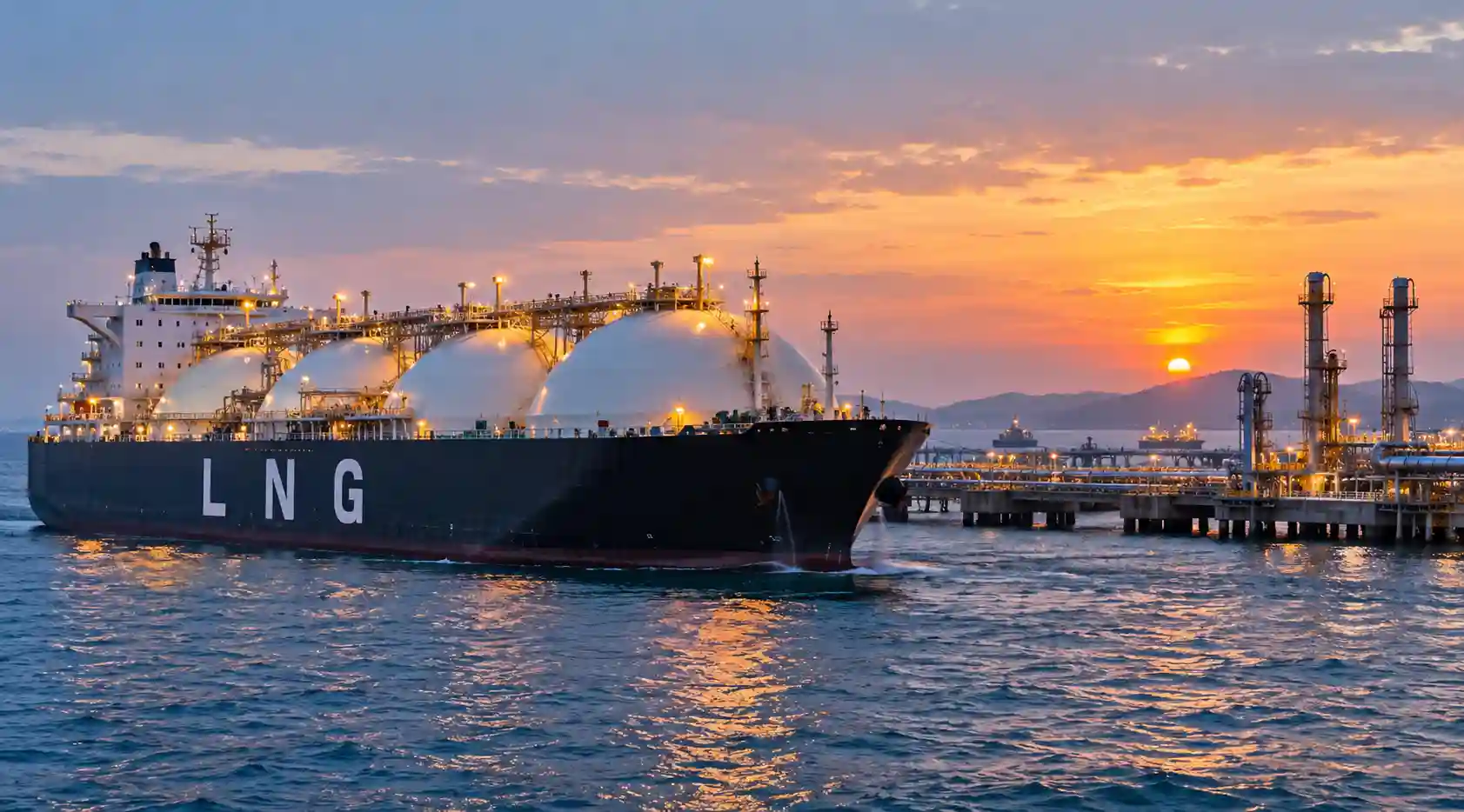

NEW DELHI/LONDON — Global liquefied natural gas prices have climbed to their highest levels in almost four years, as a war between the United States, Israel and Iran keeps a fifth of the world's LNG supply effectively locked out of the market and European buyers draw down critically low storage ahead of winter.
Benchmark Asian spot LNG prices have moved firmly above $25 per million British thermal units (MMBtu) in recent days, levels last seen in December 2022, according to assessments from pricing agency Argus and S&P Global Platts. The Argus assessment for spot deliveries to northeast Asia (ANEA) for the front-half of October was pegged at $25.83/MMBtu, exceeding the initial wartime peak of $25.165/MMBtu recorded on March 19, when Iranian strikes damaged part of Qatar's LNG export capacity.
Separately, Platts' Japan Korea Marker (JKM), the leading Northeast Asian benchmark, touched roughly $25.91/MMBtu on September 3, its highest level since December 2022, Bloomberg reported, citing traders. That represents more than double pre-war levels.
In Europe, the Title Transfer Facility (TTF) month-ahead contract averaged about $21/MMBtu in August, up nearly 90 percent year-on-year and its highest since December 2023, according to figures cited by International Energy Agency gas analyst Greg Molnar. JKM moved in tandem, averaging around $22/MMBtu in August, also up roughly 90 percent on the year. The spread between JKM and TTF, a key gauge of competition for flexible cargoes, narrowed to about $1/MMBtu in August, underscoring how closely Asian and European buyers are now bidding against each other for the same supply.
What Is Confirmed on the Supply Side
The physical disruption at the center of the rally is well documented. QatarEnergy halted production at its Ras Laffan complex, the world's largest LNG export facility with roughly 77 million tonnes a year of capacity, after Iranian strikes in March damaged part of the plant, according to reporting from the Oxford Institute for Energy Studies and multiple news organizations. Daily tanker transits through the Strait of Hormuz, the narrow waterway through which about a fifth of global LNG and roughly a quarter of seaborne oil trade normally passes, collapsed from about 95 to as few as 4 in the days following the war's outbreak in late February. Iran's Revolutionary Guard Corps later declared the strait closed to vessels traveling to or from the United States, Israel and their allies.
Since then, a small number of Qatari LNG tankers have transited the strait under case-by-case arrangements reportedly involving Iranian and Pakistani mediation, ship-tracking data compiled by Bloomberg, LSEG and Kpler show, but volumes remain far below the roughly three shipments a day that moved out of the Gulf before the war.
Qatar and the United Arab Emirates have together lost more than 50 billion cubic meters of cumulative LNG supply between March and August, a decline roughly equivalent to half of China's total LNG imports in 2025, Molnar said. QatarEnergy has declared force majeure on term LNG shipments through at least October or November, affecting long-term buyers including India's Petronet LNG, which holds an 8.5-million-tonne-a-year contract accounting for roughly a third of India's overall LNG imports. Two of Ras Laffan's damaged production trains could take three to five years to resume exports, senior industry officials said, with the remaining capacity expected to restart only once the Strait of Hormuz reopens to normal traffic.
Market Fear vs. Physical Outages
Beyond these documented losses, much of the recent price move reflects risk premium and positioning rather than new physical outages. Hostilities between the United States and Iran resumed in late August and early September after a lull that had persisted since July, driving LNG prices up more than 5 percent in a single week. Traders and analysts describe the fear of a prolonged or widening conflict, rather than a confirmed new supply loss, as the immediate driver of the latest leg higher. US President Donald Trump said further strikes on Iran were possible, though no additional confirmed damage to Gulf energy infrastructure had been reported at the time of writing.
Impact on Buyers, Utilities and Inflation
The price surge is already reaching consumers. In India, Indraprastha Gas Ltd (IGL), the country's largest city gas distributor, raised compressed natural gas (CNG) prices in Delhi by 3.9 rupees per kilogram in its steepest single-day increase, bringing its cumulative CNG price hike since January to 9.9 rupees per kilogram, the highest among comparable city gas distributors, according to a note from Mumbai-based brokerage DAM Capital. Domestic gas from older fields covers only about 40 percent of city gas supply in India, leaving the rest exposed to costlier imported LNG and compressing distributor margins.
Despite higher costs, Indian LNG imports rose 34 percent year-on-year to nearly 2.5 million tonnes in August, according to data from Kpler, as city gas and fertilizer demand pushed buyers to secure cargoes. Weekly shipments to India reached their strongest levels since February, according to Vortexa. Bangladesh resumed LNG imports after two floating storage and regasification units came back online in August.
Not all buyers have kept pace. China, the world's largest LNG importer, likely cut its purchases in August as high spot prices weighed on industrial demand. Pakistan has scrapped at least one emergency LNG tender because offers were too expensive, worsening an existing electricity crunch.
In Europe, gas storage stood at about 65 percent of capacity by the end of last week, 17 percentage points below the five-year average, Vortexa said, raising the stakes for winter refilling just as Asian buyers compete for the same cargoes from the United States and West Africa.
Key Facts
- Platts JKM: Reached approximately $25.91/MMBtu on September 3, 2026—more than double pre-war levels and the highest since December 2022.
- Argus ANEA: Front-half October delivery stood at $25.83/MMBtu.
- European TTF: Month-ahead contract averaged roughly $21/MMBtu in August, up 90% year-on-year.
- Supply Loss: Qatar and the UAE lost more than 50 billion cubic meters of LNG between March and August.
- Ras Laffan Outage: Two damaged trains may take three to five years to restart.
- Transit Drops: Strait of Hormuz transits fell from ~95 to as low as 4 per day post-escalation.
- EU Storage: At 65% capacity, roughly 17 percentage points below the five-year seasonal average.
What to Watch Next
Markets are closely monitoring whether renewed US-Iran tensions will escalate further, the scale of informal tanker transits through the Strait of Hormuz, the progression of European winter storage refilling, and whether alternative export projects can ramp up quickly enough to offset the persistent shortfall in Gulf supplies.
Further reading and useful links
Reader questions
Frequently asked questions
Why are LNG prices at multiyear highs in 2026?
A combination of confirmed and feared supply disruptions is driving prices. Qatar's Ras Laffan export facility has been partially offline since strikes in March 2026, the Strait of Hormuz has seen severely reduced tanker traffic, and European gas storage is well below its five-year average heading into winter.
How much has Asian spot LNG (JKM) risen compared with pre-war levels?
Platts' JKM benchmark reached about $25.91/MMBtu on September 3, 2026, more than double pre-war levels and marking its highest point since December 2022.
Is the Strait of Hormuz fully closed to LNG shipments?
Not entirely. While transits collapsed from roughly 95 to as few as 4 vessels shortly after the conflict began, a small number of Qatari LNG tankers have since transited under case-by-case arrangements. However, shipment volumes remain far below pre-war levels.
Nexuswild welcomes factual corrections. Email contact@nexuswild.com with evidence and the article URL.