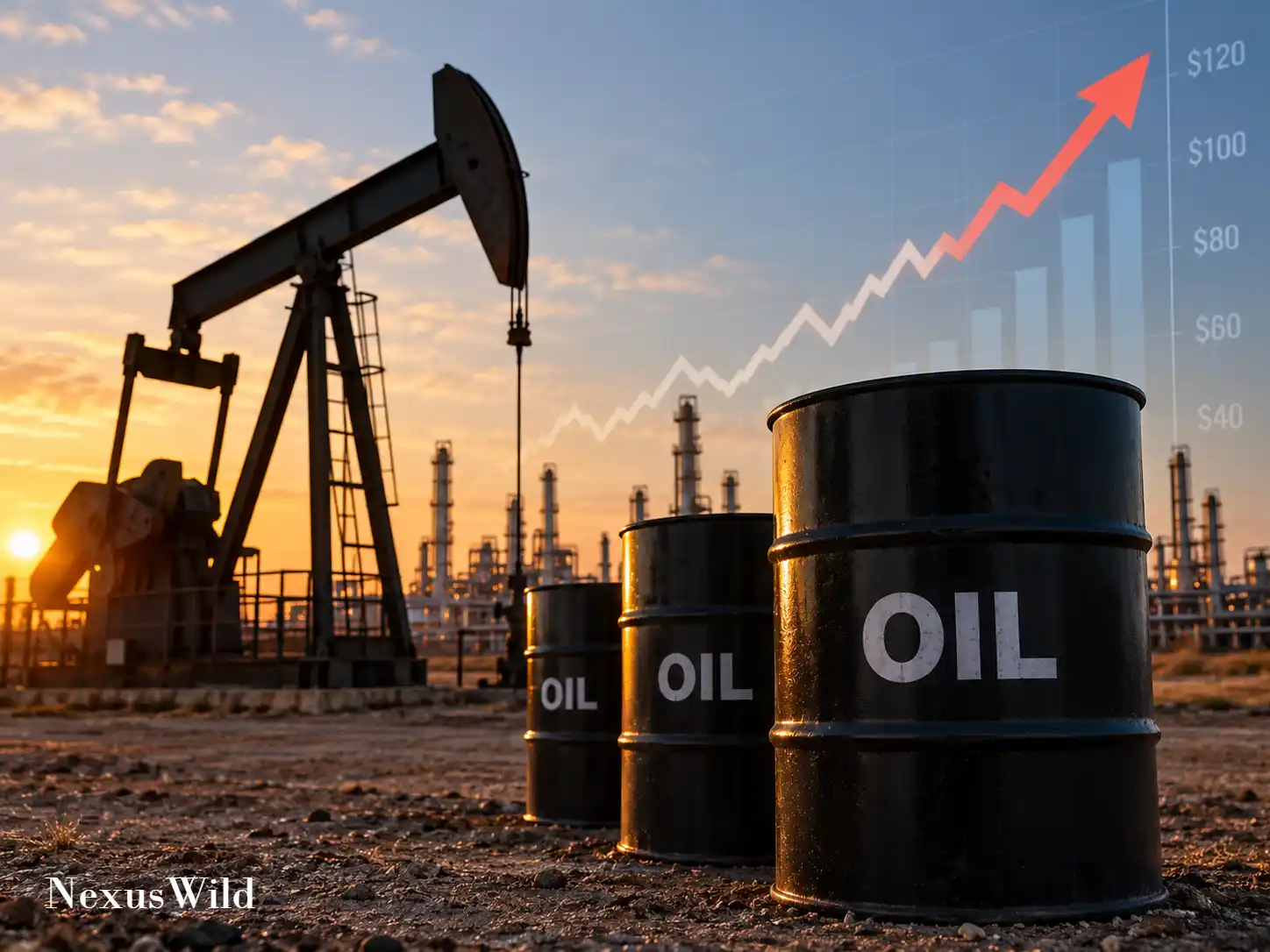

Oil prices have surged to their highest levels in months, and the move is rattling investors worldwide. Brent crude, the global benchmark, rose to $97.39 a barrel on Sunday, up more than 11% over the past month and nearly 48% higher than a year ago. U.S. crude climbed to $92.06 a barrel, up almost 18% for the month and up nearly 48% year-over-year.
Why Prices Are Rising
The surge traces back to renewed conflict between the United States and Iran. Over the weekend, U.S. forces struck three Iranian oil tankers, and Iran's military reportedly targeted American warships with ballistic missiles in response. The fighting has stretched on for months, with little sign of easing.
Investors are also watching the Strait of Hormuz. The narrow waterway once carried about 20% of the world's oil shipments, and the ongoing conflict has curtailed traffic through it. Any further disruption there could tighten global supply significantly.
Hopes for a diplomatic resolution have dimmed too. U.S. Energy Secretary Chris Wright said Sunday that a nuclear agreement with Iran may not happen anytime soon.
Markets React Unevenly
The uncertainty is rippling through equity markets, though not uniformly. European stocks slipped Monday, with Germany's DAX, France's CAC 40 and Britain's FTSE 100 all in the red. Asian markets moved the opposite way, with Japan's Nikkei 225 and South Korea's Kospi posting sharp gains.
The moves follow a rougher stretch on Wall Street earlier this month. The Dow Jones Industrial Average fell more than 400 points in a single session, with the S&P 500 and Nasdaq also declining as technology and growth stocks led the losses. Traders pointed to climbing bond yields and a broader shift toward caution.
Inflation and Rate Concerns Build
Bond markets are flashing warning signs. The two-year U.S. Treasury yield, which tracks expectations for Federal Reserve policy, rose to 4.35%, its highest level since January 2025 and up sharply from about 3.50% at the start of the year.
Higher energy costs are stoking inflation worries, since fuel prices feed into transport, manufacturing and shipping costs across the economy. Analysts note that rising oil prices threaten to reignite inflation and raise the odds of tighter monetary policy, and that climbing bond yields tend to move alongside oil, compounding investor unease. Money markets currently see a Federal Reserve rate hike as more likely than not this month—a sharp reversal from earlier expectations of cuts.
Safe-haven assets have shown mixed signals through the volatility. Spot gold fell 2.4% during last week's oil spike, even as investors sought safety elsewhere, underscoring how unsettled trading has become.
Consumers Feel the Pinch Too
The rally isn't confined to trading floors. President Trump has urged Americans to tolerate somewhat higher gasoline prices as the conflict continues, acknowledging the pass-through to consumers at the pump.
Not every analyst expects prolonged turmoil. Some market strategists believe the current volatility could give way to stronger performance later in the year, particularly if inflation eases and clarity emerges around the Fed's leadership.
For now, though, sentiment remains cautious, with markets moving on each new headline from the Middle East.
What investors are watching next: any sign of a shift toward U.S.-Iran talks, and the Federal Reserve's response to inflation data ahead of its September policy meeting.
Further reading and useful links
Reader questions
Frequently asked questions
Why are oil prices rising so quickly?
The surge in oil prices is primarily driven by renewed conflict between the United States and Iran, which has included strikes on oil tankers and curtailed traffic through the critical Strait of Hormuz.
How much has the price of oil increased?
Brent crude recently rose to $97.39 a barrel, jumping more than 11% over the past month and nearly 48% higher than a year ago.
How is the rising price of oil affecting inflation?
Higher energy costs feed directly into transport, manufacturing, and shipping costs. Analysts warn that rising oil prices threaten to reignite broader inflation, prompting bond yields to spike and increasing expectations of a Federal Reserve rate hike.
Nexuswild welcomes factual corrections. Email contact@nexuswild.com with evidence and the article URL.