
Nvidia Reports Record $115.8 Billion Q3 Revenue as Vera Rubin Ships and Q4 Forecast Reaches $130 Billion
Nvidia has reported another record-breaking quarter, reinforcing its position at the centre of the global artificial intelligence infrastructure market. The semiconductor company generated $115.8 billion in revenue during the third quarter of fiscal 2027, an increase of 103% compared with the corresponding period a year earlier and 20% sequentially.
The results, announced on November 17, 2026, reflect continued demand for the company's accelerated computing platforms, particularly from hyperscale cloud providers, AI developers, enterprises and other customers building large-scale computing infrastructure.
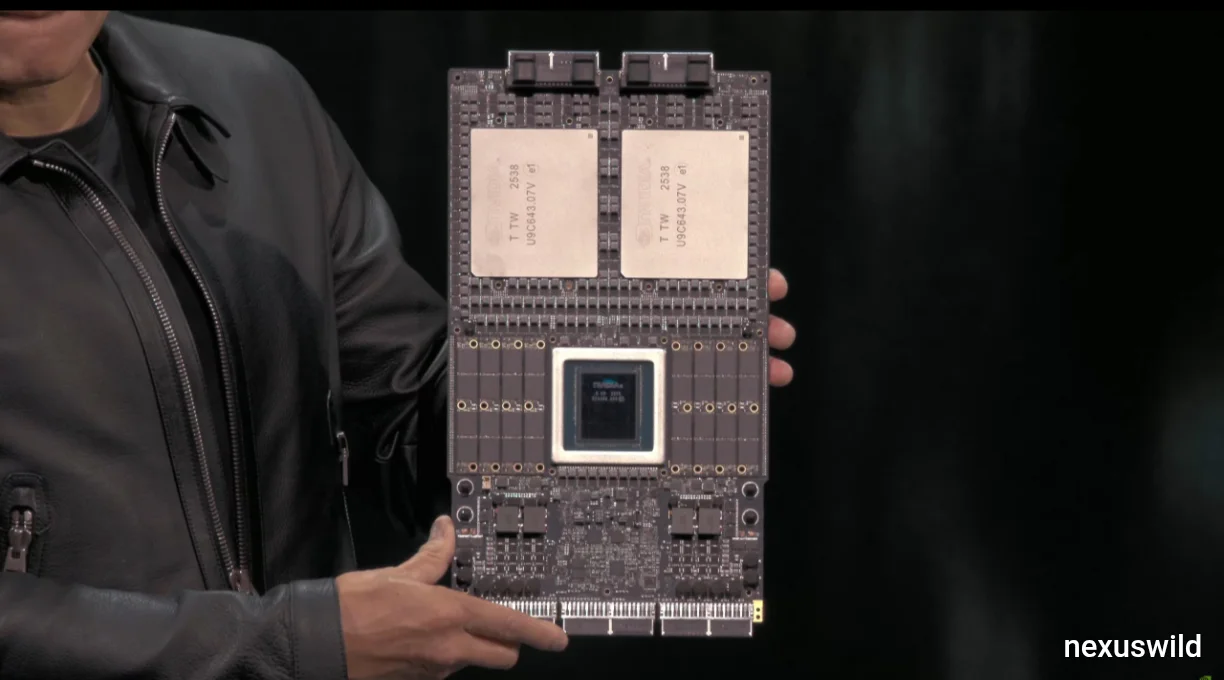
The Data Center business remained the principal growth engine, generating $107.6 billion in quarterly revenue. The company also confirmed that its next-generation Vera Rubin NVL72 platform has entered production shipments, marking an important transition in its hardware roadmap.
Nvidia's outlook was equally significant. Management projected fourth-quarter fiscal 2027 revenue of $130 billion, plus or minus 3%, and raised its fiscal 2028 revenue-growth expectation to approximately 75%. These projections indicate that the company expects demand for AI computing infrastructure to remain strong as customers expand their capacity.
However, the results also highlight the challenges associated with rapid product transitions. Nvidia expects gross margins to decline in the next quarter as it moves through the Vera Rubin ramp, before management's previously communicated expectation of a recovery in fiscal 2028.
Record quarterly revenue reflects accelerating AI infrastructure demand
Nvidia's third-quarter revenue reached $115.8 billion, compared with $57 billion in the same quarter of the previous fiscal year. The 103% annual increase demonstrates the scale of expansion in the company's business as AI infrastructure investment continues across the technology industry.
Revenue also increased 20% from the preceding quarter, when Nvidia reported $96.2 billion. This sequential growth is important because it shows that the company's expansion is not solely the result of comparison with a lower year-ago base.
Profitability remained exceptionally strong. GAAP net income reached $65.3 billion, representing a 105% increase year over year. GAAP diluted earnings per share were $2.70, up 108%, while non-GAAP diluted earnings per share reached $2.68, an increase of 111%.
The company reported GAAP gross margin of 74.8% and non-GAAP gross margin of 74.9%. These figures demonstrate the substantial profitability of Nvidia's current business model, although the forward outlook indicates that margins may face pressure during the transition to its next-generation products.
The financial performance matters beyond Nvidia itself. The company supplies processors and computing platforms used by cloud infrastructure providers, AI laboratories, enterprises and other organisations developing or operating increasingly complex AI systems.
Its results therefore provide an important indication of spending patterns across the broader AI infrastructure ecosystem. Strong sales suggest that customers continue to allocate substantial capital toward computing capacity, although Nvidia's performance alone cannot establish the profitability of every AI investment made by its customers.
Data Center generates $107.6 billion and remains the central growth engine
Nvidia's Data Center business produced $107.6 billion in third-quarter revenue, increasing 110% year over year and 21% sequentially.
The segment has become the dominant component of the company's financial performance. Its growth reflects demand for GPUs, networking technologies, systems and related computing infrastructure used to train and operate large AI models.
The expansion of generative AI has increased the amount of computing capacity required by technology companies. Training increasingly capable models requires substantial computing resources, while inference — the process of running trained models to produce responses and perform tasks — creates continuing demand as AI applications reach more users.
This combination has supported investment from major cloud providers and specialised AI infrastructure companies. Customers are building data centres, expanding existing facilities and securing access to computing hardware that can support their anticipated workloads.
Nvidia's Data Center business serves this demand through a broader infrastructure portfolio rather than individual chips alone. Its platform strategy combines computing processors, networking, software and complete systems intended to operate at data-centre scale.
The financial results suggest that this integrated approach remains commercially powerful. However, the concentration of revenue in Data Center also makes Nvidia particularly sensitive to the investment decisions of a relatively small number of very large customers.
If hyperscalers or AI infrastructure providers reduce spending, delay projects or reconsider their capacity requirements, the effect could be significant for Nvidia's future growth.
Vera Rubin NVL72 begins shipping as Nvidia enters a new product cycle
One of the most important developments in the earnings announcement was confirmation that Nvidia has ramped production and begun shipping its Vera Rubin NVL72 computing platform.
The company described the product transition as the fastest ramp in its history. Its quarterly presentation also attributed nearly $20 billion in sequential revenue contribution to Vera Rubin.
This is a major development because the company's growth depends not only on sustained demand but also on its ability to introduce new generations of computing hardware at scale.
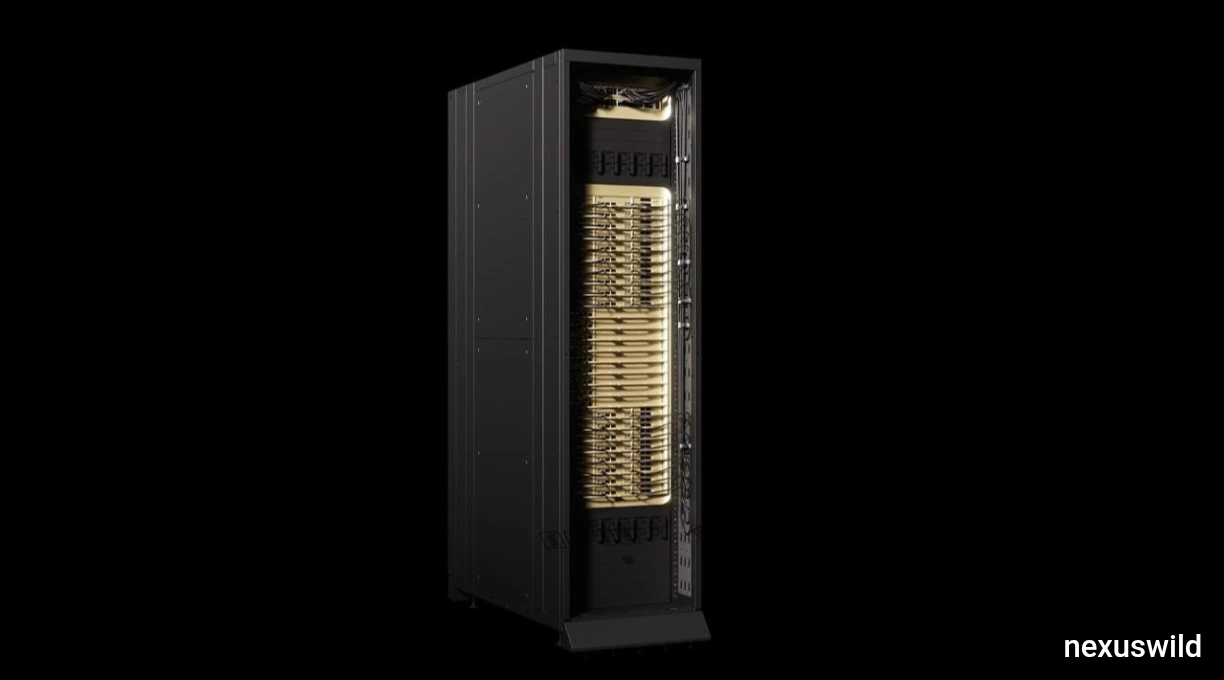
The Vera Rubin platform represents the next stage of Nvidia's accelerated-computing roadmap. Its NVL72 configuration is designed around rack-scale computing, combining multiple processing components and high-speed interconnections into an integrated system.
This approach reflects a broader shift in data-centre design. As AI workloads become larger and more complex, performance increasingly depends on how processors, memory, networking and software operate together.
The transition from individual accelerator products to integrated computing systems creates opportunities for Nvidia to supply a larger share of the infrastructure required by customers. It also increases the importance of system integration, cooling, networking and data-centre power availability.
Nvidia identified several cloud partners where Vera Rubin systems are running or being deployed, including CoreWeave, Google Cloud, Microsoft Azure, Oracle Cloud Infrastructure and Nebius. It also reported expansion of the Vera Rubin cloud ecosystem, including availability announcements involving Oracle Cloud Infrastructure and Google Cloud.
These announcements indicate that the product is moving beyond a laboratory or demonstration stage. Nevertheless, initial shipments and partner deployments should not be interpreted as proof that every customer has completed large-scale deployment or that the platform is already operating throughout the global enterprise market.
Why rack-scale computing is becoming increasingly important
Modern AI infrastructure is becoming more demanding as models grow in complexity and applications require faster responses.
A large AI workload may involve thousands of processing units communicating continuously. The performance of the overall system depends on more than the speed of a single GPU. Data movement, memory capacity, interconnect bandwidth, power delivery and cooling can all influence the performance of the complete installation.
Rack-scale systems attempt to address these requirements through integrated hardware configurations.
Nvidia's Vera Rubin NVL72 fits into this strategy by offering a platform designed for coordinated operation across a large computing system. This approach can simplify some aspects of infrastructure integration for customers that would otherwise need to assemble multiple components from different suppliers.
It also increases the importance of the wider supply chain. Data-centre operators need compatible networking equipment, power systems, cooling infrastructure and physical facilities capable of supporting high-density computing racks.
The commercial impact of a new accelerator platform can therefore extend beyond the semiconductor manufacturer. Suppliers of optical networking, electrical infrastructure, liquid cooling, server components and data-centre construction services may also benefit when customers expand their facilities.
However, the extent of those benefits will vary. Not every data-centre project will use the same architecture, and hardware deployment schedules depend on power availability, facility readiness, supply-chain capacity and customer budgets.
Q4 FY2027 revenue guidance reaches $130 billion
Nvidia expects fourth-quarter fiscal 2027 revenue of $130 billion, with a range of plus or minus 3%.
This implies a forecast range of approximately $126.1 billion to $133.9 billion. The guidance is higher than the company's Q3 revenue and indicates that management expects demand to continue expanding into the next reporting period.
One important qualification is that Nvidia explicitly stated that its Q4 outlook does not assume any Data Center compute revenue from China.
This detail matters because export restrictions and licensing requirements can influence the markets in which advanced computing products can be sold. By excluding China Data Center compute revenue from its forecast, Nvidia is presenting a revenue expectation that does not rely on a recovery in those sales during the quarter.
The fourth quarter also includes an additional calendar week. That factor should be considered when comparing the period with a standard-length quarter, particularly when assessing sequential growth rates.
The $130 billion forecast is management guidance, not a guaranteed outcome. Actual revenue will depend on shipment execution, customer demand, product availability, supply-chain performance and other business conditions.
Even with those qualifications, the guidance demonstrates the scale of demand Nvidia expects to serve in the near term.
Fiscal 2028 revenue-growth outlook rises to approximately 75%
During the earnings call, interim CEO and CFO Colette Kress raised Nvidia's fiscal 2028 revenue-growth expectation to approximately 75%, compared with the previous expectation of around 70%.
Management linked the revised outlook to stronger customer demand and additional supply capacity. The forecast is also based on a higher fiscal 2027 revenue base.
This is an important distinction. A growth percentage applied to a larger revenue base implies a substantially larger amount of additional sales than the same percentage applied to a smaller base.
The raised outlook signals that Nvidia expects its AI infrastructure business to continue expanding beyond the current fiscal year. It also suggests that management believes supply availability and customer readiness can support further growth.
However, the figure should be treated as a management expectation rather than a formal guarantee. Future revenue will depend on the pace of AI investment, the ability of customers to finance infrastructure expansion, competition, product execution and broader economic conditions.
The outlook also raises the stakes for Nvidia's supply chain. Delivering sustained growth at this scale requires coordination across semiconductor manufacturing, advanced packaging, memory, networking, system assembly and data-centre infrastructure.
Cloud industry backlog reaches $2.5 trillion, according to management
Another notable figure discussed during the earnings call was the cloud industry's backlog, which Colette Kress said had reached approximately $2.5 trillion, up from around $2 trillion three months earlier.
The increase provides an indication of the scale of commitments and expected infrastructure activity across the cloud industry.
This figure requires careful interpretation. It is not Nvidia's own revenue backlog, nor does it mean that Nvidia has received $2.5 trillion in purchase orders. It is a broader industry-level backlog figure cited by management.
Cloud infrastructure providers make long-term commitments involving data-centre capacity, computing resources and related services. These commitments can reflect expectations about future demand from enterprises, developers, AI laboratories and other customers.
The backlog figure therefore provides context for the potential scale of infrastructure investment. It does not guarantee that all planned spending will occur on schedule or that every commitment will translate into completed data-centre construction and hardware purchases.
For Nvidia, the relevance lies in the relationship between cloud expansion and demand for accelerated computing. If infrastructure providers continue to build capacity, they may require additional processors, networking systems and integrated computing platforms.
The figure reinforces management's optimistic demand narrative, but it should be reported as a company executive's assessment of the wider industry rather than as an independently verified financial obligation.
Gross margins face pressure during the Vera Rubin transition
Despite record revenue and strong forward guidance, Nvidia expects gross margins to decline in the fourth quarter.
The company guided both GAAP and non-GAAP gross margins to a range of 71%–72%, below the 74.8% GAAP and 74.9% non-GAAP margins reported in Q3.
Management had previously indicated that margins could settle around 72%–73% in fiscal 2028. The expected recovery is linked to the company's pricing, product and cost outlook.
A decline in gross margin does not necessarily indicate weakening demand. It can also reflect changes in product mix, manufacturing costs, system configuration, supply conditions and the economics of introducing a new platform.
The Vera Rubin transition involves complex rack-scale systems rather than simply replacing one processor with another. Integrated systems can require additional components, advanced networking, high-performance memory and specialised manufacturing processes.
These requirements can affect costs and margins during the early stages of production. As manufacturing scales and the supply chain becomes more efficient, the economics may improve.
Nevertheless, margin recovery is not automatic. Higher component costs, competitive pricing, customer negotiations and supply-chain constraints could continue to influence profitability.
Investors will therefore need to monitor both revenue growth and gross-margin performance. Rapid sales expansion can be positive, but the quality and profitability of that growth remain important.
Share repurchase authorization and capital allocation
Nvidia also has a substantial share repurchase programme. Its board approved an additional $150 billion increase in the company's share repurchase authorization in September 2026.
At the end of the third quarter, approximately $227.3 billion remained available under the authorization. During Q3, Nvidia returned $28.1 billion to shareholders through share repurchases and cash dividends.
The timing is important: the additional authorization was approved in September, rather than being a new board decision announced alongside the November earnings release.
Share repurchases allow companies to return capital to shareholders and can reduce the number of shares outstanding over time. Their impact depends on the price paid, the pace of repurchases and the company's broader capital-allocation priorities.
Nvidia's large authorization also illustrates its financial capacity following several years of rapid revenue and profit expansion.
At the same time, the company is investing in research and development, supply capacity and its wider technology ecosystem. Balancing shareholder returns with the capital required to maintain technological leadership will remain an important management responsibility.
Colette Kress leads earnings commentary as interim CEO and CFO
The earnings announcement was also significant from a leadership perspective. Colette Kress appeared in the capacity of interim CEO and executive vice president and CFO.
Her commentary addressed the company's financial results, product roadmap, customer demand and forward outlook.
The leadership transition places additional attention on the company's ability to maintain execution while continuing to expand its product portfolio and supply relationships.
Nvidia's operating performance is supported by a large organisation spanning hardware engineering, software development, manufacturing partnerships, sales and ecosystem development. The continuity of these operations is important as the company moves through a major product transition.
The earnings release and management commentary indicate that the company intends to maintain its existing strategic direction. The next few quarters will provide further evidence of how effectively its leadership structure supports the business during this period.
Implications for the global semiconductor industry
Nvidia's results have implications for semiconductor manufacturers, data-centre operators and technology companies worldwide.
The scale of its Data Center business demonstrates how strongly AI infrastructure demand is influencing the semiconductor market. Advanced processors and integrated computing systems are becoming essential components of the technology infrastructure used to develop and operate modern AI services.
This creates opportunities for companies involved in semiconductor fabrication, advanced packaging, memory, networking, power systems and cooling infrastructure.
The transition to Vera Rubin could also create a new investment cycle for data-centre operators. Existing facilities may require upgrades, while new facilities need to be designed around higher computing density and demanding power requirements.
However, the market also faces risks. Infrastructure spending is capital intensive, and customers must eventually generate sufficient revenue or productivity improvements to justify the investment.
If the commercial returns from AI services fail to meet expectations, customers could delay or reduce future spending. This could affect suppliers throughout the semiconductor and data-centre ecosystem.
Competition also remains a significant factor. Other chip manufacturers and technology companies are developing alternative AI processors, custom accelerators and specialised computing platforms.
Nvidia's current performance is strong, but continued leadership will depend on maintaining product advantages, software ecosystem strength, supply reliability and customer confidence.
What investors and enterprise customers should monitor next
Several factors will shape the next stage of Nvidia's performance.
The first is the pace of Vera Rubin deployment. Investors will want to understand whether initial shipments translate into sustained production volume and whether cloud partners can bring the systems online as planned.
The second is Data Center revenue growth. The business now accounts for the overwhelming majority of Nvidia's total revenue, making customer spending patterns especially important.
The third is gross-margin performance. The Q4 guidance points to a decline from Q3 levels, and future results will show whether margins recover as management expects.
The fourth is the conversion of cloud-industry commitments into actual infrastructure spending. A large backlog is encouraging, but execution, financing and data-centre readiness determine how much of that demand becomes realised revenue across the ecosystem.
Finally, investors will need
Nexuswild welcomes factual corrections. Email contact@nexuswild.com with evidence and the article URL.