
SpaceX has announced a financing arrangement worth approximately $40 billion in expected principal payments to obtain advanced artificial intelligence chips and related computing equipment, marking a major development in the funding of large-scale AI infrastructure.
Under the disclosed plan, an entity managed by Apollo Global Management will acquire graphics processing units (GPUs) and associated equipment, then lease the hardware to SpaceX for use at data centers selected by the company. SpaceX entered into a binding commitment letter on October 24, 2026, to establish the master finance lease. The arrangement remains subject to specified closing conditions and is expected to close before the end of the year.
The agreement is intended to provide SpaceX with access to substantial computing capacity without requiring the company to purchase all the equipment directly upfront. However, the arrangement is not free financing: SpaceX is expected to make lease payments over the applicable terms, including principal, interest and certain other costs.
How the $40 billion financing arrangement works
The planned transaction uses an equipment-leasing structure. Rather than SpaceX buying the entire fleet of AI hardware directly, an Apollo-managed entity will acquire the equipment and lease it to SpaceX in separate tranches.
According to SpaceX’s disclosure, aggregate principal payments under the lease schedules are expected to total approximately $40 billion. That figure excludes interest and certain additional expenses, so it should not be interpreted as the full lifetime cost of the financing.
Each equipment tranche will have its own lease schedule, with a term of approximately five to five-and-a-quarter years from its commencement date. Rent is expected to be payable quarterly in advance. The payments will generally include one-twentieth of the financed cost of the relevant tranche, an amount calculated using a fixed annual rate on the outstanding lease balance, and certain ongoing costs.
The fixed financing rate was not disclosed as finalized in the initial filing. It is expected to be determined before the company enters into the master finance lease.
This distinction matters because the final cost of the arrangement will depend partly on the interest rate and other charges. The headline $40 billion figure describes expected principal payments rather than the total amount SpaceX will pay over the life of the leases.
Apollo and major financial institutions participate
Apollo Global Management is central to the arrangement through the entity it manages. Goldman Sachs acted as the sole structuring agent, while funds and accounts managed by BlackRock and Goldman Sachs Asset Management, along with capital accounts advised by KKR, made anchor commitments.
The participation of these financial institutions reflects the growing role of institutional capital in funding AI computing infrastructure. The equipment needed to operate advanced AI services requires substantial investment, and financing structures can spread the cost of acquiring hardware over several years.
For Apollo and other participating investors, equipment-backed financing can provide exposure to assets associated with demand for AI computing. However, the potential returns depend on the transaction’s final pricing, the value and useful life of the equipment, the reliability of lease payments and other contractual protections.
The agreement does not eliminate risk. The parties must still manage financing costs, hardware delivery schedules, equipment depreciation and the possibility that computing demand or technology requirements change during the lease term.
Nvidia’s Vera Rubin hardware is central to the plan
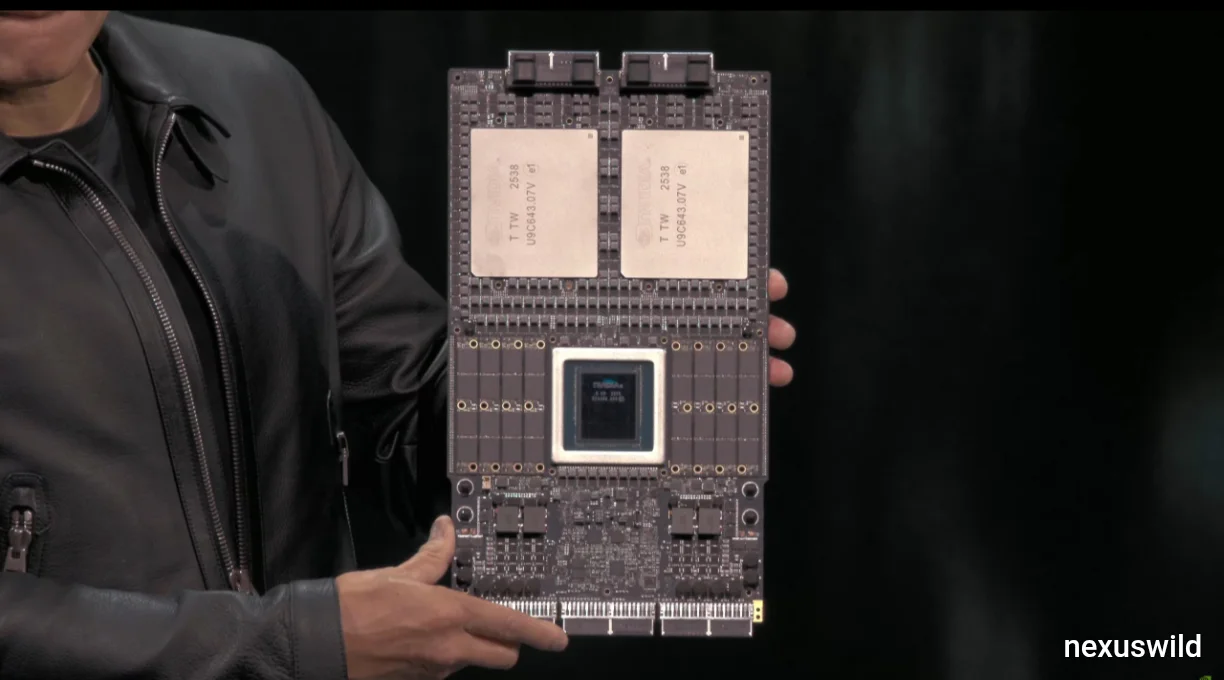
SpaceX said the lease will support the deployment of Nvidia’s next-generation Vera Rubin chips and related equipment. These processors are intended for demanding AI workloads that require substantial computing capacity.
The hardware is expected to arrive in tranches during the first half of 2027. Lease schedules will commence as the relevant equipment is delivered, rather than all beginning at once. The phased approach links payments to the delivery of individual groups of equipment.
The infrastructure will be used for SpaceX’s terrestrial computing expansion. The company has said this capacity will support Grok services for consumers and enterprise customers, as well as existing and future cloud-services customers.
The deal is therefore about more than acquiring individual processors. Large AI deployments also require servers, networking, power delivery, cooling systems, data-center space and ongoing operations. Financing the hardware is one component of the wider infrastructure challenge.
SpaceX’s AI expansion and payback claims
SpaceX Chief Financial Officer Bret Johnsen said the company aims to deploy what it describes as the world’s largest computing infrastructure. He also said SpaceX was seeing payback periods of less than one year on its “Super Intelligence” infrastructure investments.
That payback statement should be treated as management’s claim rather than an independently verified result. SpaceX did not provide enough detail in the announcement to establish the calculation’s assumptions, the investments included or whether the same payback period would apply to the equipment covered by this lease.
The commercial case for the financing depends on SpaceX being able to put the equipment to productive use and generate sufficient revenue or strategic value to justify its cost. Demand for AI computing, utilization rates, operating expenses and the pace of model development will all influence the economics.
SpaceX’s planned use of the hardware spans consumer and enterprise Grok services as well as cloud customers. This could diversify the sources of demand for its computing capacity, but the announcement does not disclose customer-level revenue commitments or guarantee that utilization will meet expectations.
What the deal means for AI infrastructure financing
The arrangement illustrates how equipment leasing can help technology companies obtain costly computing hardware while spreading payments over time. It also shows how asset managers and institutional investors are participating in the physical infrastructure behind AI services.
Compared with purchasing equipment entirely with cash, leasing can preserve immediate liquidity. But it creates contractual payment obligations, and the final accounting treatment depends on the lease terms and applicable accounting standards. It would therefore be premature to describe the transaction as automatically keeping the equipment or associated obligations off SpaceX’s balance sheet.
The deal also highlights a wider challenge facing the AI industry: computing demand is growing, but the infrastructure required to serve it is capital-intensive. Companies and financiers must judge how long current hardware will remain useful, how quickly newer systems will arrive and whether future revenues will support the financing costs.
What happens next
SpaceX expects the master lease to close before the end of 2026, subject to the specified conditions. Hardware deliveries and the commencement of individual lease schedules are expected in the first half of 2027.
The next important details will include the final financing rate, completion of the transaction, delivery timing and the pace at which SpaceX deploys the equipment. Investors and industry observers will also watch how effectively the additional computing capacity supports Grok and cloud services.
The $40 billion arrangement is a significant commitment to AI infrastructure, but it is not a guarantee of future commercial returns. Its long-term importance will depend on the final cost of financing, successful hardware deployment and SpaceX’s ability to turn computing capacity into sustainable value.
Nexuswild welcomes factual corrections. Email contact@nexuswild.com with evidence and the article URL.