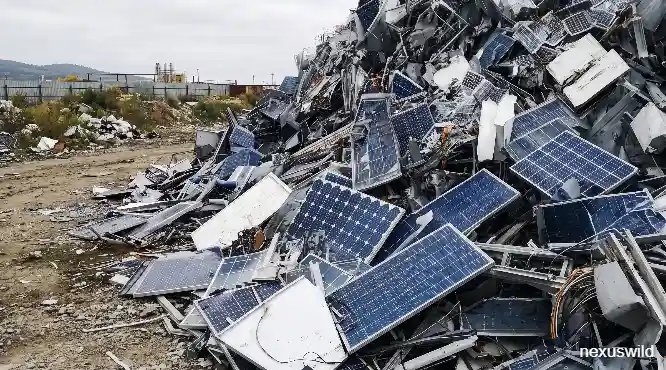

The clean energy boom has a quiet second chapter. Every battery, solar panel and wind turbine built today will eventually wear out, and each one is packed with metals that took mines, money and energy to produce. The question for companies and governments is whether those end-of-life products become a waste problem or a new supply of raw materials.
The demand pushing recycling forward
The International Energy Agency's Global Critical Minerals Outlook 2026 projects that demand for critical minerals will nearly double by 2040 under current policies, with lithium demand rising more than threefold and nickel, graphite and rare earths up by roughly 50 to 90 percent, according to a summary of the report. Prices have already moved: base metals such as aluminium, copper and tin rose by about a third between January 2025 and April 2026, with copper reaching record highs.
That squeeze is what gives recycling its economic logic. Critical minerals make up about a quarter of the cost of a battery cell, though only around 3 percent of the price of an average electric vehicle, the IEA notes.
What the volumes look like
The wave of end-of-life products is still ahead. A battery circularity report from the IEA and the European Patent Office, published at the end of April 2026, estimates that roughly 1.2 million electric vehicle batteries could reach the end of their life by 2030, rising to as many as 14 million by 2040.
Solar is following. A September 2026 report from the IEA's photovoltaic power systems programme estimates that silver recoverable from retired solar systems could equal 30 to 45 percent of the solar industry's cumulative silver demand between 2025 and 2050, if recovery is efficient. That is a conditional estimate, not a guarantee.
Why it isn't a big source yet
Today, recycling mostly handles scrap from factories, not old products. The IEA's Global EV Outlook 2026 says recycling's contribution to meeting battery mineral needs "still remains limited" beyond production scrap, and the agency expects manufacturing scrap to supply about two-thirds of battery recycling feedstock until 2030. The market for used and end-of-life EV batteries is still early, and future flows are uncertain.
Economics add a second problem. Prices for used EV batteries have fallen sharply in recent years, in step with declines in new battery and mineral prices. When metal prices drop, recyclers who depend on the value of recovered metals lose margin, which could mean different business models and dedicated regulation to make sure old batteries are properly collected.
The longer-term case
An earlier IEA report on critical minerals recycling, published in November 2024, put numbers on the long-run upside. If countries deliver their announced climate pledges, recycling could cut the need for new mines by about 40 percent for copper and cobalt and 25 percent for lithium and nickel by 2050. Battery recycling could meet 20 to 30 percent of lithium, nickel and cobalt demand by 2050, but only if collection improves, which the report calls the most critical factor.
It also warned that recycling is not automatically clean. Poorly managed battery recycling can cause pollution and water contamination, and standards need strengthening.
Who controls it
The business is concentrated. The IEA says China accounts for more than three-quarters of global battery pre-treatment capacity and 90 percent of material recovery capacity. For countries trying to build supply security, that makes domestic recycling a strategic question as well as an environmental one, and it explains why policy support is growing.
What to watch
Three signals will show whether old batteries and panels become real raw material. First, collection rates, since you cannot recycle what is never returned. Second, metal prices, which decide whether recycling pays without subsidy. Third, whether companies can design products that are easier to take apart. Until the first large waves of retired batteries arrive after 2030, the opportunity is real but mostly ahead of us.
Nexuswild welcomes factual corrections. Email contact@nexuswild.com with evidence and the article URL.