
Salesforce and NVIDIA announced Koa on September 15, 2026, at Salesforce's annual Dreamforce conference in San Francisco, introducing what Salesforce describes as its first CRM-specific reasoning model. Built by post-training NVIDIA's open-weight Nemotron 3 Super model, Koa is designed to help AI agents on Salesforce's Agentforce platform reason through complex, multi-step business workflows rather than simply generating conversational responses.
The announcement marks a notable moment for enterprise AI: rather than relying solely on third-party frontier models, Salesforce has built a proprietary reasoning engine trained specifically on decades of its own CRM domain knowledge, while retaining control over the model weights and running inference within its own infrastructure.
What Koa Is and How It Differs From a Conventional AI Assistant
Salesforce describes Koa as a reasoning model, a category of AI system designed to work through multi-step problems using deliberate, structured reasoning rather than producing a single-pass response to a prompt. According to Salesforce's official product page, Koa is intended to enable agents to reason through the complex, multi-step tasks required for enterprise work, such as updating a sales opportunity, routing a support case, or scheduling a follow-up.
This distinguishes Koa from a general-purpose conversational AI assistant in a specific way: rather than being trained broadly across the internet and then prompted for CRM tasks, Koa was developed by post-training an existing foundation model using a synthetic dataset modeled specifically on enterprise CRM workflows. Salesforce says this dataset draws on 27 years of the company's own CRM intelligence, reflecting the reasoning, tool use and decision-making patterns typical of business software use, rather than being built from actual customer data stored in CRM systems. Rohan Kumar, Salesforce's president and chief platform and engineering officer, described the approach to IT Pro as starting "from a domain-specialised model approach that further trains an already intelligent model on more task-specific information," rather than training a model from scratch.
The Role of NVIDIA Nemotron
Nemotron is NVIDIA's family of open-weight foundation models. According to Reuters' reporting on the announcement, Koa was developed by post-training NVIDIA Nemotron 3 Super, and Salesforce controls the resulting model weights and performs post-training and inference within its own infrastructure, rather than relying on an externally hosted model.
Coverage from StartupFortune identified Nemotron 3 Super as a 120-billion-parameter open-weight foundation model, and described Salesforce's training process as using reinforcement learning, specifically Group Relative Policy Optimization, carried out using NVIDIA's NeMo RL, NeMo Gym and NeMo AutoModel tooling. This reporting attributes the technical training methodology to publicly available coverage of the announcement rather than to a peer-reviewed technical paper, and should be read accordingly.
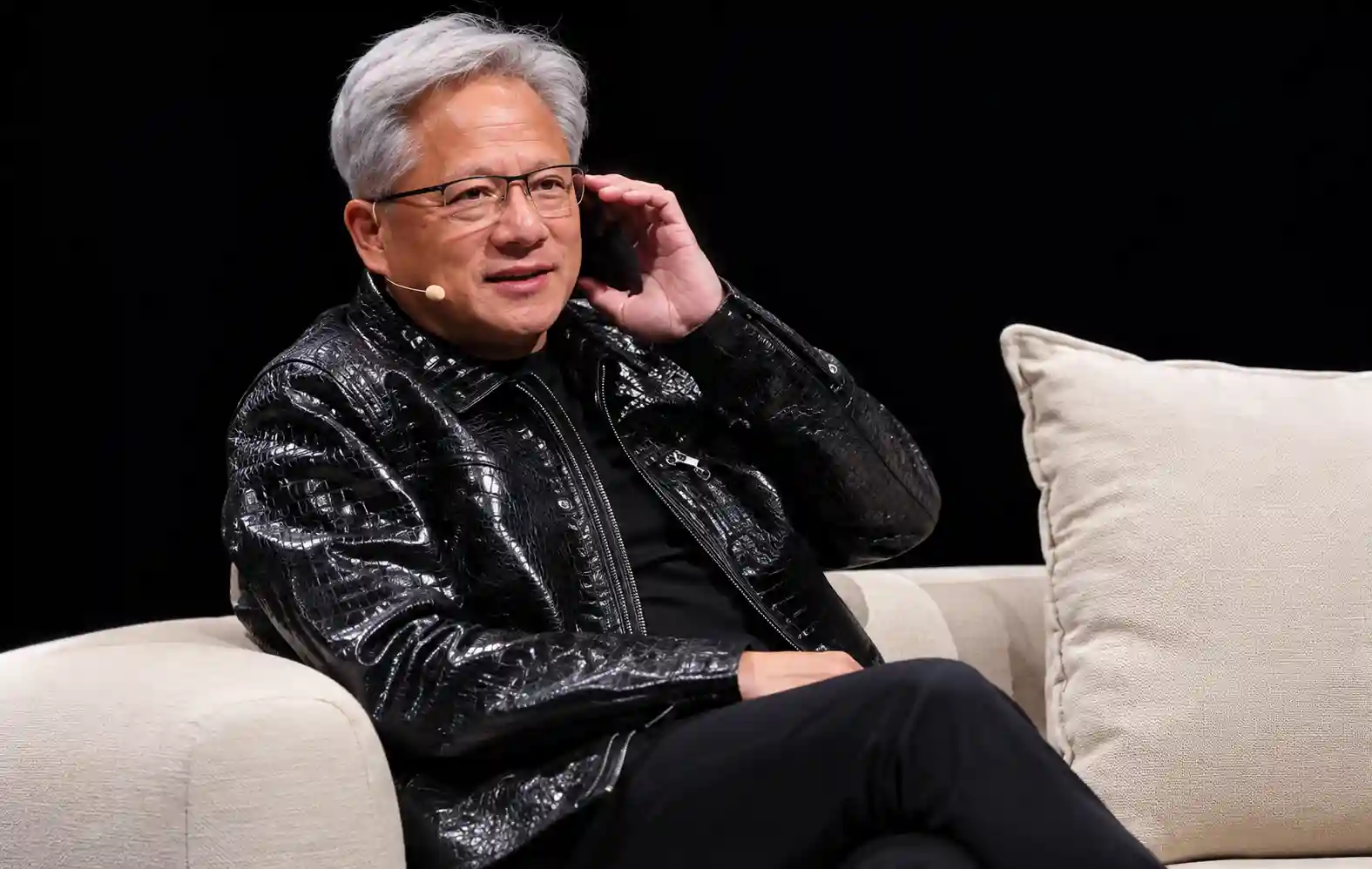
NVIDIA founder and CEO Jensen Huang was quoted in the companies' official announcement, distributed via Business Wire, saying: "AI is creating a much larger opportunity for software. Every company needs useful AI, tailored to its knowledge, expertise, and work. NVIDIA Nemotron open models give Salesforce the foundation to turn decades of enterprise expertise into specialized AI with Koa, creating a CRM model that can reason and securely take action."
Salesforce chair and CEO Marc Benioff was separately quoted, according to StartupFortune's reporting on the announcement, saying: "With Koa, the knowledge is put inside the model itself. We trained a reasoning engine that understands the structure of a deal, the lifecycle of a service case, and the workflows that vary across industries." This quote comes from secondary reporting on the announcement rather than the primary Business Wire release reviewed for this article, and should be attributed accordingly pending direct verification against Salesforce's own statement.
Intended CRM Applications and Deployment
According to Salesforce's official Koa product page, the model is intended to power a range of Agentforce use cases, including help agents, employee agents, event agents and web agents. Salesforce states that Koa can be selected as a managed large language model within the Data Cloud generative models catalogue, enabled organization-wide within Agentforce as a model provider in Setup, or applied as a standard model within Prompt Builder at the agent or sub-agent level.
The companies' joint announcement also stated that the collaboration extends NVIDIA's open models and accelerated computing into Missionforce, a Salesforce offering aimed at government and regulated organizations, giving those customers control over their model, data and deployment environment. This detail is drawn directly from the official Business Wire release and reflects a stated product integration rather than a demonstrated customer deployment.
Salesforce has said Koa has already been deployed inside the company's own operations. IT Pro's reporting on the launch noted that Koa has been used internally at Salesforce, though public detail on the scale or duration of that internal deployment was limited in the sources reviewed for this article.
Benchmark Claims and Performance
Salesforce has published specific performance claims tied to its own internal benchmark, called CRM Bench. According to Salesforce's official Koa product page, CRM Bench is a suite of real-world CRM tasks, such as updating an opportunity, routing a case, or scheduling a follow-up. Salesforce states that Koa "already matches or exceeds leading model performance on CRM actions with 3x fewer errors."
This is a company-reported benchmark result, evaluated using a benchmark Salesforce itself designed and controls, rather than an independently administered or third-party verified evaluation. No independent, peer-reviewed benchmark data comparing Koa's performance against other named models was identified in the sources reviewed for this article. Readers and enterprise buyers evaluating this claim should treat it as a vendor-reported performance figure pending independent verification, rather than as proof that Koa is established to outperform other reasoning or CRM-focused AI systems generally.
A Notable Business Context
Coverage from StartupFortune noted that Salesforce's Koa announcement came roughly three weeks after the company publicized a separate partnership arrangement with Anthropic, under which Salesforce had described Anthropic's Claude models as a leading AI option for its CRM software. The same reporting characterized Koa's launch as reflecting a multi-model strategy on Salesforce's part, building its own proprietary reasoning model on open-weight NVIDIA technology while continuing separate commercial relationships with frontier AI labs. This characterization comes from journalistic analysis of Salesforce's public announcements and should be read as such rather than as a statement made directly by Salesforce about its own strategic intent.
Why It Matters
Koa represents a shift some large software vendors are exploring: rather than depending entirely on general-purpose frontier models accessed through an API, Salesforce has built and now controls its own domain-specific reasoning model, trained specifically on CRM workflow patterns and hosted within its own infrastructure. If this approach proves durable, it could influence how other large enterprise software providers think about balancing proprietary, task-specific models against reliance on external frontier AI labs, particularly for customers in regulated industries or government, where data control and deployment environment are significant purchasing considerations.
At the same time, the available evidence for Koa's real-world performance currently rests on Salesforce's own internal benchmark and its own reported results. Whether Koa's reasoning capabilities hold up across the full range of enterprise CRM tasks, and how it performs relative to competing approaches under independent evaluation, remains to be demonstrated beyond the company's own published claims.
Further reading and useful links
Reader questions
Frequently asked questions
What is Salesforce Koa?
Koa is Salesforce's first CRM-specific reasoning model, built by post-training NVIDIA's open-weight Nemotron 3 Super model on a synthetic dataset modeled on 27 years of Salesforce's CRM workflow knowledge, designed to help Agentforce agents reason through complex, multi-step business tasks.
Is Koa built entirely by Salesforce or by NVIDIA?
Koa was developed through technical collaboration between the two companies, using NVIDIA's open-weight Nemotron 3 Super model as its foundation. Salesforce performed the post-training and controls the resulting model weights, running post-training and inference within its own infrastructure.
Has Koa been independently proven to outperform other AI models?
No independent, third-party benchmark verification was found. Salesforce has published a company-reported result on its own internal CRM Bench benchmark, stating Koa matches or exceeds leading model performance on CRM actions with three times fewer errors, but this is a vendor-reported claim rather than an independently verified finding.
How can businesses access Koa?
According to Salesforce's official product page, Koa can be selected as a managed large language model in the Data Cloud generative models catalogue, enabled organization-wide within Agentforce, or applied as a model within Prompt Builder at the agent or sub-agent level.
Does this mean Salesforce is moving away from other AI partners like Anthropic?
Not according to available reporting. Coverage of the announcement described Koa as part of a multi-model strategy, with Salesforce continuing separate commercial arrangements with frontier AI labs alongside its own proprietary, NVIDIA-based reasoning model.
Nexuswild welcomes factual corrections. Email [email protected] with evidence and the article URL.