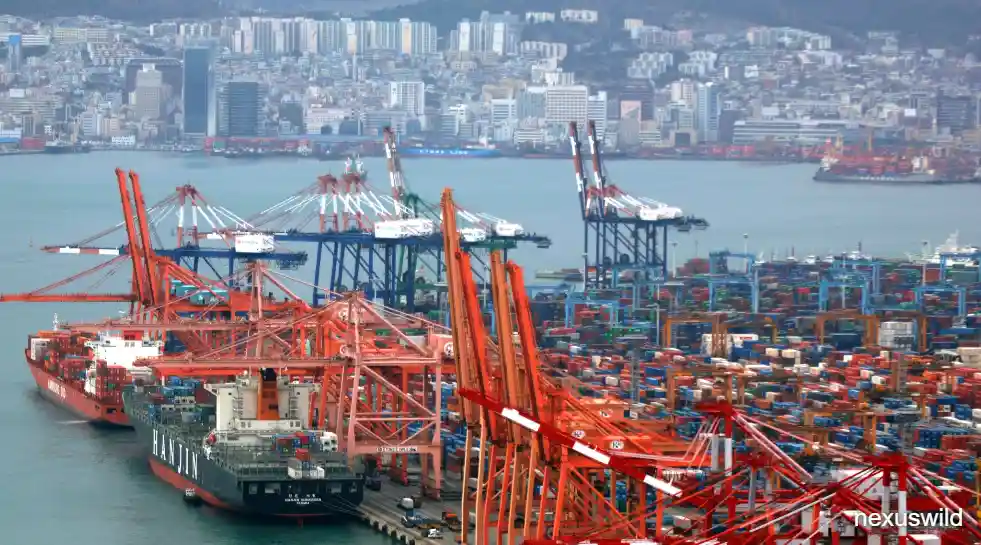

South Korea’s export engine is running hotter than it has in half a century. Fueled by a relentless global appetite for artificial intelligence hardware and advanced computing infrastructure, the nation's outbound shipments have shattered historical records. As the world's leading supplier of memory chips, South Korea is capturing the massive financial upside of the global AI investment cycle, solidifying its position at the centre of the modern technology supply chain.
According to preliminary data released by the Ministry of Trade, Industry and Energy and the Korea Customs Service, South Korea’s exports in September 2026 jumped an astonishing 83.5% from a year earlier to reach $120.94 billion. The sheer scale of this single-month volume is unprecedented in the country's trading history, completely rewriting expectations for the South Korea economy heading into the final quarter of the year.
South Korea’s Record September Exports
The September trade figures represent a milestone for the export-reliant nation. To understand the magnitude of this growth, one only needs to look at the cumulative year-to-date data.
Between January and September 2026, South Korea exports 2026 reached an estimated $814.53 billion. In just nine months, the country has already comfortably surpassed its full-year 2025 export total of $709.3 billion. This momentum has positioned the nation within striking distance of an economic benchmark that was once considered highly optimistic: achieving $1 trillion in annual exports.
Semiconductor Exports Lead the Surge
While multiple sectors contributed to the overall trade strength, the record-breaking headline figure is almost entirely anchored by silicon.
South Korea semiconductor exports for September hit a staggering $60.3 billion, an increase of 262.8% year-on-year. This marks the very first time the country’s chip shipments have breached the $60 billion threshold in a single month. The surge in export value reflects a potent combination of higher shipment volumes, robust end-market demand, and—crucially—stronger pricing for advanced memory products.
How AI Demand Is Driving Chip Shipments
The explosive growth in Korea chip exports is directly tied to the global buildout of artificial intelligence infrastructure. Tech giants in the United States and China are spending billions to construct massive data centres capable of training and running complex generative AI models.
These AI servers require vast amounts of specialised memory to function efficiently. South Korea is home to Samsung Electronics and SK Hynix, two manufacturers that dominate the global market for High-Bandwidth Memory (HBM) and next-generation enterprise DRAM (such as DDR5). Because these advanced memory chips command a significant price premium over standard consumer electronics chips, their rising adoption has disproportionately boosted the overall dollar value of South Korean semiconductor shipments.
China, US and Other Major Export Markets
Geographically, the export boom is being driven by the world's two largest economies. Despite ongoing geopolitical friction and supply chain restructuring, demand from both the United States and China remains incredibly robust.
According to the customs data, shipments to the United States surged 137% year-on-year to reach $24.33 billion in September, fueled by aggressive American investments in AI infrastructure, petrochemical products, and general machinery. Meanwhile, exports to China grew by 122.7%, exceeding $20 billion for the fourth consecutive month as Chinese manufacturers stockpile tech components and raw materials.
Other Industries Supporting Export Growth
While global semiconductor demand captured the spotlight, the broader technology hardware sector also experienced extreme growth. Computer exports—heavily tied to the same AI server and enterprise hardware upgrade cycles driving the chip market—soared by an incredible 435.3% year-on-year.
Traditional industrial pillars also supported the national export portfolio. The automotive, general machinery, and petroleum sectors reported solid outbound volumes, benefiting from sustained commercial demand across North America and Southeast Asia.
Trade Surplus, Imports and Economic Impact
The sheer velocity of the South Korea September exports generated an equally historic trade balance.
While imports climbed a substantial 26% year-on-year to $71.09 billion—largely reflecting the higher cost of importing energy and raw materials needed to manufacture advanced technology—the export surge easily outpaced incoming costs. This dynamic resulted in an unprecedented South Korea trade surplus of $49.85 billion for September.
Such a massive surplus acts as a vital stabiliser for the South Korean won, bolstering foreign exchange reserves and providing the Bank of Korea with greater flexibility to manage domestic monetary policy in the face of shifting global interest rates.
Risks Behind the Export Boom
Despite the celebratory headlines, the Korean semiconductor industry and the broader export economy face distinct vulnerabilities. The most obvious risk is concentration. With semiconductors alone accounting for roughly half of the country's entire export value in September, South Korea's economic health is hyper-exposed to the notorious volatility of the global chip cycle. If hyperscale technology companies suddenly moderate their capital expenditure on AI infrastructure demand, South Korean export growth could decelerate sharply.
Furthermore, geopolitical tensions present a constant threat. The escalating trade war between Washington and Beijing over advanced technology access frequently places South Korean manufacturers in a delicate diplomatic position. Adding to these concerns are rising global protectionism, potential tariff hikes in major Western markets, and ongoing conflicts in the Middle East that threaten to disrupt energy supplies and increase global shipping costs.
Expert and Government Views
South Korean officials have acknowledged both the historic nature of the data and the underlying macroeconomic risks.
Following the release of the September figures, Minister of Trade, Industry and Energy Kim Jong-kwan stated that the country's full-year exports are firmly on track to reach the highly coveted $1 trillion target for the first time in history. However, Minister Kim explicitly cautioned that rising trade protectionism and volatility stemming from Middle East tensions remain serious structural risks that policymakers are monitoring closely.
Market analysts echo this cautious optimism. While economists agree that the current AI-driven supercycle provides a powerful economic tailwind, they stress that South Korea must continue to diversify its export base—such as pushing further into green technology, electric vehicles, and biotechnology—to insulate the wider economy from future downturns in the semiconductor market.
What the Numbers Mean for South Korea
For the moment, the September 2026 data proves that South Korea has successfully manoeuvred itself into the most lucrative segment of the modern digital economy. The massive trade surplus and robust US dollar inflows are providing critical support to the country's manufacturing heartlands, enabling companies like Samsung and SK Hynix to continuously fund the multi-billion-dollar research and development required to stay ahead of international rivals.
South Korea Official Trade Data Summary
| Metric | September 2026 | Year-on-Year Change | Reporting Period |
|---|---|---|---|
| Total exports | $120.94 billion | +83.5% | September 2026 (Provisional) |
| Semiconductor exports | $60.30 billion | +262.8% | September 2026 (Provisional) |
| Imports | $71.09 billion | +26.0% | September 2026 (Provisional) |
| Trade surplus | $49.85 billion | N/A | September 2026 (Provisional) |
| January–September exports | $814.53 billion | +56.8% | Jan–Sept 2026 (Cumulative) |
(Data source: Ministry of Trade, Industry and Energy / Korea Customs Service)
Conclusion
The September 2026 trade figures represent far more than a routine statistical beat. By exporting $120.9 billion worth of goods in a single month and riding a 262.8% surge in semiconductor shipments, South Korea has firmly demonstrated the economic power of controlling critical technology bottlenecks. While geopolitical risks and cyclical market dynamics will inevitably challenge this momentum, the current reality is undeniable: as long as the world requires advanced artificial intelligence, it will remain heavily reliant on South Korean manufacturing.
Nexuswild welcomes factual corrections. Email contact@nexuswild.com with evidence and the article URL.