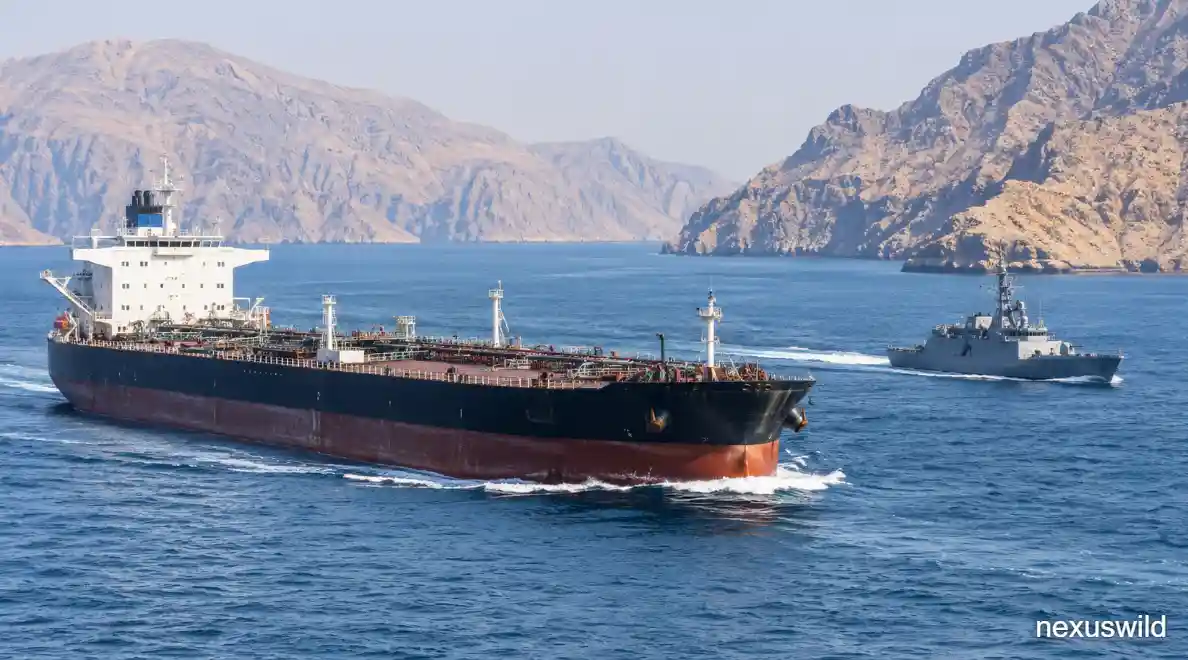

Global energy markets ended October under renewed pressure after a commercial oil tanker was attacked in the Strait of Hormuz, intensifying concerns about the security of one of the world's most important maritime energy corridors. The incident, involving explosive devices attached to a vessel by a small boat, caused an engine-room fire but did not result in reported casualties or environmental damage.
The attack occurred as geopolitical tensions involving Iran continued to unsettle energy markets. Crude oil prices rose more than 2% on Friday, October 30, reaching their highest settlement levels since late April. Brent crude futures for December delivery closed at $117.64 per barrel, an increase of 2.4%, while US West Texas Intermediate (WTI) settled at $104.12, up 2.08%.
The monthly performance was also significant. Brent advanced 13.6% during October, while WTI gained 15.2%, reflecting a combination of regional supply concerns, conflict-related risks and uncertainty about the security of energy infrastructure and shipping routes.
The tanker attack added another warning for shipping companies, energy traders and governments that depend on uninterrupted Gulf exports. Although the vessel continued its voyage after the crew extinguished the fire, the incident demonstrated how relatively small-scale attacks can create wider economic uncertainty when they occur along a critical international trade route.
Tanker Attack Highlights Vulnerability of Commercial Shipping
The United Kingdom Maritime Trade Operations (UKMTO), a maritime security organisation operated by the British military, reported that a tanker in the Strait of Hormuz had been struck by explosive devices attached by a small boat.
According to Reuters, maritime-security sources identified the vessel as the Panama-flagged MT Louise 1 and said two limpet mines had been attached to its hull. The incident occurred approximately 25 nautical miles northeast of Khasab, Oman.
The explosion caused a fire in the vessel's engine room and temporarily disabled the tanker. The crew successfully extinguished the blaze, and the vessel was able to continue towards its next port of call. UKMTO reported that the crew was safe and that there was no environmental impact.
The initial UKMTO advisory did not identify the vessel by name or establish responsibility for the attack. The identification of MT Louise 1 and the description of the devices as limpet mines came from maritime-security sources cited in subsequent reporting.
The incident was particularly significant because maritime sources described it as the first known successful limpet-mine strike in the Strait of Hormuz since the conflict involving Iran began in February 2026. The use of a small boat to attach explosive devices to a commercial vessel illustrates the difficulties of protecting shipping in a congested maritime environment.
Limpet mines are designed to attach to a ship's hull and cause damage through an explosion. Their deployment does not necessarily require a large naval platform, making them a concern for commercial vessels operating close to coastlines and through narrow shipping corridors.
The identity of the attackers remained unclear in the reports available by October 31. No party should therefore be treated as responsible without further evidence or an official attribution.
Why the Strait of Hormuz Matters to Global Energy Markets
The Strait of Hormuz is a strategic maritime passage connecting the Persian Gulf with the Gulf of Oman and the wider Arabian Sea. It provides a major export route for oil and gas produced by countries including Saudi Arabia, Iraq, Kuwait, Qatar, the United Arab Emirates and Iran.
Its importance extends beyond the countries bordering the Gulf. Energy-importing economies across Asia rely heavily on supplies moving through the region, while global trading companies use the route to transport crude oil, petroleum products and liquefied natural gas.
The concentration of energy exports through a relatively narrow maritime passage creates a significant vulnerability. Even when there is no complete closure, threats against commercial vessels can disrupt normal shipping schedules and increase the cost of transporting energy.
A serious interruption could affect crude availability, refinery operations and the movement of petroleum products. Buyers may need to seek alternative suppliers, while traders could compete for cargoes available from other producing regions.
The economic consequences would depend on the scale and duration of any disruption. A single tanker attack does not automatically mean that regional oil exports have stopped. However, repeated incidents can change how shipping companies, insurers and energy buyers assess the risks associated with the route.
For this reason, the market impact of a maritime security incident can extend beyond the physical damage to an individual vessel.
Oil Prices Reach Six-Month Settlement Highs
Crude prices strengthened on Friday as traders assessed the possibility of further escalation in the Middle East and the implications for regional energy supplies.
Brent crude futures for December delivery, which expired on October 30, settled at $117.64 per barrel, gaining $2.76 or 2.4%. The more actively traded January Brent contract increased by $2.63 to $113.43.
WTI crude futures advanced $2.12, or 2.08%, to close at $104.12 per barrel.
The settlements represented the highest levels since the end of April. Brent recorded a 13.6% increase during October, while WTI gained 15.2%.
Market participants were not responding exclusively to the tanker attack. Reuters reporting also highlighted concerns about a possible escalation in the Iran conflict after the US midterm elections, threats to regional oil infrastructure and uncertainty surrounding diplomatic efforts.
Additional concerns came from reports of attacks and threats involving Saudi energy infrastructure. The Houthis claimed strikes on Saudi sites, including major energy facilities, while regional security developments increased uncertainty about the safety of oil production and export networks.
These wider developments contributed to the risk premium in crude markets. The tanker incident reinforced existing concerns that the conflict could affect commercial shipping and energy infrastructure beyond the immediate location of military activity.
The distinction is important for interpreting the price movement. Although the attack was a significant catalyst for renewed supply concerns, the October rally reflected a broader geopolitical environment rather than one isolated event.
Shipping Companies Face Higher Operational Risk
The security situation in the Strait of Hormuz creates operational challenges for shipping companies transporting crude oil and petroleum products.
Vessel operators must evaluate the security of routes, the possibility of attacks, the availability of maritime protection and the consequences of delays. When the risk of operating in a particular corridor increases, companies may review voyage plans, crew safety arrangements and communication procedures.
Some operators may consider alternative routes where commercially and geographically practical. However, there are limitations. The Strait of Hormuz is the principal maritime exit for much of the Gulf's energy exports, and alternative routes cannot always accommodate the same volumes or serve the same destinations.
Rerouting can also increase sailing distances, fuel consumption, vessel utilisation time and freight expenses. Longer journeys may reduce the number of voyages a tanker can complete within a given period, tightening vessel availability even if global demand for shipping remains unchanged.
For cargo owners, these developments can affect delivery schedules and the cost of securing transportation. Refiners that depend on regular crude deliveries may need to maintain larger inventories or arrange alternative supply contracts to reduce exposure to unexpected disruptions.
The longer the security uncertainty continues, the more likely companies are to incorporate additional risk costs into commercial decisions.
War-Risk Insurance and Freight Costs Under Pressure
Insurance is another important channel through which geopolitical tensions can influence the global energy market.
Commercial vessels operating in designated high-risk areas may face additional war-risk insurance premiums. Insurers assess factors including the probability of attack, the intensity of regional conflict, vessel ownership, cargo type and the ship's intended route.
When security conditions deteriorate, underwriters may revise coverage terms, increase premiums or require additional information before agreeing to insure a voyage.
For tanker operators, higher insurance costs add to the expense of transporting crude oil. These costs may ultimately be reflected in freight rates or negotiated shipping charges paid by cargo owners.
The effect can spread beyond the vessel directly affected by an incident. If insurers reassess the risk of an entire maritime corridor, other operators using the same route may also face higher costs.
However, the exact increase in insurance premiums following this particular attack should not be assumed without published quotations or confirmation from insurers. The incident creates a basis for renewed risk assessments, but the final commercial impact will depend on underwriting decisions and the wider security situation.
Shipping companies must also consider crew safety, security planning and the potential financial consequences of delays or damage. These factors make maritime operations more expensive even when vessels continue to pass through the route.
Energy Importers Face Renewed Cost Pressures
Higher crude oil prices can affect energy-importing economies through several channels.
The first is the direct cost of importing petroleum. Countries that rely heavily on overseas crude supplies may face larger import bills when benchmark prices rise. The impact depends on currency movements, supply contracts, government taxes and the proportion of imported energy in the national consumption mix.
The second is the effect on domestic fuel prices. Refiners purchase crude oil as a major input, and higher acquisition costs can eventually influence wholesale and retail prices for petrol, diesel, aviation fuel and other petroleum products.
The timing and scale of the pass-through vary by country. Government pricing policies, subsidies, strategic inventories and the competitive structure of domestic fuel markets can delay or reduce the immediate impact on consumers.
For countries in Asia, the Strait of Hormuz is particularly important because a large share of Gulf energy exports is directed towards Asian buyers. A prolonged disruption could therefore increase competition for alternative crude supplies and place pressure on import-dependent economies.
India is among the countries that need to monitor the situation closely because it imports a substantial portion of its crude oil requirements. Higher international prices can increase the country's energy import bill and complicate decisions involving fuel prices, inflation management and fiscal support.
The actual impact on India would depend on the duration of elevated prices, the origin of crude purchases, shipping and insurance costs, exchange-rate movements and the response of domestic fuel retailers.
Airlines, Shipping and Manufacturing Face Higher Costs
The impact of rising crude prices extends beyond the energy industry.
Airlines are particularly exposed to changes in jet fuel prices. Fuel represents a significant operating expense for carriers, and sustained increases can reduce profit margins or lead to higher ticket prices.
Airlines may attempt to manage the impact through fuel hedging, route adjustments, operational efficiency and changes to fares. However, these strategies cannot fully eliminate exposure when prices remain elevated for an extended period.
Maritime logistics providers also face higher costs through marine fuel, insurance and freight expenses. Companies transporting goods between Asia, Europe and other international markets may need to reassess budgets and shipping contracts if energy costs continue rising.
Heavy manufacturing is another area of concern. Industrial facilities depend on energy for machinery, heating, transportation and production processes. Higher fuel and electricity costs can reduce margins, particularly for businesses operating in energy-intensive industries such as chemicals, steel, cement and industrial materials.
Manufacturers may attempt to pass additional costs on to customers, but their ability to do so depends on market competition and demand conditions.
If higher energy expenses persist, businesses may delay investment, reduce discretionary spending or seek efficiency improvements to protect profitability.
Inflation Risks Complicate Central Bank Decisions
An extended increase in crude oil prices could create additional inflationary pressure across the global economy.
Energy prices influence headline inflation directly through household fuel and electricity expenses. They can also affect the cost of transporting goods, operating factories and distributing products.
When businesses face higher energy and logistics expenses, some may pass those costs to customers. This can gradually affect prices across sectors that are not directly connected to petroleum production.
Central banks therefore monitor energy markets when assessing inflation risks. A sustained oil-price increase can complicate monetary policy decisions, particularly in economies where inflation is already above target.
However, policymakers must distinguish between a temporary energy-price shock and a persistent inflation trend. A short-lived increase in crude prices may not justify an immediate change in interest rates, while prolonged pressure that spreads into wages, services and broader production costs could become more significant.
Higher energy prices can also weaken household purchasing power. Consumers spending more on transport and utilities may reduce spending on other goods and services, potentially slowing economic growth.
This creates a difficult balance for central banks: responding too aggressively to a temporary supply shock could weaken demand, while ignoring persistent inflation pressure could make price stability more difficult to restore.
Diplomatic and Security Developments Remain Central
The future direction of energy markets will depend heavily on developments in the wider Middle East conflict.
Diplomatic efforts, military activity and decisions affecting commercial navigation could all influence the risk assessment of energy traders and shipping companies.
Reuters reported that diplomatic contacts involving regional mediators and the United States continued during the period, although uncertainty remained over the possibility of further escalation. Market participants were also watching developments surrounding the US midterm elections and their potential implications for regional policy.
The security situation is not determined by the tanker attack alone. Other threats to oil infrastructure, shipping routes and export facilities could have a greater or more lasting impact if they interrupt actual production or transportation.
For shipping companies, the key issue is whether the route remains sufficiently secure for normal commercial operations. For energy buyers, it is whether crude and refined-product deliveries can continue without significant delays or additional costs.
A return to more predictable maritime conditions could reduce the risk premium embedded in oil prices. Conversely, repeated attacks or a prolonged disruption to shipping could keep markets volatile even if global production remains broadly unchanged.
What Businesses and Investors Should Monitor
The next stage of the market response will depend on several developments.
Maritime security alerts: New incidents involving tankers, cargo ships or other commercial vessels could increase concerns about the safety of the route.
Shipping and insurance costs: Changes in war-risk premiums and freight rates will help reveal whether the market is pricing in a longer period of elevated maritime risk.
Actual oil flows: Traders will need to distinguish between threats to shipping and measurable interruptions to crude and petroleum-product exports.
Regional diplomatic developments: Negotiations and military decisions involving Iran and other regional actors could change expectations about future supply risks.
Oil benchmarks and market spreads: Brent, WTI and the price difference between different delivery periods can provide insight into market expectations about immediate and future supply conditions.
Energy company announcements: Changes to loading schedules, export operations and refinery activity could provide further evidence of whether geopolitical risks are affecting physical supply.
For businesses, monitoring these indicators is important because crude prices alone do not capture the full cost of operating in a high-risk maritime environment.
Outlook: Supply Security Becomes a Larger Market Concern
The Strait of Hormuz tanker attack has reinforced the connection between maritime security and global energy stability. Although the vessel's crew contained the fire and no environmental damage was reported, the incident has added to the concerns already influencing oil markets.
Brent's October gain of 13.6% and WTI's increase of 15.2% demonstrate the extent to which geopolitical uncertainty has influenced crude pricing. The latest attack added another source of risk at a time when traders were already monitoring regional conflict, threats to energy infrastructure and uncertain diplomatic developments.
For the global economy, the main concern is not simply whether another tanker will be attacked. It is whether repeated incidents will make energy transportation through the Gulf consistently more expensive and less predictable.
If commercial shipping continues without major interruption, the market may gradually adjust to the elevated security environment. But a broader disruption involving multiple vessels, export facilities or key maritime routes could have much more serious consequences for crude availability and transportation costs.
For now, energy importers, shipping companies, insurers and industrial businesses face a more uncertain operating environment. The ability to maintain secure maritime trade routes will remain central to the stability of international energy markets as the Middle East situation develops.
Nexuswild welcomes factual corrections. Email contact@nexuswild.com with evidence and the article URL.