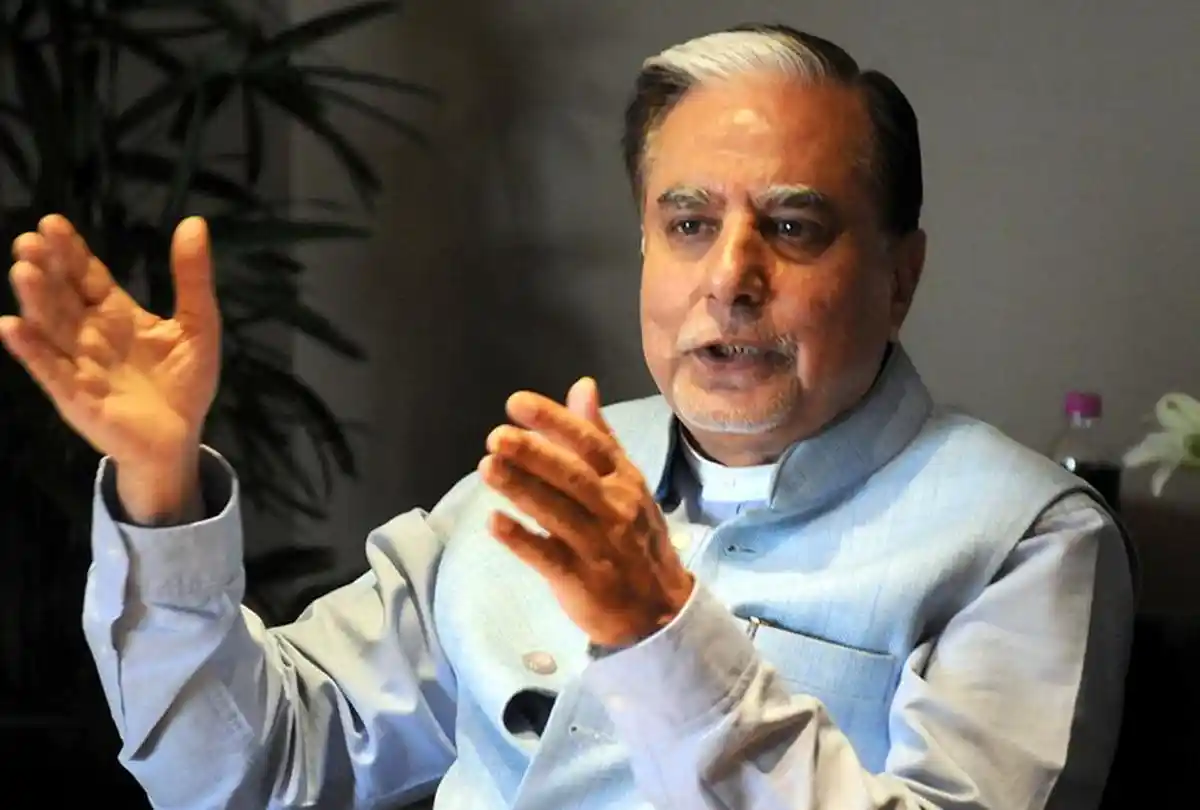

NEW DELHI — The National Company Law Tribunal has approved a repayment plan under which Essel Group founder Subhash Chandra will pay creditors a combined ₹6.5 crore, against admitted claims totalling approximately ₹22,006.57 crore in his personal insolvency proceedings. The figure breaks down as ₹6.25 crore for creditors and a further ₹25 lakh toward insolvency process costs, working out to a recovery of roughly 0.03% of admitted claims, widely reported as a 99.97% haircut.
It is tempting to describe this as ₹22,006 crore in loans being "waived." That framing is misleading. Chandra was not the principal borrower of most of this money. He was a personal guarantor for borrowings taken by Essel-linked and related entities, and the case's approved plan settles claims against him personally as guarantor, not the underlying corporate debt itself.
Guarantor, Not Borrower
The proceedings trace back to a ₹170 crore facility extended to Vivek Infracon, a company for which Chandra provided a personal guarantee. Indiabulls Housing Finance, now Sammaan Capital, initiated insolvency proceedings against him over this guarantee in 2022. Once a personal insolvency process opens, other creditors holding claims against the same guarantor can file their own claims into the same proceeding, which is how the admitted claims figure grew to ₹22,006.57 crore, an amount reflecting the total guarantee-related exposure claimed by multiple lenders, not a single personal loan Chandra took out.
That distinction matters for what creditors can still do. According to reporting on the NCLT's order, the tribunal noted that Chandra's personal assets were worth substantially less than even the ₹6.5 crore proposed under the plan, and indicated creditors could potentially still pursue recovery from the principal corporate borrowers themselves. Settling a claim against a guarantor does not, on its own, extinguish a lender's right to recover from the company that actually borrowed the money, though the extent of what remains recoverable depends on the financial condition of each specific corporate borrower and any separate insolvency or recovery proceedings against them.
Why the Plan Was Approved
The repayment plan received support from creditors holding 80.81% of voting value, a threshold that satisfied what is required under the Insolvency and Bankruptcy Code (IBC) for a personal insolvency repayment plan to be approved. NCLT judicial member Nilesh Sharma, who was brought in as a third member after the original two-member bench delivered a split verdict on September 3, 2025, approved the plan under Section 114 of the IBC. Once approved, the plan becomes binding on all creditors, including those who voted against it, under Section 115.
Dissenting creditors argued the recovery on offer was negligible and, in LIC Housing Finance's characterization, "unviable and unlawful." LIC Housing Finance held an admitted claim of ₹1,322.39 crore but was offered only about ₹38.09 lakh under the plan, a recovery of roughly 0.03% on its own claim. The tribunal's order reportedly rejected these objections on the basis that it could not substitute its own commercial judgment for the decision reached by the required majority of creditors, a principle consistent with how Indian insolvency law generally treats the collective commercial decisions of creditors.
The tribunal's reasoning also rested on valuation. The resolution professional's assessment found Chandra's available personal assets were worth less than the settlement amount itself, and the tribunal weighed whether rejecting the plan and pushing Chandra toward bankruptcy would leave creditors better or worse off. Its conclusion, based on that valuation, was that bankruptcy proceedings were unlikely to produce a materially better outcome for creditors than the negotiated plan.
How the Case Reached This Point
After Indiabulls Housing Finance's 2022 petition, the case faced earlier legal challenges before the Supreme Court lifted a stay on proceedings, after which the NCLT formally admitted Chandra into the personal insolvency resolution process in April 2024. The case then proceeded through the standard steps of the personal guarantor framework under the IBC, including claim admission, a resolution professional's assessment, and creditor voting on the proposed plan, culminating in the original bench's split decision in September 2025 and Sharma's tie-breaking approval this week.
Lenders Push Back
Despite the plan's approval, several major creditors have said they will challenge the order before the National Company Law Appellate Tribunal (NCLAT).
- Canara Bank, which held a 1.60% voting share and voted against the plan, said it is filing an appeal and had separately sought a forensic audit, a request it said could not be granted given its minority voting position.
- Union Bank of India (UK) Ltd, holding a 0.76% share, said it is "immediately challenging" the order.
- LIC Housing Finance, with a 6.09% voting share, said it will appeal alongside other public financial institutions.
- HDFC Bank's position is narrower for now. The bank has said its admitted claim, inherited from the erstwhile HDFC Limited following their merger, represented about 3.2% of total claims, and that it opposed and voted against the plan. HDFC Bank has described itself as "exploring an appeal" at the NCLAT, a more preliminary stance than the three lenders that have committed to filing.
- Axis Bank and RBL Bank also voted against the plan during creditor deliberations, according to reporting on the case.
The core objection from dissenting lenders is straightforward: a recovery of roughly three-hundredths of one percent is difficult to justify, and several have raised questions about how Chandra's personal assets were valued and whether the resolution process adequately tested that valuation. An appeal to the NCLAT does not automatically undo the NCLT's order; the plan remains approved and legally binding unless and until the appellate tribunal rules otherwise or grants a stay.
Chandra's Response
Separately from the legal proceedings, Chandra has made his own public statements about the case, which should be read as his personal claims rather than findings of the tribunal. He has said the Essel Group repaid roughly ₹43,000 crore of a total ₹45,000 crore in debt and has called for an independent audit of the group's finances. In a video message following the order, he said he intends to pay "the last ₹6.5 crore I have left" under the plan and spoke of working with contacts in Switzerland on future investment activity. These are Chandra's own characterizations of his financial position and conduct, distinct from the tribunal's legal findings.
What Comes Next
With Canara Bank, Union Bank of India (UK) and LIC Housing Finance confirming appeals, and HDFC Bank indicating it is considering one, the matter is now expected to move to the NCLAT. Until an appeal succeeds in altering or staying the order, the approved repayment plan stands, meaning the practical outcome for now is that Chandra's personal guarantor obligations are being settled for ₹6.5 crore while questions about recovery from the underlying corporate borrowers, and about how his personal assets were valued, remain contested in a separate forum.
Further reading and useful links
Reader questions
Frequently asked questions
Does the NCLT order mean ₹22,006 crore in corporate loans are waived?
No. The NCLT order settles claims against Subhash Chandra personally as a guarantor. Creditors can potentially still pursue the principal corporate borrowers for the underlying corporate debt.
Why did the NCLT approve a plan with a 99.97% haircut?
The plan received the required statutory support (80.81% of voting value) from creditors. Additionally, the resolution professional's assessment found Chandra's available personal assets were worth less than the ₹6.5 crore settlement amount, leading the tribunal to conclude that outright bankruptcy would not produce a better outcome.
How are dissenting lenders responding to the approval?
Major dissenting lenders, including Canara Bank, Union Bank of India (UK) Ltd, and LIC Housing Finance, have confirmed they will challenge the NCLT's order before the National Company Law Appellate Tribunal (NCLAT).
Nexuswild welcomes factual corrections. Email contact@nexuswild.com with evidence and the article URL.