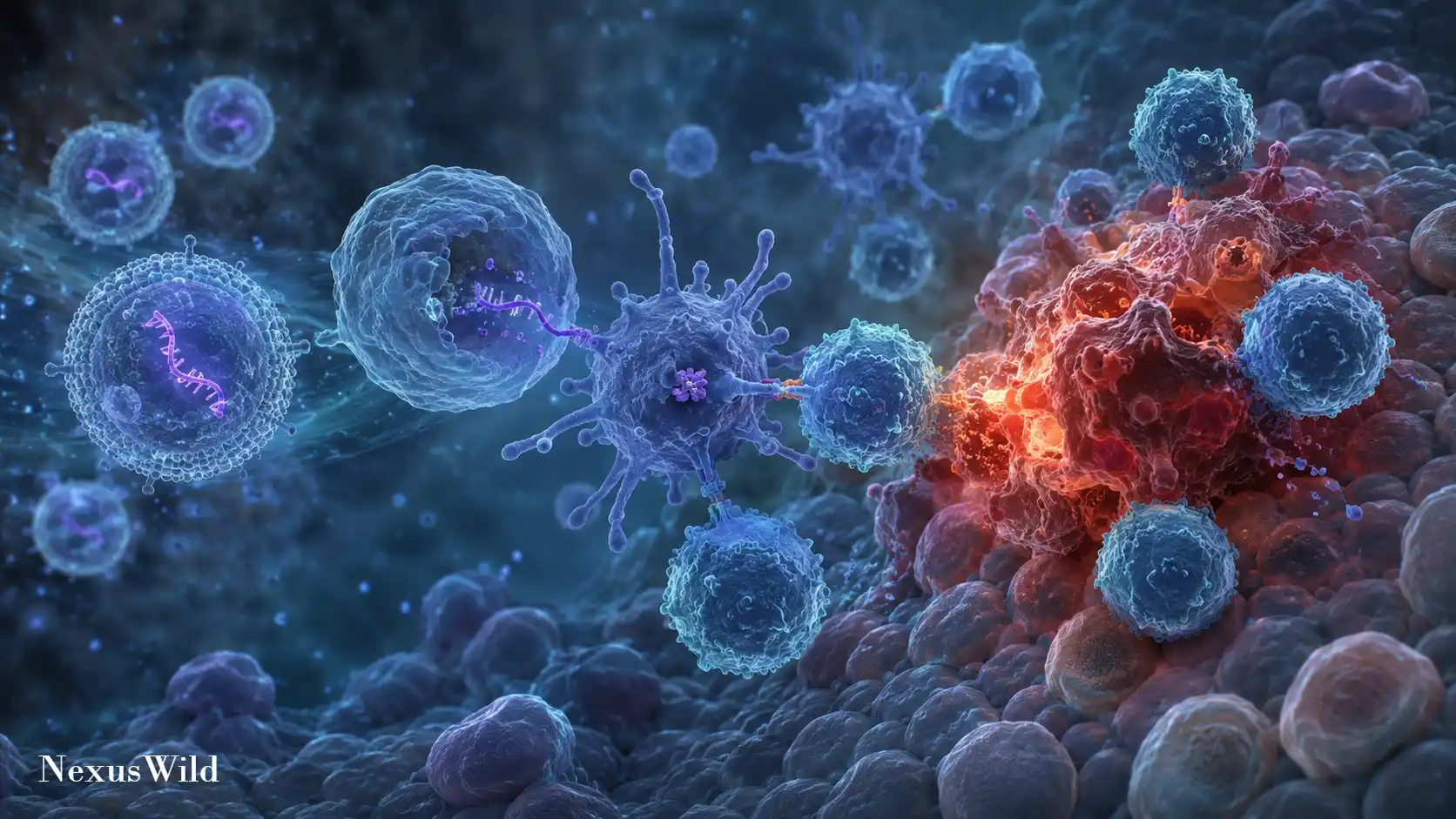

An mRNA cancer vaccine is not the same kind of vaccine as a flu shot or the HPV vaccine. Those are preventive vaccines, given to healthy people to stop an infection, or in HPV's case, to prevent the viral infections that can eventually cause cervical and other cancers. The mRNA vaccines now in late-stage cancer trials are therapeutic: they're given to patients who already have, or have recently had, cancer, with the goal of treating existing disease or preventing it from coming back after surgery. They do not prevent cancer in healthy people, and none is currently approved for that purpose.
How a Personalized Cancer Vaccine Is Built
The process starts with a patient's own tumor. After surgery, doctors sequence the tumor's DNA alongside healthy tissue to find mutations unique to the cancer. Software then predicts which mutated proteins, called neoantigens, are most likely to be displayed on the surface of cancer cells and recognized as foreign by the immune system. Moderna and Merck's intismeran autogene, for example, is designed to encode instructions for up to 34 different neoantigens specific to each patient's tumor. An mRNA sequence carrying these instructions is manufactured individually and injected, prompting the patient's own cells to produce the neoantigen proteins and present them to the immune system. This is meant to train T cells, particularly the cytotoxic CD8+ T cells that can directly kill cancer cells, to recognize and attack any remaining tumor cells carrying those same markers.
These vaccines are typically paired with checkpoint inhibitors like pembrolizumab (Keytruda), drugs that block proteins cancer cells use to suppress T cell activity. The logic is straightforward: a vaccine that primes T cells to recognize cancer works better if those T cells aren't simultaneously being switched off by the tumor.
The Melanoma Result
On August 19, 2026, Moderna and Merck announced topline results from the Phase 3 INTerpath-001 trial, which enrolled 1,137 patients with completely resected, high-risk stage IIB-IV melanoma. Patients were randomized to receive intismeran autogene plus pembrolizumab, or pembrolizumab alone. The trial met its primary endpoint of recurrence-free survival and a key secondary endpoint, distant metastasis-free survival, with the companies describing the improvement as statistically significant and clinically meaningful. No new safety signals were reported.
It's worth being precise about what this announcement is and isn't. The companies did not release specific numbers alongside this Phase 3 announcement, and full data are expected at a future medical meeting; this is a topline company announcement, not yet a peer-reviewed publication. It also measures recurrence-free and metastasis-free survival, not overall survival, meaning it shows patients are staying cancer-free for longer, not yet how it affects long-term survival, which requires more follow-up time to assess.
The result builds on earlier, published Phase 2b data from the KEYNOTE-942 trial, whose five-year follow-up was presented at the 2026 ASCO Annual Meeting and published in the Journal of Clinical Oncology. That smaller trial found the combination reduced the risk of recurrence or death by 49% and the risk of distant metastasis or death by 59%, compared with pembrolizumab alone. Those figures come from the earlier trial, not the new Phase 3 data. Merck and Moderna have said they plan to engage regulators on a filing submission, but the therapy is not yet approved anywhere.
Not Every Cancer Is Responding
Days later, on August 28, 2026, BioNTech and Roche's Genentech announced they were terminating a Phase 2 trial of a different personalized mRNA vaccine, autogene cevumeran, in colorectal cancer. That trial, BNT122-01, tested the vaccine alone, without a checkpoint inhibitor, in patients with surgically removed, high-risk colorectal cancer who still tested positive for circulating tumor DNA, comparing it against watchful waiting. An independent Data Safety Monitoring Board identified what BioNTech described as a numerical imbalance in overall survival between the two groups; a Genentech spokesperson confirmed there were more deaths in the vaccine arm in this specific patient population, and the board concluded that continuing the trial was unlikely to change that outcome.
The two results are not directly comparable. The melanoma trial paired the vaccine with an active checkpoint inhibitor in both study arms; the colorectal trial tested the vaccine alone against observation. BioNTech said the outcome reflects the broader challenge of treating tumors like colorectal cancer that tend to have immune-suppressive microenvironments, which can blunt a vaccine-primed immune response regardless of how well-targeted it is. A separate BioNTech trial combining autogene cevumeran with a checkpoint inhibitor and chemotherapy in pancreatic cancer, called IMcode003, was not affected and continues.
Small, early Phase 1 data in pancreatic cancer, presented in April by researchers at Memorial Sloan Kettering, found that among the subset of patients whose immune systems responded to the vaccine, a large majority were still alive years later; this involved a small number of patients in an early-phase trial and hasn't been confirmed in larger studies. Moderna and Merck have also said they have Phase 2 and Phase 3 trials underway in non-small cell lung cancer, bladder cancer and renal cell carcinoma, though results from those trials aren't yet available.
Why Scientists Remain Optimistic, and What Stands in the Way
The appeal of this approach is its precision: a vaccine built from a patient's own tumor mutations, capable of targeting dozens of neoantigens at once, aimed specifically at the microscopic cancer cells that can survive surgery and eventually cause recurrence. Combined with checkpoint inhibitors, it represents a genuinely new tool in adjuvant cancer care.
The obstacles are substantial. Every personalized vaccine has to be individually sequenced, designed and manufactured for a single patient, which takes time and money that a mass-produced drug does not. Tumors are heterogeneous, meaning different parts of the same tumor can carry different mutations, complicating neoantigen selection. Some cancers create immunosuppressive environments that blunt any immune-based therapy, personalized or not, as the colorectal result illustrates. Response also appears to vary significantly by cancer type, so a result in melanoma cannot simply be assumed to hold in colorectal, pancreatic or lung cancer. And regulators will ultimately want mature overall survival data, not just recurrence-free survival, before any broad approval decision.
The Bottom Line
The melanoma data represent a real scientific milestone, the first positive Phase 3 result for an individualized mRNA cancer therapy. The colorectal setback, arriving just over a week later, is a reminder that this milestone doesn't automatically extend to other tumor types. Whether personalized mRNA cancer vaccines become a broadly useful part of cancer treatment will depend on results across a much wider range of cancers, mature survival data rather than recurrence data alone, and whether individualized manufacturing can be scaled affordably. None of this should be read as a signal for patients to seek these therapies in place of established cancer treatment; the vaccines currently in trials are being tested alongside, not instead of, standard surgery, immunotherapy and other proven care.
Further reading and useful links
Reader questions
Frequently asked questions
Are mRNA cancer vaccines meant to prevent healthy people from getting cancer?
No. The mRNA vaccines currently in late-stage trials are therapeutic, meaning they are given to patients who already have or have recently had cancer, with the goal of treating the existing disease or preventing it from returning.
How did the personalized mRNA vaccine perform in melanoma trials?
In an August 2026 announcement, Moderna and Merck reported that their Phase 3 trial for intismeran autogene combined with pembrolizumab met its primary endpoint of recurrence-free survival for high-risk melanoma, building on earlier Phase 2b data that showed a 49% reduction in the risk of recurrence or death.
Do mRNA cancer vaccines work for all types of tumors?
No. A Phase 2 trial of a personalized mRNA vaccine for colorectal cancer was terminated in August 2026 due to higher mortality in the vaccine arm compared to watchful waiting. Certain tumors have immune-suppressive microenvironments that blunt vaccine-primed immune responses.
Nexuswild welcomes factual corrections. Email contact@nexuswild.com with evidence and the article URL.