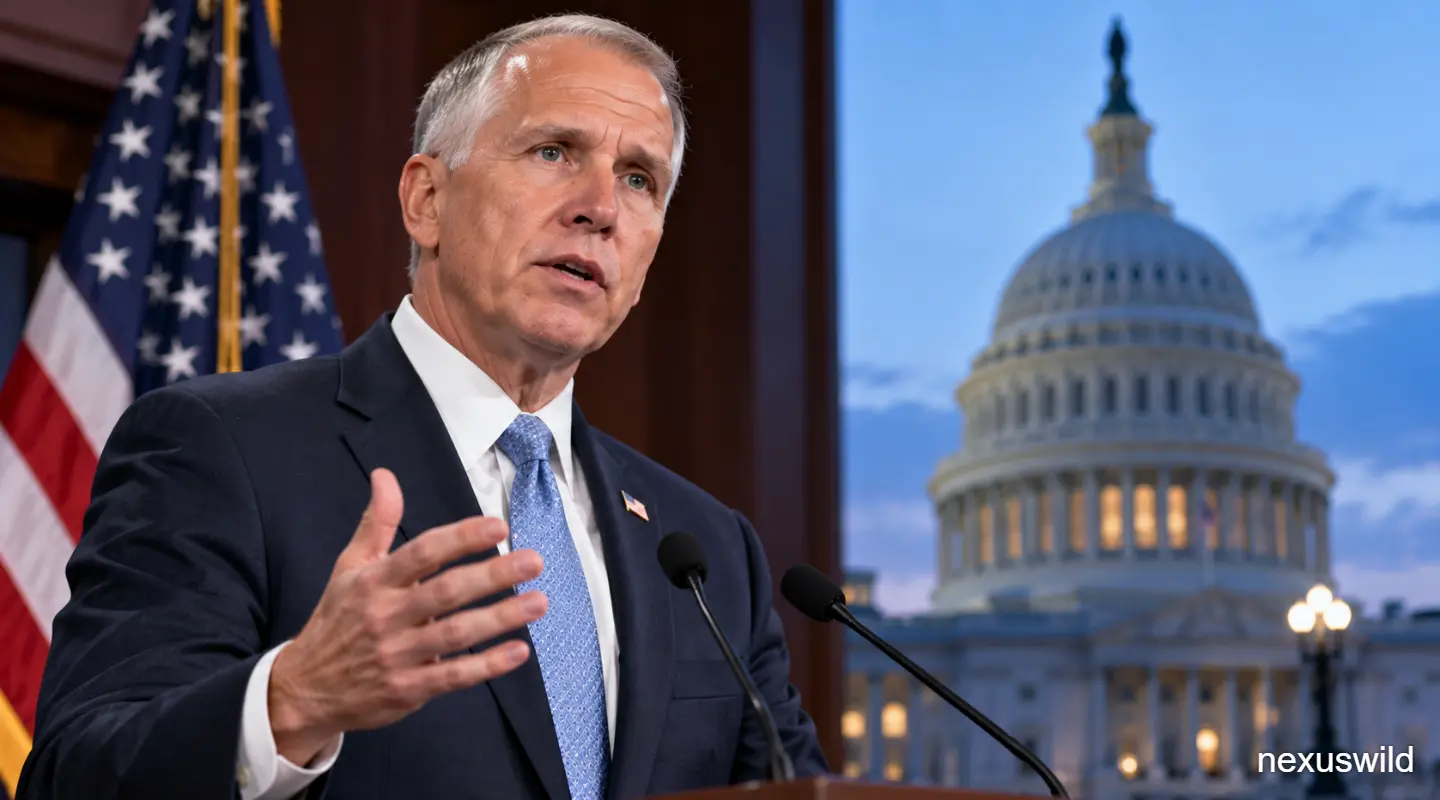

Republican Sen. Thom Tillis of North Carolina says Congress must more forcefully exercise its constitutional role as a check on presidential power, warning that continued erosion of institutional independence could weaken the U.S. system of government.
Tillis made the comments in an interview with CBS News’ 60 Minutes broadcast on October 4, 2026, as he prepares to leave the Senate at the end of his current term. The interview focused on his relationship with President Donald Trump, his criticism of senior administration officials and his broader concern that power has increasingly shifted toward the executive branch.
His warning was not limited to Trump. Tillis said the trend has developed across several administrations and argued that lawmakers have too often accepted greater presidential authority when the White House is controlled by their own party.
Tillis Says Executive Power Has Expanded Across Administrations
During the interview, Tillis told CBS correspondent Ross Douthat that he sees a long-running expansion of presidential influence at Congress’ expense.
He described a “constant escalation” across the past four administrations, referring to the Obama, first Trump, Biden and second Trump presidencies. According to Tillis, presidents have increasingly relied on executive action while Congress has failed to defend its position as a separate and coequal branch.
Tillis said his objection applies regardless of which party controls the White House. He argued that senators can be too willing to transfer or tolerate additional authority when a president from their own party is in office, only to object when that power is later exercised by the opposing party.
That is Tillis’ political assessment. The Constitution itself does not prohibit presidents from issuing executive orders, but the scope of executive action is constrained by constitutional authority, laws enacted by Congress and judicial review.
‘I Want Checks and Balances’
Tillis linked his concern directly to the constitutional separation of powers.
“I want checks and balances. I want all three branches to have their individual role,” he told *60 Minutes*.
He argued that preserving those institutional boundaries is important because democratic systems can weaken when one branch becomes dominant.
Asked specifically about the danger of authoritarianism, Tillis pointed to what he described as the executive branch’s “outsized influence,” including presidential pressure on elected lawmakers through primary-election politics. He said such pressure could reduce the independence of members of Congress and eventually produce what he described as a government dominated by a single institution.
Tillis used unusually stark language to describe the possible consequence, warning that unchecked concentration of authority could produce what he called a “sort of dictator king.” That phrase was a political warning from Tillis, not a legal determination about the current U.S. government.
What Checks and Balances Mean Under the Constitution
The constitutional system Tillis referenced divides federal authority among three branches.
Article I gives legislative power to Congress. Article II places executive power in the president. Article III establishes the federal judiciary. The Constitution Annotated, maintained by Congress, explains that this separation was designed to prevent governmental authority from becoming concentrated in one institution.
The branches are separate but not completely isolated.
Congress passes legislation and controls federal appropriations. The president can veto legislation, while Congress can override a veto with the required two-thirds vote in both chambers. The Senate also exercises an “advice and consent” role over many presidential appointments and treaties. Courts can review disputes over whether government actions comply with the Constitution and federal law.
The Senate Historical Office describes that arrangement as deliberately creating both cooperation and conflict between institutions while limiting the ability of any one branch to consolidate power.
Tillis Focuses on Congress as a Coequal Branch
Much of Tillis’ criticism was directed not only at presidents but also at Congress itself.
His argument is that senators and representatives must actively use the authority the Constitution gives them rather than relying on presidents to make major policy decisions through executive action.
In the CBS interview, Tillis said recent presidents have sometimes behaved as though Congress were subordinate rather than coequal. He argued that Congress contributes to the imbalance when lawmakers decline to assert their legislative and oversight powers.
That position reflects a long-running constitutional debate rather than a novel legal principle. Congress and presidents have disputed the boundaries of executive authority throughout U.S. history, including over appointments, military action, spending, regulation and emergency powers.
The constitutional framework allows substantial presidential authority while also giving Congress and the courts mechanisms to limit or review executive action.
Trump Administration Is the Immediate Context
Although Tillis said his concern extends across administrations of both parties, his 60 Minutes appearance occurred in the specific context of his increasingly strained relationship with Trump and several members of the president’s administration.
CBS reported that Tillis has criticized advisers surrounding Trump and questioned whether some senior officials should hold the authority given to them. Tillis also told the program that he regretted his vote to confirm Defense Secretary Pete Hegseth.
Those criticisms represent Tillis’ judgment about individual officials and should be distinguished from independently established constitutional facts.
Tillis nevertheless continued to identify himself as a conservative Republican and said his concerns about executive power were consistent with his longstanding support for limited government.
Primary Pressure Is Part of Tillis’ Concern
One of the more specific risks Tillis raised involved presidential influence over members of Congress through party primaries.
He argued that lawmakers can lose independence when they fear a president may endorse or support a primary challenger against them. In his view, that political pressure can discourage legislators from challenging executive actions even when they privately disagree with them.
The Constitution does not prevent presidents from endorsing candidates or participating in party politics. Tillis’ concern is instead about the institutional effect he believes such pressure can have on Congress’ willingness to operate independently.
CBS reported that Tillis said many Republican senators had privately expressed reservations about actions by the administration while remaining reluctant to speak publicly. That claim comes from Tillis and his forthcoming book and has not been independently established as a count of Senate opinion.
His Retirement Gives the Comments Additional Context
Tillis announced in June 2025 that he would not seek another Senate term.
In his official statement at the time, he said he wanted to spend more time with his family and expressed frustration with political theater and partisan gridlock in Washington. He said he intended to use the remainder of his term to focus on policy without the demands of campaigning or fundraising.
His retirement announcement followed a dispute with Trump over major domestic legislation. CBS reported that Trump threatened to support a primary challenger after Tillis said he would vote against the legislation, and Tillis subsequently chose not to seek reelection.
That history provides political context for the interview, but it does not by itself establish why Tillis holds his broader constitutional views. Tillis presented his concerns about executive authority as extending beyond his personal disputes with Trump.
Courts Also Serve as a Check on Presidential Authority
Tillis focused heavily on Congress, but the judiciary is another central part of the constitutional system.
Federal courts can hear challenges alleging that executive actions exceed presidential authority or conflict with statutes or the Constitution. The Supreme Court and lower federal courts therefore frequently become arbiters of disputes between Congress and the executive branch.
That role remains particularly relevant during periods when presidents test the boundaries of statutory or constitutional authority.
Current Supreme Court litigation includes multiple disputes concerning the reach of presidential power, showing that disagreements over executive authority continue to be resolved through the judiciary as well as through legislation and political negotiation.
Court rulings on individual executive actions do not necessarily settle every broader debate over presidential power, however. Many separation-of-powers questions depend on the particular statute, constitutional provision and factual circumstances involved.
Tillis Presents the Issue as Institutional, Not Only Partisan
A central feature of Tillis’ argument is that constitutional restraints should operate regardless of which political party holds power.
He told CBS that lawmakers make a recurring mistake when they permit presidents from their own party to accumulate powers that they would oppose under the other party.
That principle mirrors the structural logic of checks and balances: constitutional powers belong to institutions, not political parties.
The Senate’s own historical account says the system was designed to distribute authority and prevent its consolidation within any one branch, while accepting that this structure can produce political conflict and slower decision-making.
Whether Congress has in fact surrendered too much authority to modern presidents is a matter of legal, historical and political debate. Tillis’ assertion that it has is his interpretation.
Conclusion
Sen. Thom Tillis used his October 4 60 Minutes interview to argue that Congress must more actively defend its constitutional role as a check on presidential authority.
His warning was aimed immediately at what he considers excessive executive influence during the second Trump administration, but Tillis said the underlying trend has developed across administrations of both parties. He specifically raised concerns about executive orders, political pressure on lawmakers and Congress’ willingness to give presidents greater room to act.
The constitutional system does divide federal power among Congress, the president and the judiciary, with each branch holding mechanisms that can constrain the others. That structure is an established feature of the U.S. Constitution.
Tillis’ conclusion that those safeguards are currently under growing strain is his political and institutional assessment. His broader argument is that preserving democratic government requires Congress, courts and the executive branch to continue exercising their separate constitutional roles rather than allowing federal authority to become concentrated in a single institution.
Nexuswild welcomes factual corrections. Email contact@nexuswild.com with evidence and the article URL.