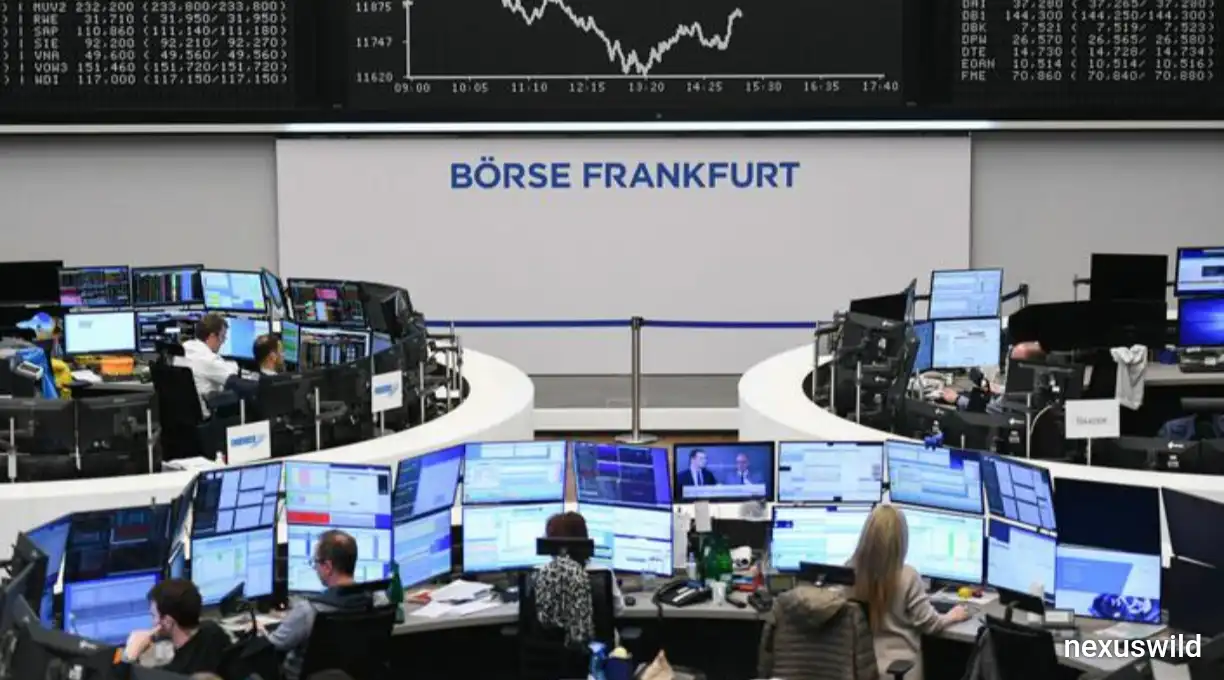

Thyssenkrupp’s materials distribution and supply chain division, tk accelis, began trading on the Frankfurt Stock Exchange on Wednesday, October 28, marking another major step in the German industrial group’s restructuring. The listing valued the business at approximately €1.77 billion at its opening price, making it Germany’s largest stock-market listing of 2026 so far, according to Reuters.
Shares opened at €27.80. Reuters later reported that the company’s market valuation had risen as trading progressed, illustrating how the market capitalisation changed during the debut session. Thyssenkrupp distributed 49% of tk accelis to its existing shareholders and retained the remaining 51%, preserving majority ownership while giving the materials business a separate public-market identity.
A major step in Thyssenkrupp’s restructuring
The listing is part of Thyssenkrupp’s wider effort to move from an integrated industrial conglomerate towards a holding-company structure with distinct operating businesses. Under its ACES 2030 strategy, the group has been pursuing a more decentralised model intended to give subsidiaries clearer responsibilities and greater scope to develop their own businesses.
The tk accelis spin-off follows earlier listings involving Thyssenkrupp’s hydrogen technology business, Thyssenkrupp nucera, and its naval systems division, TKMS. The company says separating operating businesses can make their performance more transparent to investors and give management teams greater entrepreneurial flexibility.
The transaction did not amount to a conventional initial public offering in which a company necessarily sells newly issued shares to raise fresh cash. Instead, the 49% stake was distributed directly to existing Thyssenkrupp shareholders, with one tk accelis share allocated for every 20 Thyssenkrupp shares held. The parent company retained control through its 51% holding.
That structure gives shareholders direct exposure to the materials business while keeping it connected to the parent group. It also creates a separately traded share price that investors can use to assess the market’s valuation of the division.
What tk accelis does
tk accelis buys, sells, processes, stores and distributes industrial materials, including steel and alloys. Its services extend beyond traditional materials trading into processing, logistics and digital supply chain solutions. The company describes this broader approach as “Materials-as-a-Service,” with the aim of providing customers with more integrated support rather than simply supplying raw materials.
The business operates in 30 countries and employs approximately 15,500 people, representing around 17% of Thyssenkrupp’s workforce. It generated €11.4 billion in sales during the 2024/25 financial year, accounting for nearly one-third of the parent group’s revenue. Its customers include Airbus, BP, Tesla and Volkswagen, according to Reuters.
Its role across several industrial sectors makes demand dependent on a range of factors, including manufacturing activity, automotive production, aerospace demand, metal prices and customer inventory management. A large revenue base therefore does not necessarily translate into equally strong profits: materials distribution can involve significant purchasing, processing, warehousing and logistics costs.
Profitability is the next test
For investors, the central question is whether tk accelis can convert its substantial sales into higher and more consistent margins. In fiscal 2024/25, the company reported adjusted earnings before interest, taxes, depreciation and amortisation (EBITDA) of €229 million, equivalent to an adjusted EBITDA margin of 2%.
In its October 28 listing announcement, the company said sales reached €9.1 billion in the first nine months of fiscal 2025/26, while adjusted EBITDA totalled €256 million. That represented an adjusted EBITDA margin of approximately 2.8% over the period, above the 2% margin reported for the preceding full financial year. The comparison is useful, but the nine-month period should not be treated as a full-year result.
Management has set a medium-term target of an adjusted EBITDA margin of 4% to 5% and annual sales growth exceeding 4%. The company says its priorities include expanding higher-margin services, growing its North American business and improving efficiency. These are forward-looking targets rather than guaranteed outcomes.
Achieving them will depend on execution and the economic environment. A stronger services mix could improve profitability if customers are willing to pay for additional processing and supply chain support. However, weak industrial demand, pricing pressure, higher operating costs or unexpected disruptions could make the targets more difficult to reach.
Why the valuation matters
The opening valuation of approximately €1.77 billion provides investors with an initial market reference for a business that previously operated within a larger industrial group. Subsequent share-price movements changed that valuation during the first trading session.
Analyst estimates before the listing varied considerably. Jefferies estimated tk accelis’ enterprise value—including debt—at between €2.6 billion and €4.8 billion. Enterprise value and equity market capitalisation measure different things: enterprise value incorporates debt and other adjustments, while market capitalisation is calculated using the share price and shares outstanding. The estimates therefore should not be compared directly with the opening equity valuation as if they were identical measures.
The separate listing could also make it easier for investors to evaluate the materials business independently of Thyssenkrupp’s other divisions. But a new quoted valuation does not, by itself, prove that the spin-off has unlocked additional economic value or eliminated a conglomerate discount. That assessment will require sustained trading data, financial performance and a comparison with appropriate industry peers.
Competition and the growth outlook
tk accelis is entering public markets at a time when the industrial materials and distribution sector is also undergoing consolidation. Reuters highlighted the acquisition of German competitor Kloeckner & Co by US-based Worthington Steel, alongside a planned combination involving US materials distributors Ryerson and Olympic Steel. These developments show that companies in the sector are reassessing their scale and competitive position.
For tk accelis, independence could provide more flexibility in allocating capital, developing digital services and pursuing growth opportunities. Its continued relationship with Thyssenkrupp may also provide strategic continuity, although the parent’s 51% stake means the company is not fully independent in terms of ownership.
The key indicators for investors will be progress towards the margin target, sales growth, cash generation, debt management and the share price’s performance after the initial listing period. Management’s ability to turn a large distribution operation into a more profitable, service-oriented business will be central to the longer-term investment case.
The debut marks an important corporate milestone, but it is only the beginning of tk accelis’ public-market record. Its long-term success will depend less on the first-day valuation than on whether it can deliver stronger profitability and sustainable growth while navigating industrial demand and competitive pressures.
Nexuswild welcomes factual corrections. Email contact@nexuswild.com with evidence and the article URL.