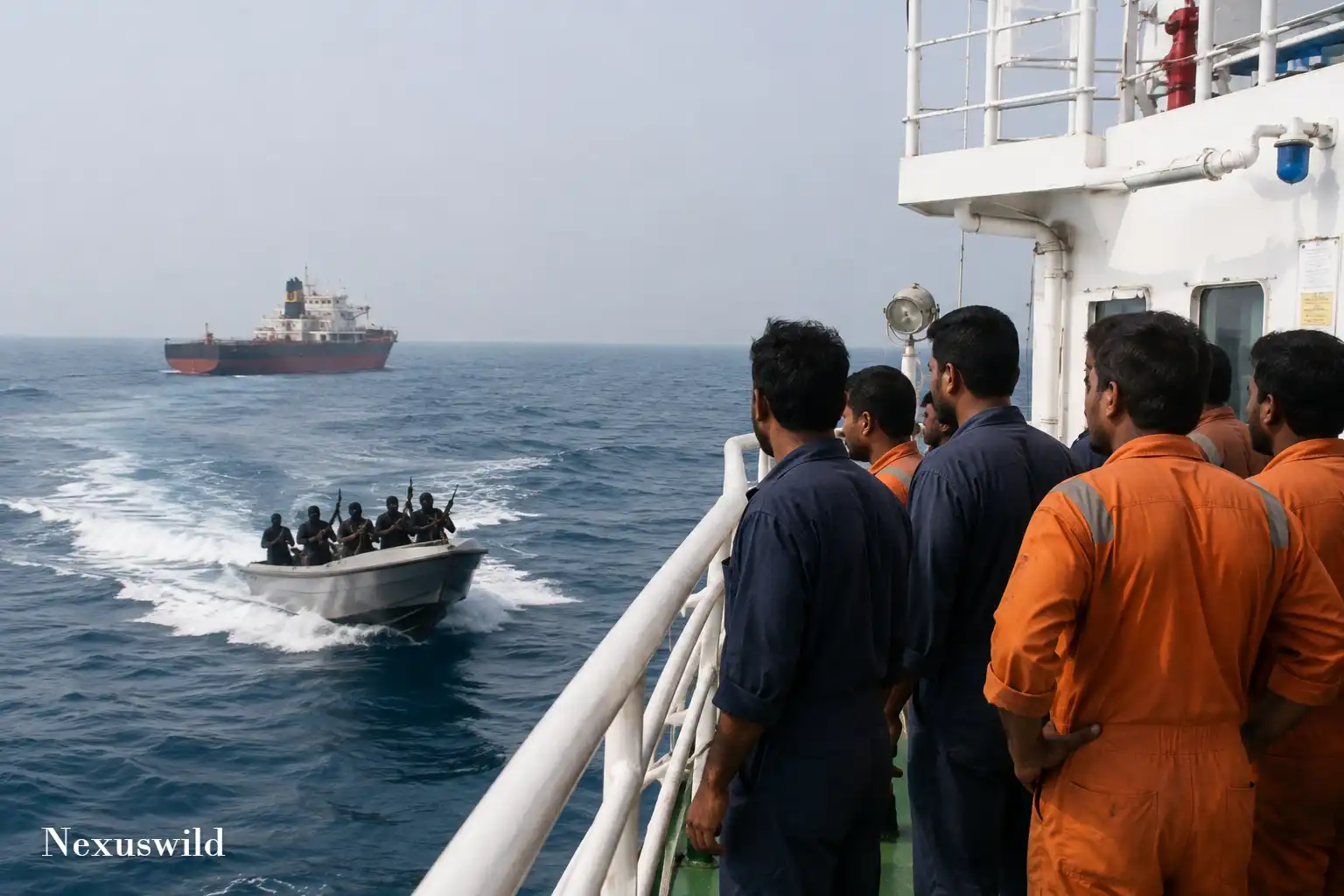

Two commercial vessels carrying a combined 22 Indian nationals have been seized by armed pirates in separate incidents off the coasts of Yemen and Somalia, India's Ministry of Ports, Shipping and Waterways confirmed on Friday, August 21. According to officials, all 22 Indian crew members are reported safe as of the latest information available, though the status of both vessels themselves remains a developing situation.
Two Separate Hijackings, Three Days Apart
The first vessel, the Eritrea-flagged oil products tanker MT Sibu 1, was hijacked by six armed pirates in the Gulf of Aden on August 20, roughly 30 nautical miles off the coast of Yemen. The tanker was carrying 20 crew members in total, including 16 Indian nationals, along with one Syrian, one Sudanese and one Iraqi crew member, while the nationality of one remaining seafarer had not been confirmed at the time of reporting. Maritime tracking data indicated the tanker was approached by an unidentified vessel shortly before it lost communication and came under pirate control.
The second incident took place three days earlier, on August 17, when the Cameroon-flagged cargo ship M/V LUTUF was seized off Somalia's Puntland coast. The vessel had 10 crew members on board, six of them Indian. According to officials, eight pirates armed with AK-47-type rifles and operating from two skiffs boarded the ship. The crew initially took shelter in the vessel's citadel, a reinforced safe room designed to protect seafarers during a hijacking, but the pirates reportedly breached it and moved the crew to the ship's bridge. As of the latest update, the vessel remained under pirate control.
Government Response
The development was disclosed by a senior Shipping Ministry official to the Press Trust of India. Officials said the Directorate General of Shipping has been coordinating with the recruitment and placement agency associated with MT Sibu 1, identified as S K S Krishi Marine Services, which has been asked to file an incident report and provide periodic updates through the e-Navik online marine casualty reporting system used by Indian maritime authorities. Similar reporting requirements are expected to apply to the agency linked to the LUTUF's Indian crew.
As of this report, there has been no official confirmation of an Indian Navy deployment specific to either the MT Sibu 1 or the LUTUF hijacking. The Indian Navy has, however, maintained an anti-piracy presence in the Gulf of Aden and wider western Indian Ocean for several years and has previously intervened in hijacking incidents involving Indian crew in the region, including the 2024 rescue operation involving the vessel MV Ruen.
Piracy, Not a Houthi Attack
It is worth being precise about the nature of these incidents. Both hijackings match the pattern of Somali-linked piracy: small armed groups approaching in skiffs, boarding vessels, and taking crews hostage, typically with the intent of extracting a ransom. This is distinct from the Houthi attacks on shipping that have periodically affected the nearby Red Sea corridor since late 2023, which have generally involved missile and drone strikes launched from Yemeni territory and are tied to the group's stated political objectives around the Gaza conflict. Nothing in the official Indian government account or in maritime security reporting has attributed either the MT Sibu 1 or LUTUF hijacking to the Houthis.
Part of a Wider Resurgence
Both incidents come amid a broader increase in piracy activity in the Gulf of Aden and off the Somali coast this year. Security analysts have noted that naval and coalition attention in the region has been increasingly stretched by other maritime security concerns, including Houthi activity in the Red Sea and, more recently, tensions linked to the wider security situation involving Iran, leaving gaps that pirate groups operating from Somalia's Puntland region have exploited. A separate tanker, the Tanzania-flagged MT Asana, was hijacked in the Gulf of Aden roughly a month before the MT Sibu 1 incident and taken toward Puntland, according to shipping security reports, underscoring that this is not an isolated case.
What It Means for Indian Seafarers
India supplies a significant share of the world's merchant navy workforce, and incidents like these are a reminder of the risks Indian seafarers face on vessels transiting the Gulf of Aden, one of the world's busiest and most exposed shipping corridors. The government's insistence on incident reporting through the e-Navik system and coordination with recruitment agencies reflects standard protocol for tracking Indian nationals caught up in maritime security incidents abroad. For shipping companies and insurers, the twin hijackings are likely to renew scrutiny of vessel security measures, including the use of citadels, armed guards and stricter routing decisions through high-risk waters off Somalia and Yemen.
What Remains Unconfirmed
Several details remain unclear. The identity or affiliation of the pirate groups behind both hijackings has not been officially established. The current location and condition of the MT Sibu 1 and its cargo, and whether any ransom demand has been made in either case, have not been disclosed by Indian authorities. This report will be updated as verified information becomes available from the Ministry of Shipping, the Directorate General of Shipping, or other official sources.
Further reading and useful links
Reader questions
Frequently asked questions
Which ships were hijacked off the coasts of Yemen and Somalia?
The Eritrea-flagged oil products tanker MT Sibu 1 was hijacked on August 20 off the coast of Yemen, and the Cameroon-flagged cargo ship M/V LUTUF was seized off Somalia's Puntland coast on August 17.
Are the Indian crew members safe?
Yes. According to India's Shipping Ministry, all 22 Indian crew members across both hijacked vessels are reported safe as of the latest update.
Are these hijackings related to Houthi attacks in the Red Sea?
No. Officials and maritime security analysts indicate these incidents match the pattern of Somali-linked piracy, which typically involves boarding vessels for ransom, rather than Houthi missile or drone strikes.
Nexuswild welcomes factual corrections. Email contact@nexuswild.com with evidence and the article URL.