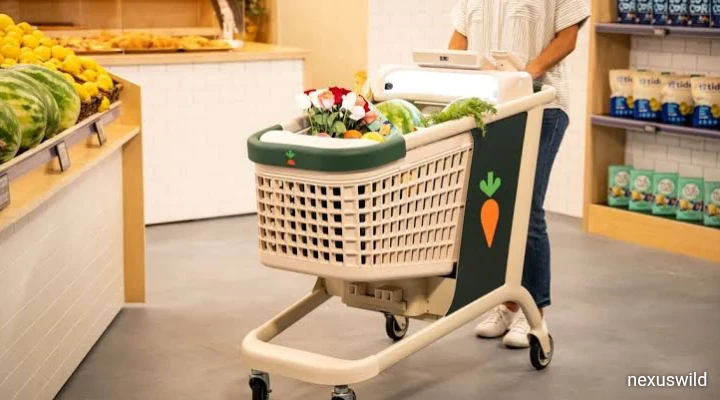

Instacart is exploring a sale and has held early talks with potential buyers including Uber and DoorDash, The Information reported on Friday 23 October, citing people familiar with the matter. Reuters, which relayed the report, said Instacart declined to comment and that no deal is assured. The news puts a sharper edge on a question retailers and delivery apps are fighting over: who owns the online grocery customer.
What was reported
Instacart's shares closed about 9% higher on Friday, Reuters said, while a separate report put the stock at $56.13, giving the company a market value near $12 billion. Uber shares fell nearly 3% and DoorDash more than 4%, according to Startup Fortune.
The Information, as summarised by Digital Today, said Instacart is reviewing options with investment banks and that antitrust review could be an obstacle, since DoorDash and Uber also run grocery delivery. An Uber official said discussions with Uber are not currently under way, the same summary reported. DoorDash discussed buying Instacart in 2021 at a reported $40 billion to $50 billion, but those talks collapsed over antitrust uncertainty.
Reuters noted that a typical takeover premium of 30% to 40% would imply a higher valuation. Applying that range to $12 billion gives roughly $16 billion to $17 billion, an arithmetic estimate that matches a headline from Tech Startups. None of this has been confirmed by the companies.
The retailers are pulling ahead
Online grocery is no longer a niche. Brick Meets Click estimated that online orders made up more than 19% of US grocery sales in the first quarter of 2026, against less than 15% in the third quarter of 2024. Sales grew more than 20% from a year earlier, and same-day orders were about 80% of delivery orders.
Walmart is the largest player. Brick Meets Click said it is approaching a 40% share of US online grocery sales, helped by deliveries within an hour of checkout. Amazon has also gained by extending fresh-food availability within its same-day network and, in March, introducing options of three hours or less, the firm said.
Other estimates differ. A statistics roundup citing eMarketer put Walmart at 30.9%, Amazon at 23.6% and Kroger at 9.1%. The gap reflects different definitions and methods, so the shares are best read as a range.
Amazon said its same-day perishables service reached more than 2,300 US cities and towns by December 2025. When Amazon announced that expansion, shares of Instacart's owner fell 6.9%, Uber 6% and DoorDash 4.5%, MarketScreener reported.
Grocers hedge across apps
Large grocers are reluctant to depend on one intermediary. Kroger has called Instacart its primary delivery fulfilment partner for orders on its own website and app, but it also added its more than 2,600 stores to DoorDash in October 2025 and planned to join Uber Eats in early 2026, Digital Commerce 360 reported. In August, Kroger and Instacart began combining prescription and grocery delivery, Chain Store Age reported.
That pattern suggests retailers want the reach of delivery platforms without giving up the customer relationship. An eMarketer analyst told Reuters that Instacart risks being squeezed between retailers building their own digital channels and larger platforms that can bundle grocery with other services.
On Friday, Progressive Grocer reported that Amazon is retiring its grocery partner storefront model and will work with those retailers in other ways, citing customer feedback.
Where the money is
Growth has not made delivery easy to profit from. An analysis by research site Analysis Atlas said DoorDash became the largest US grocery delivery platform by volume in the second half of 2025, yet its first-quarter 2026 net income fell 5% year on year. The site said DoorDash reports that one in two new grocery-delivery customers now starts on its app. That analysis is a secondary source.
Advertising is a second profit pool. The same analysis listed latest-year advertising revenue of about $68 billion for Amazon, $6.4 billion for Walmart, $1.07 billion for Instacart and roughly $1 billion for DoorDash, citing company filings. Owning shopper data is a major reason ownership of the basket matters.
What is not established
The Instacart sale is a media report based on unnamed sources. The companies have not confirmed talks, and buyers, price and timing are unknown. Market-share figures vary between trackers, and Brick Meets Click's methodology was not reviewed in full. Some statistics come from research sites that summarise other data.
What to watch next
Watch for company statements or a formal process on Instacart, and for how regulators view a combination of two delivery rivals. Walmart's and Amazon's next earnings will show whether their share gains continue. Grocers' multi-app strategies, including Kroger's, will show whether retailers or platforms capture more of the customer relationship and the advertising revenue that comes with it.
Nexuswild welcomes factual corrections. Email contact@nexuswild.com with evidence and the article URL.