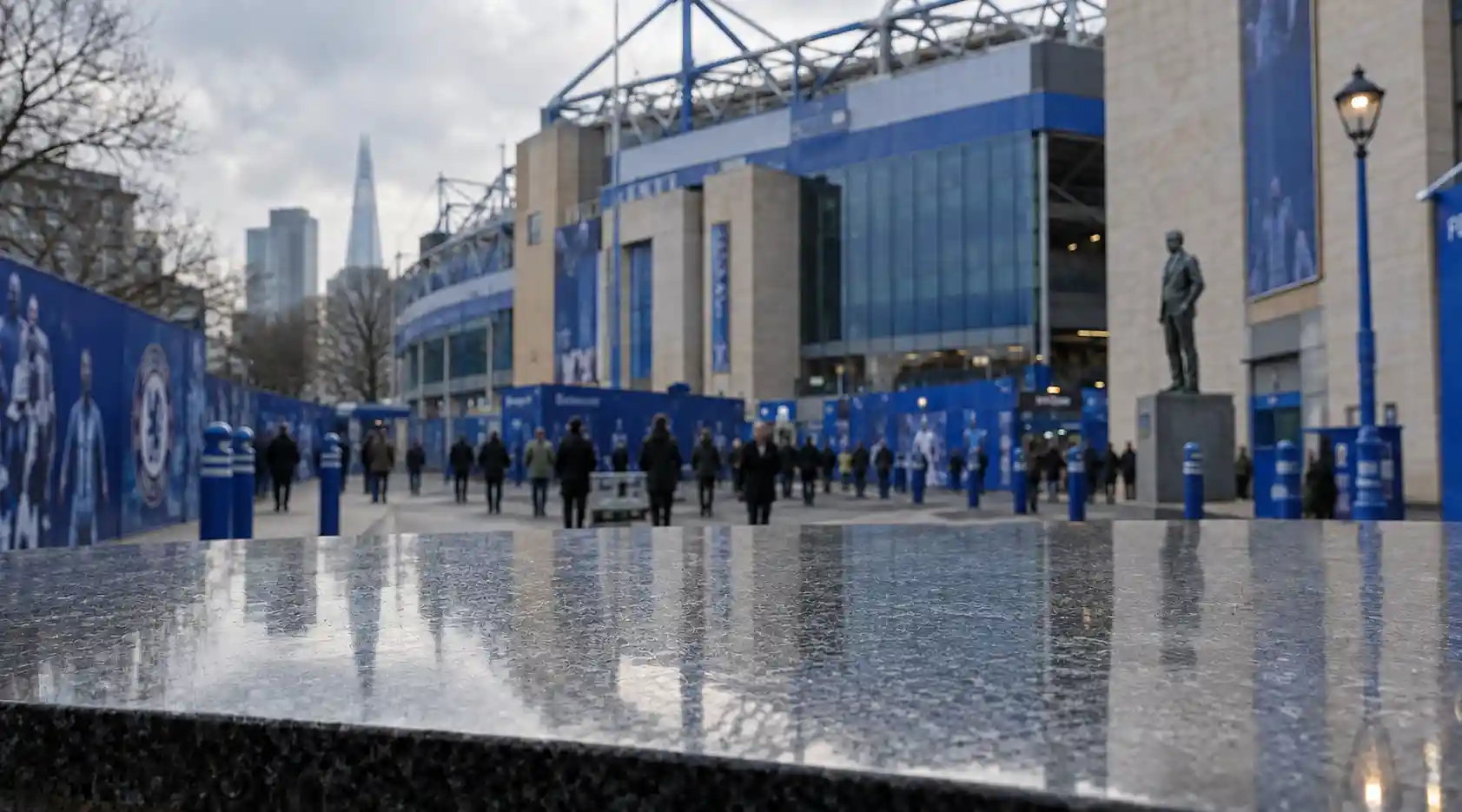

LONDON, Sept. 12, 2026 - More than four years after Chelsea Football Club changed hands, the money from the sale remains frozen in the United Kingdom. The cash, however, has not been economically idle.
Funds held through Roman Abramovich’s former ownership structure have generated at least £175 million in interest, pushing the pool from an initial £2.35 billion toward £2.5 billion, according to the latest reported company accounts.
The financial outcome is unusual. A company that no longer owns the football club has been earning substantial interest because billions of pounds remain blocked while sanctions law, charitable commitments and corporate liabilities are still being resolved.
That interest is not football operating profit. It is the return on a very large cash balance that has remained frozen.
The central question is no longer the sale itself. It is where the money ultimately goes.
How £2.35 billion became close to £2.5 billion
Chelsea was sold in May 2022 after the UK sanctioned Abramovich following Russia’s full-scale invasion of Ukraine.
The government’s sale framework was explicit. Abramovich could not benefit from the transaction, and the proceeds had to remain frozen in a UK account unless the Treasury licensed their use.
The original proceeds were about £2.35 billion.
Reported Fordstam accounts show nearly £63 million of interest in the year to June 2023 and about £114 million in the year to June 2024.
Those two periods alone account for at least £175 million of accumulated interest.
On a simple basis, £114 million of annual interest on roughly £2.35 billion is equivalent to about 4.9%. That is only an approximate comparison because the account balance and timing can change, but it shows why the fund expanded so quickly during a period of relatively high UK interest rates.
Why the money remains frozen
Abramovich is still a designated person under the UK’s Russia sanctions regime.
An asset freeze restricts dealing with funds or economic resources owned, held or controlled by a sanctioned person unless a licence permits it.
When Chelsea was sold, the government ensured that the proceeds could not be paid to Abramovich.
The May 2022 UK declaration stated that the funds would remain in a frozen UK bank account and that future use would require further Treasury approval.
It also stated that the money should be used for humanitarian purposes in Ukraine.
That principle remains at the heart of the dispute.
The UK has already created a legal route for transfer
In December 2025, HM Treasury issued a licence allowing more than £2.5 billion to be transferred to benefit people in Ukraine.
The government said the original proceeds must be used for humanitarian causes in Ukraine and that Abramovich must not benefit.
It also stated that future gains generated by an approved charitable foundation could be used more broadly for victims of conflict worldwide.
This is a crucial distinction.
The continuing freeze is not simply the result of the government having no legal mechanism to release the money.
A licensed route now exists.
The unresolved issue is implementing an acceptable structure and completing the transfer under the required conditions.
The government has said it is prepared to pursue court action if the commitment is not fulfilled.
The interest has created a second pool of value
The original political and legal debate centered on the £2.35 billion sale proceeds.
The delay has created another question: what happens to the interest?
At least £175 million is significant in its own right.
The UK government’s December 2025 statement referred to more than £2.5 billion, indicating that the government expects the enlarged balance, rather than only the original sale amount, to be addressed.
The exact legal and accounting treatment of all accumulated interest will depend on the final structure.
The amount may also have continued to rise after June 2024.
The latest reported accounts discussed publicly cover only the period through that date.
Without newer audited figures, it would be inappropriate to claim an exact September 2026 balance.
The £1.4 billion loan question
A separate issue sits inside Fordstam’s balance sheet.
Abramovich financed Chelsea for years through shareholder and related-party loans.
Reported accounts still show around £1.4 billion connected to Camberley International Investments, a Jersey-based vehicle linked to Abramovich.
Before the sale, Abramovich publicly said he would not seek repayment of loans.
UK Government Investments later recorded that commitment in its official account of the transaction, alongside the commitment to establish a charitable foundation and donate net sale proceeds.
The continued appearance of the liability in corporate accounts is still important.
A public pledge, an accounting liability and an irrevocable legal waiver are not necessarily the same thing.
If a creditor claim remained legally enforceable, the amount ultimately available for donation could be affected.
But sanctions create another barrier. A payment that benefits Abramovich cannot simply be made while he remains designated unless it is legally licensed.
Why Fordstam’s profit is not football profit
The claim that this is an exceptionally profitable football business is best understood as irony.
Fordstam no longer owns Chelsea.
Its recent interest income does not come from tickets, broadcasting, sponsorship, player trading or merchandise.
It comes from a huge cash balance held after the club was sold.
The underlying economics are closer to a frozen holding vehicle than an operating sports company.
That matters because a £114 million interest line should not be confused with Chelsea Football Club suddenly becoming more profitable.
The current club has different ownership and separate accounts.
The delay has increased the fund but not solved the problem
There is a financial paradox.
The money has not reached humanitarian beneficiaries, but the balance has grown because it remained in an interest-bearing account while rates were elevated.
That does not make delay desirable.
Humanitarian capital has a time value beyond financial return.
Money available during the early stages of a humanitarian crisis can have greater practical impact than a larger amount distributed years later.
The interest is therefore a by-product of delay, not a substitute for timely deployment.
The UK rate cycle explains the scale of the interest
The Bank of England raised interest rates sharply after the pandemic period as inflation accelerated.
That changed the economics of cash.
A multi-billion-pound deposit that might once have earned little could suddenly produce nine-figure annual interest income.
Fordstam’s reported numbers reflect that environment.
Future interest growth will depend partly on rates.
If rates decline, annual interest income may fall.
If the balance remains frozen and yields stay relatively high, the fund may continue to grow.
The lack of a current audited figure is therefore important.
The £2.5 billion description should be treated as an approximate public figure rather than a precise live balance.
Jersey adds another legal layer
There are also ongoing legal proceedings in Jersey related to Abramovich and frozen assets.
A June 2026 Government of Jersey freedom-of-information response confirmed an ongoing legal case and refused to disclose legal spending because disclosure could prejudice the litigation.
That is separate from the UK dispute over the humanitarian destination of the Chelsea proceeds.
It is important not to collapse the two issues into one.
An ongoing legal case or criminal investigation does not itself establish that the Chelsea sale proceeds are criminal property.
Only a competent legal authority can make that determination.
Why Sibneft is part of the background
Abramovich’s fortune has long been associated with his former interest in the Russian oil company Sibneft.
The UK government’s own 2022 sanctions announcement noted that he sold a 73% stake in Sibneft to state-owned Gazprom for £9.87 billion in 2005.
That history is relevant because scrutiny of major fortunes often focuses on the transactions through which wealth was created.
But historical scrutiny is not the same as a legal finding about the Chelsea proceeds.
That distinction should remain clear.
Why the sanctions framework blocks a simple repayment
Even if Fordstam has a contractual liability to an Abramovich-linked entity, payment cannot be treated as a normal corporate transaction.
UK sanctions prohibit making funds or economic resources available to a designated person or for their benefit unless permitted.
That places the Office of Financial Sanctions Implementation at the center of any lawful movement of the money.
The Chelsea proceeds are therefore simultaneously a corporate-finance issue, a sanctions issue and a humanitarian-funding issue.
Why £2.5 billion matters in humanitarian terms
The scale is substantial even by international aid standards.
In December 2025, the UK government cited United Nations estimates that 12.7 million people in Ukraine required humanitarian support.
It also noted that the UN and partners had appealed for $3.32 billion in 2025 for humanitarian and refugee-response plans.
A fund of more than £2.5 billion is therefore not symbolic.
It could represent one of the largest single pools of private-origin humanitarian financing linked to the war.
That makes the delay financially and politically significant.
What is confirmed
Chelsea was sold in May 2022.
The original proceeds were about £2.35 billion.
The funds were frozen in the UK under sanctions controls.
Abramovich remains sanctioned.
The UK government requires that Abramovich does not benefit from the proceeds.
A December 2025 licence created a route for more than £2.5 billion to be transferred for humanitarian causes in Ukraine.
Reported accounts show at least £175 million in interest through June 2024.
The funds had still not been distributed by September 2026.
What remains unresolved
The final charitable structure is not fully resolved.
The legal and accounting treatment of the roughly £1.4 billion related-party loan remains important.
The exact current cash balance is not established by a newer audited figure in the public information used here.
The treatment of all interest earned after June 2024 is not yet clear publicly.
The relationship between the UK sanctions process and separate Jersey proceedings adds further complexity.
These are not minor accounting questions. They determine how much can ultimately be transferred and under what authority.
The strict conclusion
The extraordinary part of the Chelsea transaction is now what happened after the sale.
A frozen £2.35 billion cash balance has earned at least £175 million in interest while the principal remained caught between sanctions law, charitable commitments, corporate liabilities and legal disputes.
The money has grown.
The humanitarian transfer has not happened.
The UK government has created a licensed route for more than £2.5 billion to be used in Ukraine and has publicly said it is prepared to enforce the commitment through the courts.
Until the remaining legal and governance issues are resolved, the account can continue to earn interest.
But the important question is not how profitable the frozen cash has become.
It is when the money will finally be used for the humanitarian purpose that underpinned the sale in the first place.
Reader questions
Frequently asked questions
How much money came from the Chelsea sale?
The proceeds placed into the frozen account were about £2.35 billion following the 2022 sale.
How much interest has the frozen Chelsea money earned?
Reported company accounts show at least £175 million of accumulated interest through June 2024, including about £114 million in the year to June 2024.
Why is the Chelsea sale money still frozen?
Roman Abramovich is sanctioned in the United Kingdom. The sale was licensed on the condition that he would not benefit from the proceeds, and release requires compliance with the sanctions licence and approved humanitarian purpose.
What does the UK government want the money used for?
The UK government says the proceeds must be used for humanitarian causes in Ukraine. A December 2025 licence created a route for more than £2.5 billion to be transferred for that purpose.
Is the current balance exactly £2.5 billion?
No exact September 2026 audited balance is established in the sources used here. The reported accounts discussed publicly cover the period through June 2024, so additional interest may have accrued since then.
Does the Jersey legal case prove the Chelsea proceeds are criminal property?
No. An ongoing investigation or legal proceeding is not a finding of guilt or a judicial determination that the Chelsea proceeds are criminal property.
Nexuswild welcomes factual corrections. Email [email protected] with evidence and the article URL.