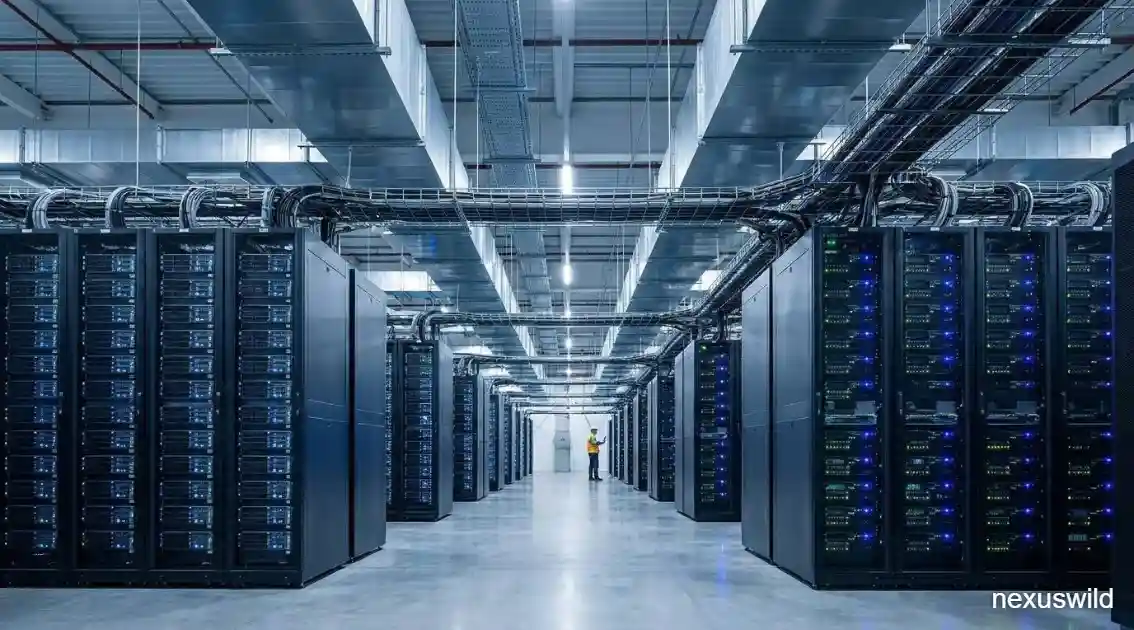

Artificial intelligence has become one of the investment priorities in the global technology industry. Companies are committing sums to data centres, advanced processors, networking equipment and cloud infrastructure in anticipation of sustained demand for AI services. Yet rising revenue is no longer enough to guarantee investor confidence.
The central question is changing. Of asking how quickly AI businesses can grow investors increasingly want to know how much cash that growth generates how long the infrastructure buildout will take to pay for itself and whether companies can maintain their spending without putting pressure on their balance sheets.
Recent financial results illustrate the tension. Microsoft reported cloud growth while Metas second-quarter 2026 results showed revenue increasing even as operating income declined. These outcomes demonstrate why investors are examining profitability and cash generation alongside headline sales growth.
The cost of building the AI economy
AI services require physical infrastructure. Training and operating models involves specialised processors, high-performance servers, data centres, networking systems, electricity and cooling equipment. Companies must also fund research, software development and the recruitment of talent.
The spending is occurring before every potential application has become a source of revenue.
J.P. Morgan Global Research projected that AI-related capital expenditure could reach $900 billion in 2026. The estimate illustrates the scale of the investment cycle although forecasts remain sensitive to construction schedules, hardware availability and companies spending decisions.
For technology businesses these investments can create long-term advantages. More computing capacity can support products, larger workloads and greater demand from enterprise customers. However the financial benefits may emerge gradually while many of the costs must be paid earlier.
This timing difference is at the heart of the investor debate.
Why revenue growth does not tell the whole story
Revenue measures how much a company earns from selling its products and services. It does not show how much money remains after operating costs, capital expenditure and other financial commitments.
A company can report accelerating sales while simultaneously spending more on infrastructure, hiring and product development. If those expenses grow faster than its ability to generate cash the business may face increasing pressure despite its expansion.
Free cash flow is particularly important in this context. It generally measures operating cash flow minus capital expenditure although companies may use definitions and adjustments.
Strong free cash flow gives a business flexibility to finance investment internally repay debt make acquisitions and return capital to shareholders. Weak or negative free cash flow does not automatically indicate a failing business during an expansion phase but it makes the timing and funding of future investment more important.
For investors the issue is whether the expected future benefits justify the money committed today.
Different results reveal financial pressures
Microsofts fiscal fourth-quarter results covering the three months ended June 30 2026 showed revenue of $90 billion, an increase of 18% year over year. Azure and other cloud services revenue grew 43% highlighting the momentum of its cloud business.
The results demonstrate how demand for computing and AI-related services can support growth. The next question is how efficiently the company can expand capacity while preserving cash generation and attractive returns on investment.
Metas second-quarter results presented a picture. Revenue reached $60.8 billion up 28% from a year earlier but operating income fell 8% to approximately $18.8 billion. Capital expenditure, including payments on finance leases reached approximately $31.1 billion during the quarter.
The figures show that strong sales growth can coexist with pressure on operating profitability and substantial investment requirements. They do not by themselves establish whether Metas term AI spending will succeed or fail.
The distinction matters because the major technology companies have business models, financial resources, infrastructure strategies and opportunities to monetise AI.
Financing the next phase of expansion
The scale of AI investment is also changing how companies finance their ambitions.
Cash generated by established businesses has historically supported much of the technology industrys expansion. However as infrastructure budgets rise external financing is becoming more prominent.
Recent reporting citing S&P Global Market Intelligence data indicated that five major US technology companies raised a $326 billion through stock and bond issuance in 2026. The amount reflects the growing financing requirements associated with the race to build AI capacity.
Debt can allow a company to fund projects without issuing additional shares but borrowing increases interest costs and future repayment obligations. Equity financing can strengthen the balance sheet. It may dilute existing shareholders ownership.
Neither approach is inherently problematic. The financial risk depends on the amount raised the cost of capital the companys ability to service its obligations and the returns generated by the investment.
If AI infrastructure produces cash flows external financing can support profitable expansion. If commercial returns arrive slowly than expected the same financing commitments can reduce flexibility.
The importance of monetisation
AI adoption is expanding across software development, business automation, customer service, research and data analysis. Yet usage does not necessarily translate into revenue.
Businesses may use AI frequently while negotiating lower prices benefiting from more efficient models or shifting workloads between providers. Competition can therefore increase demand while limiting the revenue captured by companies.
The financial outcome depends on factors: pricing power, customer retention, computing costs, the ability to sell premium services and the productivity improvements that AI delivers to customers.
Technology companies must also determine whether new AI products create business or simply replace revenue from existing services. A successful product can still produce financial returns if development and operating costs remain too high.
The strongest evidence of success will be sustained customer spending accompanied by improving unit economics and cash generation.
What investors will watch next
The next stage of the AI investment cycle will be judged through more than revenue growth. Investors will examine capital expenditure forecasts, operating margins, free cash flow, financing costs, customer demand and managements explanations of expected returns.
Infrastructure delivery is another variable. Data centres require sites, power connections, cooling systems, equipment and regulatory approvals. Delays can postpone revenue while leaving businesses committed to expenditure.
Companies may also need to adjust investment schedules if demand develops differently from their expectations. That would not necessarily mean abandoning AI; it could represent a shift toward projects with commercial prospects.
A demanding test, for AI businesses
The AI investment cycle is not simply a question of whether the technology has useful applications. It is also a test of whether companies can convert those applications into economic value.
Large technology businesses may have the strength to invest for years while smaller infrastructure providers and highly leveraged operators can face tighter constraints. Their risks should not be treated as identical.
Ultimately revenue growth remains important. It is only one part of the financial picture. Investors want evidence that expanding AI demand can support margins, sufficient cash flow and returns that justify the capital committed.
The companies that demonstrate this connection will be better positioned to sustain investment. For those that cannot impressive sales growth may fail to provide the reassurance the market is seeking.
Nexuswild welcomes factual corrections. Email contact@nexuswild.com with evidence and the article URL.