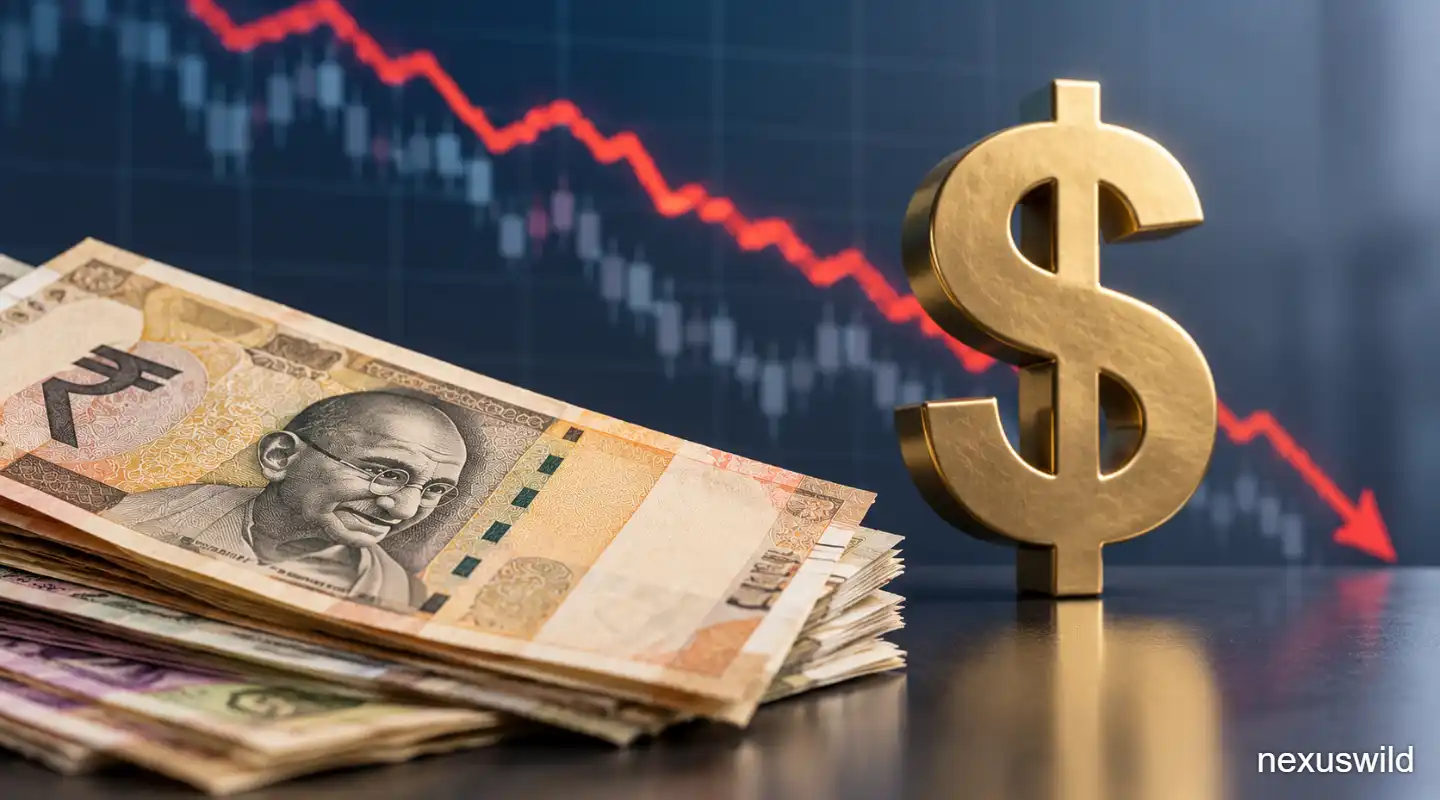

The Indian rupee remained close to its record low against the US dollar on Friday, October 9, despite the Reserve Bank of India (RBI) raising its policy repo rate to 5.50% earlier in the week. Persistent foreign investment outflows, demand for dollars and unfavourable currency hedging flows continued to weigh on the Indian currency.
The rupee closed at ₹96.73 per US dollar on Friday, little changed from the previous session. It remained close to its all-time low of ₹96.96, recorded in May 2026, highlighting the continued pressure on the currency despite tighter monetary policy. Reuters reported that the rupee also recorded a weekly decline following the central bank's rate decision.
The currency's performance illustrates the limits of using interest-rate increases alone to support an exchange rate when international capital flows and demand for foreign currency remain unfavourable.
RBI Raises Repo Rate to 5.50%
On October 7, the RBI increased its policy repo rate by 25 basis points to 5.50%. It was the central bank's first rate increase in nearly four years.
A repo rate hike raises the benchmark rate at which the RBI lends to banks against eligible securities. It can influence borrowing costs, financial conditions and expectations about inflation and currency stability.
Higher domestic interest rates can sometimes support a currency by improving the relative return on local-currency assets. However, the impact depends on several factors, including the expected path of interest rates in other countries, investor confidence, inflation expectations and the outlook for economic growth.
In this case, the rupee weakened after the announcement as market participants continued to focus on limited foreign capital inflows and other pressures on the currency.
The RBI also shifted its monetary policy stance from neutral to calibrated tightening, signalling a stronger emphasis on managing inflationary pressures and liquidity conditions.
Foreign Investment Outflows Continue to Weigh on the Rupee
Foreign investment flows remain an important factor in determining demand for the rupee.
When overseas investors sell Indian shares or other assets and transfer the proceeds abroad, they may need to exchange rupees for foreign currencies, increasing demand for dollars. Persistent outflows can therefore put downward pressure on the Indian currency.
Reuters reported that foreign portfolio outflows and elevated hedging activity by importers were contributing to rupee weakness. Importers often purchase dollars or use financial contracts to manage the cost of future overseas payments, and these transactions can add to currency-market demand.
State-run banks also sold dollars during recent trading sessions, according to market participants cited by Reuters. The sales were widely viewed by traders as likely intervention on behalf of the RBI, although the central bank's role in those specific transactions was not independently confirmed.
Such intervention can help moderate short-term volatility, but it does not necessarily reverse the underlying forces affecting the exchange rate.
Global Markets and Oil Prices Add to Currency Pressure
The dollar's performance in international markets and changes in global commodity prices also influence the rupee.
India imports substantial quantities of crude oil, making the cost of energy imports an important factor in its external payments. When oil prices rise, the country's import bill can increase, potentially raising demand for dollars and putting additional pressure on the currency.
A stronger US dollar can also make dollar-denominated imports and international obligations more expensive in rupee terms.
Reuters noted that oil prices and the dollar had eased from recent highs, but the rupee had received limited support from the improvement. This suggests that domestic investment flows, hedging demand and broader market sentiment remained important influences on the currency.
The exchange rate is determined by several interacting forces, meaning that a change in one global indicator does not guarantee an immediate recovery.
India's Foreign Exchange Reserves Remain an Important Buffer
India's foreign exchange reserves provide the RBI with a buffer to manage external financial pressures and, when necessary, intervene in currency markets.
According to Reuters, India's foreign exchange reserves fell for a fourth consecutive week to $734.6 billion as of October 2, 2026. The reported level was approximately $50 billion below the record high reached in September.
A decline in reserves does not automatically indicate a financial crisis. Reserve movements can reflect several factors, including central-bank currency operations and valuation changes in the assets held.
Nevertheless, reserve levels are closely monitored because they help indicate the country's capacity to meet external obligations and respond to periods of market volatility.
The RBI's approach to managing the rupee will therefore be watched alongside changes in reserves, capital flows and international financial conditions.
What the Rupee's Weakness Means for Businesses and Consumers
A weaker rupee can have different effects across the economy.
Businesses that import crude oil, electronics, machinery, industrial components or other goods priced in dollars may face higher costs when the currency depreciates. Companies that cannot pass these increases on to customers may experience pressure on profit margins.
Consumers can also be affected if higher import costs translate into more expensive products, fuel-related expenses or overseas travel.
On the other hand, exporters earning revenue in dollars may receive more rupees when converting their foreign-currency earnings. The benefit depends on their imported input costs, contractual arrangements and currency hedging.
A weaker currency does not affect every sector equally. The overall impact depends on the balance between import dependence, export earnings and the ability of businesses to manage exchange-rate changes.
Outlook: Rupee Faces Continued Pressure
The rupee's movement in the coming months will depend on the interaction between RBI policy, global interest rates, oil prices, foreign investment flows and demand for dollars.
Reuters reported that analysts expected the currency to remain near record-low levels over the following three to six months. Such projections are forecasts rather than guaranteed outcomes, and exchange rates can change rapidly as market conditions evolve.
Further interest-rate changes may influence investor expectations, but their effect on the rupee will depend on the broader economic and financial environment.
For now, the currency's performance shows that the RBI's rate hike has not been enough to overcome the pressures affecting the foreign-exchange market. Investors and businesses will continue to monitor capital flows, central-bank actions and global market developments for signs of a sustained change in direction.
Nexuswild welcomes factual corrections. Email contact@nexuswild.com with evidence and the article URL.