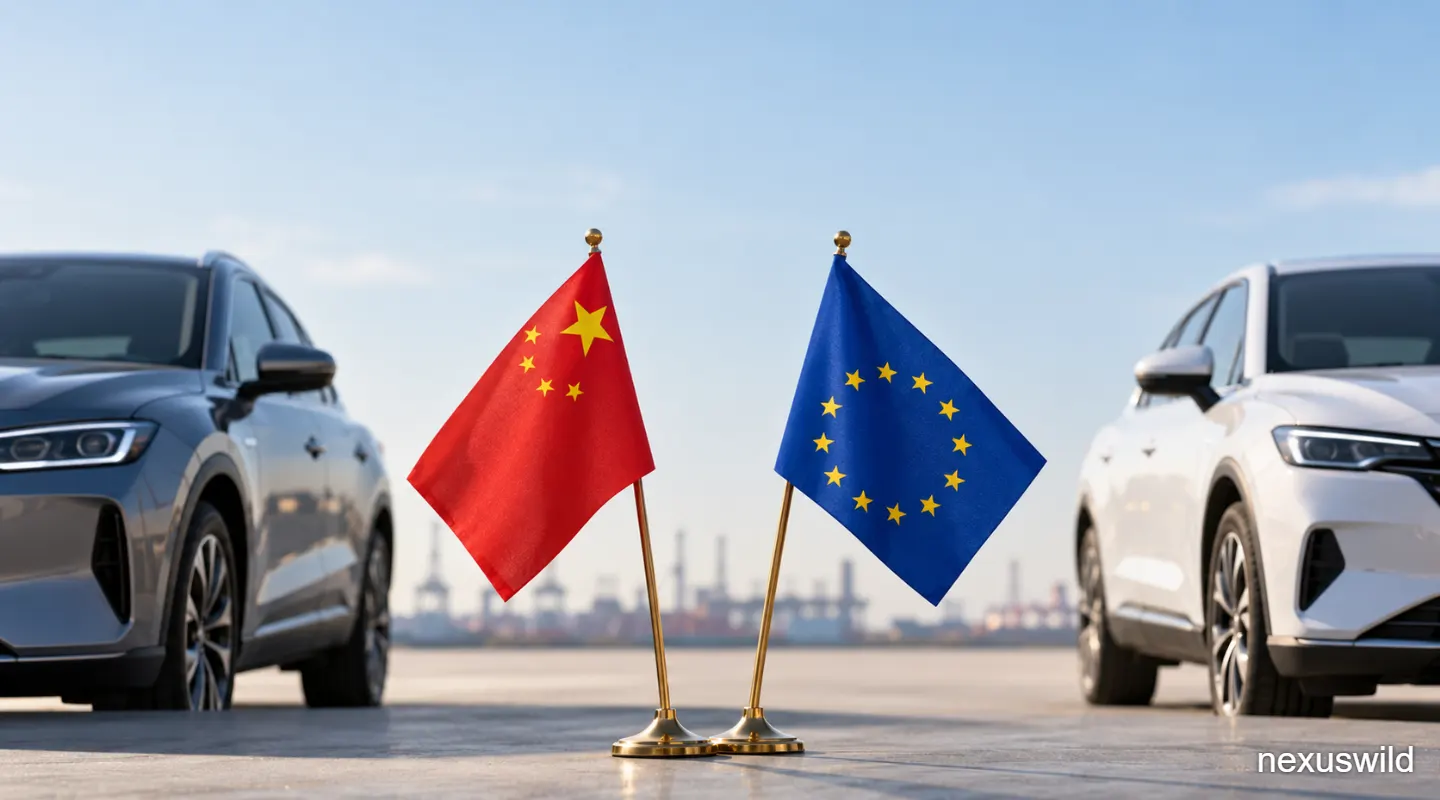

China and the European Union have reached a preliminary understanding that could reduce Chinese hybrid and plug-in hybrid vehicle exports to the European market by more than half over four years, marking a potential step towards easing tensions between the two major trading partners.
European Trade Commissioner Maroš Šefčovič announced the development on October 9, 2026, following two days of discussions in Beijing with Chinese officials, including Commerce Minister Wang Wentao. He said the understanding could prevent several million vehicles from being exported to the bloc over the coming four years.
The discussions also produced understandings on improving access for selected European products in China and facilitating export licences for rare earths and permanent magnets. These materials are important to several industrial supply chains, including automotive manufacturing and advanced technology.
The announcement represents progress in negotiations over trade imbalances and market access. However, the precise mechanism for limiting vehicle exports has not yet been fully detailed, and further discussions will determine how the understanding is implemented.
What the China-EU Hybrid Car Agreement Covers
The central element of the understanding is a reduction in Chinese exports of hybrid and plug-in hybrid vehicles to the EU compared with projected volumes.
Šefčovič said the arrangement could cut those exports by more than half over four years. He did not provide a detailed implementation framework during the announcement, leaving questions about how export volumes would be measured and managed.
The distinction between hybrid vehicles and fully electric cars is important. Conventional hybrids combine an internal-combustion engine with an electric motor, while plug-in hybrids can recharge their batteries externally. Fully electric vehicles operate without an internal-combustion engine.
The agreement focuses on hybrids and plug-in hybrids. It forms part of wider EU-China discussions over automotive trade and should not be interpreted as a blanket ban on Chinese vehicles entering Europe.
Both sides have an interest in avoiding further disruption to commercial relations while addressing concerns over competition, industrial capacity and market access.
Why the EU Is Concerned About Chinese Car Imports
European governments and automotive manufacturers have raised concerns about increasing imports of Chinese vehicles and the pressure they place on domestic producers.
Chinese automakers have expanded their presence in international markets through a combination of manufacturing scale, competitive pricing and investment in vehicle technology. Their growing exports have intensified competition for established European manufacturers, particularly as the industry invests in electrification and faces higher production costs.
The EU has already imposed additional duties on certain Chinese-made battery-electric vehicles following an investigation into subsidies. Beijing has opposed the measures and introduced trade actions affecting some European products.
The resulting dispute has extended beyond cars to include agricultural goods, food products, industrial materials and critical minerals.
European officials have argued that a more balanced trading relationship is needed to protect industrial competitiveness while preserving access to international markets. China, meanwhile, has maintained that it should not be treated as the sole cause of Europe's economic and trade challenges.
The hybrid vehicle understanding offers a possible route for addressing one area of disagreement through negotiations rather than an immediate escalation of trade restrictions.
European Carmakers React to the Announcement
European automotive shares broadly rose following news of the understanding, reflecting investor expectations that a reduction in Chinese vehicle exports could ease some competitive pressure on manufacturers.
However, the long-term impact on the European automotive industry remains uncertain. A reduction in imports could give domestic manufacturers more room to compete, but the outcome will also depend on consumer demand, production costs, technological development and the ability of European companies to offer attractive vehicles.
German automotive industry representatives cautiously welcomed the progress while indicating that it was too early to determine whether the arrangement would resolve concerns about unfair competition.
The deal also does not eliminate the need for European manufacturers to adapt to changing consumer preferences and competition in electric and hybrid vehicle markets.
For Chinese automakers, Europe remains an important potential market. Any restriction on export growth could affect sales strategies, production planning and decisions about where to manufacture vehicles.
Wider Trade Concessions Cover European Products
The Beijing discussions went beyond the automotive sector.
According to Šefčovič, the two sides reached an understanding involving Chinese import duties on selected European exports worth nearly €4 billion in current export value. Products discussed included car parts, olive oil and footwear.
The parties also agreed to continue facilitating Chinese export licences for rare earths and permanent magnets through an expedited process. Access to these materials has become a major concern for European manufacturers because they are used in industrial applications, electronics and components for electric vehicles.
The announcements indicate that both sides are linking progress in one area of trade to broader questions about market access and supply-chain reliability.
However, the full commercial impact will depend on the details of the tariff arrangements, the products covered and how quickly licensing procedures improve.
The EU-China Trade Deficit Remains a Major Issue
The negotiations took place against a backdrop of growing concern in Europe about the scale of its trade imbalance with China.
European officials have warned that the gap has become increasingly difficult to sustain politically, particularly as manufacturers face pressure from imports and some companies reduce workforces or restructure operations.
Chinese exports to the EU have increased in value, while European businesses have sought better access to China's market. Disagreements over subsidies, tariffs, industrial policy and critical materials have complicated the relationship.
The hybrid vehicle understanding is intended to address one part of that broader dispute. It does not, by itself, resolve the structural issues affecting bilateral trade.
EU leaders are expected to review the outcome of the discussions and consider the next steps in the bloc's approach to economic relations with China. Further negotiations are planned for early 2027.
What Happens Next?
The next phase will focus on translating the preliminary understanding into a workable arrangement.
Important questions include how the export reduction will be calculated, which vehicle categories will be covered, how compliance will be monitored and whether the arrangement will affect actual shipments in the way European officials anticipate.
The parties will also need to determine how progress on rare earth licences and market access for European products will be measured.
The agreement's effectiveness will depend on implementation rather than the announcement alone. If both sides make progress on the outstanding details, the understanding could provide a framework for reducing trade friction. If disagreements persist, disputes over automotive competition and market access could continue.
Outlook: A Step Towards Easing Trade Tensions
The China-EU understanding marks a notable development in negotiations over hybrid vehicle exports and wider economic relations. It signals that both sides are willing to explore negotiated solutions to trade disputes that have affected manufacturers, exporters and supply chains.
Nevertheless, the arrangement remains preliminary, and its practical effects are not yet fully established. The scale of any reduction in vehicle shipments will depend on the final terms and their implementation.
For European automakers, the immediate development offers a potential change in the competitive environment. For Chinese manufacturers, it introduces uncertainty around future export volumes to a major market.
The broader test will be whether the understanding leads to sustained progress on trade imbalances, market access and critical-material supply chains without triggering new restrictions in other sectors.
Nexuswild welcomes factual corrections. Email contact@nexuswild.com with evidence and the article URL.