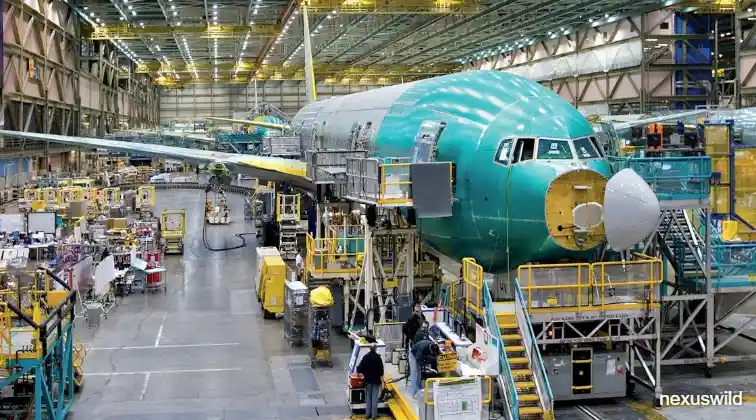

Global aircraft manufacturers face a difficult financial equation: airlines need more planes, but producing and delivering them at the required pace remains challenging. Engine shortages, supplier constraints, rising manufacturing costs, certification delays and heavy investment can prevent strong order books from translating into immediate profits. Recent results from Boeing and Airbus demonstrate why aircraft demand, production capacity and financial performance do not always move in the same direction.
Why Aircraft Manufacturers Can Face Financial Pressure Even When Travel Demand Remains Strong
Strong demand for air travel should be good news for aircraft manufacturers. Airlines need additional planes to expand routes, replace ageing fleets, improve fuel efficiency and accommodate passengers. Yet a large market for new aircraft does not automatically translate into stronger profits for the companies building them.
The challenge lies in the difference between demand and delivery. Airlines can place substantial orders years before they receive an aircraft, while manufacturers must secure engines, assemble complex components, maintain quality standards and meet regulatory requirements before handing over each plane. Much of the cost is incurred long before the final payment arrives.
That gap has become a significant issue across the aviation industry. According to the International Air Transport Association (IATA), the global aircraft order backlog reached approximately 18,100 aircraft in May 2026, equivalent to more than half the active fleet. At the same time, the industry was still dealing with a substantial shortfall in deliveries compared with the pre-pandemic trend. IATA's June 2026 industry outlook describes aircraft availability as a major constraint on airline growth.
For manufacturers, this creates an unusual situation: the market can provide years of potential work while operational problems continue to restrict the revenue and cash needed to execute it.
1. A Large Order Book Does Not Guarantee Immediate Revenue
An aircraft order is an indication of future demand, not the same as completed sales. Manufacturers typically receive payments at different stages of the production and delivery process, but a substantial portion of the commercial transaction depends on completing contractual milestones and delivering the aircraft.
That makes production performance critical. If a manufacturer has thousands of orders but cannot deliver planes on schedule, it may have difficulty converting its backlog into cash at the expected rate. Delays can also push planned revenue into later reporting periods and complicate production schedules.
The scale of Boeing's backlog illustrates the opportunity and the challenge. In its third-quarter results released on October 27, 2026, Boeing reported a record total company backlog of $745 billion, including more than 6,300 commercial aircraft. Yet its commercial aircraft division recorded a $697 million operating loss in the quarter, with revenue of $10.7 billion. The company attributed the division's performance partly to a less favourable mix of deliveries and higher projected production and supply-chain costs.
The figures show why order volume alone is an incomplete measure of financial health. A manufacturer must deliver aircraft at an economically sustainable rate, not simply secure contracts.
2. Engine Shortages Can Disrupt an Entire Production Line
Aircraft manufacturing depends on a network of specialised suppliers, and engines are among its most important components. An airframe can be substantially assembled, but the manufacturer cannot complete a delivery without the required engines and other essential equipment.
Engine production and maintenance also involve complex engineering, specialised materials and extensive testing. If output from an engine supplier falls behind schedule, aircraft production can be delayed even when the manufacturer has enough labour and factory capacity to build more planes.
Airbus has specifically identified Pratt & Whitney engine shortages as a challenge to its production ramp-up. In its full-year 2025 results, published in February 2026, the company reported 793 commercial aircraft deliveries and €73.4 billion in revenue, while highlighting engine supply constraints as an ongoing operational issue. Its first-half 2026 results later showed 351 commercial aircraft deliveries and negative free cash flow before customer financing of approximately €1.2 billion.
These figures do not indicate that Airbus's entire business is struggling. Instead, they demonstrate how even a manufacturer reporting higher revenue and earnings can face pressure from the cash required to operate and expand its production system.
Supply-chain weaknesses can also affect component manufacturers. In August 2026, Honeywell Aerospace reduced its full-year sales-growth forecast, citing persistent supply constraints despite strong demand. The company's reported difficulties showed that growing orders across the industry do not necessarily lead to higher output when suppliers cannot increase production quickly enough.
3. Increasing Production Can Raise Costs Before It Improves Profits
When demand is strong, manufacturers have an incentive to increase output. However, scaling production in aerospace is not as simple as adding another assembly shift. It can require more trained workers, additional equipment, expanded supplier capacity, new production facilities and closer coordination across a large network of contractors.
Costs may rise before the extra aircraft reach customers. Manufacturers can also experience inefficiencies when one part of the production system expands faster than another. More workers and factory capacity will not necessarily produce more deliveries if engines, wings, fuselages or other critical components remain unavailable.
Boeing's latest results illustrate the difficulty. The company said it would not achieve its earlier target of delivering 500 aircraft in 2026. It also pushed its target of producing 47 737 aircraft per month into early 2027, citing production constraints that included wing and fuselage output. The company continued to work through challenges affecting other commercial programmes as well.
For investors, the issue is not just whether production will eventually increase. It is whether the company can reach a higher rate without incurring excessive costs, additional rework or quality problems.
Manufacturers must balance urgency with reliability. Expanding too slowly delays cash generation, but accelerating too aggressively can create costly defects, interruptions and further delays.
4. Suppliers Can Capture Demand Without Delivering the Expected Profit
Aircraft manufacturers do not operate in isolation. They rely on companies that produce engines, avionics, landing gear, electronic systems, cabin equipment and other specialised components. If suppliers encounter labour shortages, material constraints or manufacturing inefficiencies, the resulting costs can spread throughout the industry.
The financial effect can be counterintuitive. A supplier may receive more orders but still struggle to meet its earnings targets because it cannot manufacture enough components. It may need to invest in additional capacity, pay more for materials, maintain higher inventory or use expensive alternatives to support deliveries.
The problem can become more complicated when suppliers must serve aircraft manufacturers and existing airline fleets simultaneously. New production requires components for factory installation, while older aircraft need replacement parts and maintenance support to remain operational.
In October 2026, GE Aerospace raised its full-year profit outlook on the strength of engine repair and spare-parts demand. However, it also indicated that additional production costs associated with Boeing's delayed 777X programme would weigh on future earnings. The example highlights a broader feature of aerospace manufacturing: strong demand in one part of the market does not eliminate cost and execution risks elsewhere.
Manufacturers therefore need supplier visibility, dependable delivery schedules and realistic production plans. A delay at a single critical supplier can affect an aircraft worth tens or hundreds of millions of dollars.
5. Development, Certification and Quality Problems Can Delay Returns
Commercial aircraft are developed over long periods and require extensive testing and regulatory approval. Manufacturers must demonstrate that designs meet applicable safety and performance requirements before new models or major modifications can enter service.
Certification delays can postpone deliveries and extend the period during which manufacturers carry development costs without receiving the expected commercial returns. They can also require additional engineering work, testing, supplier changes and production adjustments.
Boeing's 777X programme illustrates how long timelines can affect financial planning. In its October 2026 results, the company continued to expect the first 777-9 delivery in 2027, following ongoing certification work and efforts to address an engine-related issue. Boeing's regulatory timeline remains dependent on the completion of the required testing and approval process.
The commercial impact of a delayed programme can extend beyond the initial development budget. Manufacturers may have to maintain facilities and engineering teams for longer, revise customer delivery schedules and manage uncertainty around future production rates.
Quality problems introduce another layer of risk. Correcting defects can require additional inspections, replacement components, rework or changes to manufacturing procedures. Even where demand remains high, a manufacturer cannot simply bypass these requirements to deliver more aircraft.
Safety and reliability are essential to the long-term commercial value of an aircraft programme. The immediate cost of addressing problems can therefore be substantial, but failing to address them could create greater operational and financial consequences.
6. Heavy Investment and Cash-Flow Timing Put Pressure on Balance Sheets
Aircraft manufacturing requires considerable investment in engineering, tooling, factories, testing infrastructure and production equipment. These expenses can occur years before the business earns the full return from an aircraft programme.
Even when sales eventually increase, the timing of payments and expenditure matters. A manufacturer may need to pay suppliers and workers, invest in future production, resolve existing programme problems and cover overheads while waiting for customer payments linked to deliveries.
This can produce a gap between accounting performance and cash generation. Revenue may rise while free cash flow remains weak because investment and operating expenses consume much of the cash entering the business.
Airbus's first-half 2026 results provide an example. The company reported revenue of €33.2 billion and adjusted operating earnings of €2.7 billion, up from the same period a year earlier. Yet free cash flow before customer financing remained negative at approximately €1.2 billion. This does not, by itself, signal financial distress, but it demonstrates why revenue and profit figures must be considered alongside cash flow, investment requirements and balance-sheet strength.
For Boeing, the cash-flow challenge is more pronounced. The company reported $464 million in free cash flow for the third quarter, while its free cash flow for the first nine months of 2026 remained negative at $359 million. Its commercial aircraft division also continued to post an operating loss.
These differences matter because financial pressure varies by company, programme and business segment. The same industry conditions can affect manufacturers differently depending on their cost structures, debt levels, production maturity and ability to generate cash from services or defence contracts.
7. Airline Demand Is Strong Over the Long Term, but the Near-Term Picture Can Change
The assumption that travel demand remains strong needs some qualification. Airlines continue to need new aircraft, and the enormous order backlog indicates that many carriers expect demand for air transport and fleet renewal to continue over the longer term. However, passenger traffic can still weaken temporarily when fuel prices rise, economic conditions deteriorate or geopolitical disruptions affect major routes.
IATA's June 2026 outlook projected global passenger traffic growth of 2.1% for the year, while warning that elevated fuel costs and supply constraints were putting pressure on airline profitability. Its August passenger-market report subsequently recorded a 0.8% year-on-year decline in global passenger traffic for that month, although the passenger load factor remained high at 85.1%.
This distinction is important for manufacturers. A large backlog supports the longer-term market outlook, but airlines must still be able to finance deliveries and operate aircraft profitably. Higher operating costs or weaker cash positions can influence the pace of fleet expansion, financing decisions and the timing of new orders.
Manufacturers are therefore exposed to two related but different risks: the ability of airlines to pay for aircraft and the manufacturer's ability to deliver them at a sustainable cost.
What the Industry Needs to Watch Next
The next stage for aircraft manufacturers will depend on whether production capacity can catch up with demand without creating new cost or quality problems. Progress should be measured through completed deliveries, production reliability, supplier performance, programme milestones and cash generation, rather than order announcements alone.
For investors and industry customers, the most useful indicators include delivery targets versus actual deliveries, operating margins in commercial aircraft divisions, free cash flow, debt levels and evidence that supply bottlenecks are easing. Manufacturers that can turn backlogs into timely, profitable deliveries will be better positioned to benefit from the market's long-term demand.
The outlook is not uniformly negative. Airbus entered 2026 with strong demand and improved earnings in the first half, while Boeing has continued to report a record backlog and progress on several programme milestones. Their financial positions and operating challenges, however, are different, and performance will depend on execution as much as market opportunity.
Conclusion
Aircraft manufacturers can face financial pressure even when travel demand remains strong because demand is only the starting point. Profit depends on whether companies can source components, build aircraft, complete certification, meet delivery commitments and control costs while funding years of development and expansion.
A large backlog offers visibility into future business, but it cannot replace cash generated by completed deliveries. The manufacturers best placed to benefit from the next phase of aviation growth will be those that improve production reliability, strengthen supplier networks and convert orders into sustainable margins and cash flow.
Nexuswild welcomes factual corrections. Email contact@nexuswild.com with evidence and the article URL.