
Alphabet shares dropped approximately 10% in after-hours trading on October 28 after the Google parent reported quarterly revenue below analyst expectations and a sharp deterioration in free cash flow. The results exposed a growing tension for major technology companies: demand for artificial intelligence infrastructure is expanding rapidly, but building the capacity to serve that demand requires enormous upfront investment.
Alphabet reported third-quarter revenue of $127.58 billion, up 25% from a year earlier but below the approximately $128.2 billion expected by analysts surveyed by LSEG, according to Reuters. Net income available to common shareholders declined to $26.17 billion from $34.98 billion in the same quarter of 2025. Diluted earnings were $2.12 per share, affected in part by losses on equity investments.
The market reaction reflected concerns about the quality and sustainability of growth, rather than a lack of demand across the company. Google Cloud delivered exceptionally strong results, but advertising—the core of Alphabet’s business—grew more slowly than some analysts had anticipated.
Google Cloud surges as AI demand expands
Google Cloud revenue more than doubled year on year, rising 103% to $30.71 billion. Alphabet attributed the growth to demand for enterprise AI infrastructure, AI solutions and core cloud services. Sales of its Tensor Processing Unit systems, known as TPUs, also contributed meaningfully.
The business reported operating income of approximately $11.12 billion, compared with $3.59 billion a year earlier. Its operating margin rose to 36.2%, demonstrating that the rapid expansion was accompanied by improved reported profitability.
Google Cloud’s backlog reached $561 billion, according to Reuters’ account of the earnings call. Alphabet said it expected to recognise more than 55% of that backlog as revenue over the following 24 months. A backlog indicates contracted or committed business, but it is not equivalent to cash already received; timing and fulfilment depend on contractual terms and the company’s ability to deliver services.
The results strengthen Alphabet’s position in the market for cloud computing and AI infrastructure. However, they do not by themselves establish that every AI investment will earn an attractive return.
Search advertising misses expectations
Alphabet’s Google Search and other revenue increased 12% to approximately $63.35 billion. That was solid growth, but it fell short of some market expectations. Total advertising revenue reached about $82.01 billion, also below analyst forecasts.
Investors are watching whether the introduction of AI-powered search experiences will strengthen Google’s business or change how it earns money from search activity. Alphabet has been developing AI Mode, a conversational interface for search, while continuing to test how advertisements fit into that experience.
Company executives said search query growth was strong, with the year-on-year growth rate reaching its highest level in five years. Yet increased user activity does not automatically translate into equivalent advertising revenue. Monetisation depends on factors such as the types of queries users make, ad placement, advertiser demand and the effectiveness of new formats.
YouTube advertising revenue rose 9% to about $11.21 billion. Taken together, the figures show continued growth across Alphabet’s advertising operations, but the slower-than-expected results heightened questions about how AI could affect the company’s established search business.
$51.4 billion in quarterly capital expenditure
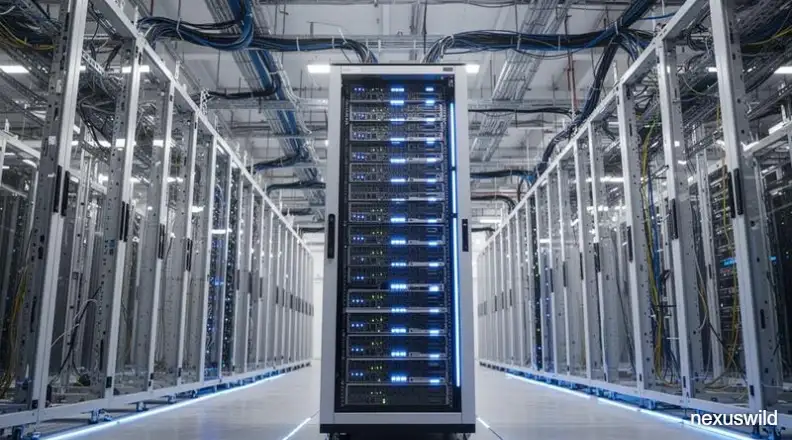
Alphabet spent approximately $51.4 billion on capital expenditure during the quarter, largely to expand technical infrastructure supporting AI and cloud services. The investment includes equipment and facilities required to train and run AI models and deliver computing capacity to customers.
The spending contributed to negative free cash flow of approximately $9.1 billion. Free cash flow is generally calculated as operating cash flow minus capital expenditure, and it helps investors assess the cash remaining after a company funds its capital investment. A negative quarterly figure means capital spending exceeded operating cash generation under that measure; it does not, on its own, mean a company is insolvent or unable to meet its obligations.
Alphabet also said operating cash flow was affected by inventory accumulated to support TPU system sales and a $5.2 billion cash payment related to a European Commission fine from 2018 following the conclusion of its appeal process. These items help explain why the quarterly cash position should not be attributed to capital expenditure alone.
The company entered the period with substantial cash and marketable securities, providing a financial buffer. Nevertheless, investors are concerned about how long heavy investment could weigh on cash generation, particularly as Alphabet expects capital expenditure to increase significantly in 2027. It had forecast spending of $195 billion to $205 billion for 2026.
What the results mean for the AI investment race
Alphabet faces a difficult balancing act. Investing aggressively can expand cloud capacity, strengthen its AI products and help it compete with other technology companies. Spending too cautiously could leave it unable to meet customer demand or keep pace with rivals. But spending more does not guarantee that revenue and profits will grow quickly enough to justify the investment.
The results also have implications for suppliers of advanced chips, servers, networking equipment, data-centre systems and electricity infrastructure. Continued investment by large cloud providers supports demand for these products, although the benefits differ across suppliers and depend on their own costs, capacity and contracts.
For investors, the next signals to watch include advertising growth, Google Cloud’s profitability, the conversion of its backlog into revenue, capital expenditure guidance and the pace at which AI services generate revenue. Alphabet’s quarterly results show that demand for AI infrastructure is real and commercially significant, but the cash costs of expanding that infrastructure are also becoming harder to ignore.
The central question is no longer simply how quickly Alphabet can grow its AI operations. It is whether the resulting business can convert that growth into durable earnings and cash flow while protecting its core advertising franchise.
Nexuswild welcomes factual corrections. Email contact@nexuswild.com with evidence and the article URL.