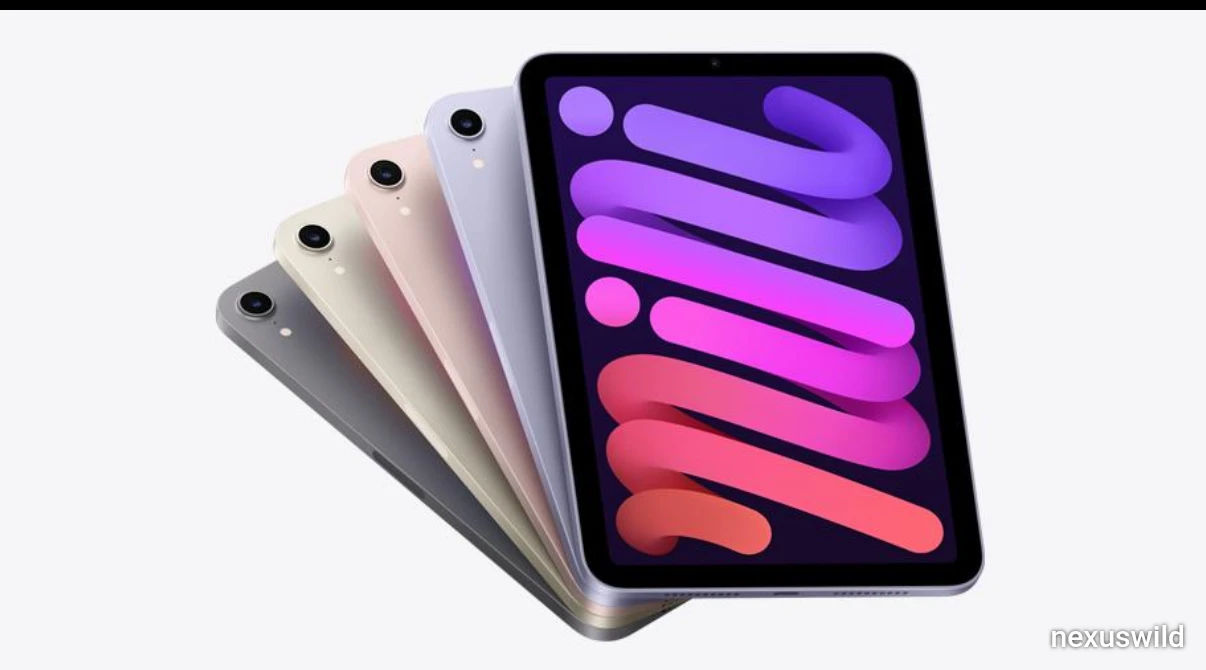

Apple Launches Redesigned iPad mini With 8.5-Inch OLED Display and A20 Pro Chip
Apple has unveiled a redesigned iPad mini featuring a larger OLED display, a new A20 Pro processor and improved durability, marking a substantial hardware update for its compact tablet range. Announced on October 26, 2026, the new model combines an 8.5-inch Super Retina XDR OLED screen with a thinner design, updated wireless connectivity and additional capabilities for on-device artificial intelligence.
The tablet measures just 5.4mm thick and introduces an IP67 rating for water and dust resistance. Apple has also repositioned the front-facing camera for landscape video calls and added support for the latest Apple Intelligence features through iPadOS 27.
In India, the new iPad mini starts at ₹82,900 for the 128GB Wi-Fi model. The Wi-Fi + Cellular version starts at ₹1,00,900. Pre-orders open on October 28, while customer deliveries and retail availability are scheduled to begin on November 6.
The launch positions the iPad mini as a premium compact tablet for users who want portability without giving up the performance and display capabilities associated with Apple's larger devices.
An 8.5-inch OLED display in a compact design
The new iPad mini's most visible upgrade is its 8.5-inch OLED display, which is larger than the 8.3-inch screen on its predecessor. Apple says the company has increased the display size while maintaining the previous generation's overall footprint, helped by bezels that are 24% thinner.
The Super Retina XDR panel uses OLED technology, allowing individual pixels to control their own light output. This enables deeper blacks and high contrast, which can improve the appearance of films, photographs, games and other visual content.
Apple lists peak brightness of up to 1,200 nits, full-screen brightness of 600 nits for SDR and HDR content, and a minimum brightness of one nit. The company says peak brightness is more than twice that of the previous generation.
An optional nano-texture glass finish is also available on selected configurations. Designed to reduce glare in bright environments, it may appeal to photographers, illustrators and professionals who frequently use their tablets outdoors or under strong lighting. It is not a standard feature across every storage and connectivity combination.
For people who use a compact tablet for reading, editing documents, drawing or watching videos while travelling, the larger OLED panel could make the device more versatile. However, buyers should check the exact configuration before assuming that it includes nano-texture glass.
A20 Pro brings faster processing and AI performance
The new tablet is powered by Apple's A20 Pro chip, manufactured using a 2-nanometre process. Apple says the processor brings substantial improvements to graphics, general computing and AI-intensive workloads.
According to the company, the A20 Pro delivers up to 4.5 times faster AI performance than the previous-generation iPad mini. Apple attributes the improvement partly to Neural Accelerators built into each GPU core and an updated Neural Engine.
The chip also supports hardware-accelerated graphics features, including ray tracing and mesh shading. Apple says graphics performance can reach up to 2.7 times that of the previous generation in its stated tests. CPU performance for multithreaded workloads can improve by up to 60%, although actual results depend on the task and software.
These upgrades could benefit users working with image-editing tools, illustration applications, 3D content and AI-enabled creative software. They may also help the tablet handle demanding applications while retaining its compact form.
The advertised performance figures are based on Apple's own testing and should not be interpreted as guaranteed improvements in every application. Independent testing will be needed to compare real-world performance across different workloads.
Apple is also promoting the tablet's role in its AI ecosystem. The device runs iPadOS 27 and supports the company's newer Apple Intelligence and Siri features, subject to language, regional and feature availability requirements.
The practical benefit will depend on which AI features are available to users in their preferred language and market. Buyers should therefore distinguish the tablet's hardware capability from the availability of individual software features.
IP67 rating adds water and dust resistance
For the first time in the iPad mini line, Apple has introduced an IP67 rating for water and dust resistance.
Under the IEC 60529 standard, IP67 indicates protection against dust ingress and resistance to immersion in fresh water under specified laboratory conditions. Apple says the new iPad mini was tested at a maximum depth of one metre for up to 30 minutes.
The rating could be useful for people who read near a pool, work outdoors or carry the tablet between different environments. It also provides an additional layer of protection against accidental exposure to water and dust.
However, the rating does not make the device waterproof. Apple warns that resistance is not permanent and can decrease with normal wear. Liquid damage is not covered under its standard warranty, and users should not attempt to charge the device while it is wet.
The addition is a meaningful durability improvement, but it should not be treated as permission to deliberately submerge the tablet or expose it to liquids.
Updated cameras and connectivity
Apple has moved the 12MP Center Stage front camera to the landscape edge of the iPad mini. This orientation is intended to make video calls feel more natural when the tablet is positioned horizontally, such as on a desk or attached to a keyboard or stand.
Center Stage automatically adjusts the framing to keep participants in view during supported video calls. The feature can be particularly useful for remote meetings, online classes and calls with family or colleagues.
The tablet also introduces an Acoustic Display audio system, which Apple says improves the audio experience. The combined camera and audio changes reflect the growing role of compact tablets in video communication and remote work.
Connectivity has also been updated. Apple includes its N1 wireless networking chip, with support for Wi-Fi 7, Bluetooth 6 and Thread. Cellular configurations use Apple's C2 modem for mobile connectivity.
The move toward Apple's own wireless and cellular components is part of the company's wider effort to design more of its device technology internally. Such integration can give Apple greater control over hardware and software coordination, though its eventual effect on manufacturing costs and profit margins cannot be determined from the announcement alone.
Actual wireless speeds will depend on the user's router, network environment, carrier, signal strength and service plan. Wi-Fi 7 support does not automatically guarantee a particular internet speed.
India price and availability
Apple has confirmed the following starting prices for the new iPad mini in India.
Configuration| Starting price Wi-Fi, 128GB| ₹82,900 Wi-Fi + Cellular, 128GB| ₹1,00,900
The tablet is available in midnight and starlight finishes, with storage options of 128GB, 256GB and 512GB. Higher-capacity configurations and selected nano-texture options cost more than the entry-level models.
Pre-orders begin on October 28, 2026, through Apple's India website and the Apple Store app. The company says the tablet will begin arriving at customers' homes and become available through Apple Store locations and authorised resellers on November 6.
Apple Pencil Pro and Apple Pencil (USB-C) are compatible with the new iPad mini. The company has also introduced a Smart Folio accessory for the device, sold separately.
For Indian buyers, the entry price places the tablet in the premium segment. The Wi-Fi + Cellular model costs ₹18,000 more than the base Wi-Fi configuration, so buyers should consider whether mobile connectivity is necessary or whether a phone hotspot will meet their needs.
What the launch means for compact tablets
The new iPad mini combines three major upgrades: OLED display technology, faster processing and improved durability. Together, they make the device more capable for creative work, entertainment, video calls and mobile productivity.
The OLED display is particularly notable because it brings a higher-end screen technology to Apple's smaller tablet category. Its arrival could add to demand for advanced display components in compact devices, although the announcement alone does not establish how much the wider tablet market or display supply chain will grow as a result.
Apple's A20 Pro chip and in-house connectivity components also underline the company's focus on integrating hardware and software. This strategy could help it differentiate its products, but the impact on costs, margins and competitors will become clearer only through product testing and subsequent financial disclosures.
The higher starting price may limit its appeal to casual tablet buyers, particularly those who mainly browse the web, read or stream videos. For users who value a compact size, a premium display, Apple Pencil compatibility and strong processing performance, the updated model offers a broader feature set.
Ultimately, the new iPad mini represents a significant refresh rather than a change in the product's core purpose. It remains a small tablet designed for portability, but its improved screen, processor, camera and resistance rating make it better equipped for a wider range of tasks.
As pre-orders open on October 28, buyers will have an opportunity to compare storage options, connectivity configurations and accessories before the November 6 retail launch. Independent reviews and real-world battery, performance and display tests will provide a clearer picture of how much the new hardware improves everyday use.
Nexuswild welcomes factual corrections. Email contact@nexuswild.com with evidence and the article URL.