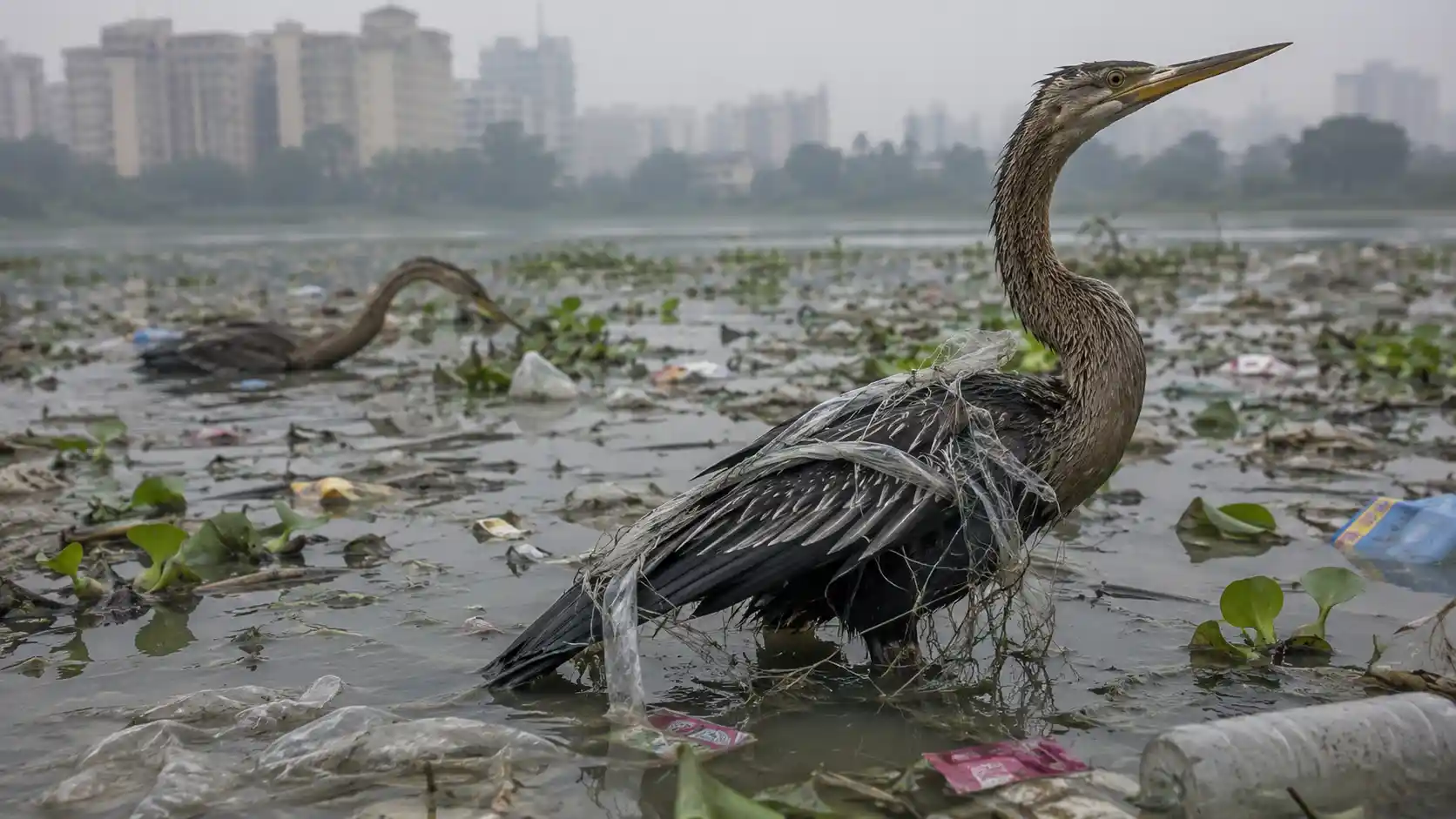

BENGALURU — A piece of discarded cloth, a length of plastic mesh, or an abandoned fishing net rarely looks dangerous lying at the edge of a lake, but for an Indian darter, any of these can become a trap that slowly starves it to death. Wildlife rescuers in Bengaluru say they are seeing a rise in darters turning up in distress with waste caught around their long, pointed bills.
The Avian and Reptile Rehabilitation Centre (ARRC), a Bengaluru-based wildlife rescue group, has been called in for cases involving darters entangled in debris, with birders reporting sightings at lakes including Doddanekundi, Jakkur, Yelahanka, Rachenahalli, Hesarghatta, Sampengahalli, Lalbagh and Chelkere. Birders at Doddanekundi Lake have specifically described seeing darters with waste caught around their beaks, including plastic wrappers, discarded fishing nets, cloth, puja materials, and vegetable plastic mesh.
Not every entangled bird has been confirmed dead, but cases range from birds observed with material caught on their bills, to birds that rescuers manage to capture and treat, to a smaller number of confirmed deaths.
Why a Feeding Bill Becomes a Liability
The Indian darter (*Anhinga melanogaster*), also known as the snakebird, hunts underwater by swimming with its body submerged and darting its head forward to impale fish before flicking them into the air and swallowing them head-first. This specialized anatomy becomes a liability when artificial material loops around the bill, preventing the bird from fishing effectively and causing it to weaken or starve. The Indian darter is found across South and Southeast Asia and is classified as Least Concern on the IUCN Red List, though local populations still face significant pressures.
Why These Birds Are Hard to Rescue
Entangled darters generally remain capable of flight, complicating rescue efforts because they will often take off when a rescuer approaches. Wildlife rescuers say the safest approach involves:
- Observing a bird from a distance using binoculars to assess entanglement and weakness before attempting capture.
- Using motorised boats to close the distance on open water.
- Employing drones to track a bird's location and condition across a lake before a capture attempt.
By the time some birds are caught, they are already severely weak or emaciated, which is why wildlife groups discourage untrained public rescue attempts that can drive a weakened bird into open water or cause further injury.
Broader Lake Pressures and Proposed Solutions
While some lakes like Doddanekundi have undergone rejuvenation, garbage dumping, plastic waste, discarded fishing material, religious waste, and sewage inflow remain persistent pressures across many Bengaluru lakes. These wetlands serve as habitats for resident birds and seasonal migratory species.
Some responses are already underway:
- Rescue groups like ARRC continue to respond to distress calls and treat entangled birds.
- Regular citizen-led lake cleanup drives remove waste from several lakes in partnership with civic authorities.
Other proposed measures include awareness campaigns for proper waste disposal, preventing edge dumping, establishing dedicated waste collection points, and encouraging the public to report distressed wildlife to professionals.
Further reading and useful links
Reader questions
Frequently asked questions
Why is lake garbage particularly dangerous for the Indian darter?
The Indian darter relies entirely on a specialized hunting technique that involves darting its long, spear-like bill underwater to impale fish. When discarded materials like plastic mesh or cloth wrap around its beak, the bird is unable to hunt effectively and can slowly starve to death.
Why shouldn't the public try to catch and help entangled birds themselves?
Entangled darters can usually still fly and are easily spooked. Wildlife groups discourage public rescue attempts because an untrained approach can drive an already weakened bird into open water or cause further injury, effectively reducing its chances of survival.
Which Bengaluru lakes have reported cases of entangled darters?
Birders have reported sightings of entangled darters at several lakes across Bengaluru, including Doddanekundi, Jakkur, Yelahanka, Rachenahalli, Hesarghatta, Sampengahalli, Lalbagh, and Chelkere.
Nexuswild welcomes factual corrections. Email contact@nexuswild.com with evidence and the article URL.