
China Shenhua Energy reported a 10.9% year-on-year increase in third-quarter revenue to RMB 106.69 billion, while profit attributable to shareholders rose 3.2% to RMB 15.69 billion, according to its quarterly report released on October 24, 2026.
The results from the state-owned coal mining and energy group reflect different operating conditions across its coal and power businesses. Higher average coal selling prices supported the coal segment’s revenue, while rising coal procurement costs weighed on the profitability of electricity generation.
The company’s financial disclosures show that revenue and earnings continued to grow, although the increase in profit was more modest than the rise in sales.
Revenue and profit increase in the third quarter
China Shenhua recorded Q3 operating revenue of RMB 106.693 billion, compared with RMB 96.228 billion in the corresponding period a year earlier, after restatement of the prior-year figure.
Profit attributable to shareholders reached RMB 15.688 billion, up 3.2% year on year. Profit before tax increased 2.7% to RMB 24.115 billion.
The figures indicate that the company generated higher sales but saw a comparatively smaller increase in shareholder profit. Differences between revenue and earnings growth can reflect operating costs, segment performance, financing expenses, taxes and other factors.
For the first nine months of 2026, revenue rose 9% to RMB 296.031 billion, while profit attributable to shareholders increased 3.8% to RMB 44.403 billion.
Coal operations benefit from higher average selling prices
Coal remained a major contributor to China Shenhua’s operating activity. The company reported that coal segment revenue for January through September increased 6.6% year on year to RMB 211.14 billion.
The average selling price of coal, excluding tax, reached RMB 448 per tonne during the nine-month period, up 7.4% from RMB 417 per tonne in the corresponding period of 2025.
However, the higher average price did not translate into an equivalent increase in sales volume. Total coal sales were 460.6 million tonnes, broadly flat compared with the prior-year period. Sales of self-produced coal declined, while sales of purchased coal increased.
Coal segment gross profit rose 2.9% to RMB 52.994 billion, but its gross margin declined by 0.9 percentage point to 25.1%.
The figures suggest that higher selling prices supported coal-business revenue and gross profit, while changes in sales mix and costs limited margin expansion.
Power segment faces higher coal procurement costs
China Shenhua’s power business experienced a more difficult margin environment.
For January through September, power segment revenue increased 3.9% to RMB 82.41 billion. The company attributed the increase to higher power dispatch volumes and average electricity selling prices.
Yet operating costs rose faster than revenue. The segment’s cost of sales increased 10.3% to RMB 72.058 billion, with the company citing increased electricity output and higher coal-purchase prices.
As a result, power segment gross profit fell 25.8% to RMB 10.352 billion. Gross margin declined by 5 percentage points to 12.6%.
The company also reported that average power dispatch cost, including heat sales, rose 8.3% year on year to RMB 335.6 per megawatt-hour during the first nine months.
These figures show how higher coal prices can affect an integrated energy company differently across its businesses. Higher prices may support coal sales revenue, while raising input costs for power generation when coal is purchased for use in electricity production.
A mixed picture across the energy business
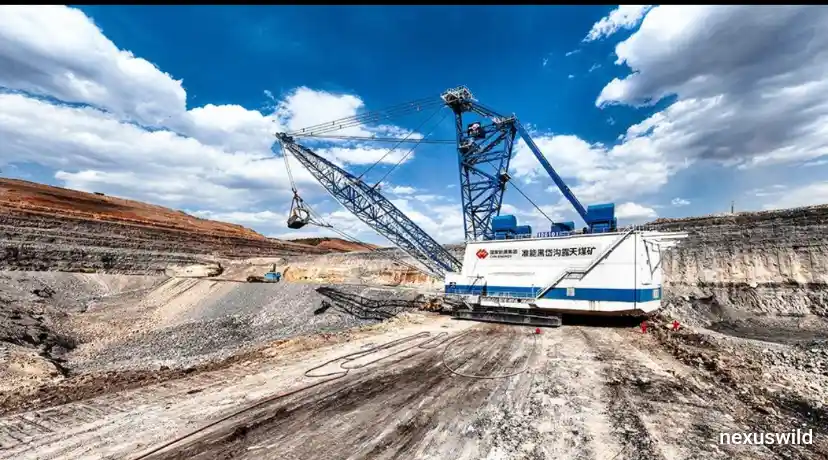
China Shenhua operates across coal mining, electricity generation, railways, ports and coal chemicals. Its integrated structure gives it exposure to several parts of the energy supply chain, but segment results can vary depending on prices, costs, production and sales volumes.
The company’s railway business reported nine-month revenue growth of 3.6% to RMB 33.948 billion, while pretax profit increased 8.4% to RMB 11.433 billion.
Coal chemical revenue increased 50% to RMB 23.739 billion, and gross profit rose to RMB 4.92 billion from RMB 556 million a year earlier. The company attributed the change to higher sales volumes and prices, alongside a production shutdown in the prior-year comparison.
These results show that the coal and power divisions were not the only contributors to the company’s overall performance. Other operations also influenced its consolidated financial results.
What the results mean for energy markets
China Shenhua’s quarterly results offer a snapshot of the economics of an integrated coal and power company during a period of varying prices and operating costs.
For coal producers, selling prices and production costs are important drivers of profitability. For power generators, fuel procurement costs must be weighed against electricity selling prices and output. When those prices move in different directions, segment margins can diverge.
The company’s disclosures do not by themselves establish a broader trend for all Chinese coal producers or power utilities. Market conditions vary by region, contract structure, fuel mix and regulatory framework.
What to watch next
Investors and energy-market observers will be watching coal prices, purchased-coal costs, electricity dispatch volumes and selling prices in the coming quarters.
The company’s ability to maintain revenue growth while managing costs across its mining and power businesses will be important to its future results. The latest report shows that China Shenhua continued to expand revenue and profit, but the margin pressures in its power segment remain a notable part of the earnings picture.
The results underline a central feature of integrated energy operations: changes in commodity prices can benefit one part of the business while creating cost pressure for another.
Nexuswild welcomes factual corrections. Email contact@nexuswild.com with evidence and the article URL.