
Planetary scientists from India have unveiled detailed new maps of Martian atmospheric dynamics, shedding light on the severe temperature fluctuations and complex circulation patterns that govern the Red Planet. Using advanced infrared data captured by a spacecraft in orbit, researchers from the Physical Research Laboratory (PRL) in Ahmedabad have detailed how the Martian climate behaves across some of its most prominent geological features.
The findings, published on September 10, 2026, in the peer-reviewed journal *Current Science*, provide a crucial update to the scientific understanding of thermal behavior and atmospheric evolution on Mars. By focusing on the Hellas and Argyre impact basins, the research team, comprising S. A. Haider, Dimitra Atri, Siddhi Y. Shah, Gayatri J. Sharma, and Tariq Majeed, demonstrated how deep topography and a highly elliptical orbit combine to create extreme weather patterns that continuously sweep across the planet.
India's Ongoing Legacy in Martian Science and Global Collaboration
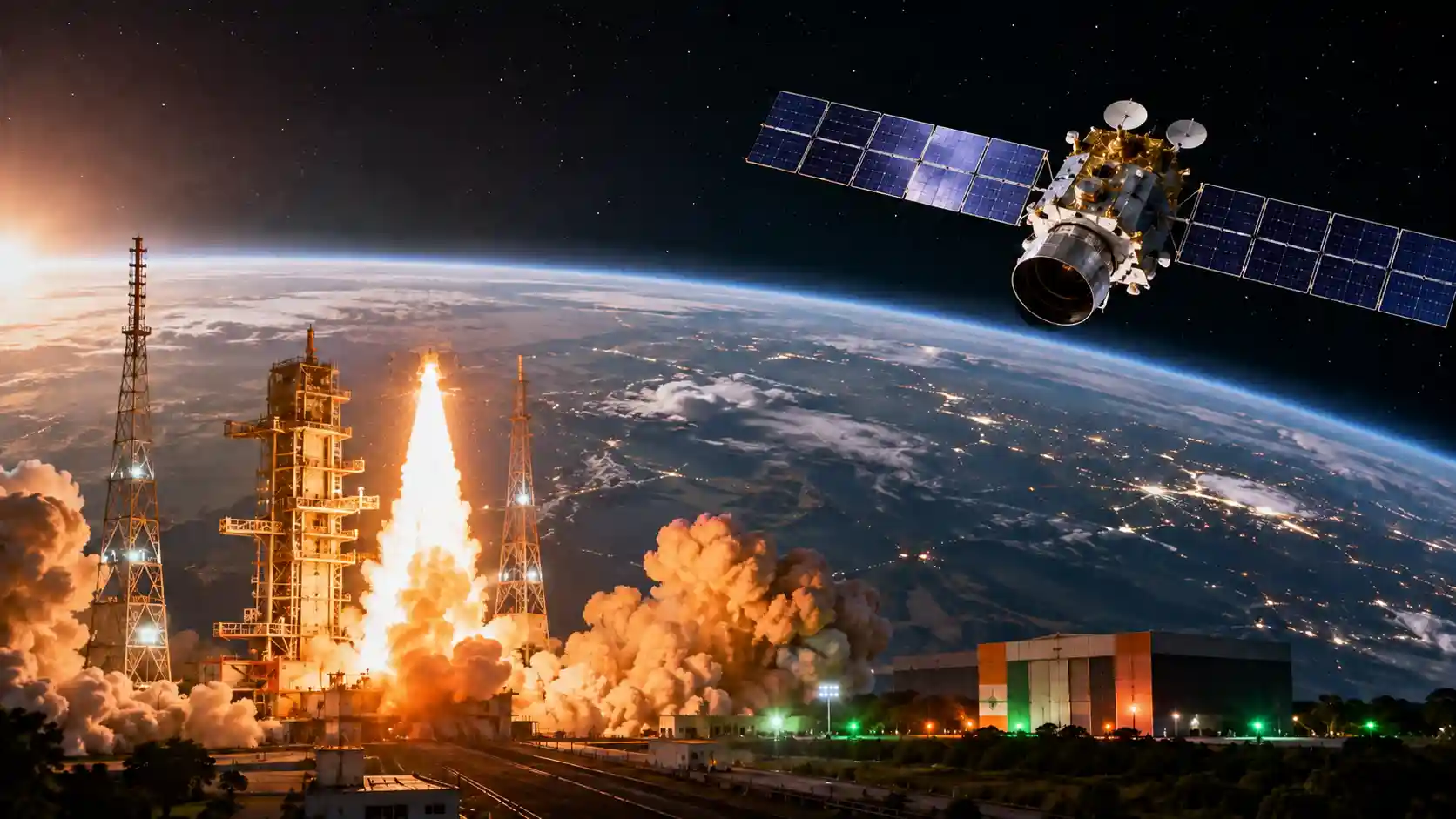
The current research builds upon a long-standing Indian commitment to planetary science and Martian exploration. India ushered in a new era of space research with the launch of its Mars Orbiter Mission, widely known as Mangalyaan, in 2013. That mission carried several instruments, such as the Mars Exospheric Neutral Composition Analyser and a Thermal Infrared Imaging Spectrometer, specifically designed to study the loss of the Martian atmosphere and map surface compositions.
While Mangalyaan concluded its historic mission after years of successful data collection, Indian scientists have continued to lead the analysis of Martian atmospheric processes. For this latest study, researchers from the Physical Research Laboratory utilized international datasets. The team analyzed observations from the Emirates Mars Infrared Spectrometer (EMIRS), an instrument aboard the Emirates Mars Mission's Hope spacecraft. This collaborative approach to data analysis highlights the increasingly interconnected nature of global space research, allowing Indian scientists to continue probing the mysteries of Mars' climate evolution using cutting-edge orbital technology.
The Extreme Thermal Swings of the Red Planet
While Mars often appears in orbital imagery as a static, frozen desert, its surface actually experiences rapid and intense temperature changes. The recent study quantified these dramatic thermal shifts with high precision. Researchers recorded surface temperatures that range from a surprisingly mild 27 degrees Celsius (nearly 300 Kelvin) during peak summer conditions down to a freezing minus 113 degrees Celsius (around 160 Kelvin) in the winter months.
These massive fluctuations are a direct consequence of the Martian atmosphere, which is incredibly thin compared to the atmosphere on Earth. An atmosphere acts as a planetary insulating blanket. On Earth, a dense mixture of nitrogen and oxygen traps solar radiation and distributes heat relatively evenly across the globe. Because Mars lost the majority of its ancient, thicker atmosphere billions of years ago to atmospheric escape processes, it now lacks this dense gaseous envelope.
Consequently, the Martian surface heats up very quickly when exposed to direct sunlight and loses that thermal energy almost immediately after sunset. The infrared measurements gathered by the EMIRS instrument confirmed that the thin atmosphere forces the planet into a state of perpetual thermal extreme, causing diurnal (daily) temperature variations that would be impossible under Earth's protective atmospheric conditions.
Zonal Waves and the Influence of Martian Topography
Beyond measuring simple temperature highs and lows, the scientists observed that thermal energy moves across the planet in large-scale, structured patterns known as zonal waves. Rather than rising and falling uniformly, Martian temperatures ripple around the planet in distinct waves. These wave patterns provide planetary scientists with a vital, indirect method to track how the Martian atmosphere circulates, similar to watching ripples on the surface of a pond to understand the water currents beneath.
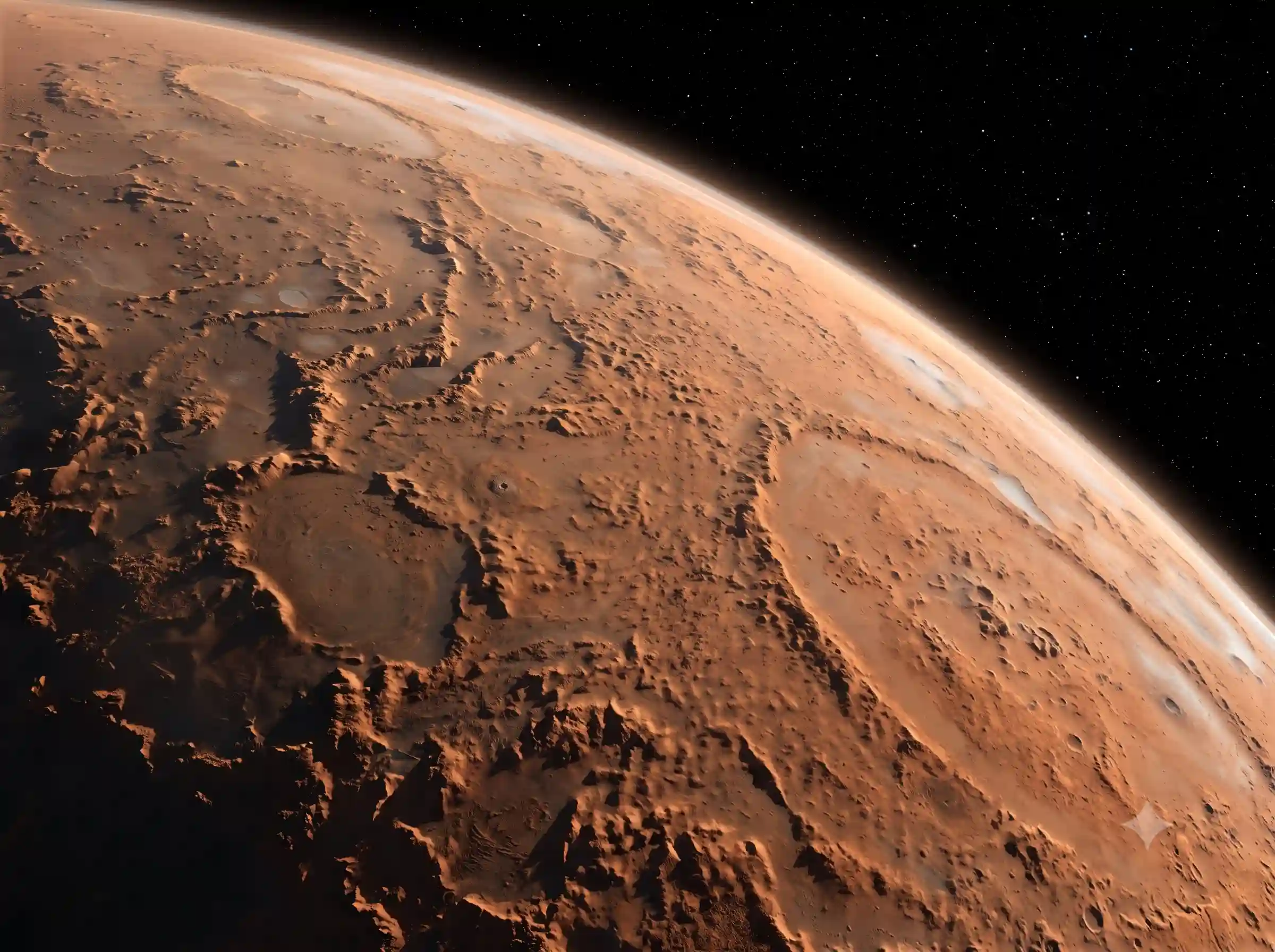
To thoroughly understand these atmospheric dynamics, the PRL researchers focused their analysis on two of the largest impact features in the southern hemisphere: the Hellas and Argyre basins. These massive topological depressions offer unique environments for studying planetary weather. The data revealed striking differences in how the atmosphere behaves over each distinct basin.
Over the Argyre basin, the atmospheric circulation was heavily dominated by a large-scale "wave-1" pattern. This indicates a relatively broad and continuous atmospheric wave sweeping uniformly through the region. In contrast, the much larger and deeper Hellas basin exhibited more complex "wave-2" and "wave-3" patterns. These multi-wave structures shifted depending on the Martian season, suggesting that atmospheric circulation becomes highly segmented and turbulent as it interacts with the specific geometry and immense depth of the Hellas basin.
The Impact of Orbital Imbalance on Seasonal Weather
The discrepancies in atmospheric wave patterns between different regions highlight the critical role that topography plays in shaping planetary climates. Hellas Planitia is the largest well-preserved impact basin on Mars and contains the lowest elevations on the planet. The immense depth and distinctive geological shape of these basins physically interrupt the flow of air, forcing the atmosphere to compress and expand into complex wave structures.
Furthermore, the research underscores how the planet's orbit actively exaggerates its climate extremes. Mars possesses a highly elliptical orbit, meaning the distance between the planet and the Sun varies significantly throughout its long orbital year. Mars reaches its closest approach to the Sun during the southern hemisphere's summer season.
Because of this specific orbital geometry, the southern summer is significantly more intense than the northern summer. The researchers noted that temperatures in certain southern regions were roughly 25 Kelvin higher than during the corresponding season in the northern hemisphere. When this intense, asymmetric solar heating interacts with the deep atmospheric columns trapped within the Hellas and Argyre basins, it drives the complex zonal waves observed by the scientific team.
Evaluating and Refining Existing Climate Models
A critical component of modern planetary science involves refining the sophisticated computer models used to predict weather on other worlds. As part of their comprehensive study, the Indian researchers compared their newly acquired EMIRS orbital observations with theoretical predictions generated by the Mars Climate Database (MCD).
This comparative analysis yielded valuable insights for future atmospheric modeling. While the existing computer models successfully reproduced the broad, large-scale patterns of the zonal waves and seasonal shifts, there were notable discrepancies in the absolute temperature values. The research team found that the Mars Climate Database often predicted temperatures approximately 10 Kelvin cooler than the actual infrared measurements recorded by the spacecraft.
Identifying these gaps between theoretical models and empirical data is a vital step in atmospheric science. The findings will allow atmospheric physicists to recalibrate their climate models, significantly improving their accuracy for predicting Martian weather patterns, seasonal changes, and the long-term evolution of the planet's climate.
Implications for Future Planetary Exploration
Understanding the complex dynamics of the Martian atmosphere is a fundamental requirement for the next phase of space exploration. As international space agencies plan future robotic missions and conceptualize eventual crewed landings, highly accurate atmospheric data becomes essential for ensuring mission safety and structural resilience.
Spacecraft entering the Martian atmosphere must safely navigate the thin, fluctuating air currents during the critical descent and landing phases. Sudden changes in atmospheric density, driven by extreme temperature swings and shifting zonal waves, can significantly alter a spacecraft's trajectory. Furthermore, establishing permanent surface habitats will require a precise understanding of the thermal extremes that scientific equipment and astronauts will face on a daily basis.
By mapping the intricate temperature waves and identifying exactly how surface topography influences atmospheric circulation, the scientists at the Physical Research Laboratory have contributed a vital piece of knowledge to the global planetary science community. Their research ensures that future landers, rovers, and human explorers will be better prepared to withstand the harsh, dynamic environment of the Red Planet.
Further reading and useful links
Reader questions
Frequently asked questions
What did Indian scientists discover about the climate on Mars?
Researchers mapped extreme temperature variations and large-scale atmospheric wave patterns across major impact basins, revealing a highly dynamic and complex climate system driven by topography.
Which spacecraft provided the data for this atmospheric research?
The research utilized infrared observations from the Emirates Mars Mission's Hope spacecraft, specifically its Emirates Mars Infrared Spectrometer (EMIRS) instrument.
Why does Mars experience such extreme temperature swings?
The planet has an extremely thin atmosphere that cannot efficiently store or distribute heat. This is coupled with a highly elliptical orbit that creates severe seasonal imbalances.
What are zonal waves in the Martian atmosphere?
Zonal waves are large-scale ripple patterns in atmospheric temperature that provide scientists with an indirect way to track how air circulates across the planet.
Which institution led this Mars research?
The research was conducted by planetary scientists at the Physical Research Laboratory (PRL), a premier research institute based in Ahmedabad, India.
Nexuswild welcomes factual corrections. Email [email protected] with evidence and the article URL.