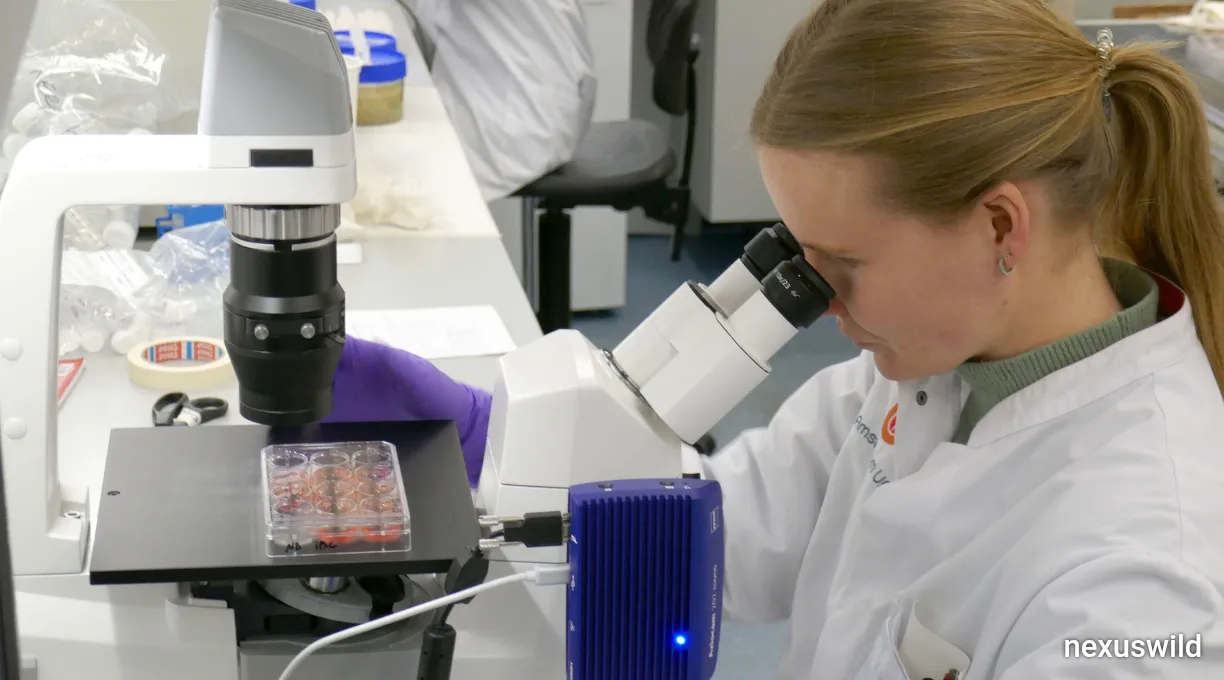

Researchers at the University of Bonn and University Hospital Bonn have reported a laboratory method that converts human blood cell precursors into neural stem cells while substantially reducing their estimated epigenetic age. In a study published in Aging Cell, cells derived from an 80-year-old donor registered a molecular age of less than 20 years on an epigenetic clock.
The research, published online on October 3, 2026, examines how cellular identity and age-associated molecular patterns change during direct reprogramming. Although the findings could help scientists investigate aging and neurological disorders, they do not show that a person’s body has been rejuvenated or that an anti-aging treatment is available.
How the researchers changed cell identity
The team converted erythroid progenitors—precursor cells involved in producing red blood cells—into induced neural stem cells, or iNSCs. These cells can be grown in the laboratory and differentiated into neural cell types.
The researchers used two transcription factors, SOX2 and c-MYC, to redirect the cells’ developmental program. Transcription factors influence which genes a cell expresses, helping determine its identity and function.
The method is known as direct conversion because the cells move from a blood-cell precursor state to a neural stem-cell state without first passing through a pluripotent stem-cell stage. Pluripotent cells can develop into many cell types, whereas neural stem cells have a more restricted developmental potential.
The study included cells from donors ranging in age from newborns to 101 years old. This broader age range allowed the researchers to compare how the reprogramming process affected cells from people at different stages of life.
What does a molecular age below 20 mean?
To measure changes associated with aging, the researchers used DNA-methylation-based epigenetic clocks. These tools analyse patterns of chemical modifications to DNA that change with age and use them to estimate a biological or molecular age.
The researchers found a pronounced reduction in estimated epigenetic age in iNSCs derived from older donors. For the cells from an 80-year-old donor highlighted by the University of Bonn, the estimated molecular age fell below 20 years.
That result needs careful interpretation. An epigenetic clock measures a specific set of molecular patterns; it does not measure a person’s overall health, life expectancy or the age of every cell in the body. The finding also does not mean that the donor became biologically younger.
The paper reported that cells retained, on average, approximately 13% of their donor’s original age estimate at an early passage and around 5% at a higher passage. These figures describe the researchers’ measurements in cultured cells and should not be interpreted as a comparable percentage reduction in human aging.
A gradual process lasting several weeks
A central finding was the pace of the change. Unlike some conventional reprogramming approaches in which cells pass through a pluripotent stage, the direct conversion process showed a prolonged transition. The researchers tracked changes for more than 100 days, with much of the epigenetic resetting occurring over several weeks.
Their time-course analysis found that the acquisition of a mature neural stem-cell molecular signature continued after early markers of conversion had appeared. In other words, a cell could begin to show characteristics of a neural stem cell before the wider set of molecular changes associated with that identity had fully developed.
This extended timeline gives researchers an opportunity to study the relationship between changes in cell identity and changes in age-associated molecular markers. It may help them investigate which biological processes accompany, accelerate or slow epigenetic de-aging.
The study also compared molecular features of cells derived from younger and older donors. With extended conversion, some transcriptomic differences between those groups diminished. The researchers reported that established iNSC lines lacked several age-associated cellular hallmarks, broadly resembling induced pluripotent stem cells and their derivatives in this respect.
These findings are evidence of changes in cultured cells, not proof that every aspect of cellular aging has been reversed. The study examined multiple molecular and cellular features, and those measures do not collectively establish a complete restoration of youthful function.
Why the method could matter for neurological research
Age is a major risk factor for several neurodegenerative conditions, including Alzheimer’s disease. Researchers studying these disorders need laboratory models that help them examine human neural biology and test possible interventions under controlled conditions.
Directly generated neural stem cells could provide another route to producing human neural cells from donors of different ages. Researchers may be able to use such models to investigate how cellular processes change during reprogramming, compare cell lines and explore candidate compounds before deciding whether further studies are warranted.
The slow progression of epigenetic changes is particularly relevant to experimental research. Scientists can collect samples at different stages and compare DNA methylation, gene expression and other cellular measurements as the cells change identity.
However, the study did not establish that this method accelerates clinical drug discovery, reduces the cost of manufacturing cell therapies or treats Alzheimer’s disease. Those are possible areas for future investigation, not demonstrated clinical outcomes.
Important limitations and safety questions
The work was conducted in vitro, meaning the experiments took place outside a living organism. It does not show that the process can safely rejuvenate neural tissue inside a person, improve cognition or extend human lifespan.
The use of c-MYC also makes careful safety evaluation important. This transcription factor participates in cell growth and proliferation and is associated with cancer biology. Its use in a reprogramming protocol does not by itself mean the resulting cells are unsafe, but it would be inappropriate to assume that the method has lower cancer-related risks than other stem-cell approaches without comparative safety evidence.
Before any therapeutic application, researchers would need to address issues including reproducibility, cell identity, genomic stability, unwanted cell growth, differentiation control and the behaviour of cells in relevant disease models. Further preclinical research would be needed before clinical testing could be considered.
What comes next
The Bonn study offers researchers a way to examine epigenetic de-aging as it unfolds during the direct conversion of blood cell precursors into neural stem cells. Its most immediate value is as a tool for studying cellular reprogramming and the molecular features associated with aging.
The next question is whether scientists can identify the mechanisms driving these changes and determine how consistently they occur across donors and experimental conditions. Establishing whether the resulting cells can model specific neurological diseases reliably will also be important.
For now, the result is a significant laboratory finding—not a human anti-aging breakthrough in the clinical sense. It provides a new experimental window into how cells can change both their identity and some molecular indicators of age, while leaving the prospect of safe and effective treatments for future research.
Nexuswild welcomes factual corrections. Email contact@nexuswild.com with evidence and the article URL.