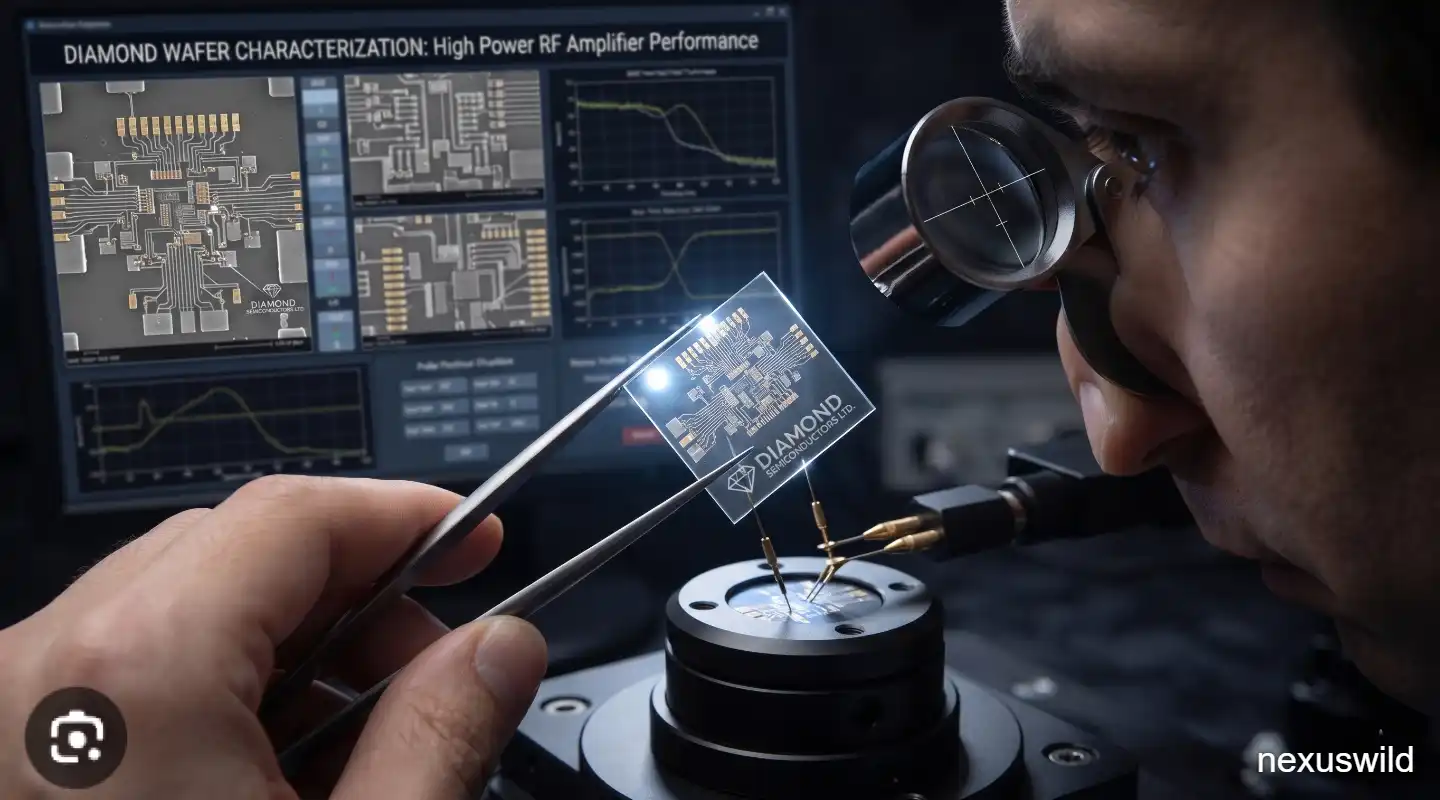

Lab‑grown diamonds in electronics are being looked at as a new growth path beyond jewellery because advances in computing, semiconductor technology and industrial electronics are creating a need for specialised materials. The same synthetic diamond that has changed the gemstone market could become a part in systems that manage heat boost device reliability and help next‑generation electronics work better.
The chance for diamonds in electronics is appearing at a tough time for parts of the lab‑grown diamond industry. Falling prices and sharper competition are putting pressure on makers that depend heavily on jewellery. This has pushed some producers to explore uses where technical performance matters more than appearance, colour or gemstone grading.
Advanced electronics could offer an attractive alternative for lab‑grown diamonds in electronics. Diamond has thermal conductivity, high electrical breakdown strength and chemical stability. These traits make it a good fit for heat spreaders, specialised power electronics, high‑frequency devices and quantum sensing tools. It can also be used in diamond semiconductors and for diamond chip cooling.
However the commercial chance for diamonds in electronics needs careful thinking. Industrial diamond is not jewellery‑grade material sold to a different buyer. Lab‑grown diamonds in electronics are part of a class of advanced electronics materials. Electronics work demands purity levels, crystal structures, sizes and manufacturing tolerances. Makers must create materials that meet engineering needs consistently and fit into devices made by semiconductor manufacturers.
Recent reporting by Reuters shows that Chinese synthetic diamond producers are increasingly looking toward semiconductor and AI‑related uses as they search for growth. The shift could open a higher‑value market for makers but widespread use will depend on cost, performance and the ability to scale up production.
Why Electronics Companies Are Interested in Diamond
Heat has become an engineering problem as processors, power devices and electronic systems grow stronger and tighter. AI accelerators and other high‑performance chips can pile up a lot of heat in spots. If that heat cannot be removed well devices may have to slow down or may break down.
Traditional cooling systems use copper, aluminium, thermal interface materials, heat sinks and liquid cooling. These are still important. The rising demands of high‑performance computing push researchers to look at materials that can move heat away from sensitive parts more quickly.
Diamond stands out because it can move heat well. High‑quality diamond can conduct heat better than copper depending on its structure, purity and how it is made. This makes it a good choice for a heat spreader, a part that spreads spots over a larger area before the heat reaches a cooler.
A diamond layer or part could help make management better in certain electronic packages. The benefit is not lower temperature. Better heat removal can also let engineers keep performance improve reliability or shrink the space needed for some cooling solutions.
Research published in Diamond and Related Materials in February 2026 looked at a way to use CVD diamond technology to join chemical vapour deposition or CVD, diamond pieces into larger plates for cooling high‑performance devices. The work shows both sides of the chance: diamond has thermal traits but making large, even and cheap parts remains a big technical hurdle. This is part of the study of diamond management. Research paper
AI Data Centres Could Become a Market
The growth of AI infrastructure is raising interest in things that can handle the heat from powerful processors and supporting electronics. Data‑centre operators are putting money into AI data centre cooling, advanced cooling, high‑density server racks and complex power systems.
For makers of diamonds, in electronics the quickest chance may be to supply parts used inside electronic packages instead of trying to replace the whole server cooling system.
Diamond heat spreaders can help remove heat from high‑power components such as selected processors, semiconductor lasers and power devices. Diamond may also be useful in systems where thermal performance's especially important and the extra material cost can be justified.
The distinction between laboratory promise and commercial adoption is important. A material can outperform alternatives in a controlled experiment without becoming the preferred option in a mass‑produced device. Engineers must consider resistance across interfaces, manufacturability, mechanical reliability, compatibility with existing packaging processes and total system cost.
Diamond components must also be integrated into a thermal design. Exceptional conductivity within diamond itself does not guarantee performance across the entire chip package. Heat can still become trapped at engineered interfaces between different materials.
Research into low‑temperature diamond deposition and interface engineering is addressing some of these challenges. A December 2025 study explored microwave‑plasma‑assisted CVD diamond films as heat spreaders in the back‑end processing of silicon integrated circuits with an emphasis on deposition temperatures with existing chip structures. Research paper.
If manufacturers can deliver components at commercially acceptable prices AI‑related electronics could offer a market that values engineered performance rather than gemstone aesthetics.
Falling Jewellery Prices Are Encouraging Diversification
The search for customers is also linked to changing economics in the lab‑grown gemstone market.
Synthetic diamonds have expanded access to diamond jewellery by enabling manufacturers to produce stones in controlled environments. As production technology has improved and supply has increased prices for lab‑grown gemstones have fallen. That has benefited consumers. Created challenges for producers competing primarily on volume and price.
Manufacturers face pressure to differentiate their products improve efficiency and identify applications where technical expertise provides a stronger competitive advantage.
Industrial diamond materials operate under a set of commercial requirements. Buyers may prioritise conductivity, crystal quality, defect density, wafer dimensions and consistent performance over visual characteristics. A manufacturer able to meet these specifications could develop relationships with customers in electronics, industrial equipment and scientific instrumentation.
Reuters October 2026 report on Chinas synthetic diamond sector describes producers exploring these opportunities as jewellery‑related economics become more challenging. The shift is particularly relevant to China, which has a synthetic diamond production base and a substantial manufacturing ecosystem. Reuters report.
Still jewellery production and electronic‑grade diamond manufacturing should not be treated as businesses. Existing gemstone equipment and production expertise may provide a starting point. Advanced applications require specialised processes, quality‑control systems and customer qualification.
For producers diversification will be most valuable when it builds on capabilities they can realistically develop than assuming that all existing output can be redirected into higher‑margin industrial markets.
Diamond Could Support Power Electronics
Heat management is one possible application. Diamond is also being studied for devices that operate under demanding electrical, thermal or environmental conditions.
Power electronics control the conversion and distribution of energy in systems such as electric vehicles, renewable‑energy installations, industrial drives and electricity networks. These devices can face temperatures, substantial voltages and demanding reliability requirements.
Diamonds wide bandgap and high electrical breakdown strength make it a candidate, for electronic devices designed to operate under conditions that challenge conventional semiconductor materials. Diamonds thermal properties may also help remove heat generated during operation.
Potential applications include diodes, transistors, high‑frequency components and devices intended for harsh environments. Diamond‑based structures may also be combined with semiconductors, including gallium nitride to improve heat dissipation or device performance.
Commercialisation remains challenging. Producing electronic‑grade diamond with the required properties is difficult while controlled doping, contact formation, device fabrication and integration all require development. Silicon, silicon carbide and gallium nitride already serve established markets with manufacturing ecosystems.
Diamond is therefore more likely to enter selected applications where its properties offer an advantage than to displace established semiconductor materials across the industry.
For manufacturers this means that the power electronics opportunity may develop gradually. Qualification cycles, device reliability testing and customer design decisions can take time even when the underlying material shows strong technical performance.
Quantum Sensors Offer Another Specialised Opportunity
I see that diamond is used in electronics not to manage heat or control power. Some defects inside the diamond crystal can act like quantum sensors and scientists use them to build very sensitive measuring tools.
A clear example is the nitrogen‑vacancy centre. Here a nitrogen atom sits next to a missing spot in the diamond structure forming a defect that we can control and read. Those nitrogen‑vacancy centres let us detect fields, temperature and other physical changes.
I think these features make diamond useful for tools, precise sensors, industrial checks and some medical or navigation uses. Researchers are also looking at diamond sensors for places that need size, high sensitivity or tough operating conditions.
The Quantum Diamond Laboratory at Princeton Plasma Physics Laboratory studies diamond for high‑level sensing, electronics and heat control. Their work shows that lab‑made diamond can be an engineering material, not just a pretty stone.
For makers of diamond quantum uses add another layer of difficulty. Where the defects are, how many there are and how uniform they are decide how well a diamond works in a sensor. The purity of the material and the crystal quality must fit the use.
So quantum sensing can be a chance for very specialised suppliers but it does not automatically turn surplus gemstones into sales. Companies have to work with designers and research labs to meet exact technical needs.
Chemical Vapour Deposition Is Central to the Opportunity
Two ways make lab diamond: high‑pressure, high‑temperature growth and chemical vapour deposition.
The high‑pressure high‑temperature route mimics the pressure and heat that form natural diamond. Chemical vapour deposition or CVD takes a carbon gas. In a steady setting lays diamond onto a base.
CVD is very useful for electronics because it lets us grow films and bases with exact traits. Depending on how it's run firms can make either polycrystalline or single‑crystal diamond for the needs of different industries.
Making a diamond that works well in electronics is more than just growing a big crystal. Makers must control defects, impurities, grain borders, surface finish and thickness. They also have to keep every batch the same.
Another challenge is big‑area production. Electronics makers like parts that fit their machines and have the same size. Making small good samples in a lab is different from giving out parts that are all the same and give good yield.
Better growth methods, stronger bonds and tighter quality checks will decide how fast diamond can switch from lab work to industry.
Firms that put money into these skills can serve electronics buyers better than those who only make gemstones.
The Commercial Challenge Is Integration, Not Material Performance
Diamond has great physical traits that make electronics firms curious but that alone does not mean a big market will grow.
A big problem is how diamond talks to the parts in a device. Heat has to move from the chip to the diamond to the rest of the cooling system. If the contact creates much resistance we lose some of diamonds benefit.
Makers also have to think about how to bond, how the parts expand with heat the stresses, the finish and whether it works with production. Every new material must be very reliable because electronics must run steady for a time.
Cost is a factor. Diamond can earn a price in top‑end systems where heat limits a pricey processor or power unit.. In cheap electronics old materials may still win, even if they are less good, at heat.
So the business case has to be looked at the system. A diamond part is worth it only if it gives gains in performance, reliability, size or power use that cover the extra cost.
That means working closely with customers is very important. Diamond makers must team up with chip designers, packaging experts, equipment makers and labs to show how their material behaves in use.
China Could Play a Major Role. Competition Will Intensify
China has a big lab‑diamond industry, especially in Henan where diamond making has a long history. Its current plants could give suppliers an early edge as they look into industrial uses.
The next stage of competition will rely on more than how many diamonds are produced.
Electronics customers look for quality, technical support, reliable delivery and materials that satisfy strict engineering specifications.
Companies in countries are also developing technologies that use diamond. Research laboratories, specialist material suppliers and semiconductor innovators are looking at heat spreaders, advanced power devices and quantum applications.
This creates an opportunity for partnerships between established diamond producers and electronics businesses.
A gemstone manufacturer may have growth expertise and production infrastructure. May not have knowledge of semiconductor integration.
A specialist electronics company may understand the application. Needs access to reliable diamond material.
Partnerships can bridge those gaps. They do not remove the time and expense needed to qualify a new material.
Geopolitical considerations may also affect the supply chain.
As synthetic diamond becomes more relevant to technologies, trade restrictions and export controls could affect access to specialised equipment and materials.
Companies serving customers may therefore need to think about where they grow, process and finish their products.
Manufacturers Must Avoid Betting Heavily on Forecast Demand
The promise of advanced electronics could encourage diamond producers to invest aggressively in new facilities.
Demand forecasts for emerging materials are uncertain especially when adoption depends on changes to established semiconductor designs.
A successful laboratory demonstration does not show how many chips will use diamond what customers will pay or how quickly production can grow.
Some applications may reach maturity sooner than others while certain research paths may never become large markets.
Producers should therefore differentiate between industrial demand, products already being qualified by customers and longer‑term applications that remain experimental.
A measured strategy could involve supplying heat spreaders first developing partnerships with packaging companies and gradually expanding capacity as repeat orders and qualification milestones become clearer.
Investment in metrology, material consistency and application engineering may be as important as adding growth equipment.
Manufacturers also need to assess the economics of each product line
A specialised diamond material can command a selling price but can still generate weak returns if yields are low processing is expensive or customers require extensive technical support.
The durable opportunity will belong to companies that can demonstrate repeatable performance and reliable delivery not just those that announce the most ambitious production targets.
What Comes Next for Diamond Manufacturers?
The movement into electronics could gradually change how parts of the lab‑grown diamond industry define their business.
Of competing only in a crowded gemstone market some producers may become suppliers of engineered materials for computing, power management, sensing and other industrial technologies.
The strongest near‑term case is likely to involve applications where diamonds thermal properties solve a clear engineering problem.
Quantum sensing and diamond‑based electronic devices offer possibilities but many will require further research, process development and customer qualification.
This transition will not be immediate and industrial applications are unlikely to absorb all gemstone production.
Electronics‑grade material must meet different requirements while semiconductor manufacturers are cautious about introducing new materials into complex production systems.
Nevertheless the opportunity is strategically important.
It gives manufacturers a reason to invest in research develop partnerships and pursue markets where product performance may matter more than the visual characteristics that define jewellery.
The key question is whether suppliers can convert diamonds material properties into products that are manufacturable, reliable and economically competitive.
If they succeed advanced electronics could become a new market for selected lab‑grown diamond producers.
The industrys next phase may be shaped not by how efficiently it can grow diamonds but also by how precisely it can engineer them for the technologies that need them.
Nexuswild welcomes factual corrections. Email contact@nexuswild.com with evidence and the article URL.