
Cryptocurrency has become an established part of the digital financial ecosystem but using it for ordinary purchases has remained more complicated than holding or trading it. Buying coffee paying for groceries or booking accommodation with assets has traditionally involved additional steps, including transferring funds through exchanges converting cryptocurrency into conventional currency and moving money into a payment account.
That experience is gradually changing as financial technology companies connect wallets with established payment networks.
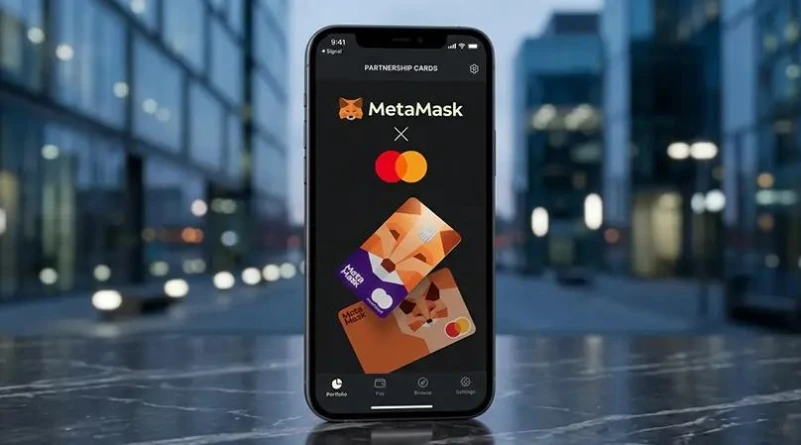
One example is the MetaMask Card, a crypto-linked debit card developed by MetaMask, the self-custody wallet platform operated by Consensys. Through its partnership with Mastercard and payment infrastructure providers the card allows eligible users to spend supported assets at merchants that accept Mastercard.
The initiative represents a development in the relationship between decentralised finance and everyday commerce. Of requiring users to leave their wallets and convert assets manually before making purchases the system is designed to handle the payment and conversion process when a transaction takes place.
The product has also moved beyond its limited pilot. MetaMask announced an United States launch in February 2026 introducing a premium metal card alongside its digital offering. Its current product platform promotes supported blockchain networks, stablecoin spending and connections with MetaMask Money Account.
The larger opportunity is not simply another cryptocurrency debit card. It is the possibility of making digital assets more practical within existing infrastructure allowing consumers to use blockchain-based balances without requiring every merchant to accept cryptocurrency directly.
- Connecting Self-Custodied Crypto With Payments
The most important feature of MetaMask Card is its connection to a self-custodied digital wallet.
Traditional crypto payment cards often require users to transfer funds to a platform or card account before spending. This can create steps and means users may need to transfer control of their assets to another service provider.
MetaMask follows an approach. Users retain control of supported assets in their MetaMask wallets until they make a payment. When a purchase is authorised the selected cryptocurrency is converted into the required currency through the cards payment infrastructure.
This allows the customer to use a card payment experience while the underlying funding source remains a digital wallet.
The model is particularly relevant to people who prefer managing their assets rather than maintaining balances with centralised exchanges. It also reduces the need to manually sell cryptocurrency every time a user wants to make a purchase.
However self-custody does not mean that the entire transaction happens independently of institutions. The card relies on payment providers, Mastercards network and regulated infrastructure to process merchant payments. In the United States MetaMasks February launch announcement identified Baanx, Monavate as the programme provider and Cross River Bank as the card issuer.
The distinction is important: the customer controls the cryptocurrency before payment. Conventional payment infrastructure is still involved in completing the purchase.
- Mastercard Acceptance Removes a Major Barrier to Everyday Use
One of the challenges facing cryptocurrency payments has been merchant acceptance.
Although blockchain networks can transfer assets between users most conventional businesses operate through established card networks, banking relationships and payment processors. Merchants generally do not want to manage cryptocurrencies, wallets and blockchain settlement systems for ordinary retail transactions.
MetaMask Card addresses this issue through Mastercards existing payment network.
According to MetaMask the card can be used at than 150 million merchant locations worldwide where Mastercard is accepted. Eligible users can pay online in stores and through supported mobile wallets such as Apple Pay and Google Pay.
This gives cryptocurrency holders access to a merchant ecosystem without requiring individual businesses to install blockchain payment systems or accept digital currencies directly.
For example a customer holding a supported stablecoin or cryptocurrency could use a MetaMask Card to make a purchase at a retail business. The transaction is processed through the card network while the cards payment infrastructure handles the conversion from the selected asset into conventional currency.
This arrangement offers a commercial advantage. Than attempting to convince millions of merchants to change their payment systems crypto payment providers can connect digital wallets to infrastructure that merchants already use.
For businesses this means the payment experience can remain familiar. For consumers it creates another way to access the value stored in assets.
The model does not mean merchants receive cryptocurrency directly. The conversion and card settlement process separates the customers funding asset from the currency used in the payment system.
- Stablecoins Could Become a Central Part of Crypto Spending
Not all digital assets are equally suitable for purchases.
Cryptocurrencies such as Bitcoin and Ether can experience price fluctuations. A consumer who plans to spend an amount may find that the value of the asset changes between the time it is held and the time it is used.
Stablecoins offer another option. These digital tokens are designed to maintain a stable value against a reference asset, commonly a national currency such as the US dollar.
MetaMask Card supports a selection of assets including mUSD, USDC and USDT alongside other supported tokens. The availability of assets depends on supported networks and product conditions.
Dollar-denominated stablecoins can make spending more predictable for users who want to maintain funds in a format without taking the same level of market-price exposure associated with more volatile cryptocurrencies.
MetaMask has also expanded this idea through its Money Account announced on June 30 2026. The self-custodial account connects balances with spending, trading and certain decentralised finance services.
The company describes mUSD as a dollar-denominated stablecoin backed one-to-one by US dollars and short-term US Treasury bills held in custody through Bridge, a Stripe company. The announcement also describes connections with finance lending protocols, including Morpho and Aave for users who choose to access variable returns.
This development suggests that crypto payment products are becoming part of a financial ecosystem. Users may increasingly expect one digital account to support holding, converting, spending and potentially earning on supported balances.
However stablecoins are not identical to bank deposits. Their reliability depends on the issuer, reserve arrangements, redemption mechanisms and applicable legal protections. Where users access yield through decentralised finance they also take on smart-contract, protocol and market risks.
- Rewards and Mobile Payments Could Encourage Adoption
Convenience is important. Consumers also compare payment products based on rewards, costs and additional benefits.
MetaMask has introduced a rewards structure intended to make its card more attractive to users who already hold assets.
According to its product information the free virtual card offers 1% back in mUSD on eligible purchases. The premium Metal option is advertised at $199 per year. Offers 3% back on the first $10,000 of annual spending followed by 1%. Other features and benefits vary by region.
The company also supports payments through wallets allowing users to make purchases without necessarily carrying a physical card.
These features bring the product closer to premium debit and rewards cards. Of receiving conventional cashback eligible customers receive rewards in a stablecoin that can remain within the MetaMask ecosystem.
That approach could encourage frequent use among existing crypto users. A customer may find it more convenient to spend assets directly than to transfer funds between wallets, exchanges and bank accounts.
However rewards must be evaluated alongside membership costs, foreign exchange arrangements, transaction limits and any applicable network fees. A premium card may not deliver value to someone whose spending volume's too low to justify its annual subscription.
The wider strategic objective is to make cryptocurrency spending part of a consumer routine. Mobile payments, familiar checkout processes and straightforward rewards could help reduce the barriers that have limited adoption.
- The Business Opportunity Extends Beyond Individual Consumers
The growth of crypto-linked payment cards could create opportunities for parts of the financial technology industry.
Wallet providers can make their products more useful by adding spending options. Payment networks can expand their exposure to assets without requiring every merchant to adopt blockchain technology. Issuers and payment infrastructure companies can develop services around card authorisation, conversion, compliance and settlement.
There is also an opportunity for stablecoin providers. When users hold stablecoins for purchases rather than simply trading them these assets become connected to practical economic activity.
For MetaMask the card can strengthen its position beyond being a wallet used for storing, transferring and interacting with digital assets. The addition of spending and money-management services creates an integrated financial product.
For Mastercard partnerships with crypto platforms provide a way to support payment sources while maintaining the existing merchant acceptance network.
The model may also have implications for travel and international spending. Digital wallets can hold supported assets across blockchain networks while card payments can be converted into local currency at checkout. However the actual cost and exchange rate depend on the payment arrangements and users should check the terms applying to their card and region.
These developments could make payment infrastructure more flexible. They also increase competition between banks, fintech companies, crypto platforms and digital wallet providers.
- Geographic Availability and Regulatory Rules Remain Barriers
Despite its international ambitions MetaMask Card is not available, to every user everywhere.
Payment products must comply with financial regulations, identity verification requirements and the rules governing card issuance and digital assets. As a result geographic access can differ when Mastercard is accepted widely.
MetaMask announced in February 2026 that it would launch in the United States and several other regions. However the current product page shows a list of countries and territories that're eligible. It also states that sign-ups in the United States are not available now. As of October 30 2026 India is not on the list of countries that're eligible.
This difference is important. Just because a merchant in a country accepts Mastercard does not mean that a person living there can get a MetaMask Card. Whether a merchant accepts a card and whether a person is eligible to get the card are issues.
Rules and regulations also affect how these products work. Companies may need to follow rules about identifying customers preventing money laundering checking against sanctions protecting consumers and following restrictions on crypto services.
Taxes are another thing to consider. In some places spending or getting rid of cryptocurrency can create an event even if the transaction looks like a normal card purchase. The rules vary depending on the country and the type of cryptocurrency.
For the industry to grow crypto payment companies will need to create compliance systems. They also need to make it clear where they are available how much it costs to make a transaction and what responsibilities users have.
Security and consumer protection will be key to building trust in the run.
Letting users keep control of their money until a payment is made is a feature but it does not remove all financial or technical risks.
Self-custody means users are responsible for keeping their wallet and private keys safe. If they lose access or their information is stolen, getting their money back can be hard or impossible depending on the situation.
Smart contracts and blockchain networks also bring risks. A transaction could involve fees, delays or other issues. The assets and networks supported can. Users must make sure they are using the right wallet and payment interface.
Card security is still important. A payment card can be lost, stolen or used without permission even if the digital assets are in a self-custodied wallet. Users need to know how card freezes disputes, unauthorized payments and refunds work.
MetaMasks announcement about the US launch mentioned features like Mastercard Zero Liability and other protections for cardholders. However the specific protections and the conditions for them depend on the card program, where the user's the type of transaction. Users should not think that every protection available with a bank-issued debit card applies the same way to a crypto-linked payment.
The balance between self-custody and consumer protection will be important for the stage of adoption. Making payments easier should not come at the cost of responsibilities or not enough safety measures.
Competition is moving toward integrated finance.
MetaMask is not the company that is linking cryptocurrencies with regular payments. Exchanges, wallet providers, stablecoin issuers and payment technology companies are all finding different ways to make digital assets usable in daily transactions.
The focus is slowly moving from letting users buy or sell cryptocurrencies to offering more financial services.
This might include payments, stablecoin accounts, international transfers, digital rewards and connections to finance.
The development of the MetaMask Money Account shows this direction. Of treating the card as a separate payment product MetaMask is linking it to a larger account system where users can hold supported stablecoins use selected services and spend through the card.
The challenge for companies will be to make these services reliable and easy to understand. People usually expect payment products to work well have pricing and offer a clear way to fix problems.
Traditional payment networks have spent years building relationships with merchants, settlement processes and customer support systems. Crypto platforms will need to meet these expectations while dealing with the complexity of blockchain technology and self-custody.
Companies that do this well may have a chance to reach customers who want access to assets without changing how they make everyday purchases.
What Happens Next?
The future of crypto-linked payment cards will depend on how well providers expand where they are available make transactions easier and keep users confident.
For MetaMask the next important steps will include making the card available to people connecting the wallet and Money Account better improving support for digital assets and expanding relationships with payment networks.
People watching the industry will also look at how stablecoinsre used beyond just trading in cryptocurrencies. More spending at stores would suggest that digital assets are becoming part of daily financial activity not just for investing or settling bets.
The important signs will be how active cardholders there are, how often they use the card how much they spend, how many merchants accept it how many customers stay and the costs of converting and processing payments.
The MetaMask Card is a step in the way cryptocurrency payments are developing. By linking self-custodied assets to Mastercards network it gives eligible users a way to spend supported cryptocurrencies and stablecoins through a familiar debit card experience.
The bigger importance is in the technology behind the product. Wallet providers, payment networks and stablecoin platforms are working together to link blockchain-based assets with traditional financial systems.
Wider acceptance will depend on more than just convenient checkout technology. Geographic limits following rules the changing value of assets costs of transactions and protecting users will continue to affect how much people adopt it.
The move is not necessarily about replacing money or card networks. Instead it shows a system where digital assets can be another way to pay within familiar payment experiences. Whether this model is used by people will depend on making it affordable, safe, clear and available, to more people.
Nexuswild welcomes factual corrections. Email contact@nexuswild.com with evidence and the article URL.