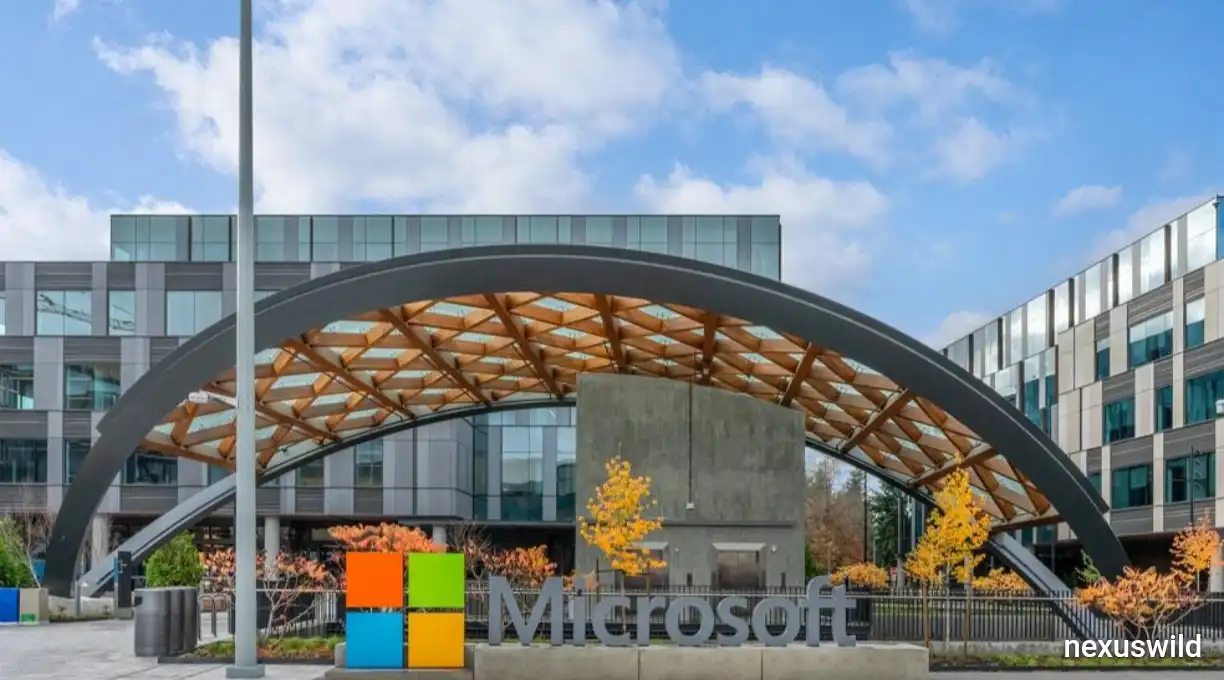

Microsoft has introduced a new Voluntary Exit Offer (VEO) for eligible employees in selected teams across the United States, the United Kingdom, Canada and India. Announced on October 26, 2026, the programme gives participating employees an opportunity to leave the company with financial support and career-planning resources. The move comes as the technology giant continues investing heavily in artificial intelligence infrastructure while reviewing how its workforce is organised.
Microsoft Chief People Officer Amy Coleman announced the programme in an employee communication subsequently published on the company’s official blog. She described the offer as a way to give employees considering opportunities outside Microsoft another option, while allowing participating business units to adapt to changing requirements.
The company has not said that all eligible employees are expected to leave. Nor has it announced a specific number of departures it hopes to achieve through the initiative.
Who is eligible for Microsoft's voluntary exit offer?
Microsoft says the offer is available to eligible employees at internal job level 70 and below in participating organisations across four countries: the United States, Canada, the United Kingdom and India.
Approximately 60,000 employees may qualify, according to reports citing people familiar with the programme and company confirmation to news organisations. That represents roughly 27% of Microsoft's 223,000 full-time employees reported as of June 30, 2026.
Eligibility does not mean that every employee in the relevant countries or job grades can participate. Microsoft has stressed that some organisations are included while others are not. Decisions depend on individual business priorities, customer commitments and workforce needs.
Reporting by Reuters identifies AI experiences, Copilot, finance, human resources, Xbox and Windows + Devices among the areas participating in the programme. Sales, commercial business, marketing, security and certain other teams have been reported as excluded, although the company has not published a complete public list of every participating team.
Employees who qualify are expected to receive individual offer details through email. Those details are important because the public announcement does not establish a single package for every worker.
What financial support will employees receive?
Microsoft's public announcement confirms that eligible employees who choose to leave will receive financial support and career-planning resources. Reports indicate that the package is expected to follow the company's standard severance arrangements.
However, Microsoft has not publicly set out a complete, universal payment formula in its announcement. Specific details, including the amount of severance, any continued benefits and the applicable departure conditions, should therefore be checked against the individual offer provided to each eligible employee.
Some media reports describe terms understood to include base pay linked to tenure and job level, continued healthcare coverage for a defined period and career-transition assistance. These details should not be treated as a guaranteed package for every eligible worker unless confirmed in their official offer.
The distinction matters because a voluntary exit programme is not the same as a blanket redundancy announcement. Employees are being offered a choice, and the final terms can determine whether leaving is financially and professionally appropriate for an individual.
Reports indicate that eligible employees will have until early December to make a decision, with departures scheduled for December 31, 2026. Employees should rely on the deadline and conditions stated in their own offer rather than assume that every country or team follows identical administrative arrangements.
Why Microsoft's AI infrastructure spending matters
The programme arrives as Microsoft commits substantial capital to the computing infrastructure needed to operate and expand AI services. The company's investor materials indicate that its calendar-year 2026 capital expenditure outlook is approximately $175 billion, following an adjustment related in part to how certain data-centre leases are accounted for.
Capital expenditure, commonly shortened to capex, covers investment in long-lived assets such as data centres, servers, networking equipment and other infrastructure. These investments are essential to providing cloud computing and AI services at scale, but they also create significant demands on cash flow and financial planning.
Microsoft's infrastructure supports its Azure cloud platform and AI-related products and services, including Copilot. Its cloud infrastructure also serves external organisations developing and running AI systems. Demand for computing capacity has therefore become a central consideration in the company's investment plans.
The scale of the spending has increased investor attention on whether AI-related revenue and productivity gains will justify the cost of building and operating the infrastructure. The voluntary exit offer adds a workforce-management dimension to that broader financial question.
Nevertheless, the available evidence does not establish that the programme was created solely to pay for AI infrastructure. Microsoft says the initiative is intended to give employees flexibility and help participating organisations adapt to changing business needs. Cost management and AI investment provide relevant context, but the company's public statement does not identify a single financial motive.
A workforce strategy built around voluntary departures
The offer follows Microsoft's earlier voluntary retirement initiative in 2026. Reporting on that programme said more than 30% of the approximately 8,750 eligible employees accepted the offer. The new programme differs in its reported scale and geographic reach, extending eligibility to selected teams across four countries and including a wider range of internal job levels.
Voluntary exits can give a company a way to adjust staffing without requiring every departure to result from an involuntary layoff. They can also give employees more control over the timing of a career change, provided the package and personal circumstances make leaving a viable choice.
The outcome is not guaranteed. Some employees may accept the offer, while others may prefer to remain at Microsoft or explore internal opportunities. The final reduction in headcount, if any, will depend on employee decisions and the company's subsequent workforce plans.
It is also important not to equate the number of eligible employees with the number of jobs being eliminated. The figure of approximately 60,000 describes the potential pool of employees who may qualify, not a confirmed count of departures.
What the programme means for employees in India
India is one of the four countries included in the offer, making the announcement relevant to Microsoft's workforce there. However, eligibility is determined by participation in specific organisations and internal job level, rather than country alone. The company has not publicly disclosed how many India-based employees qualify or how many are expected to accept.
Employees considering the offer will need to evaluate the individual financial terms, healthcare arrangements, career-transition support and their next employment options. They should also confirm any country-specific requirements directly with Microsoft's human resources team.
For employees on work visas in another country, immigration and employment consequences may require separate professional advice. The public announcement does not provide enough information to determine how the offer would affect any individual's immigration status.
What investors will be watching next
Microsoft's next quarterly results, scheduled for October 28, 2026, are likely to draw attention to its cloud performance, AI demand, capital expenditure and financial outlook. Investors may also look for further context on how the company plans to balance infrastructure expansion with operating costs.
The voluntary exit offer provides a concrete example of how a large technology company is giving selected employees another route to leave while adjusting its organisational structure. But it is too early to determine how many employees will accept, how much the programme will cost or what measurable effect it will have on operating expenses.
The central distinction is between eligibility and outcome. Microsoft has made the offer available to a reported pool of around 60,000 employees, but the actual number of departures remains unknown. The longer-term significance will depend on employee participation, the company's subsequent workforce decisions and whether its growing AI infrastructure investments generate sustainable returns.
For now, the announcement signals a broad workforce adjustment conducted through a voluntary mechanism rather than confirmation of a new mandatory mass-layoff round. Further details may emerge as eligible employees review their offers and Microsoft reports its financial results.
Nexuswild welcomes factual corrections. Email contact@nexuswild.com with evidence and the article URL.