
Oracle is expanding its artificial intelligence infrastructure through a broader mix of computing hardware, deepening its partnership with Nvidia while planning to bring Google’s Tensor Processing Units and specialist AI inference systems to Oracle Cloud Infrastructure (OCI).
The announcements, made at Oracle AI World in Las Vegas on October 27, 2026, reflect a shift in how cloud providers are building capacity for increasingly demanding AI workloads. Rather than relying on one accelerator architecture for every task, Oracle wants customers to select hardware according to their requirements for training performance, inference speed, power consumption and cost.
The expansion includes plans to scale Nvidia Vera Rubin NVL72 systems to multi-gigawatt capacity, make Nvidia Vera CPUs available on OCI, and introduce additional systems from Google, Cerebras Systems and SambaNova Systems. Several elements are future deployments rather than infrastructure already operating at the announced scale.
Nvidia partnership expands to multi-gigawatt capacity
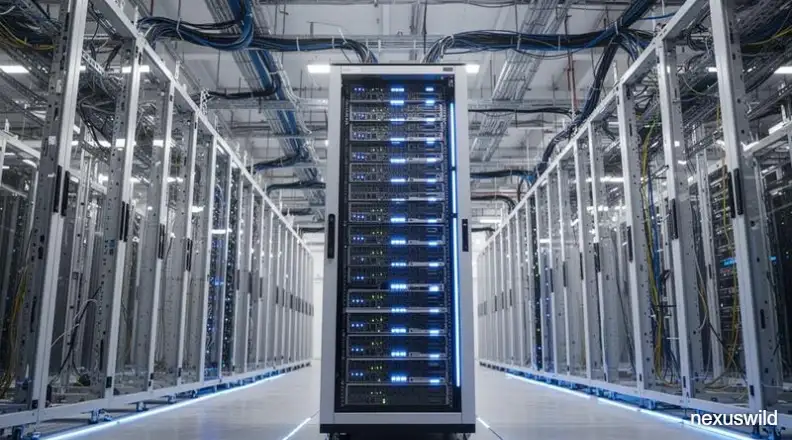
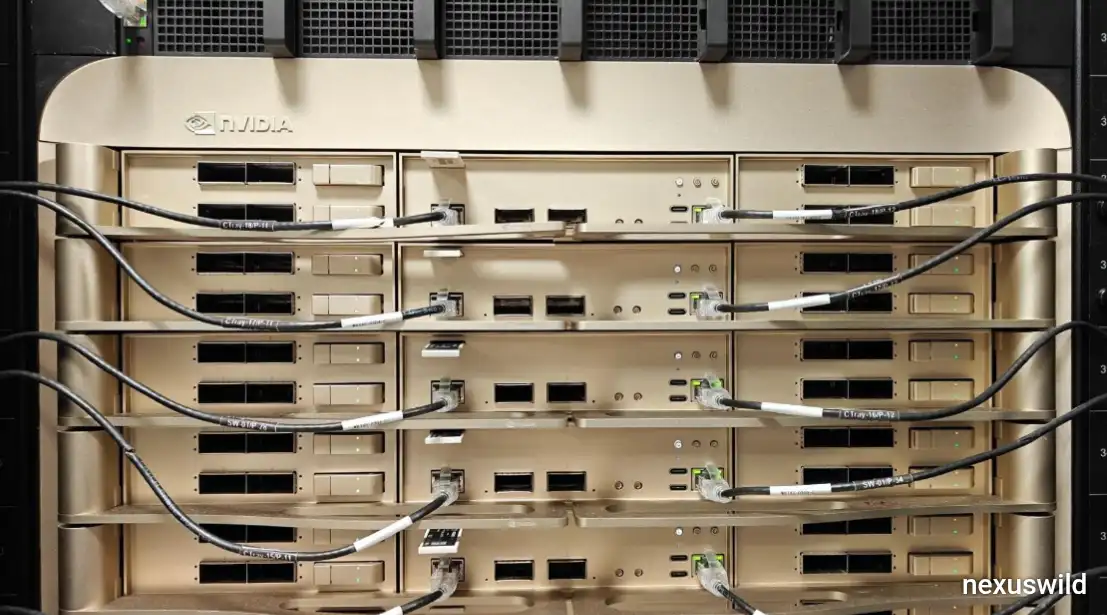
Oracle and Nvidia said they plan to expand OCI superclusters using Nvidia Vera Rubin NVL72 systems to multi-gigawatt scale. Oracle also announced general availability of Vera Rubin NVL72 systems and Nvidia Vera CPUs on OCI.
The collaboration is designed to support AI model training, inference and agentic applications. Training involves developing or adapting models, while inference is the process of using a trained model to generate responses or predictions. Agentic applications may combine repeated model calls with activities such as executing code, retrieving information and using external tools.
Those different tasks place different demands on infrastructure. GPUs are central to many large-scale AI workloads, while CPUs manage orchestration, data access and other computing tasks around model calls.
Oracle says customers will be able to scale CPU and GPU resources independently. The goal is to reduce idle capacity and improve utilisation when a workload does not need maximum GPU resources at every stage.
The companies did not disclose the financial value of the expanded agreement. Nvidia CEO Jensen Huang has previously said Vera Rubin systems could generate up to $40 billion in revenue per gigawatt for Nvidia, but that figure is a company executive’s estimate, not a disclosed value for Oracle’s deal.
Google TPUs bring another architecture to OCI
Oracle and Google also announced plans to make Google’s eighth-generation Tensor Processing Units available through OCI. The companies describe the arrangement as the first time Google TPUs will be offered through a hyperscale cloud platform outside Google.
Google’s eighth-generation portfolio includes TPU 8t, designed for training, and TPU 8i, designed for inference. Oracle plans to begin offering the hardware in calendar year 2027, with capacity expected to ramp over multiple years.
TPUs are specialised processors developed by Google for machine-learning workloads. Offering them through OCI could allow customers to access another accelerator architecture without relying exclusively on Nvidia-based infrastructure.
The commercial significance will depend on availability, software compatibility, workload performance and pricing. The announcement does not establish that TPUs will be cheaper or faster for every application, and customers will need to assess the suitability of each architecture for their own models and operating requirements.
Cerebras and SambaNova target specialised workloads
Oracle is also planning to broaden its inference options with Cerebras and SambaNova hardware.
Cerebras and Oracle announced plans to make Cerebras inference available on OCI in 2027. Cerebras uses a wafer-scale processor design that integrates compute and memory across a large silicon wafer. Its approach is intended to reduce some of the data movement and communication overhead involved in running AI models.
SambaNova SN50 systems are also planned for OCI. The company develops specialised AI systems intended to support inference and other demanding workloads.
These additions are important because AI inference is becoming a major infrastructure requirement as organisations move from experimenting with models to deploying AI services for customers and employees. Fast response times can matter for interactive applications and multi-step AI agents, where each additional model call can add latency.
However, Oracle has not established that these alternatives will outperform GPUs across all workloads. Performance and cost depend on the model, software stack, memory requirements, utilisation and the scale of deployment.
Oracle Acceleron remains part of the networking strategy
Expanding accelerator options also increases the importance of the networking that connects chips, servers and storage.
Oracle’s Acceleron is a networking platform that includes network fabrics, converged network interface cards, routing and multiple network paths. Oracle says it is extending Acceleron with additional capabilities for remote direct memory access (RDMA) connectivity and storage attachment.
In large AI clusters, network performance can affect how efficiently processors exchange data. Congestion or slow communication can leave expensive compute resources waiting for information rather than processing workloads.
Oracle’s strategy is to combine its networking capabilities with different compute architectures. That could give customers greater flexibility when building large AI systems, but actual improvements will depend on how each hardware and software configuration performs under real workloads.
Capital spending remains a major consideration
The infrastructure expansion comes as Oracle continues investing heavily in data centres and AI computing capacity. Reuters reported that Oracle maintained its fiscal 2027 capital-spending target at approximately $90 billion to $95 billion.
Such spending reflects the cost of building facilities, securing power and cooling, acquiring processors and connecting large systems. It also creates financial execution risks, particularly when new capacity takes time to become operational and generate revenue.
Oracle has said customer demand for AI cloud infrastructure is driving its investment plans. Nevertheless, the company has not disclosed the financial value of the latest Nvidia expansion, and the announcements alone do not establish how quickly each new system will contribute to revenue or profitability.
Power availability, construction timelines, supply constraints and customer demand will all influence how rapidly the planned capacity comes online.
What the expansion means for enterprise AI
Oracle’s announcements illustrate the growing diversity of the AI hardware market. Nvidia remains a central supplier of AI accelerators, while Google, Cerebras and SambaNova offer alternative architectures aimed at particular workloads.
For cloud customers, a broader hardware portfolio may create more options for balancing performance, energy use and cost. It could also help organisations avoid designing every AI application around a single type of processor.
But greater choice does not automatically remove supplier dependence or guarantee lower costs. Customers still need compatible software, reliable capacity, suitable networking and predictable pricing.
The next milestones will be the rollout of Google TPUs on OCI, the planned 2027 availability of Cerebras inference, and further details on SambaNova deployments. The scale and timing of Nvidia’s multi-gigawatt expansion will also be important indicators of how quickly Oracle can turn its plans into operating capacity.
For now, Oracle is positioning OCI as a cloud platform that can support multiple AI computing architectures. Whether that strategy creates a lasting competitive advantage will depend on real-world availability, performance, customer adoption and the economics of operating the infrastructure at scale.
Nexuswild welcomes factual corrections. Email contact@nexuswild.com with evidence and the article URL.