
Samsung Electronics reported record third-quarter revenue and operating profit on October 29, as demand for artificial intelligence memory chips continued to lift the South Korean technology giant. Yet the record results did not prevent its shares from falling during morning trading, with investors weighing the net-income shortfall and the timing of further shareholder returns.
The company posted consolidated revenue of ₩195.3 trillion and operating profit of ₩107.4 trillion for the July–September quarter. Revenue rose 126.9% from a year earlier, while operating profit surged 783.1%. Net income reached ₩75.13 trillion, up 514.6% year on year but below the average analyst forecast of ₩87.01 trillion reported by Yonhap News Agency.
Samsung became the first technology company to report quarterly operating profit exceeding ₩100 trillion, according to its announcement. The result reflects the strength of the current semiconductor cycle, but it also illustrates why investors look beyond a single headline earnings figure when assessing a company’s financial performance.
AI memory demand drives semiconductor earnings
Samsung’s Device Solutions division, which includes its semiconductor businesses, generated ₩147.1 trillion in revenue and ₩106.5 trillion in operating profit during the quarter. The division accounted for nearly all of the group’s operating profit.
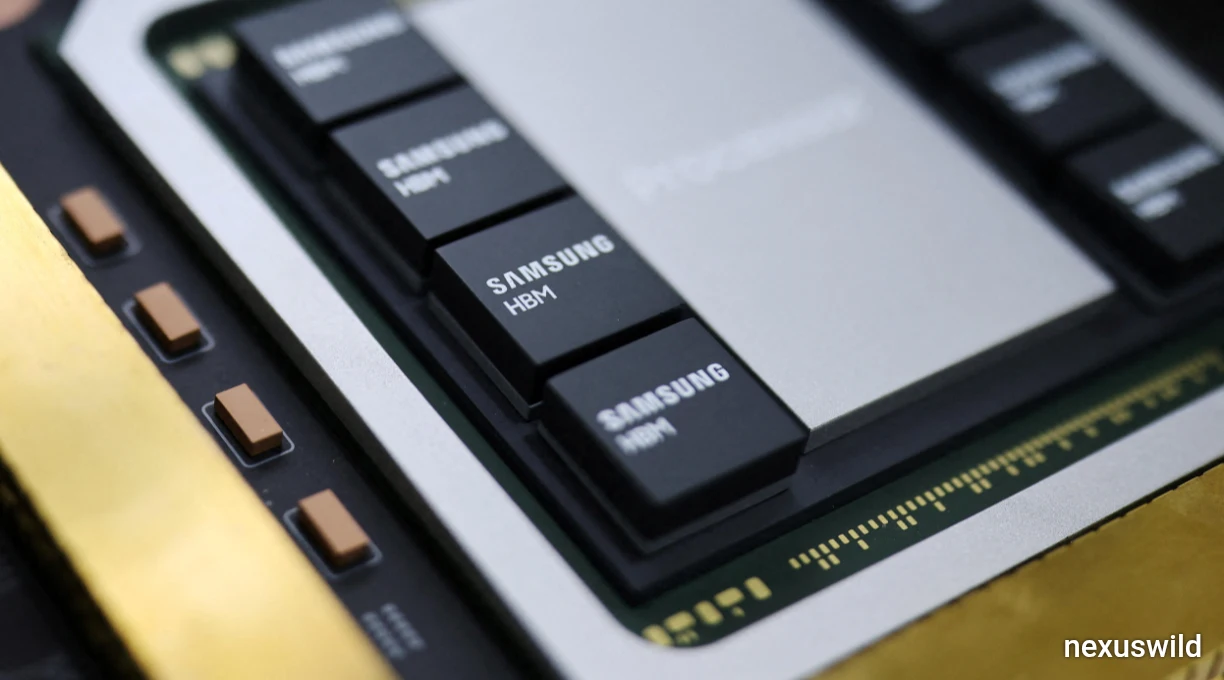
The Memory Business achieved record quarterly revenue and operating profit as strong server demand and AI-related applications supported higher memory prices. Samsung said it expanded sales of high-bandwidth memory, including HBM4, while responding to demand for server solid-state drives and other high-performance memory products.
HBM is designed to provide high-bandwidth data access for advanced processors used in AI training and inference. As cloud providers build more AI infrastructure, demand for specialised memory has become an increasingly important factor in semiconductor industry earnings.
Samsung expects investment in AI infrastructure to remain strong into 2027 and said demand for AI-related memory could outstrip industry supply. Those expectations are the company’s outlook, however, rather than a guarantee that current prices or profit margins will persist.
Other businesses face a different picture
The semiconductor division’s performance contrasted with weaker results in parts of Samsung’s broader electronics portfolio.
The Device eXperience division, which includes consumer-facing electronics businesses, recorded an operating loss of ₩0.8 trillion. Samsung said its Visual Display business faced lower revenue after major sporting events ended, while the home-appliance business was affected by higher raw-material and logistics costs.
Samsung Display reported ₩8 trillion in revenue and ₩1.1 trillion in operating profit. The mobile and network businesses reported combined revenue of ₩37.7 trillion but an operating loss of ₩0.6 trillion. These figures demonstrate that strong memory-chip earnings do not translate into equally strong results across every business line.
For investors, the concentration of profit in semiconductors creates both an opportunity and a risk. Continued demand for AI hardware can support exceptional earnings, but a change in memory prices, customer spending or the balance between supply and demand could affect profitability quickly.
Net income misses forecasts despite record operating profit
The difference between operating profit and net income was another focus of the results. Operating profit measures earnings from business operations before items such as financing costs and taxes. Net income incorporates additional expenses, income and other items, making it a broader measure of the profit attributable to the period.
Samsung’s net income of ₩75.13 trillion fell short of the analyst consensus of ₩87.01 trillion cited by Yonhap. The gap does not mean Samsung’s core operations were weak: its operating result was exceptionally strong. But the shortfall shows that the operating-profit record did not flow through into net income to the extent analysts had anticipated.
The exact contribution of individual non-operating items should be based on the company’s financial statements rather than inferred from the difference between the two totals alone.
Shareholder returns become a market focus
Investor attention also turned to Samsung’s capital-return policy. The company approved a ₩30 trillion cash dividend for the third quarter, equivalent to ₩4,601 per common share and ₩4,601 per preferred share, according to its official results release.
Samsung’s broader shareholder-return plan for 2026 is estimated at ₩90 trillion to ₩110 trillion. The company said ₩35 trillion had already been planned or completed and that the remaining ₩55 trillion to ₩75 trillion would include further dividends and a substantial share repurchase and cancellation programme.
However, the final policy, total amount and specific execution plans for the remaining funds will be determined at a board meeting scheduled for late January 2027. The company has not said that the remaining money will be cancelled or abandoned; the details are still to be finalised.
South Korean broadcaster SBS reported that Samsung shares fell around 5% during morning trading on October 29, attributing the move to disappointment over the absence of more concrete plans for the remaining shareholder returns. That is a time-specific market reaction, not a statement about the stock’s performance throughout the entire day or in later sessions.
Comparison with SK Hynix
The contrast with rival SK Hynix added context to investor expectations. SK Hynix reported third-quarter revenue of ₩104.62 trillion and operating profit of ₩83.33 trillion on October 28. It also announced an expected shareholder-return programme of approximately ₩100 trillion for 2026, including at least ₩30 trillion in cash dividends and at least ₩60 trillion in share repurchases and cancellations.
The two companies have different financial structures, investment needs and shareholder-return policies, so their announcements should not be treated as directly interchangeable. Still, the comparison highlights how investors evaluate both operating performance and the timing of capital returns during a strong semiconductor cycle.
Samsung’s results confirm that the AI memory boom is generating extraordinary earnings. The next questions are whether the company can sustain its semiconductor margins, improve performance in weaker divisions and provide a clear timetable for the remaining shareholder returns. Those factors may matter as much to investor sentiment as the latest operating-profit record.
Nexuswild welcomes factual corrections. Email contact@nexuswild.com with evidence and the article URL.