
South Korea's economy expanded faster than expected in the third quarter of 2026, driven by semiconductor exports and business investment tied to the global AI infrastructure boom. But a rare contraction in private consumption underscored how unevenly the recovery is being felt across households.
Real gross domestic product grew 1.0% from the previous quarter in the July–September period, according to preliminary data released by the Bank of Korea on October 27. The figure exceeded the 0.7% growth forecast in a Reuters poll and accelerated from the 0.6% expansion recorded in the second quarter. It was also more than three times the central bank's own August projection of 0.3% [citation:1][citation:12].
The economy grew 3.4% compared with the same period a year earlier, easing from 3.7% year-on-year growth in Q2. The latest figures suggest that South Korea's export-oriented industries remain a major source of economic momentum, even as domestic consumer spending continues to face pressure [citation:1].
Semiconductor demand supports exports and investment
The Bank of Korea identified exports and investment as the main drivers of Q3 growth. Exports rose 2.3% quarter-on-quarter, led by semiconductors, machinery and electrical equipment. Facilities investment increased 4.1%, reflecting stronger spending on machinery and semiconductor manufacturing equipment [citation:1][citation:6].
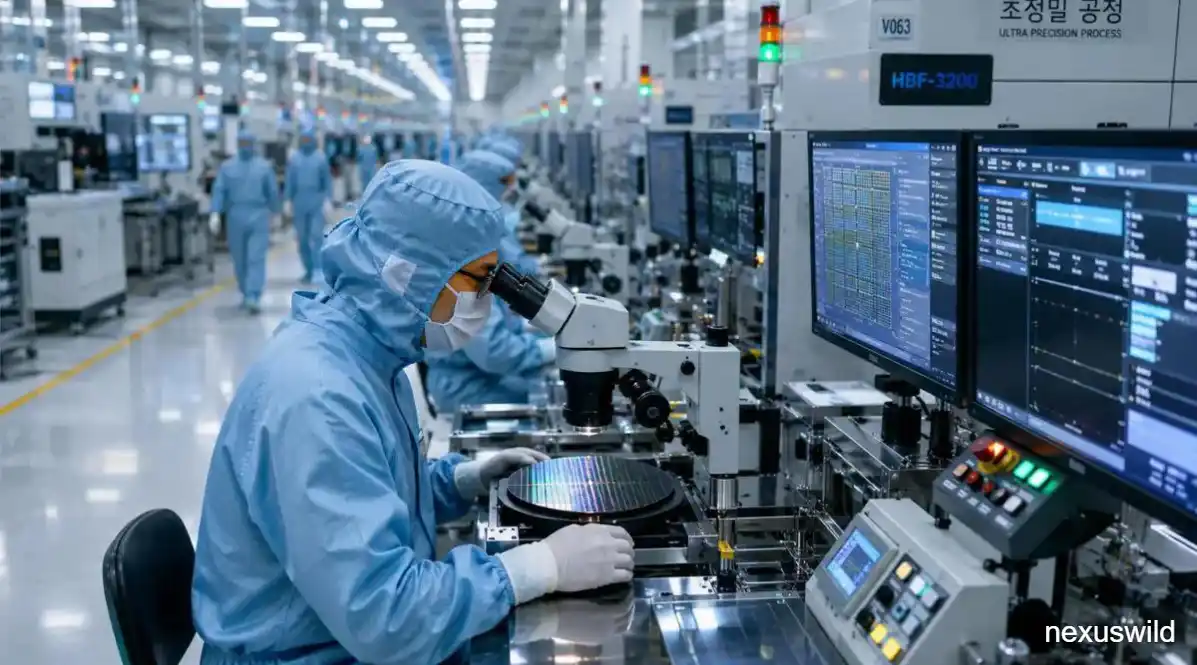
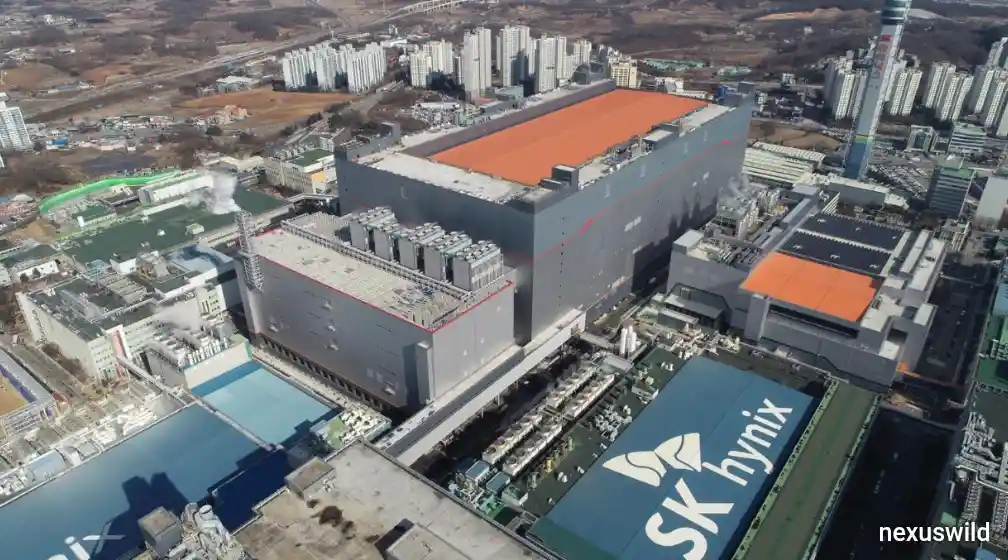
The global expansion of AI infrastructure has increased demand for advanced computing hardware and memory chips. South Korea is home to major semiconductor manufacturers, including Samsung Electronics and SK Hynix, making the industry an important channel through which global technology spending affects the country's economy.
The central bank estimated that semiconductors accounted for approximately half of economic growth in the quarter. That concentration underlines the industry's influence on the national growth outlook, while also highlighting South Korea's exposure to changes in global technology investment [citation:2].
Other components also contributed to the expansion. Government spending increased 1.9%, construction investment rose 0.7%, and investment in intellectual property products increased 2.3%, according to the Bank of Korea's preliminary figures. Manufacturing expanded 2.0%, led by computers, electronic and optical products and machinery [citation:1][citation:7].
Consumer spending remains a weak point
The stronger headline GDP result did not translate into broad-based growth across the economy. Private consumption declined 0.2% quarter-on-quarter, reversing the 0.4% increase recorded in Q2 and marking its first quarterly contraction since the fourth quarter of 2022.
The Bank of Korea attributed the decline to several factors, including reduced spending on financial services amid a stock-market correction and weaker automobile sales associated with labor strikes at major automakers. A central bank official said consumption might have increased 0.4% without those negative factors.
The weakness in household spending is significant because consumer demand is an important part of domestic economic activity. If growth depends heavily on exports and corporate investment, households may not experience the same improvement reflected in headline GDP. The Bank of Korea noted that structural headwinds, including high household debt and an aging population, continue to constrain consumption even setting aside the one-off factors.
The divergence also complicates the economic outlook. Strong semiconductor demand can support production, exports and business investment, but it does not automatically mean that households are spending more or that domestic services are experiencing a comparable recovery.
Growth outlook could improve
The stronger-than-expected Q3 result may lead the Bank of Korea to revise its economic growth projections. In August, the central bank forecast growth of 3.3% for 2026. Following the latest release, officials indicated that the annual outlook could be raised when the next forecast is published in November.
Cumulative growth during the first three quarters reached 3.6%, according to Yonhap Infomax. A Bank of Korea official said that if GDP remains unchanged in Q4 compared with Q3, annual growth could reach approximately 3.6%, and that 4% annual growth is "arithmetically possible" if fourth-quarter growth accelerates to the mid-1% range.
The central bank must also consider inflation, household credit and financial conditions. Stronger growth may reduce the urgency for monetary easing, while weak consumption and household financial pressures could argue for caution. The GDP release alone does not establish the timing or direction of a future interest-rate decision.
A strong technology cycle carries risks
South Korea's performance reflects the growing importance of semiconductor production in the global AI infrastructure cycle. Demand for memory chips, manufacturing equipment and related electronics can strengthen export revenues and encourage investment in production capacity.
However, a growth model that relies heavily on a single industry also faces risks. Semiconductor markets are cyclical, and demand can change if major technology companies reduce capital spending, if chip prices weaken or if supply expands faster than sales.
A separate report published by Reuters on October 27 said the Bank of Korea had warned that South Korean semiconductor exports could fall $50 billion to $100 billion below earlier forecasts in 2027 under a scenario in which major US technology companies slow AI infrastructure spending and chip prices decline. The central bank estimated such a scenario could reduce GDP growth by around 0.4 percentage point. This was a risk scenario, not a forecast that the decline would occur.
That warning illustrates the tension in South Korea's current outlook: the same AI-related demand supporting exports and investment also creates exposure to shifts in global technology spending.
What to watch next
The next key indicators will include Q4 export performance, semiconductor prices and shipments, corporate investment, household consumption and the Bank of Korea's updated growth projections in November.
For policymakers, the challenge will be to assess whether export-driven momentum can continue while domestic demand recovers. For businesses, the results offer evidence of continued strength in technology-related industries but do not guarantee that the current semiconductor cycle will persist.
South Korea's 1.0% quarterly GDP expansion marks a stronger-than-expected performance in Q3 2026. Yet the decline in private consumption and the economy's reliance on semiconductor-related demand show why the headline growth figure should be read as a sign of strength with important caveats, rather than evidence of a uniformly strong recovery.
Nexuswild welcomes factual corrections. Email contact@nexuswild.com with evidence and the article URL.