
NEW DELHI/WASHINGTON - The World Bank raised its growth forecast for India's current financial year, 2026-27, to 6.6%, up from the 6.3% it had projected in October 2025, according to its South Asia Economic Update released in Washington on April 8, 2026. The revision keeps India as the fastest-growing major economy in the world, even as the Bank flagged the Middle East conflict and elevated global energy prices as headwinds that will slow growth from the pace recorded in the outgoing fiscal year.
Strong Domestic Demand and Export Resilience
The report, subtitled "Working with Industrial Policy," estimates that India's economy accelerated from 7.1% growth in FY2024-25 to 7.6% in FY2025-26 (April 2025-March 2026), an estimate rather than confirmed final data, which will only be settled once India's National Statistics Office publishes its own year-end numbers. The Bank attributed that acceleration to strong domestic demand and export resilience, with private consumption growth standing out as particularly robust - supported by low inflation and the rationalisation of the Goods and Services Tax that took effect through 2025.
For FY2026-27, the year now underway, the World Bank expects growth to decelerate to 6.6% from the prior year's 7.6% pace, even as that 6.6% figure represents an upward revision from its own earlier 6.3% projection. The Bank said continued GST rate cuts should keep supporting consumer demand through the first half of the new fiscal year, while India's free trade agreements with the European Union and the United Kingdom - both of which cut tariffs and reduce trade barriers - are expected to deliver broad-based consumption and income gains, with the largest benefits flowing to consumers of manufactured goods and to rural households in particular.
Downside Pressures from Global Shocks
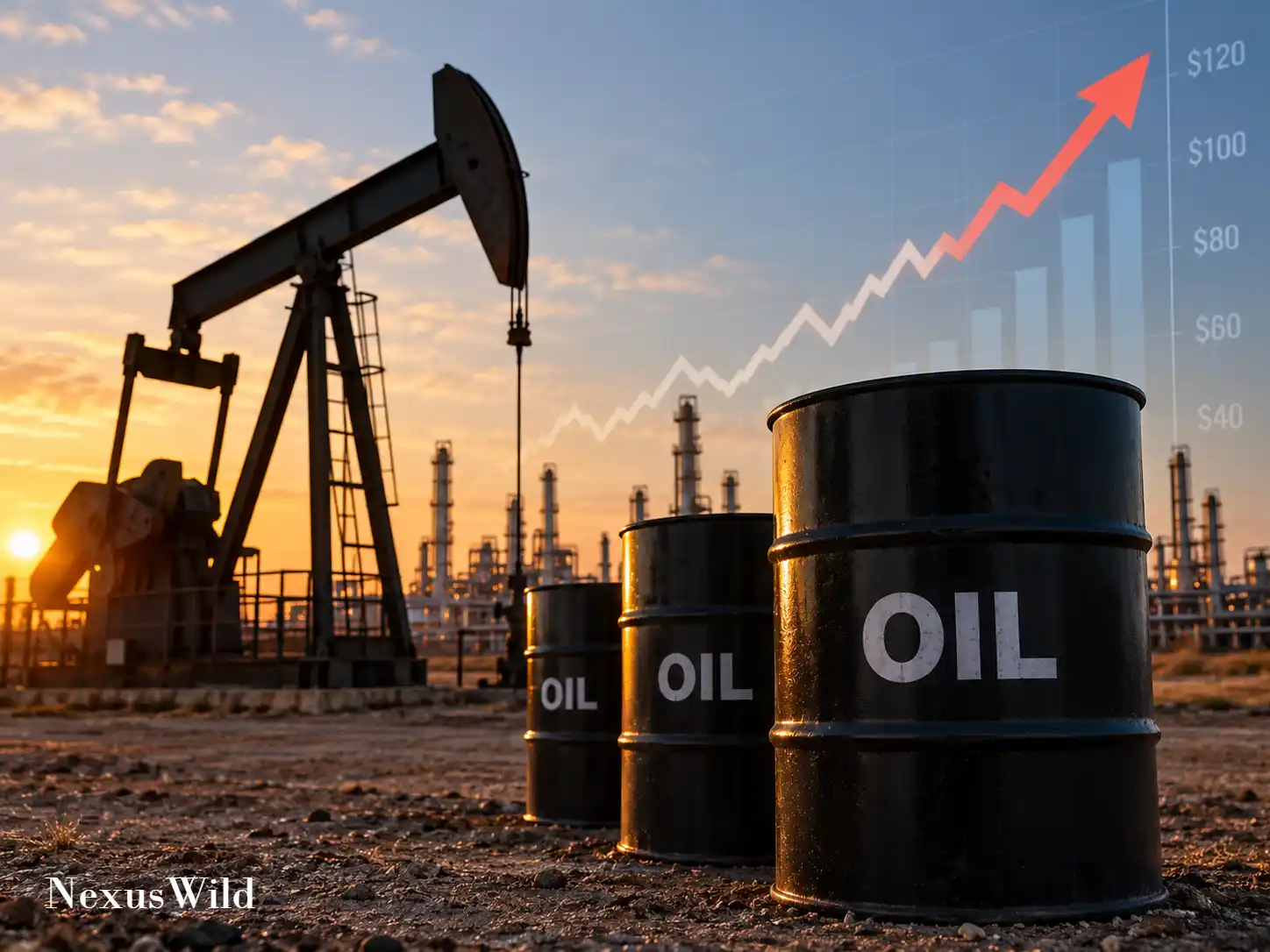
Set against that support are clear downside pressures. The Bank said elevated global energy prices, driven by the ongoing conflict in the Middle East, are expected to push up inflation and constrain households' disposable income. Government consumption growth is projected to soften as higher subsidy outlays for cooking fuel and fertiliser absorb fiscal space, and investment growth is likely to moderate amid elevated uncertainty and rising input costs.
Speaking at an event hosted by India's National Council of Applied Economic Research shortly after the report's release, World Bank economist Aurelien Kruse identified private consumption as the principal driver of Indian growth, noted that exports and investment had both stayed resilient to recent shocks, and argued that low inflation combined with prudent fiscal and monetary policy would be the key buffers against further trade disruption.
A Wider Regional Slowdown
The India-specific revision sits inside a broader regional picture that is less upbeat. The World Bank's South Asia Economic Update projects overall regional growth slowing to 6.3% in calendar year 2026, down from 7% in 2025, squarely because of the disruption to global energy markets, before recovering to 6.9% in 2027. World Bank Vice President for South Asia Johannes Zutt said the region's growth prospects remain strong despite a challenging global environment, while stressing that policy reforms on infrastructure, trade barriers and private capital mobilisation are needed to sustain growth and create jobs. Even with that regional deceleration, India remains what the report calls South Asia's principal growth engine.
Comparing Institutional Forecasts
The 6.6% figure also lands in the middle of a fairly wide range of institutional forecasts circulating for India's FY2026-27. The Reserve Bank of India's own projection stood at 6.9% at the time, more optimistic than the World Bank's. The International Monetary Fund, in its January 2026 World Economic Outlook update, had projected 6.4% growth for the same fiscal year - a touch below the World Bank's revised figure. The OECD's projection was lower still at 6.1%, and Moody's Ratings was the most conservative among major institutions at 6%. That spread reflects differing assumptions about how much the Middle East conflict and global energy prices will actually weigh on Indian household spending and investment through the rest of the year, rather than any disagreement about India's underlying growth trajectory.
Fiscal Backdrop and Trade Policy
The fiscal backdrop adds some nuance to the picture. According to the World Bank's companion India Development Update, also published in April 2026, the general government fiscal deficit narrowed from 7.7% of GDP in FY25 to 7.4% in FY26, helped by a central government that stayed on its consolidation path and strong non-tax revenue growth that offset the impact of personal income tax changes and GST rationalisation. Even so, the debt-to-GDP ratio edged up slightly, from 84.1% to 84.5%, a rise the Bank attributed to weaker nominal GDP growth following India's rebasing of its GDP series to a new 2022-23 base year in February 2026, which reduced reported nominal GDP levels.
Trade policy remains a live risk to the outlook. The effective tariff rate on Indian goods entering the United States had surged to roughly 36.2% by August 2025, up sharply from about 2.4% before April of that year, underscoring how quickly trade conditions can shift and pressure export-dependent sectors. The World Bank's India Development Update separately modelled a scenario in which an extended Middle East energy-supply disruption through the end of 2026 could pull growth down to 6.6% from what would otherwise be a 7.2% pace in the absence of conflict - illustrating just how sensitive the current forecast is to how that conflict evolves.
Implications for Businesses and Investors
For businesses and investors, the upward revision offers a measure of reassurance that India's consumption-led recovery, reinforced by GST cuts and new trade agreements, remains intact even as global conditions turn less favourable. Sectors tied to manufactured exports and rural consumption stand to benefit most directly from the FTA-driven gains the Bank highlighted. At the same time, the report's own caveats - moderating investment growth, softer government spending, and energy-price-driven inflation risk - suggest the path to 6.6% is not guaranteed, and that India's growth trajectory for the rest of FY2026-27 will depend heavily on developments well outside its own borders.
Further reading and useful links
Reader questions
Frequently asked questions
What is the World Bank's current growth forecast for India?
The World Bank projects India's economy will grow by 6.6% in the 2026-27 financial year, an upward revision from its previous 6.3% estimate.
Why did the World Bank raise India's growth forecast?
The upward revision is driven by strong domestic demand, resilient exports, low inflation, the rationalisation of the Goods and Services Tax (GST), and the anticipated benefits of new free trade agreements with the EU and UK.
What are the main risks to India's economic growth?
The primary downside risks identified by the World Bank include elevated global energy prices stemming from the Middle East conflict, moderating investment growth, and softer government consumption due to higher subsidy outlays.
Nexuswild welcomes factual corrections. Email [email protected] with evidence and the article URL.