Key Takeaways
- $58.6B Mega-Deal: The U.S. DoD has awarded Lockheed Martin a massive 7-year Undefinitized Contract Action (UCA) worth up to $58.6 billion to produce PAC-3 MSE interceptors.
- Stockpile Crisis: Active U.S. Patriot interceptor inventories fell critically below 1,000 units globally, depleted by sustained, high-intensity consumption in Ukraine and the Middle East.
- Industrial Surge: Lockheed Martin commits to an $8–$9 billion CapEx program to scale production from 600 to 2,000 interceptors annually by 2030, heavily expanding facilities in Arkansas and Alabama.
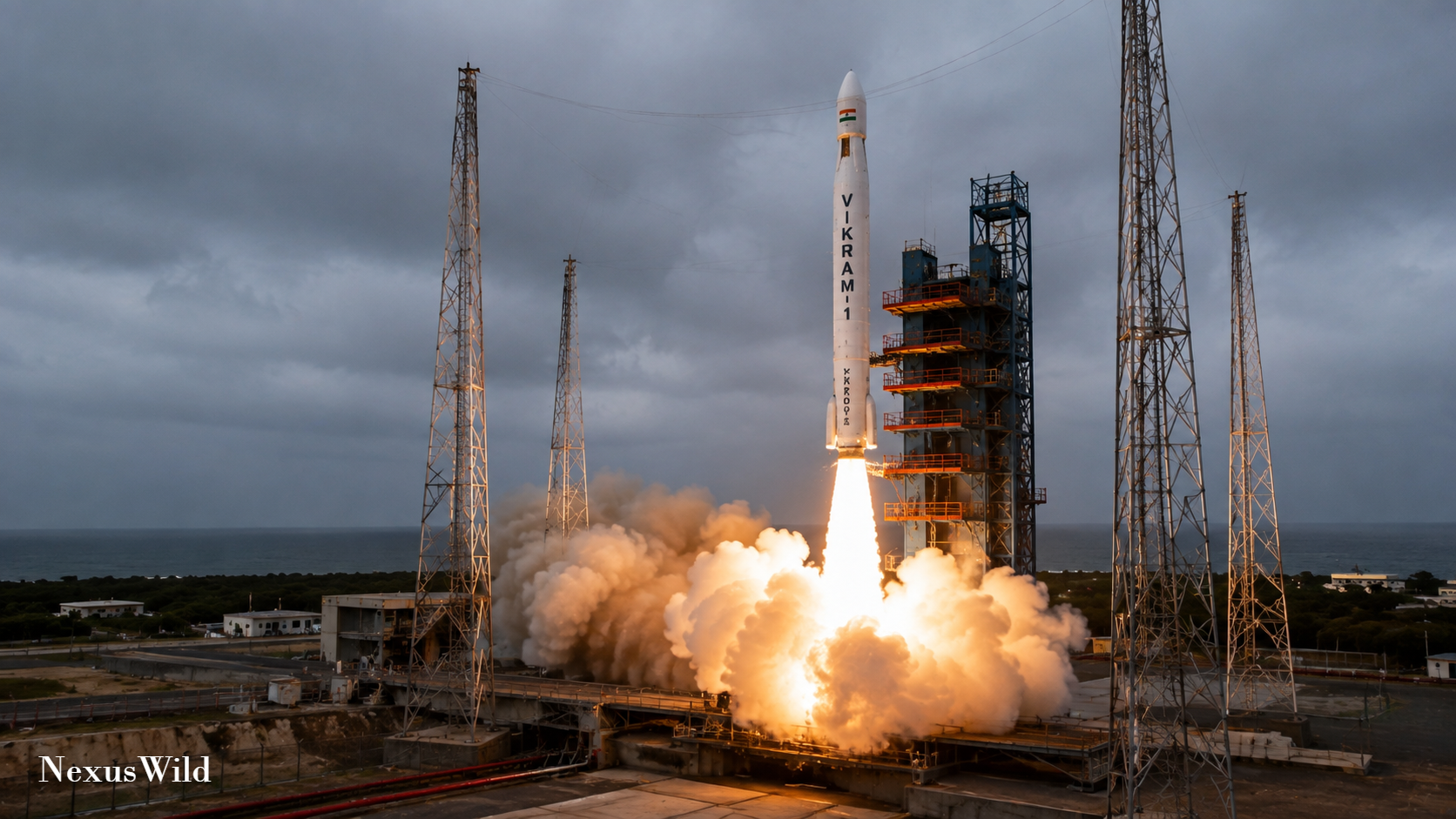
- Doctrinal Shift: Terrestrial munitions procurement now directly mirrors the "Operationally Responsive Space" (ORS) doctrine - exemplified globally by the agile, private architectures driving India's Vikram-1 launch platform.
The Strategic Realignment of the Modern Defense Industrial Base
The architecture of global security in the twenty-first century is increasingly defined not solely by the technological sophistication of deployed military assets, but by the elasticity, depth, and responsiveness of the industrial bases that manufacture them. In July 2026, the United States Department of Defense, operating through the U.S. Army, initiated a paradigm-shifting response to acute industrial vulnerability by awarding Lockheed Martin a multiyear procurement contract valued at up to $58.62 billion for the production of Patriot interceptor missiles. This agreement represents one of the most substantial and urgent munitions procurement efforts in modern military history.
Driven by the rapid and alarming depletion of critical air defense stockpiles amid high-intensity, multi-theater conflicts involving Iran and Ukraine, this mega-deal underscores a stark recognition within the American defense establishment: the peacetime optimization of defense supply chains has rendered the nation perilously exposed in the face of sustained, large-scale combat operations. For decades following the Cold War, procurement strategies prioritized low-rate, just-in-time manufacturing schedules tailored to counter-insurgency operations. The resurgence of advanced ballistic and cruise missile warfare has shattered that model, necessitating a profound transition toward long-term industrial base stimulation and "Operationally Responsive" defense architectures - both terrestrially and in the orbital domain.
This exhaustive analysis examines the multifaceted dimensions of the global industrial defense reconstitution. It explores the geopolitical catalysts driving the American missile stockpile crisis, the anatomical and financial structure of the $58.6 billion multiyear procurement agreement, and the technological nuances of the Patriot Advanced Capability-3 Missile Segment Enhancement (PAC-3 MSE) interceptor. Furthermore, it contextualizes this terrestrial munitions rush within the broader doctrinal framework of Operationally Responsive Space (ORS), contrasting the U.S. state-directed capital expenditure model with allied approaches, such as India's privatization of responsive launch capabilities via platforms like Skyroot Aerospace's Vikram-1.
The Geopolitical Catalyst: Dual-Theater Munitions Depletion
The immediate and primary impetus for the unprecedented $58.6 billion intervention is the precipitous decline in the United States' active inventory of advanced terrestrial interceptor missiles. The nature of contemporary warfare, vividly demonstrated across simultaneous theaters in Eastern Europe and the Middle East, demands a continuous, voluminous expenditure of integrated air and missile defense (IAMD) assets that far outpaces legacy manufacturing rates.
Expenditure Rates in Ukraine and the Middle East
The conflicts involving Ukraine and Iran have served as live-fire proving grounds for Western defense systems, simultaneously acting as massive, unsustainable munitions sinks. In Ukraine, the defense of critical national infrastructure and dense population centers against a relentless, multi-axis barrage of Russian ballistic, hypersonic, and cruise missiles has required the continuous supply and expenditure of Patriot interceptors. The United States has diverted significant quantities of its own munitions reserves to sustain the Ukrainian Armed Forces, establishing a severe baseline drain on existing national stockpiles.
Concurrently, military operations involving Iran have drastically intensified the consumption of these critical, high-end assets. The force protection of U.S. military personnel stationed across the Gulf, alongside the defense of strategic regional allies who rely on the Patriot system, has necessitated the active, daily deployment and firing of PAC-3 MSE interceptors against complex aerial threats. Iran's strategic reliance on asymmetric drone swarms, long-range precision fires, and theater ballistic missile salvos has forced U.S. and allied air defense batteries to utilize their interceptors at rates that eclipse the peacetime output of the entire domestic manufacturing base.
The Quantitative Reality of the Strategic Inventory Crisis
The expenditure rates observed across these dual theaters have brought the U.S. military to a highly precarious juncture regarding its strategic reserves. According to July 2026 assessments published by the Washington-based Center for Strategic and International Studies (CSIS), the U.S. military inventory possessed fewer than 1,000 Patriot interceptor missiles on hand globally. Furthermore, the inventory of the higher-tier Terminal High Altitude Area Defense (THAAD) interceptors - which operate at higher altitudes to form the upper layer of the U.S. ballistic missile defense architecture - stood at fewer than 250 units.
These figures illustrate a critical, mathematical vulnerability in national defense planning. In modern air defense doctrine, particularly against high-velocity ballistic threats, interceptors are frequently fired in tandem or multiples (often referred to as a "shoot-shoot" or "shoot-look-shoot" doctrine) to maximize the probability of kill and guarantee the negation of the incoming threat. Consequently, a physical inventory of fewer than 1,000 Patriot interceptors does not equate to the capability to intercept 1,000 separate targets; the actual defensive capacity is significantly lower. In the context of preparations for a potential, larger-scale conflict with a near-peer adversary - such as a contingency involving China in the Indo-Pacific - an inventory of this constrained size could theoretically be exhausted within the initial weeks of a high-intensity engagement.
Diplomatic Friction and the Zero-Sum Game of Alliance Defense
With fewer than 1,000 Patriot interceptors remaining in the active inventory, the Pentagon has been forced to make agonizing strategic choices regarding global asset allocation, turning defense logistics into a zero-sum game of diplomatic prioritization. The paramount priority has been the immediate force protection of United States military personnel deployed across the Middle East and the defense of Gulf states that have integrated into the regional security architecture countering Iranian influence.
This strict regional prioritization has resulted in acute disruptions to other long-standing partners and allies. Most notably, the United States was forced to halt and severely delay crucial deliveries of Patriot interceptors to Ukraine, leaving the besieged nation highly vulnerable to ongoing Russian ballistic missile offensives. Furthermore, the production backlog has deeply affected non-belligerent allies awaiting previously finalized, sovereign arms sales. Deliveries of Patriot interceptors to the government of Switzerland, for example, have been formally postponed until the year 2032. Such extended delays inherently undermine the reliability of the United States as the primary underwriter of allied security and risk pushing partners to seek alternative, potentially non-Western, defense systems. By absorbing global supply to meet immediate operational needs, the Pentagon is buying time to rebuild the industrial base, but it is incurring severe diplomatic debt in the process.
Structural Anatomy of the $58.6 Billion Patriot Framework
To rectify the glaring and dangerous discrepancy between global consumption and domestic production, the U.S. Department of Defense invoked its Acquisition Transformation Strategy, an initiative explicitly designed to accelerate the procurement of critical munitions through massive, long-term contracting mechanisms.
Transitioning from Annual Appropriations to Multiyear Signals
Historically, defense contractors operating in a peacetime environment have been highly reluctant to invest heavily in facility expansion, tooling, or workforce growth based solely on single-year procurement contracts. The inherent volatility of the annual congressional budgeting and appropriations process introduces an unacceptable degree of financial risk; a production line expanded at great cost in one fiscal year might sit idle the next if funding is suddenly reallocated to different defense priorities.
The Lockheed Martin agreement fundamentally alters this dynamic by establishing a guaranteed financial horizon. By finalizing a multiyear procurement framework extending from fiscal year 2026 to 2032, the U.S. Army is providing what Michael P. Duffey, the U.S. Under Secretary of Defense for Acquisition and Sustainment, terms as "long-term demand signals". This structural shift guarantees a sustained, high-volume baseline of purchasing over a seven-year period, effectively mitigating the financial risk for the primary contractor and its vast, highly complex network of sub-tier component suppliers.
The Mechanics of the Undefinitized Contract Action (UCA)
The sheer urgency of the geopolitical situation dictated the specific legal mechanism used to execute the deal. The Lockheed Martin award converts a previous one-year contract action worth $4.7 billion - initially awarded in April 2026 - into a sprawling seven-year draft agreement. The bulk of this expansion is legally framed as a seven-year undefinitized contract action (UCA) modification worth up to $53.86 billion.
In federal defense procurement, a UCA is a specialized mechanism that allows the government to authorize a contractor to immediately begin work, scale operations, and incur binding financial costs before the final, granular terms, exact specifications, and definitive unit prices of the contract have been fully negotiated and formalized. This tool is specifically utilized when the operational demand from the warfighter is so urgent that the military simply cannot afford the months or years typically required to finalize a contract of this magnitude. While the $58.6 billion agreement represents a draft arrangement - with exact delivery schedules, final contract values, and specific production quantities still subject to ongoing negotiation - the UCA provides immediate legal and financial authorization for Lockheed Martin to initiate massive industrial scaling without waiting for bureaucratic finality.
| Contractual Parameter | Specification / Detail |
|---|---|
| Total Potential Contract Value | Up to $58.62 billion |
| Primary Defense Contractor | Lockheed Martin |
| Core Munition Procured | PAC-3 Missile Segment Enhancement (MSE) |
| Multiyear Framework Duration | 7 Years (Fiscal Years 2026 through 2032) |
| Initial Seed Contract Award | $4.7 billion (Awarded April 2026) |
| Undefinitized Contract Action (UCA) | Up to $53.86 billion modification |
| Primary Final Assembly Location | Camden, Arkansas, United States |
| Target Interceptor Volume | Over 10,000 units expected across the contract lifespan |
Industrial Reconstitution: Capital Expenditure and Labor Economics
The ultimate objective of the $58.6 billion agreement lies not merely in the purchasing of existing off-the-shelf missiles, but in the physical, logistical, and geographical reconstruction of the American defense industrial base. The mandate is to aggressively scale up manufacturing throughput to volume levels not seen since the height of the Cold War.
Scaling Throughput to 2,000 Interceptors Annually
Prior to the formalization of this UCA framework, Lockheed Martin's production capacity for the PAC-3 interceptor hovered at a baseline of approximately 600 units annually. Given the extreme expenditure rates observed in the Middle East and Eastern Europe, this output was mathematically incapable of both supplying active conflict zones and replenishing deeply depleted domestic reserves. Under the new seven-year framework, Lockheed Martin has committed to an unprecedented manufacturing surge, aiming to more than triple its manufacturing capacity to achieve a stabilized production rate of 2,000 PAC-3 MSE interceptors per year by the end of 2030.
This monumental scaling requires highly synchronized expansion across the entire aerospace supply chain. It is not sufficient to simply expand the footprint of the final assembly plant; the disparate suppliers of highly volatile solid rocket motors, advanced terminal guidance systems, aerodynamic control surfaces, and lethal warheads must also symmetrically increase their output to prevent critical bottlenecks. The defense supply chain is notoriously brittle, heavily reliant on highly specialized, single-source providers for complex components, making the "long-term demand signal" essential for ensuring that sub-tier suppliers can confidently secure the necessary commercial financing to expand their own proprietary operations.
The $9 Billion Capital Expenditure Program and Regional Job Creation
To meet the ambitious contractual target of 2,000 interceptors annually, Lockheed Martin is undertaking a massive internal capital expenditure (CapEx) program. The defense giant has announced formalized plans to invest between $8 billion and $9 billion of its own capital by 2030 to comprehensively modernize and expand more than 20 distinct manufacturing facilities distributed across the United States. This vast investment footprint heavily targets the American South, with significant new ammunition and interceptor production centers slated for construction in Alabama and Arkansas.
The epicenter of this industrial revitalization is the PAC-3 final assembly facility located in Camden, Arkansas. The multi-billion dollar contract is projected to have a profound, transformative socioeconomic impact on the local and regional economy. Lockheed Martin intends to aggressively increase the workforce at the Camden site by approximately 50 percent, expanding from the current established baseline of roughly 1,200 employees to an estimated 1,850 skilled personnel. This influx of highly skilled manufacturing, aerospace engineering, and quality assurance jobs represents a direct, tangible translation of national security policy into local economic development, vividly demonstrating the symbiotic relationship between federal defense procurement and the vitality of the domestic industrial economy.
| Industrial Base Scaling Metrics | Current Baseline (approx.) | 2030 Target | Percentage Increase |
|---|---|---|---|
| Annual Interceptor Production Rate | 600 units | 2,000 units | +233% |
| Camden, AR Facility Workforce | 1,200 employees | 1,850 employees | +54% |
| Lockheed Martin Capital Investment | N/A | $8.0 - $9.0 Billion | N/A |
Technological Imperatives: Kinematics, Cost-Exchange, and Strategic Tiering
Comprehending the staggering financial magnitude of the $58.6 billion deal requires an exacting examination of the specific technology being procured. The funding is primarily allocated for the Patriot Advanced Capability-3 Missile Segment Enhancement (PAC-3 MSE), currently the most advanced and lethal variant in the storied Patriot family of interceptors.
The Evolution of Hit-to-Kill Engineering
Unlike legacy air defense missiles that rely predominantly on blast-fragmentation warheads - which detonate in the immediate vicinity of a target to destroy it with a cloud of high-velocity shrapnel - the PAC-3 MSE utilizes highly advanced "hit-to-kill" technology. This engineering paradigm requires the interceptor to physically collide body-to-body with the incoming threat at extreme hypersonic speeds, relying entirely on sheer kinetic energy to obliterate the target.
Hit-to-kill technology is deemed absolutely essential for neutralizing modern theater ballistic missiles, particularly those carrying weapons of mass destruction or advanced, hardened conventional payloads. A proximity blast from a fragmentation warhead may only alter a ballistic missile's trajectory slightly or fail to fully destroy its hardened payload, allowing lethal debris or the intact warhead to still strike the defended metropolitan area or military installation. The MSE variant introduces a larger, highly efficient dual-pulse solid rocket motor, enlarged aerodynamic control fins, and upgraded thermal actuators, significantly extending the missile's slant range and operational altitude compared to earlier PAC-3 variants, allowing it to counter advanced, highly maneuverable airborne threats.
The Cost-Exchange Dilemma in Asymmetric Warfare
The advanced kinetic engineering, highly sensitive radar seekers, and complex thermal materials required for hit-to-kill precision dictate an exceptionally high unit cost. While the massive multiyear UCA - which includes the procurement of more than 10,000 interceptors over its lifespan - is expected to yield vital economies of scale that will slightly reduce the unit price, each PAC-3 MSE interceptor will still cost the U.S. government at least $4 million.
This high unit cost introduces a severe, arguably unsustainable challenge in the cost-exchange ratio of modern asymmetric warfare. Adversaries utilizing mass-produced, low-cost autonomous kamikaze drones or unsophisticated, off-the-shelf cruise missiles can intentionally force the expenditure of multi-million-dollar interceptors to protect vital national assets. For stark comparison, international alternatives such as the David's Sling interceptor, produced by Israel's Rafael Advanced Defense Systems, cost approximately $1 million per unit. While the PAC-3 MSE offers unparalleled, combat-proven capability against high-end ballistic threats, utilizing a $4 million asset against a $20,000 drone represents a massive economic drain on the defending nation.
Strategic Tiering: Resurrecting the Legacy PAC-2
To address the profound economic inefficiency of using a $4 million PAC-3 MSE against cheaper, lower-tier threats, the Pentagon has simultaneously engaged in the strategic tiering of its air defense assets. In direct conjunction with the Lockheed Martin mega-deal, the Defense Department initiated a targeted $441 million purchase order for older, legacy PAC-2 Patriot interceptors from defense contractor Raytheon.
Remarkably, this represents the first such purchase of the legacy PAC-2 system by the U.S. military in 30 years. The older PAC-2 interceptors utilize traditional blast-fragmentation warheads and were primarily designed during the late Cold War to counter enemy fighter aircraft and larger drones rather than sophisticated, high-velocity ballistic missiles. Because they are significantly less expensive and faster to mass-produce than the highly complex PAC-3 MSE, the U.S. strategy involves returning these older munitions to active frontline inventories. This procurement creates a tiered, layered defense architecture wherein the cheaper PAC-2s can be deployed effectively against drone swarms and conventional aircraft, explicitly preserving the highly advanced, $4 million PAC-3 MSE interceptors for their strictly intended purpose: defending against complex ballistic missile threats.
| Interceptor System | Manufacturer | Warhead Mechanism | Estimated Unit Cost | Primary Target Profile |
|---|---|---|---|---|
| PAC-3 MSE | Lockheed Martin | Hit-to-Kill (Kinetic) | ~$4.0 Million | Advanced Ballistic Missiles, Cruise Missiles |
| David's Sling | Rafael (Israel) | Hit-to-Kill (Kinetic) | ~$1.0 Million | Tactical Ballistic Missiles, Large Rockets |
| Legacy PAC-2 | Raytheon (RTX) | Blast-Fragmentation | <$4.0 Million | Aircraft, Drones, Legacy Cruise Missiles |
Executive Directives and the Political Economy of Defense Production
The execution of a $58.6 billion multiyear procurement agreement does not occur in a political vacuum. The immense scale and sheer urgency of this contract are intrinsically linked to shifting political doctrines regarding the fundamental obligations of defense contractors and the increasingly assertive role of the state in directing national industrial capacity.
The Transition to a Quasi-War Economy
The U.S. government's approach to managing the defense industrial base has grown markedly aggressive. The realization that missile inventories were dangerously depleted by sustained military support for allies prompted a broader, overarching Pentagon strategy to establish long-term, high-volume procurement agreements across the entire defense sector, moving the industrial base closer to a quasi-war economy footing. The Patriot missile deal is not an isolated incident; it mirrors similar framework agreements implemented across other munition categories. For example, the administration reached a highly similar framework agreement earlier in 2026 with RTX (formerly Raytheon Technologies) to drastically increase the annual production of Tomahawk cruise missiles from a baseline of roughly 60 units to a long-term strategic goal of 1,000 missiles per year.
Executive Orders and the Reprioritization of Shareholder Returns
This massive industrial mobilization has been accompanied by intense, direct political pressure on the corporate governance of major defense contractors. The administration of President Donald Trump steadily intensified pressure on defense firms to definitively prioritize national security production requirements over standard corporate financial engineering, such as excessive shareholder payouts and stock buybacks.
In a highly notable escalation of state involvement in defense industry operations, President Trump signed an executive order in January 2026 directing federal officials to actively identify, scrutinize, and potentially penalize contractors deemed to be underperforming on government delivery schedules while simultaneously continuing to distribute robust profits and dividends to shareholders. This executive action fundamentally altered the risk calculus for aerospace defense executives, compelling them to rapidly reinvest profits into capital expenditures, capacity expansion, and supply chain resilience rather than focusing solely on quarterly financial returns. Lockheed Martin's massive $8 to $9 billion CapEx commitment must be viewed precisely through this lens of intense executive branch pressure and the implicit threat of regulatory or contractual retaliation against underperforming entities.
The Fragility of Congressional Dependency
Despite the unprecedented size of the U.S. Army's UCA commitment and the executive branch's highly aggressive push for production, the ultimate realization of the $58.6 billion expansion remains inexorably tethered to legislative realities. Defense industry executives, while publicly welcoming the long-term procurement strategy and the promise of stable demand signals, have consistently and firmly cautioned that full-scale production expansion is ultimately contingent upon actual congressional funding approvals.
A multiyear UCA provides a robust framework, but the U.S. Constitution strictly reserves the power of the purse for Congress. If future legislative sessions fail to formally appropriate the necessary funds, or if budget caps are imposed due to broader macroeconomic crises or partisan political disputes, the promised capital investments could stall indefinitely. Industry leaders have explicitly noted that long-term manufacturing targets, such as the 2030 goal of producing 2,000 interceptors per year, could face severe, cascading delays if budget allocations or component availability fall short of the high expectations laid out in the July 2026 framework. The fragility of this arrangement highlights the enduring tension between necessary long-term industrial planning for national security and the short-term, highly volatile realities of the American political and budgetary cycle.
Doctrinal Convergence: Operationally Responsive Space (ORS) as the Blueprint for Terrestrial Resiliency
To fully comprehend the strategic trajectory of the $58.6 billion Patriot procurement, one must look beyond terrestrial missile defense and examine the doctrinal shifts occurring in parallel warfighting domains, specifically the orbital realm. The underlying themes of the current munitions crisis - stockpile depletion, highly specialized industrial bottlenecks, and the urgent need for rapidly scalable manufacturing - are driving systemic changes that perfectly mirror the evolutionary concepts established by the Operationally Responsive Space (ORS) doctrine.
The strategic goal is to ensure that the critical interval between the expenditure or destruction of an asset and its physical replacement is systematically compressed from years down to months, weeks, or even days.
- ORS Doctrine & Munitions Reconstitution
The Origins of Responsive Doctrine
The concept of Operationally Responsive Space was formally initiated by the U.S. Department of Defense in 2003 and aggressively mandated by Congress in the 2007 National Defense Authorization Act (NDAA). The catalyst for ORS in the space domain was remarkably similar to the catalyst for the 2026 Patriot deal: a sudden realization of acute vulnerability. Following China's successful anti-satellite (ASAT) test in 2007, U.S. policymakers, including Senator Jon Kyl, recognized that highly integrated, multi-billion-dollar exquisite satellite assets could be destroyed in minutes, and the existing industrial base would require years to replace them.
The ORS mandate directed the DoD to develop the capability to rapidly reconstitute lost space assets, augment existing capabilities, and deploy new technical innovations in response to urgent combatant commander needs. It demanded a shift away from bespoke, highly tailored platforms toward simple, robust systems built to common technical standards, utilizing low-cost launch vehicles and standardized, modular "plug-and-play" buses.
Translating ORS to Terrestrial Procurement
The $58.6 billion Patriot deal represents the translation of the ORS doctrine to terrestrial missile defense. Just as the Space Force recognized that it could not wait years to replace a destroyed satellite, the U.S. Army recognized it could not wait years to replace a fired Patriot missile.
The ORS doctrine's emphasis on rapid capability delivery has evolved into the Tactically Responsive Space (TacRS) initiative, which aims to launch a fully capable space asset within 24 hours of notice. This requires having satellites pre-built in storage, utilizing modular commercial-off-the-shelf (COTS) components to lower costs, and maintaining launchers in a state of high readiness. Recent private sector achievements, such as Firefly's "Victus Nox" mission, which demonstrated a highly responsive 27-hour integration and launch turnaround, prove that these aggressive timelines are achievable when industry is properly incentivized and barriers are removed.
The transition from ad-hoc, slow-rate Patriot ordering to a seven-year, $58.6 billion guaranteed pipeline is the terrestrial equivalent of establishing an operationally responsive industrial base. The core objective in both domains is identical: resilience. The strategic goal is to ensure that the critical interval between the expenditure or destruction of an asset (whether it is a reconnaissance satellite destroyed in orbit or a Patriot missile fired at an Iranian ballistic threat) and its physical replacement is systematically compressed from years down to months, weeks, or even days. The massive CapEx commitment by Lockheed Martin to modernize 20 facilities is the physical manifestation of building this responsive capacity - ensuring that the industrial base can surge on demand, much like an ORS launch system.
The Global Paradigm: Allied Commercial Shifts and Responsive Architectures (The Indian Model)
While the United States is primarily relying on massive federal capital injections and executive pressure to rapidly scale its established defense prime contractors (Lockheed Martin, RTX) to achieve responsive capabilities, allied nations are adopting highly innovative, parallel strategies to achieve similar operationally responsive architectures. Examining India's recent strategic shifts in the orbital launch sector provides a vital comparative lens for understanding how nations globally are restructuring their public-private ecosystems to handle the demands of rapid capability deployment.
Privatizing the Responsive Capability: The Vikram-1 Milestone
On July 18, 2026, the global push for responsive architectures achieved a historic milestone when Skyroot Aerospace successfully launched the Vikram-1 rocket from the Satish Dhawan Space Centre in Sriharikota, India. Named after Dr. Vikram Sarabhai, the father of the Indian space program, Vikram-1 is India's first privately developed orbital-class launch vehicle, and its maiden flight - dubbed "Mission Aagaman" (Arrival) - successfully placed six miniaturized payloads into a 450-kilometer Low Earth Orbit (LEO). This achievement made India only the third country in the world, after the United States and China, to possess a private company capable of independently reaching orbit.
Vikram-1 represents the exact embodiment of the Operationally Responsive Space doctrine realized through private commercial innovation. It is an expendable, four-stage small-lift launch vehicle standing approximately 24 meters tall with a diameter of 1.7 meters. Utilizing an all-carbon composite airframe to drastically reduce structural weight, it features three solid-propellant lower stages (Kalam motors) and a highly precise, 3D-printed liquid-fueled fourth kick stage (Raman-I engine).
Crucially, Skyroot advertises Vikram-1 specifically as a responsive launch system. It is capable of delivering payloads of up to 350 kg to LEO and 260 kg to Sun-Synchronous Orbit (SSO) with a launch turnaround time as low as 24 hours from arrival at the pad, utilizing mobile launch infrastructure and modular avionics.
Strategic Division of Labor: Freeing the State Apparatus
The significance of Vikram-1 extends far beyond commercial success; it validates a profound structural shift in Indian state policy that closely mirrors the U.S. desire to restructure industrial burdens. Through the implementation of the Indian Space Policy 2023 and the establishment of IN-SPACe (the single-window regulator for private space activities), the Indian government intentionally liberalized the sector to transition from a purely state-led model dominated by the Indian Space Research Organisation (ISRO) to a robust public-private partnership.
This policy shift, much like the U.S. Pentagon's long-term UCA frameworks, is designed to create strategic independence and industrial depth. By actively fostering a private sector capable of handling low-margin, high-frequency commercial and small satellite tasks - even transferring the technology of ISRO's Small Satellite Launch Vehicle (SSLV) to Hindustan Aeronautics Limited (HAL) and the private sector in 2026 - the state frees ISRO from the burden of routine operational launches. This deliberate division of labor allows the national space agency to pivot its highly specialized personnel and vast resources exclusively toward high-stakes, cutting-edge endeavors, such as the Gaganyaan crewed spaceflights, deep-space exploration, and the construction of an independent space station by 2035.
| Strategic Reconstitution Models | United States (Terrestrial Defense) | India (Orbital Launch) |
|---|---|---|
| Primary Catalyst | Munitions depletion (Iran, Ukraine) | Global launch bottleneck, commercial demand |
| Mechanisms of Scaling | $58.6B UCA, Executive Orders, CapEx | Policy 2023, IN-SPACe, Tech Transfer (SSLV) |
| Responsive Target | Surge production (2,000 Patriots/yr) | 24-hr launch readiness (Vikram-1) |
| Role of the State | Directing prime contractors (Lockheed) | Regulating and supporting private startups (Skyroot) |
| Strategic Outcome | Deepened munitions stockpiles | ISRO pivots to deep space (Gaganyaan) |
Synthesis and Strategic Outlook
The $58.6 billion contract awarded to Lockheed Martin for the Patriot Advanced Capability-3 Missile Segment Enhancement represents far more than a standard, cyclical defense transaction. It serves as a definitive, unignorable acknowledgment by the United States defense establishment that the post-Cold War era of minimal strategic stockpiles and highly optimized, low-throughput supply chains has definitively ended. Driven to the absolute brink by the simultaneous, voracious demands of the conflicts in Iran and Ukraine - which reduced vital strategic inventories of Patriot and THAAD interceptors to dangerously low, mathematically vulnerable levels - the Pentagon has aggressively utilized the undefinitized contract action framework to rapidly force the expansion of the domestic defense industrial base.
By guaranteeing a long-term demand signal stretching through 2032, the U.S. government has mandated and financially incentivized Lockheed Martin and its vast network of sub-tier suppliers to fundamentally recapitalize their aging manufacturing infrastructure. The ambitious goal of tripling production to 2,000 interceptor units annually by 2030, supported by an immense $8 to $9 billion in private capital expenditures and localized workforce expansions in regions like Camden, Arkansas, aims to permanently restore the strategic depth necessary to deter near-peer adversaries while simultaneously sustaining current, high-intensity operational deployments globally.
Furthermore, this terrestrial industrial scaling perfectly mirrors the doctrinal mandates established in the orbital domain by Operationally Responsive Space (ORS), proving that the requirement for modular, high-volume, rapid-deployment architecture is now a universal prerequisite across all warfighting domains. Just as allied nations like India are successfully leveraging private enterprise (e.g., Skyroot's Vikram-1) to achieve 24-hour responsive launch capabilities and relieve the operational burden on state agencies, the United States is restructuring its relationship with defense primes to achieve industrial resilience.
However, this profound transition remains fraught with systemic challenges. It relies heavily on the assumption of consistent, unbroken congressional appropriations over the next seven years, stable and resilient supply chains for hyper-critical components like solid rocket motors, and the successful navigation of global diplomatic fallout resulting from delayed allied deliveries to nations like Ukraine and Switzerland. Ultimately, the $58.6 billion Patriot missile deal stands as a monumental, real-time test of whether the American defense industrial complex can still rapidly mobilize and scale in response to existential global security threats, effectively placing a vital segment of the U.S. economy on a long-term, quasi-wartime footing to secure the future of integrated global defense.
Nexuswild welcomes factual corrections. Email [email protected] with evidence and the article URL.