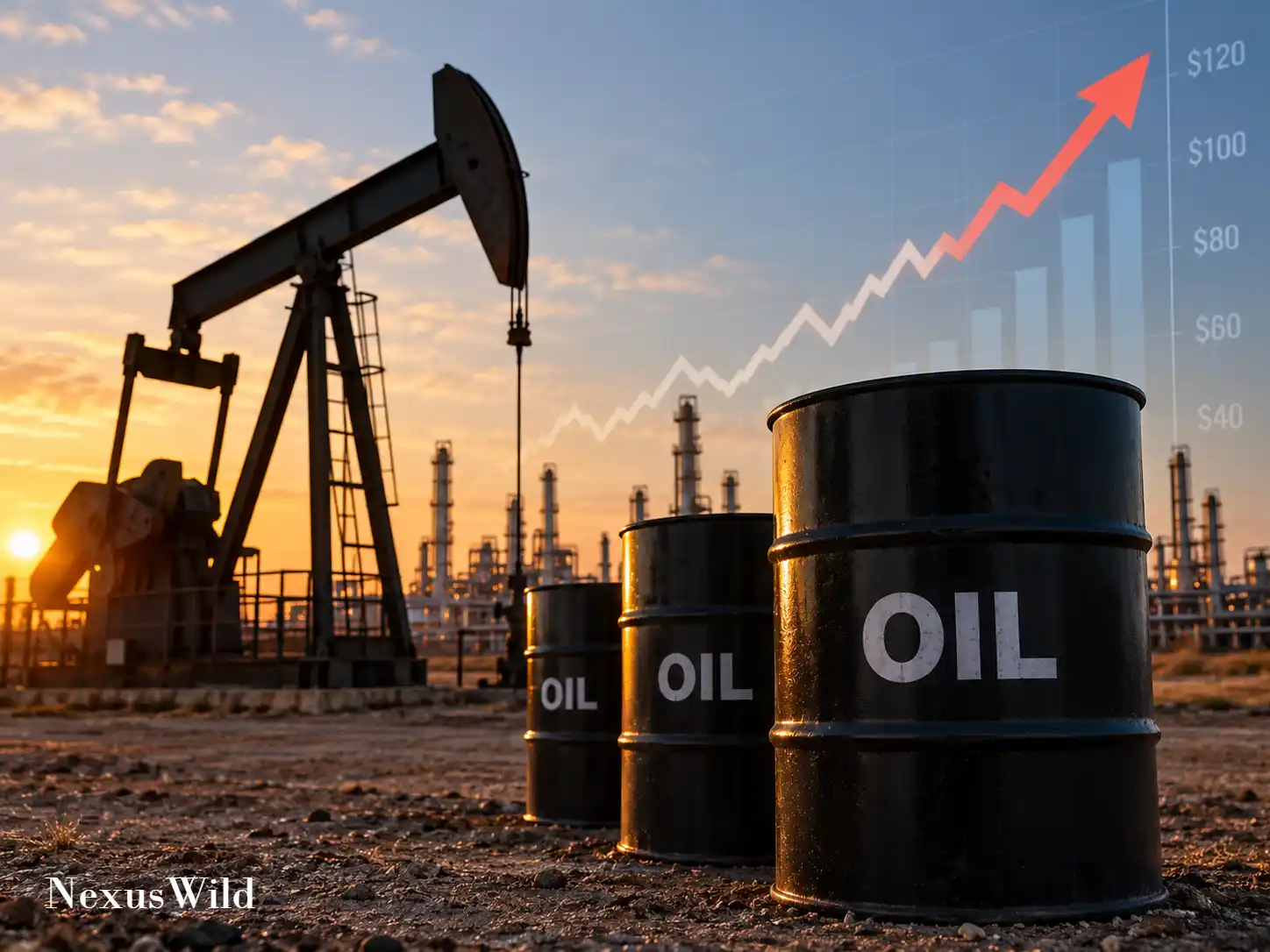

The Federal Reserve heads into next week's policy meeting with something it has not faced in years: real market odds of a rate increase. Brent crude touched roughly $108 a barrel this week, the highest since mid-May, as fighting tied to the Iran conflict has kept the Strait of Hormuz disrupted for months. That has pushed gasoline and diesel prices higher just as the Fed prepares to weigh in - and traders are no longer treating a hike as a remote possibility.
The Federal Open Market Committee meets September 15–16, with the rate decision, updated economic projections and a press conference from Chair Kevin Warsh due Wednesday afternoon. The federal funds target range has sat at 3.50%–3.75% since December 2025, held there at both the June and July meetings. The July decision was not unanimous: the Committee voted 9–3 to hold, with three members dissenting in favor of a hike, according to the Fed's own July meeting minutes.
Whether the Fed actually raises rates next week is genuinely unsettled - this is a live decision, not a foregone conclusion. As of September 10, CME FedWatch data showed roughly a 59% market-implied probability of a 25-basis-point increase, up sharply from about 36% before Warsh's late-August remarks at the Jackson Hole symposium, but still well short of a certainty. A Reuters report this week put the odds at around 71% following a hotter-than-expected producer price reading, illustrating how quickly the pricing has moved with each new data point. In short: a hike is a live, well-priced possibility, not a headline exaggeration, but it is not locked in.
The Energy Shock Behind the Shift
The proximate cause of the change in tone is oil. Prices have been elevated since a U.S.-Iran conflict escalated earlier this year and disrupted tanker traffic through the Strait of Hormuz, a key global chokepoint. Diesel prices in the U.S. climbed from roughly $3.75 to $5.68 a gallon at one point this year, according to Haver Analytics data, a jump of more than 50%. The August producer price index showed a fresh surge tied to energy costs, with diesel oil alone rising over 24% for the month, U.S. News reported, a day ahead of the more closely watched consumer price report.
Economists broadly describe oil shocks as one-off, supply-driven price increases rather than genuinely inflationary in the sustained sense - the concern is less the direct energy price rise and more whether it feeds into wages, shipping costs and broader inflation expectations over time. J.P. Morgan Asset Management's analysis earlier this year projected headline CPI could keep drifting above 3% into 2027 under a range of scenarios, depending on how long the Strait of Hormuz disruption persists.
What the Data Show
The Cleveland Fed's inflation nowcast put year-over-year CPI at 3.41% and core CPI (excluding food and energy) at 2.32% for September, with headline PCE inflation - the Fed's preferred gauge - running at 3.90% and core PCE at 3.49%, based on tracking estimates updated September 10. Energy prices have been the standout driver: earlier this year, July's CPI report showed energy costs up 14.7% year-over-year even after a monthly dip, with gasoline prices up nearly 25% over twelve months, according to Kiplinger's coverage of the report.
The labor market, by contrast, has looked sturdier than expected. Nonfarm payrolls rose 162,000 in August, far above the roughly 53,000 consensus forecast and the strongest monthly gain since March, the Bureau of Labor Statistics reported September 4. The unemployment rate held at 4.1%. June and July payrolls were also revised up by a combined 55,000. That surprise strength, layered on top of the inflation picture, was itself a factor in pushing hike odds higher, since it removed one of the arguments - labor-market softness - that had been used to justify staying on hold.
What Fed Officials Have Said
Chair Warsh used his August 28 Jackson Hole speech to deliver a notably more hawkish message than his relatively ambiguous July press conference. He said the Fed's "predominant focus right now should be on prices," noted that 54% of the 199 components in the PCE index had risen more than 3% over the prior year, and stated that summer inflation readings, while better than expected, did "not tell me that underlying trends have meaningfully improved." He added: "We must be confident that underlying inflation is moving to our objective, clearly and at sufficient speed. Otherwise, we have work to do." He was careful to note his remarks should not be read as formal forward guidance.
Fed Governor Christopher Waller separately signaled openness to a hike in a September 3 speech, according to Polymarket-linked reporting, while Governor Michael Barr said the Fed should be prepared to raise rates if inflation fails to ease. Those comments have unfolded against a backdrop of public pressure from President Trump for the Fed to cut rates instead - pressure Warsh, whom Trump appointed, has so far not accommodated in his public statements.
Markets: Yields, the Dollar, Stocks
The reaction has shown up clearly across asset classes. The 10-year Treasury yield touched around 4.95% on September 11, near three-year highs, as Trading Economics data show, up roughly 25 basis points over the past month and nearly 90 basis points higher than a year earlier. The dollar index climbed above 99.7 in early September, a three-week high, as oil gains and hawkish Fed commentary reinforced rate-hike bets, Trading Economics reported. Equities have been more volatile: stocks have alternated between rallies on any sign of oil prices easing or Middle East de-escalation, and pullbacks when crude resumes its climb, reflecting how tightly markets are now tracking the energy story alongside the Fed itself.
Other Central Banks Face the Same Dilemma
Sweden's Riksbank, the European Central Bank and others are contending with a similar trade-off. The ECB raised its key rate by a quarter point in September - its second increase of 2026, following a June hike and a July pause - citing persistent inflation pressure from the conflict-driven energy shock, even as President Christine Lagarde acknowledged that "the conflict in the Middle East continues to generate inflation pressures" and that monetary policy "cannot reopen a shipping lane." The Bank of Japan has also leaned toward tightening this year.
Analysts, including GAM Investments strategist Julian Howard, have warned that pushing rates high enough to meaningfully dent energy demand would risk tipping economies into recession, given that the shock is a supply-side one rather than a product of excess demand.
What to Watch Next
The immediate risk is that the September 10 producer price data and the CPI report due this week feed directly into Wednesday's decision, alongside the updated Summary of Economic Projections and dot plot, which will show how many FOMC participants now favor further tightening. Beyond the meeting itself, investors are watching whether Strait of Hormuz shipping disruptions ease, which would take pressure off both inflation and the Fed; whether wage growth accelerates in response to higher living costs, which would signal a more entrenched inflation problem; and how explicitly the Fed addresses continued political pressure from the White House.
Futures markets price the effective fed funds rate rising toward roughly 4.1% by December and near 4.5% by next September - implying markets currently expect not just one hike, but a further tightening path, though such pricing can and does shift quickly with each new data release.
Further reading and useful links
Reader questions
Frequently asked questions
Will the Federal Reserve raise interest rates in September 2026?
While not a certainty, market probabilities for a 25-basis-point hike have surged to between 59% and 71% following hotter-than-expected inflation data and hawkish comments from Fed Chair Kevin Warsh.
Why are inflation expectations rising?
An ongoing U.S.-Iran conflict has disrupted shipping in the Strait of Hormuz, driving Brent crude oil up to $108 a barrel and causing a surge in overall energy and diesel costs.
How is the labor market impacting the Fed's decision?
A stronger-than-expected August jobs report, which added 162,000 nonfarm payrolls, removed concerns about labor-market softness, giving the Fed more leeway to focus strictly on combating inflation.
Nexuswild welcomes factual corrections. Email [email protected] with evidence and the article URL.