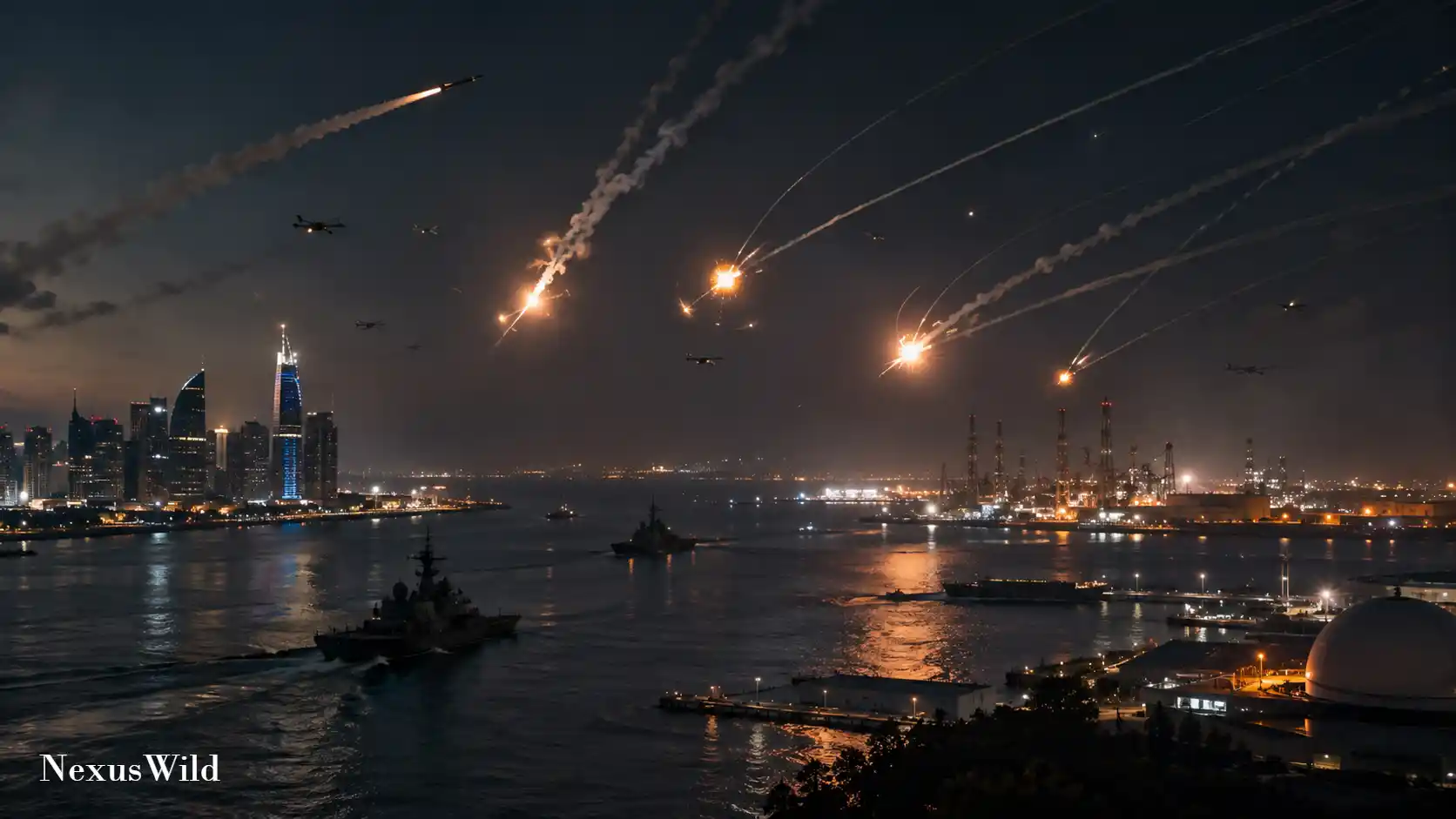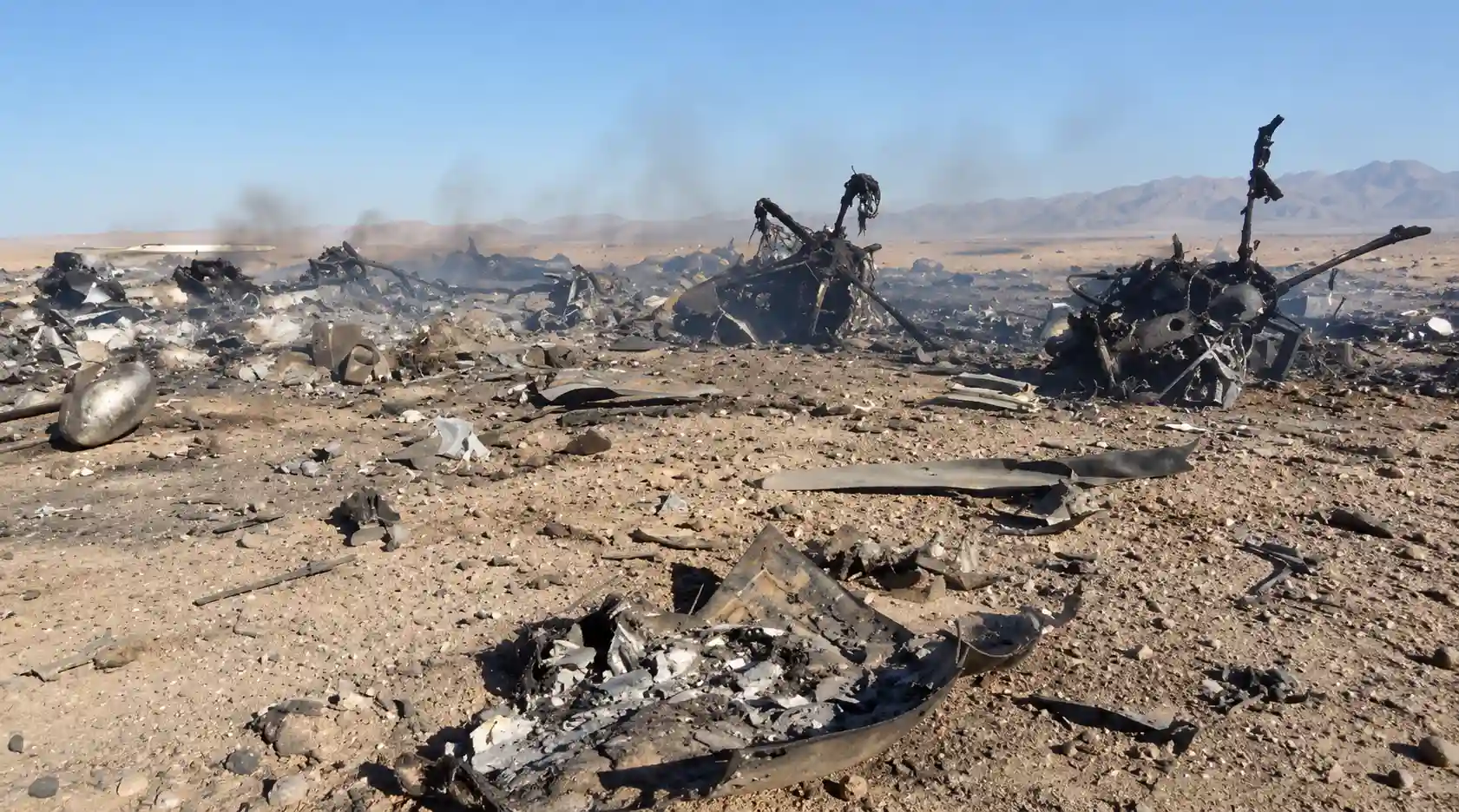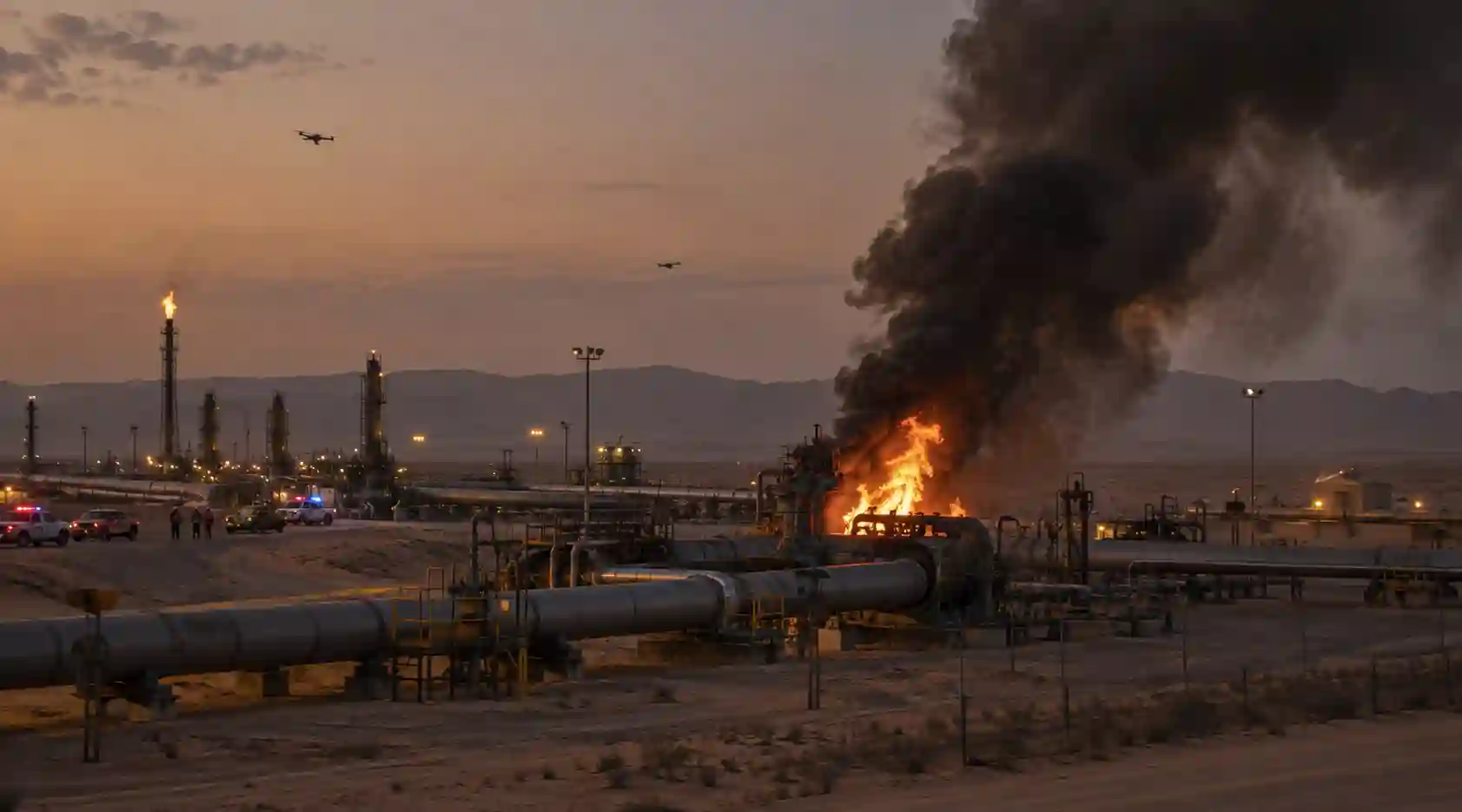

Saudi Arabia said drones launched from Iraqi territory struck its East-West oil pipeline on the morning of Thursday, September 10, 2026, causing fires, damage to pipeline infrastructure and injuries, and prompting the kingdom to temporarily shut down one of its most important alternative export routes at a moment when the Strait of Hormuz remains effectively closed.
The Saudi Ministry of Foreign Affairs said in a statement that "several drones coming from Iraq" had targeted the pipeline in the Riyadh and Medina regions, causing "human injuries and damage." An official from the Saudi Ministry of Energy separately told the state news agency SPA that the pipeline "was stopped as a precaution, and the attacks resulted in some injuries." Neither statement disclosed a specific number of casualties, and no figure has otherwise been independently confirmed. Two US officials told CNN that pump stations located along the pipeline had been struck. Satellite imagery from Copernicus Sentinel-3, reviewed by AFP and Al Jazeera, showed a black smoke plume over the pipeline route between Medina and Mahd al-Dhahab, and separate handout imagery from Planet Labs showed an infrastructure site damaged by fire southeast of Medina. NASA's fire-detection satellite system also recorded clustered thermal anomalies in the area.
Iraq's Response and the Investigation
Saudi Arabia said the drones had been traced to Maysan province in southeastern Iraq, which borders Iran. Iraqi authorities subsequently confirmed that the attack had originated from Iraqi territory, a distinction officials in Baghdad were careful to draw from any claim about who was responsible for launching it. A statement from Sabah al-Numan, spokesperson for Iraq's government, said Baghdad "condemns" the attack and affirmed its "rejection of any aggression that threatens the Kingdom's security and stability."
Iraq's government dismissed the military commander responsible for operations in Maysan province, in what was described as a response to the commander's failure to prevent the launch from territory under his area of responsibility. According to statements from Iraq's Security Media Cell, Iraqi security forces subsequently located and seized a drone-launching platform allegedly used in the attack, and forensic and technical experts were working to identify those responsible. Iraq's commander-in-chief approved a request from Iran to join the investigation, and Iraqi authorities closed border crossings with Iran for security inspections following the discovery that the launch site was in Maysan.
Responsibility for actually carrying out the attack has not been conclusively and publicly established. While some outlets described the attack as the work of "Iran-backed militias" operating from Iraqi territory, this characterization has not been confirmed by an official Saudi, Iraqi or Iranian statement and should be treated as an attribution under investigation rather than an established fact.
Saudi Arabia Holds Off on Retaliation
In a notable diplomatic move, Saudi Arabia said it would refrain from responding militarily for now, citing a direct request from Iraqi Prime Minister Mohammed Shia' al-Sudani. The Saudi foreign ministry said in a statement that "at the request of the Iraqi Prime Minister to allow the brotherly Iraqi government the opportunity to take the necessary measures to prevent attacks launched from Iraqi territory against the Kingdom and neighbouring countries, the Kingdom has chosen not to respond at this stage and to support the efforts of the Iraqi government."
The ministry added that Saudi Arabia "reserves its right to take all necessary measures to protect its sovereignty, security and critical facilities." Iraq, in turn, said it "appreciates" Riyadh's response to its request. The Gulf Cooperation Council's secretary-general, Jasem Albudaiwi, reaffirmed the bloc's "complete and steadfast solidarity" with Saudi Arabia.
Why the Pipeline Matters
The East-West pipeline, widely known as Petroline, is a 1,200-kilometre, twin-pipe system operated by Saudi Aramco that carries crude from the Abqaiq processing centre near the Gulf across the kingdom to the Red Sea port of Yanbu, bypassing the Strait of Hormuz entirely. Built in the 1980s during the Iran-Iraq war as a contingency against exactly this kind of chokepoint risk, the pipeline has a stated maximum capacity of 7 million barrels per day, of which roughly 5 million barrels per day has been available for export, with the remainder feeding domestic refineries.
Since the US-Israeli war with Iran began in February 2026, and Iran moved to effectively close the Strait of Hormuz in response, Saudi Arabia has sharply increased its use of Petroline. Average flows rose from roughly 770,000 barrels per day in January and February to around 2.9 million barrels per day by late March, with Aramco chief executive Amin Nasser saying at the time the pipeline would reach its maximum capacity within days. Bloomberg reporting described Petroline as "one reason oil prices haven't reached crisis-level highs" despite the loss of Hormuz transit, though the pipeline offsets only a fraction of the roughly 20 million barrels per day that normally passes through the strait.
That combination - a partial, already-strained substitute for Hormuz, now itself targeted - is what makes Thursday's attack significant beyond its immediate physical damage. Any sustained disruption to Petroline removes a substantial share of the alternative capacity global oil markets have been relying on since the strait closed, at a time when spare export routes are already scarce.
Market and Regional Implications
Reporting from multiple outlets described oil markets as "rattled" following the attack, though specific price figures directly tied to the pipeline strike itself remain entangled with the broader run-up in crude prices that has accompanied the Hormuz closure. Given the pipeline's role as a release valve for Saudi exports, any prolonged shutdown - even a partial or temporary one - carries the potential to add further upward pressure to global oil prices.
The attack also underscores a wider pattern flagged by regional analysts: that pipelines built specifically to route around one chokepoint remain exposed to attack themselves, and that Yanbu's own energy facilities, along with shipping routes through the Bab al-Mandeb Strait connecting the Red Sea to the Indian Ocean, face separate security risks from Iran-aligned groups including Yemen's Houthi movement.
Further reading and useful links
Reader questions
Frequently asked questions
Where did the drones that hit the Saudi pipeline come from?
Saudi Arabia and Iraq both confirmed that the drones were launched from Maysan province in southeastern Iraq, near the Iranian border.
Why is the East-West pipeline (Petroline) so important right now?
The 1,200-kilometre pipeline carries crude oil across Saudi Arabia to the Red Sea, completely bypassing the Strait of Hormuz, which has been effectively closed since February 2026 due to regional conflict.
Is Saudi Arabia retaliating against Iraq for the drone attack?
No. At the direct request of the Iraqi Prime Minister, Saudi Arabia has chosen not to respond militarily at this stage, allowing the Iraqi government the opportunity to investigate and prevent further attacks from its territory.
Nexuswild welcomes factual corrections. Email [email protected] with evidence and the article URL.