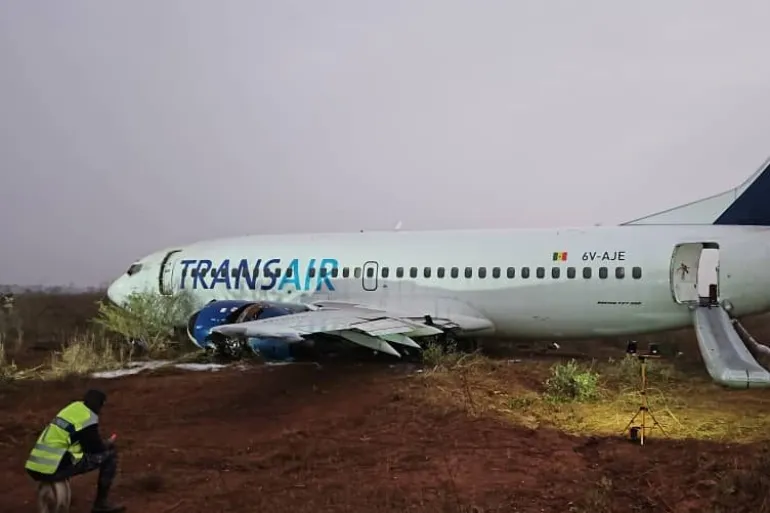

A Sepehran Airlines Boeing 737 operating a domestic flight from Mashhad to Kermanshah, Iran, made an emergency return to Mashhad on September 15, 2026, after the outer tread of a landing-gear tyre separated during takeoff and the flight crew subsequently reported an engine emergency. Video recorded inside the cabin, which has since circulated widely online, shows violent shaking, overhead bins opening and sections of ceiling lining coming loose above passengers. The aircraft landed safely back at Mashhad's Shahid Hasheminejad International Airport, and the airline says no injuries were reported. Iranian aviation authorities have opened an investigation, and the exact cause has not yet been determined.
This article separates what has been confirmed by airport officials and the airline from what remains unverified, including some of the more dramatic claims attached to the footage as it spread on social media.
What Happened After Takeoff?
According to Hassan Jafari, public relations director for the Razavi Khorasan provincial airports authority, the flight had already been delayed twice earlier in the day before finally departing Mashhad at approximately 5:30 p.m. local time. Some reports place the moment the crew declared an emergency at around 5:39 p.m., roughly nine minutes after departure.
Jafari said that as the aircraft lifted off the runway, the outer rubber, or tread, of one of the tyres on the main landing gear separated. He specifically stated that this was not a tyre burst, contradicting some of the earliest reports that circulated after the incident.
Shortly after becoming airborne, the flight crew reported a problem with one of the aircraft's engines and requested to return to Mashhad. Passengers described intense vibrations moving through the cabin during this period. The crew declared an emergency, turned the aircraft around, and carried out what officials describe as a safe landing back at Mashhad. Jafari said all passengers disembarked normally and were later placed on a replacement aircraft to complete their journey to Kermanshah. The runway at Mashhad was temporarily closed afterward for a safety inspection and cleanup before normal operations resumed.
Iranian authorities have not yet published an official account of exactly how the tyre issue and the reported engine problem may be connected, and multiple outlets have noted that this link remains unconfirmed.
What the Cabin Footage Shows
Several video clips said to have been filmed by passengers inside the aircraft have spread across social media and Iranian news outlets, including Akharin Khabar. Reviewed on their own terms, without assuming they prove a specific technical cause, the videos show the following visible details.
The cabin can be seen shaking significantly, with the motion strong enough to dislodge items from overhead storage. Overhead bins are shown open, with some personal belongings falling into the aisle and onto seats. Sections of the cabin ceiling lining, the decorative and insulating panelling that covers the space between the overhead bins and the roof of the fuselage, appear to detach in places and hang or fall toward passengers below. Cabin lighting remains on throughout the footage. Passengers are seen and heard reacting with visible distress, including screaming, ducking beneath the falling panels, and holding onto seatbacks.
Some outlets described the footage as showing the aircraft's "internal structure" becoming exposed. It is important to be precise here: what is visible in the available video is interior ceiling and panel lining separating from its fittings, not confirmed damage to the aircraft's primary structure, meaning the metal airframe that keeps the plane's fuselage intact. No footage reviewed publicly to date shows a breach of the fuselage itself, and no source has published engineering findings establishing structural damage of that kind. Descriptions of the cabin "collapsing" or the aircraft "falling apart," phrases used in some headlines, refer to loose interior panelling rather than a failure of the aircraft's structural integrity, and should not be read as evidence of the latter.
There is no visual indication in the footage reviewed that oxygen masks deployed during the incident, which would typically only occur if the aircraft lost cabin pressurization. No source consulted for this article reported a pressurization event.
Was the Aircraft Close to Crashing?
Some social media posts and secondary reports characterized the event as the aircraft nearly crashing. Based on the information made public so far, that characterization is not supported.
What is confirmed is that the aircraft became airborne after departure, that the flight crew identified a problem and made the decision to return, and that the aircraft carried out a controlled turnback and landed normally at its departure airport. There is no published information indicating the aircraft lost controlled flight, descended to an unsafe altitude, or required unusual emergency maneuvers beyond a standard precautionary return. Airport officials described the landing as safe, and there is no indication in available reporting that the crew reported loss of control at any point.
Given the absence of evidence for a loss of control, an unsafe altitude excursion, or any account from officials describing the aircraft as close to crashing, this article does not use that phrase to describe the incident. The event is more accurately described as a technical malfunction shortly after takeoff that prompted a precautionary emergency return, which the crew carried out successfully.
Passenger and Crew Impact
The exact number of passengers and crew aboard the flight has not been consistently or officially confirmed in the reporting reviewed for this article, and this piece does not repeat unverified passenger counts that have circulated for this specific flight.
Hassan Jafari of Sepehran Airlines confirmed to Iran's Fars news agency that nobody aboard was injured. Passengers were subsequently transferred to a different aircraft to continue their journey to Kermanshah. No fatalities have been reported by any official source. At least one report noted that some passengers may have been struck by falling objects during the shaking, but this detail has not been confirmed by the airline or by aviation authorities, and no source has described any resulting injuries requiring treatment. Readers should treat that specific claim as unverified pending an official account.
What Caused the Incident?
The cause of the incident has not been officially determined. What has been confirmed by the Razavi Khorasan airports authority is limited to the sequence of events: the outer tread of a landing-gear tyre separated during takeoff, and the flight crew subsequently reported an engine-related emergency.
Beyond that sequence, several elements remain unresolved and should be treated as open questions rather than established facts:
- Whether the tyre tread separation directly caused the reported engine problem, or whether the two issues were unrelated, has not been confirmed.
- What specifically caused the cabin ceiling panels to come loose, whether from the vibration associated with the technical fault, from another factor, or from a combination of causes, has not been explained by officials.
- No party, including the airline, the airport authority, or Iran's Civil Aviation Organisation, has published a technical finding attributing the incident to a specific mechanical failure, manufacturing issue, or maintenance factor.
Airport officials have stressed that determining the precise cause is the responsibility of specialists from Iran's Civil Aviation Organisation, and that conclusion has not yet been reached publicly.
What Authorities Are Investigating?
Iran's Civil Aviation Organisation is understood to be examining the incident, according to statements attributed to airport officials, though the organisation had not issued its own detailed public statement at the time of writing. The Razavi Khorasan provincial airports authority, which operates Mashhad's Shahid Hasheminejad International Airport, has been the primary source of confirmed details so far through spokesperson Hassan Jafari. Sepehran Airlines has also issued limited comment through Iranian state and semi-official media, primarily confirming that no injuries occurred and that passengers were rebooked onto another aircraft.
No international investigative body has been reported as involved in this specific incident as of this writing, which is consistent with a domestic flight and an occurrence that did not result in injuries or aircraft loss.
What Happens Next?
Aviation incident investigations of this kind typically involve steps that have not yet been publicly confirmed for this specific occurrence but are consistent with standard practice. These can include a physical inspection of the affected landing-gear tyre and wheel assembly, examination of the reported engine for signs of damage or foreign object ingestion, a review of the aircraft's maintenance history, and analysis of flight-data recorder and cockpit voice recorder information if investigators determine it is needed for an occurrence of this severity. Investigators may also seek statements from the flight crew and cabin crew regarding the sequence of warnings and vibrations they experienced.
As of this writing, no findings from any of these steps have been made public, and there is no confirmed timeline for when a preliminary or final report might be released.
Conclusion
A Sepehran Airlines Boeing 737 flying from Mashhad to Kermanshah on September 15, 2026, experienced a landing-gear tyre tread separation during takeoff, followed by a reported engine emergency, prompting the crew to turn back and land safely at Mashhad. Cabin footage that circulated afterward shows violent shaking and loose ceiling panelling, but does not show evidence of structural airframe damage or a pressurization event, and no injuries have been reported by the airline. There is no confirmed evidence supporting claims that the aircraft nearly crashed. Iranian aviation authorities have opened an investigation, and the precise cause of the tyre and engine issues, along with their connection to the cabin damage seen on video, remains under determination.
Key Facts Verified
- Flight route: Mashhad to Kermanshah, Iran (domestic flight)
- Aircraft type: Boeing 737; the specific variant has not been officially confirmed in available reporting
- Airline: Sepehran Airlines
- Date and location: September 15, 2026; departed Shahid Hasheminejad International Airport, Mashhad
- Passenger and crew numbers: Not officially confirmed as of this writing
- What happened after takeoff: A landing-gear tyre tread separated during takeoff, followed by a reported engine emergency
- Landing outcome: The aircraft returned to Mashhad and landed safely
- Injuries/fatalities: No injuries reported by the airline; no fatalities reported
- Official investigation status: Under investigation by Iran's Civil Aviation Organisation; no cause has been officially determined
- What the viral footage actually confirms: Cabin shaking, loose overhead bins, and detached ceiling panelling; it does not confirm structural airframe damage, a pressurization event, or that the aircraft nearly crashed
Further reading and useful links
Reader questions
Frequently asked questions
What happened to the Boeing 737 after takeoff?
Shortly after taking off from Mashhad, the outer tread of one landing-gear tyre separated, and the flight crew subsequently reported an engine emergency. The crew turned the aircraft back and landed safely at Mashhad.
Which airline operated the flight?
Sepehran Airlines, an Iranian carrier based in Shiraz, operated the domestic flight from Mashhad to Kermanshah.
What does the cabin footage show?
The footage shows the cabin shaking, overhead bins opening, personal items falling, and sections of interior ceiling panelling coming loose above passengers. It does not show confirmed damage to the aircraft's structural airframe or evidence of a pressurization event.
Were passengers or crew injured?
The airline said no injuries were reported. One unconfirmed report suggested some passengers may have been struck by falling objects, but this has not been verified by officials.
What is known about the cause of the incident?
Officials have confirmed that a tyre tread separated during takeoff and that an engine emergency was reported afterward, but the precise cause, and whether the two issues were connected, remains under investigation by Iran's Civil Aviation Organisation.
Nexuswild welcomes factual corrections. Email [email protected] with evidence and the article URL.